


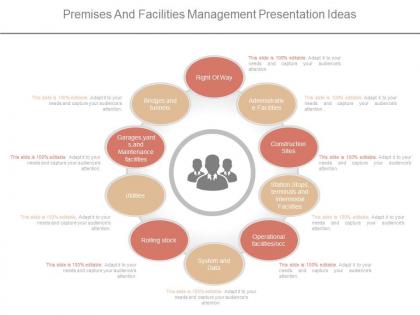
Premises and facilities management presentation ideas




Try Before you Buy Download Free Sample Product
 Impress Your
 Audience
 100%
100% Editable
 Save Hours
 of Time


They will go crazy over our Premises And Facilities Management Presentation Ideas. See them go all gaga.
People who downloaded this PowerPoint presentation also viewed the following :
Premises and facilities management presentation ideas with all 7 slides:
Control fatigue with our Premises And Facilities Management Presentation Ideas. Benefit from the comfort they bring.




FAQs for Premises and facilities
Honestly, start with an audit of what you've got right now - biggest gaps first. Focus on maintenance scheduling, space use, security, and compliance tracking. Preventive maintenance is way better than scrambling when stuff breaks (learned that the hard way). Security systems need attention too, obviously. Vendor management and budgets can get messy fast if you're not paying attention. Oh, and make sure the environment actually helps people work instead of getting in their way. It's really about creating something functional and safe that doesn't make everyone's job harder.
Honestly, tech makes facilities way easier to manage. IoT sensors track your HVAC and how many people are in different areas. Your team can report problems through mobile apps right when they spot them. CMMS software handles maintenance schedules automatically - total game changer for avoiding those "crap, we forgot the boiler service" disasters. The data shows you patterns too, like which spaces get used most. Oh, and don't try to digitize everything at once. Pick one annoying thing first, like work orders, then build from there. Way less overwhelming that way.
Look, safety stuff has to come first in premises management - everything else falls apart without it. Fire codes, accessibility rules, health regulations... yeah it's a pain but keeps people safe and your company from getting sued. Regular audits are your best friend here. Keep all that paperwork organized too (learned that one the hard way). The cool thing is good safety practices actually cut costs through fewer accidents and lower insurance. It's not just about checking boxes - though there are definitely a lot of boxes to check.
Start small - pick one thing like switching to LED lights or fixing those HVAC settings that nobody ever touches. The energy savings will honestly pay for themselves pretty quick. Get your team on board with recycling programs and cut down on disposable stuff where you can. Low-flow fixtures help with water costs too (though installing them can be a pain). I'd skip trying to do everything at once - that's how these things usually fail. Track whatever changes you make so you can actually see if it's working. Oh, and eco-friendly cleaning supplies are way easier to find now than they used to be.
Honestly, you gotta standardize your processes but don't go crazy - leave room for local quirks. Get centralized reporting set up first because managing sites blind is absolutely brutal. Same maintenance schedules everywhere, consistent vendor approach, clear communication between your central team and each location. Find solid local contacts who can handle the daily headaches. I'd start with auditing what you have now to see where things are falling apart, then roll out new procedures slowly. Don't try changing everything overnight - that's how you create chaos. Oh, and make sure those communication protocols actually work both ways.
Look, data analytics just means you're making decisions based on actual numbers instead of guessing. Track stuff like energy costs, how much space you're actually using, maintenance expenses - even tenant complaints if you want. Honestly, the amount of info you probably already have is crazy. You'll start seeing patterns pretty quickly, like predicting when your HVAC is about to crap out or figuring out which areas are total dead space. Pick one thing you want to fix first though. Don't try tracking everything at once - been there, it gets overwhelming fast.
Ugh, sounds like you're drowning in the usual nightmare stuff. Infrastructure keeps breaking, energy bills are insane, and don't even get me started on compliance - feels like they change the rules just to mess with us. Everyone wants fancy data insights but half your systems can't even talk to each other (seriously, who designed this?). Sustainability goals are breathing down your neck, hybrid work's made space planning weird, and your budget... well, when is it ever enough? Honestly though, I'd tackle preventive maintenance first. Boring, I know, but it'll save you so many 3am emergency calls later.
So space utilization metrics show you how your office is actually being used vs. what you're shelling out for. Track desk occupancy, meeting room usage, foot traffic - the works. Half your conference rooms probably sit empty while everyone crowds into like two spots (always happens). The data's super useful for lease decisions and figuring out if you need more space or can downsize. You'd be surprised how much you can cut your footprint - sometimes 20-30% - just by being smarter about layout. Real eye-opener when you see the numbers.
Your employees are honestly your best bet for figuring out what's actually working in your space. They're there every day dealing with weird lighting, temperature issues, or that one corner that's always too loud. Most facilities people won't catch this stuff until way later. Survey them regularly - even just a quick monthly check works. Make it easy for people to speak up too. I learned this the hard way when our "amazing" open office turned into a productivity nightmare and nobody told management for months. Who else is gonna tell you the truth about whether that fancy layout actually helps or just looks good in photos?
Honestly, good facilities management is a game-changer for productivity. Your team performs way better when they've got decent lighting, working AC, and equipment that doesn't break every five minutes. I swear, nothing tanks morale faster than dealing with a broken printer when you're already stressed. Clean spaces make people feel like the company actually cares about them too. Start with the basics - temperature control, lighting, cleanliness. Those three things alone will make a huge difference in how your people feel walking into work each day. It's not rocket science, but so many places get it wrong.
Look, bad premises management is basically bleeding money everywhere. Your maintenance costs skyrocket, energy bills get crazy high, and you're constantly dealing with emergency repairs that could've been avoided. Safety violations? Those fines are brutal - learned that one the hard way. Property values tank, insurance goes up, and everything breaks down when you need it most. Honestly, the worst part is losing tenants because who wants to stick around when stuff's falling apart? Track your monthly maintenance spending so you can catch problems early instead of getting hammered later.
Dude, this stuff is actually pretty cool - you basically get 24/7 monitoring of your whole building from your phone. Temperature, humidity, security, equipment issues, all of it shows up in real-time. What blew my mind was the predictive maintenance thing. Your HVAC will literally tell you it's about to crap out before it happens, which beats having it die during a heat wave. Honestly wish I'd known about this sooner. I'd say pick one system to start with and see how it goes before going crazy with it.
Look, vendor management is probably the most important part of facilities work - seriously. You're dealing with cleaning crews, maintenance people, security, landscapers, all that stuff. Bad vendor relationships = chaos. Trust me, you don't want your HVAC breaking in July because you didn't stay on top of your contractor. First thing - vet everyone properly and get solid contracts with clear service levels. Then actually check up on performance regularly (most people skip this part). Oh, and keep a database with all their info and notes about how they're doing. It'll save you so much headache later.
Don't treat your crisis plan like some binder that collects dust. Build it right into how you already run things day-to-day. Map out what could actually happen at your place - fires, blackouts, break-ins, whatever natural disasters hit your area. Then figure out who does what when stuff goes sideways. Your team needs to know how to access building controls, emergency contacts, backup power, all that. Honestly, most places skip the boring part but it matters: actually do drills and keep your emergency supplies fresh. I've seen too many "emergency" flashlights with dead batteries.
IoT sensors are everywhere now - tracking air quality, how spaces get used, all that stuff. Smart building tech is massive, and everyone's obsessing over going carbon-neutral. Your maintenance teams will love predictive analytics because it actually works for spotting problems early. Since remote work changed everything, flexible workspace design isn't optional anymore. Honestly, tenant experience platforms are pretty much expected at this point. ESG reporting is driving tons of decisions too. I'd probably start by looking at what tech you already have and figuring out where you can automate more stuff to keep up.
-
Unique research projects to present in meeting.
-
Great designs, Easily Editable.