


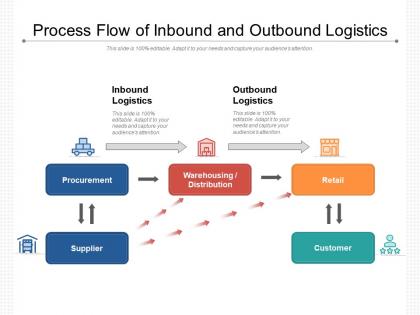
Fluxo de processo da logística de entrada e saída




Try Before you Buy Download Free Sample Product
 Impress Your
 Audience
 100%
100% Editable
 Save Hours
 of Time


Seja uma inspiração para futuros heróis com nosso Fluxo de Processo de Logística de Entrada e Saída. Acenda o desejo de beneficiar a humanidade.
People who downloaded this PowerPoint presentation also viewed the following :
Processo de logística de entrada e saída: 1. Logística de entrada: - Recebimento de matérias-primas e insumos - Armazenagem e gestão de estoque - Transporte interno e manuseio de materiais 2. Logística de saída: - Embalagem e preparação de produtos acabados - Expedição e distribuição dos produtos - Transporte e entrega aos clientes
Acenda o desejo de beneficiar a humanidade com nosso Fluxo de Processos de Logística de Entrada e Saída. Seja uma inspiração para os futuros heróis.
FAQs for Process flow of inbound
So it breaks down into planning/forecasting, procurement, inventory management, warehousing, transportation, and final delivery. Returns management too - seriously, that one will bite you if you skip it. Planning feeds into procurement, which affects inventory, and so on. When one stage goes wrong, everything else gets wonky downstream. Honestly, visibility is huge here - you need to see across all stages to catch problems early. I'd start by mapping your current process first. Find those gaps and inefficiencies before optimizing anything else.
So basically when your suppliers can't get you stuff on time, everything else falls apart. Production gets screwed up, then your warehouse is either empty or overflowing - there's no in-between, honestly. Transportation becomes a nightmare too. You've probably seen those crazy port backup stories on the news. Costs spike, delivery times get pushed out, and you're suddenly calling random suppliers at 2am trying to find alternatives. The trick is having backup plans ready before things go sideways. Otherwise you'll just be putting out fires instead of actually solving anything.
Dude, logistics without tech is brutal these days. You'll want warehouse systems tracking your inventory and AI figuring out demand patterns - saves so much headache. GPS tracking means customers can see where their stuff is (which cuts down on angry calls, trust me). Route optimization happens automatically now too. The data side is actually pretty cool - it catches problems you'd totally miss doing things manually. Oh and real-time shipment visibility is huge. I'd start small though, maybe just tracking or inventory management first. Build it up from there instead of going crazy all at once.
Dude, analytics is seriously a game-changer for supply chain stuff. Instead of just winging it, you actually see what's happening - like which shipping routes always get delayed or where your inventory keeps getting stuck. Honestly, once you start spotting these patterns, you'll kick yourself for not doing it sooner. The trick is don't try to analyze everything at once (learned that the hard way). Just pick your biggest headache - maybe it's demand forecasting or route planning - and start there. You'll catch problems way earlier and make decisions based on real data instead of gut feelings.
Start with an audit of what you actually have - that'll show you where the gaps are. Get your demand forecasting dialed in first since that's honestly where most people mess up. ABC analysis helps prioritize your expensive stuff, and automated reorder points save you from constantly babysitting inventory levels. FIFO rotation keeps things fresh, and real-time tracking beats guessing every time. I know cycle counting sounds mind-numbing, but it's so much better than those brutal year-end counts. Build solid supplier relationships too - you'll need quick replenishment when things go sideways. Focus on forecasting accuracy though, that's your biggest win.
Look, last-mile delivery is where you either win or lose customers - it's literally what they see and judge you on. Fast, reliable delivery? Happy customers. But man, this stuff costs serious money, like 40-50% of your shipping budget. Individual deliveries are just expensive - missed deliveries, weird addresses, you name it. You've got to balance not going broke with keeping people satisfied. Honestly, I'd start with better route planning and throw in some pickup spots. Cuts costs but doesn't tank your service quality.
So green logistics is all about cutting emissions across your supply chain. Rail and ocean shipping beat trucks/planes for carbon footprint, though they're slower obviously. Packaging matters more than people think - less waste, better cube utilization. Route optimization software saves tons of fuel by dodging traffic jams and finding efficient paths. Your customers are gonna expect this stuff now anyway, it's not really optional anymore. I'd start with measuring your current emissions per shipment first. That gives you a baseline to work from and shows where you're bleeding the most carbon.
Focus on the stuff that actually moves the needle - delivery times, order accuracy, inventory turnover, and shipping costs. Those are your bread and butter metrics. Honestly, I've seen way too many companies get buried under mountains of data they never even look at, which is just... pointless? Start simple with cost per shipment and on-time delivery rates. These give you the clearest snapshot of performance. Measure what your customers actually care about first. Once you've nailed those basics, then you can branch out. But seriously, don't overcomplicate it from day one.
Oh man, customs paperwork is the absolute worst - I swear they design those forms to confuse you on purpose. Currency keeps shifting on you, which messes with your budgets. Time zones are a nightmare when you're trying to get everyone on calls. Demand forecasting becomes this guessing game when shipments take forever. Plus you're juggling different carriers and warehouses everywhere, and don't get me started on language barriers. Quality standards vary like crazy between regions too. Honestly? Map out where things get stuck most often first, then fix those pain points. Way easier than trying to solve everything at once.
So real-time tracking is a game changer - you'll know exactly where everything is without playing detective. Customers stop blowing up your phone asking "where's my order?" which honestly saves your sanity. When delays pop up, you can catch them early and reroute stuff before it becomes a total mess. The automatic updates keep everyone happy too. Oh, and all that data helps you figure out which routes suck and which carriers are actually reliable. My advice? Start with your expensive or urgent shipments first, then expand from there once you get the hang of it.
Honestly, start by mapping out where you're losing the most time - that's your biggest bang for buck. Get your inventory closer to customers with regional warehouses if you can swing it. Automation is huge for order processing (manual entry is such a drag). Your suppliers need better communication too - push for faster turnarounds there. Demand forecasting helps avoid those annoying stockouts that mess everything up. For shipping, expedited options work for urgent stuff. Oh, and consolidating shipments saves time when you're not in crisis mode. Pick the worst bottleneck first though.
Dude, automation is a game-changer for logistics. Warehouse robots and AI routing cut human error big time while speeding everything up. Your order processing gets way faster, inventory tracking improves, and shipments are more accurate. Honestly, the best part is it handles all the boring repetitive tasks - your team can actually focus on real problems and customer stuff instead. Yeah, it costs money upfront, but the efficiency boost is worth it. My advice? Start small with whatever manual process eats up most of your time, then expand from there.
Dude, communication really is everything in logistics. You avoid all those "wait, what happened?" disasters that cost serious money. Keep your suppliers and carriers in the loop about delays or changes - nobody likes surprises. Having everyone follow the same processes (not just pretend to) makes a huge difference too. Response times get faster, departments actually coordinate, and you'll spot problems way before they blow up your budget. Oh, and shared dashboards are clutch - everyone sees the same info instead of working off different data. Regular check-ins help too, even if they feel repetitive sometimes.
Ugh, compliance is such a pain - you're gonna deal with endless paperwork for customs, safety certs, hazmat stuff, all that jazz. Every step gets bogged down with documentation and inspections. The worst part? Your lead times get totally screwed because one missed form can mean delays, fines, or they'll literally seize your shipment. I learned this the hard way last year. Build in extra time for inspections and always have backup routes ready. Start by figuring out which regulations actually apply to each part of your supply chain so you're not drowning in irrelevant requirements.
Honestly, just find partners who are good at the stuff you suck at. Like, if you're terrible at warehousing, get a 3PL to handle that. Regional carriers work great for last-mile delivery too. I learned this the hard way - trying to do everything yourself is expensive as hell and super stressful. Map out where your process totally falls apart first. Then find companies who actually know what they're doing in those areas. My buddy's company does inventory well but can't figure out international shipping to save their lives, so they partnered with a freight forwarder. Makes total sense.
No Reviews