


Product Adaptation Strategy For Localizing International Marketing Strategy CD




Try Before you Buy Download Free Sample Product
 Impress Your
 Audience
 100%
100% Editable
 Save Hours
 of Time


Experience the power of global growth through our Product Adaptation Strategy for Localizing International Marketing presentation. Delve into the intricacies of tailoring products to diverse markets as the presentation expertly navigates challenges, strategic choices between standardization and adaptation, and comprehensive market analyses. From tangible and intangible adjustments to promotional tactics, pricing strategies, and distribution channels, this guide covers it all. Whether its refining product design, packaging, brand translation, or positioning, every facet of successful adaptation is meticulously addressed. With insights into geographical, promotional, pricing, and logistical adaptations, this Product Standardization presentation offers a comprehensive toolkit for thriving in international markets. Concluding with implementation timelines, budget considerations, and performance assessment, including sales and revenue impact, the presentation equips businesses with a dynamic dashboard for continuous monitoring. Elevate your global strategy with this presentation, and harness the potential of international marketing through strategic product adaptation.
People who downloaded this PowerPoint presentation also viewed the following :
Content of this Powerpoint Presentation
Slide 1: This slide introduces Product Adaptation Strategy for Localizing International Marketing. State Your Company Name and begin.
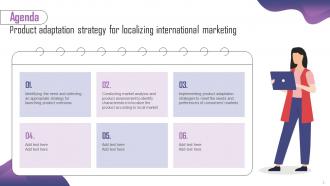
Slide 2: This slide is an Agenda slide. State your agendas here.
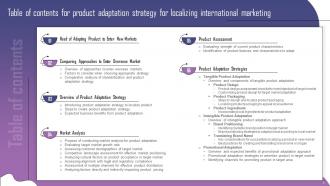
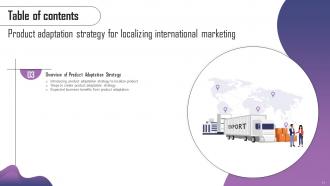
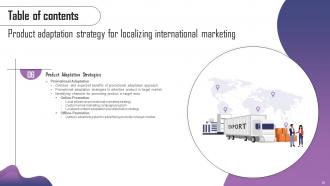
Slide 3: This slide shows a Table of Contents for the presentation.
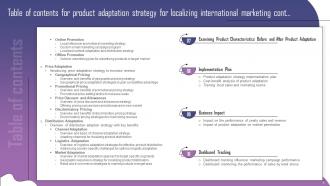
Slide 4: This slide is in continuation with the previous slide showing Table of Contents for the presentation.
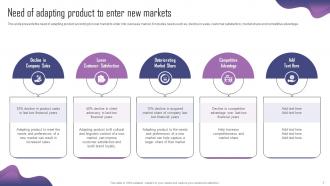
Slide 5: This slide states Need of Adapting Product to Enter New Markets.
Slide 6: This slide presents the need of adapting product according to local market.
Slide 7: This slide introduces Comparing Approaches to Enter Overseas Market.
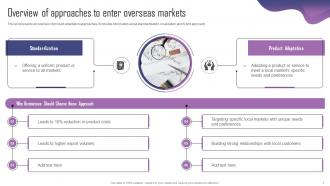
Slide 8: This slid contains an overview of product adaptation approaches.
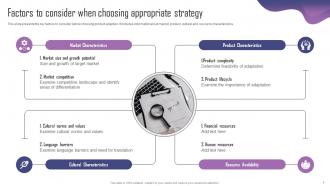
Slide 9: This slide shows the key factors to consider before choosing product adaption.
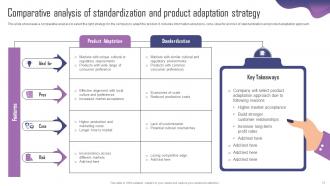
Slide 10: This slide showcases a comparative analysis to select the right strategy for the company.
Slide 11: This slide strives an overview of Product Adaptation Strategy.
Slide 12: This slide illustrates an overview of why company should consider product adaptation.
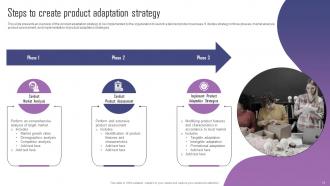
Slide 13: This slide presents an overview of the product adaptation strategy in a phased manner.
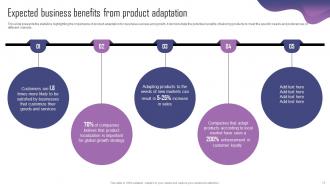
Slide 14: This slide describes an Expected business benefits from product adaptation.
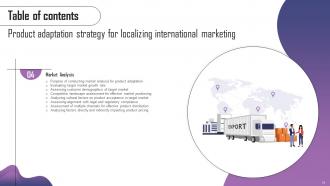
Slide 15: This slide showcases Market Analysis.
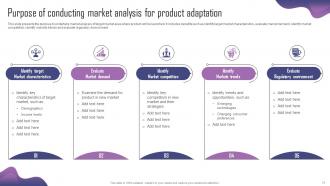
Slide 16: This slide shows the purpose to undertake market analysis of target market area where product will be launched.
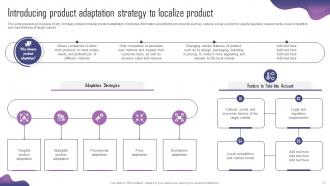
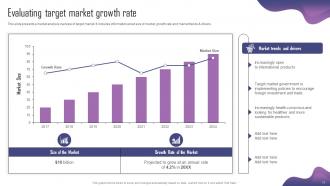
Slide 17: This slide Evaluates target market growth rate.
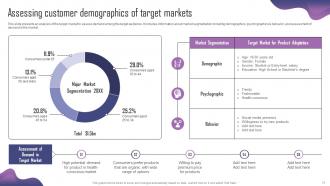
Slide 18: This slide provides an analysis of the target market to assess demand among the target audience.
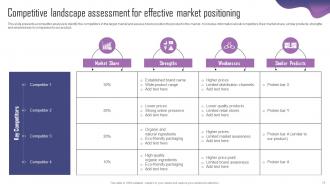
Slide 19: This slide presents a competitor analysis to identify the key competitors.
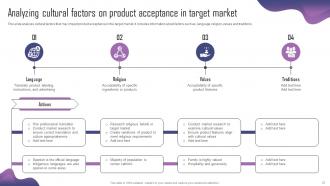
Slide 20: This slide analyzes cultural factors that may impact product acceptance in the target market.
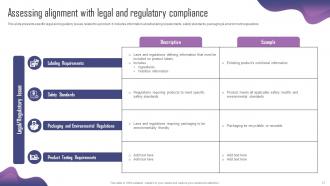
Slide 21: This slide illustrates specific legal and regulatory issues related to a product.
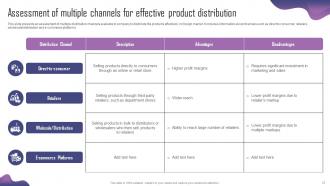
Slide 22: This slide depicts an assessment of multiple distribution channels available to company.
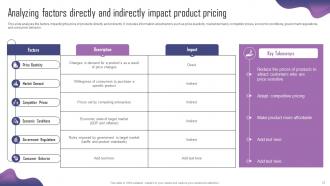
Slide 23: This slide analyses the factors impacting the price of products directly and indirectly.
Slide 24: This slide gives an overview of Product Assessment.
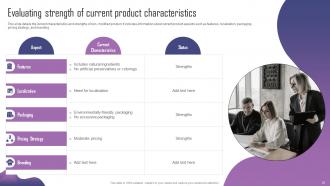
Slide 25: This slide details the current characteristics and strengths of non- modified product.
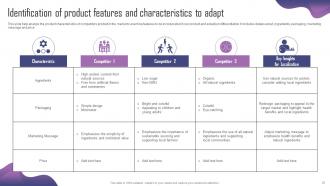
Slide 26: This slide includes Identification of product features and characteristics to adapt.
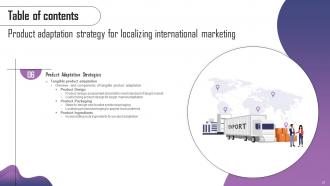
Slide 27: This slide caters to Product adaptation strategies.
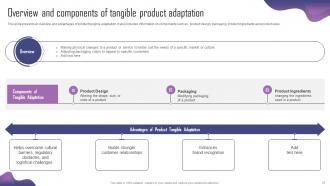
Slide 28: This slide presents an overview and advantages of product tangible adaptation.
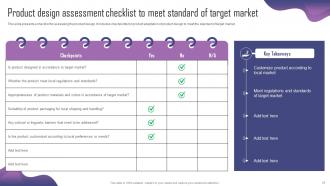
Slide 29: This slide showcases a checklist for assessing the product design.
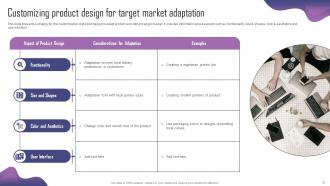
Slide 30: This slide strives a strategy for the customization of product design to adapt product according to target market.
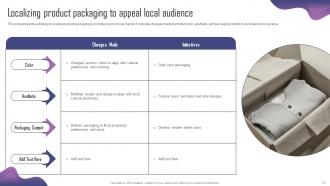
Slide 31: This slide outlines a plan for localizing product packaging to appeal local audience and send strong message across market.
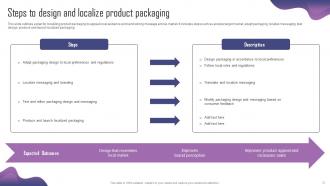
Slide 32: This slide contains a strategy to localize product packaging to promote brand in local market.
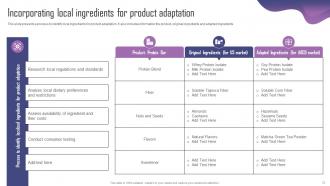
Slide 33: This slide shows a process to identify local ingredients for product adaptation.
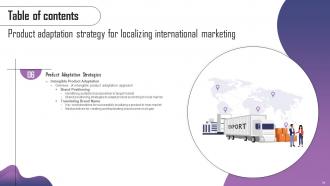
Slide 34: This slide is in continuation with Product Adaptation Strategies.
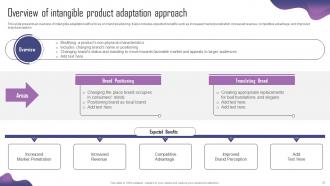
Slide 35: This slide presents an overview of intangible adaptation with a focus on brand positioning.
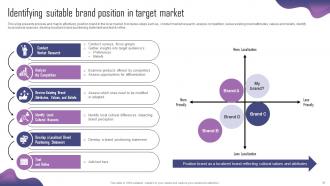
Slide 36: This slide contains process and map to effectively position brand in the local market.
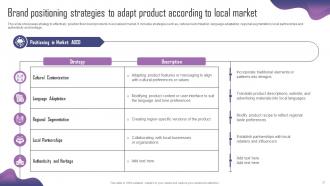
Slide 37: This slide showcases strategy to effectively position their brand products in a localized market.
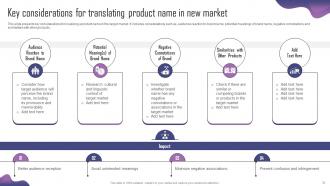
Slide 38: This slide displays key considerations for localizing a product name in the target market.
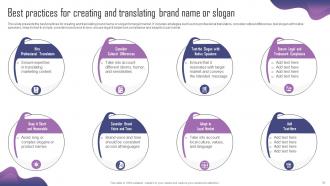
Slide 39: This slide caters the best practices for creating and translating brand name or slogan for target market.
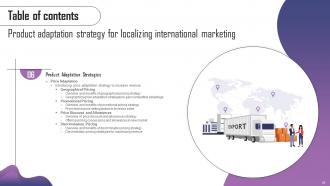
Slide 40: This slide is in continuation with Product Adaptation Strategies, and shows table of contents.
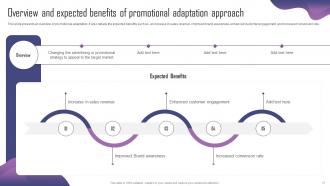
Slide 41: This slide presents an overview of promotional adaptation and expected benefits.
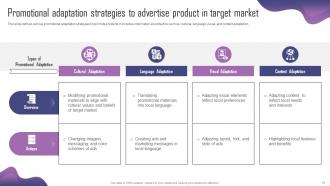
Slide 42: This slide defines various promotional adaptation strategies to promote products in target market.
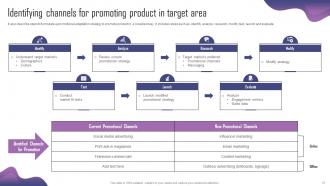
Slide 43: This slide caters to identifying channels for promoting product in a localized way.
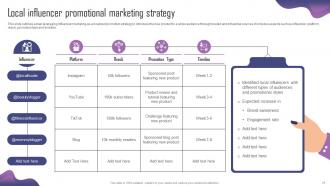
Slide 44: This slide outlines a plan leveraging influencer marketing as a localized promotion strategy.
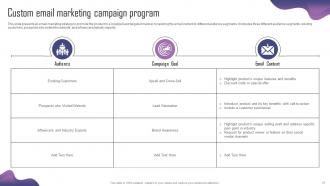
Slide 45: This slide presents an email marketing strategy to promote the product.
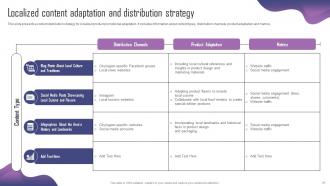
Slide 46: This slide provides a content distribution strategy for localized product promotional adaptation.
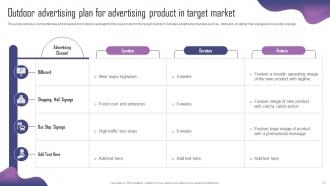
Slide 47: This slide showcases an Outdoor advertising plan for advertising product in target market.
Slide 48: This slide is in continuation with Product Adaptation Strategies, and briefs about Discriminatory Pricing.
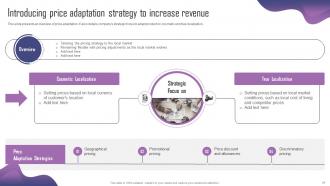
Slide 49: This slide displays Price Adaptation Strategies.
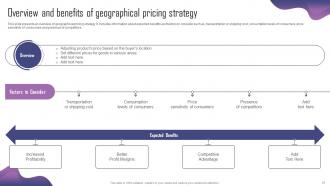
Slide 50: This slide presents an overview of geographical pricing strategy.
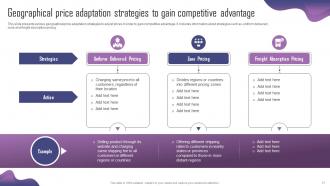
Slide 51: This slide demonstrates various Geographical price adaptation strategies to gain competitive advantage.
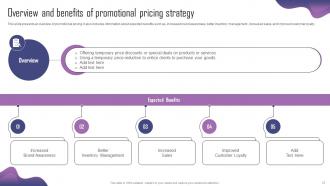
Slide 52: This slide provides an overview of promotional pricing.
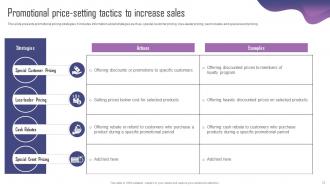
Slide 53: This slide presents Promotional price-setting tactics to increase sales.
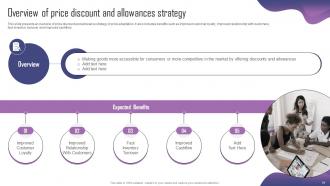
Slide 54: This slide shows an Overview of price discount and allowances strategy.
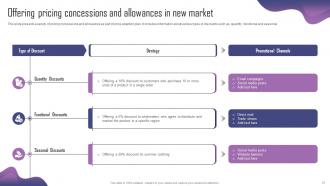
Slide 55: This slide illustrates Offering pricing concessions and allowances in new market.
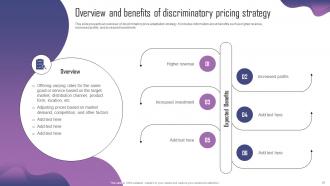
Slide 56: This slide includes Overview and benefits of discriminatory pricing strategy.
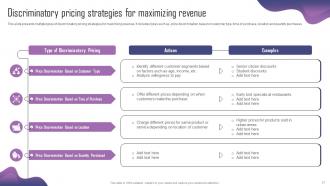
Slide 57: This slide contains multiple types of discriminatory pricing strategies for maximizing revenue.
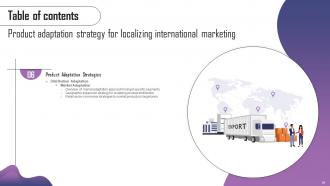
Slide 58: This slide is in continuation with a Table of Contents slides, briefing about Product Adaptation Strategies with key benefits.
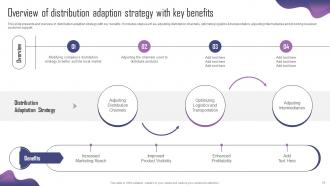
Slide 59: This slide presents and overview of distribution adaption strategy with key benefits.
Slide 60: This slide is in continuation with a Table of Contents slides, briefing Adapting channels for localizing product distribution.
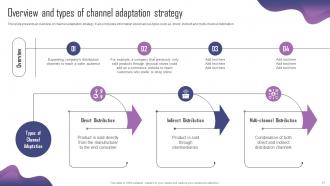
Slide 61: This slide showcases an overview and types of channel adaptation strategy.
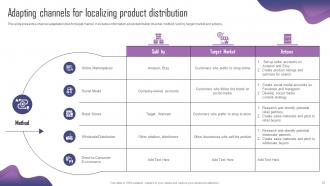
Slide 62: This slide demonstrates Adapting channels for localizing product distribution.
Slide 63: This slide is in continuation with a Table of Contents slides, briefing about logistics adaptation.
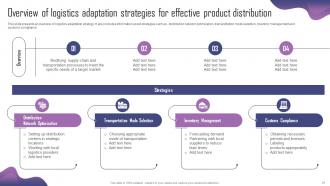
Slide 64: This slide presents an overview of logistics adaptation strategy for effective product distribution.
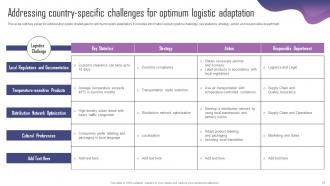
Slide 65: This slide outlines a plan for addressing logistic challenges for optimum logistic adaptation with information in tabular form.
Slide 66: This slide is in continuation with a Table of Contents slides, briefing about Distribution adaptations.
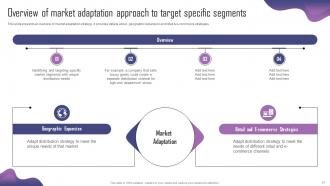
Slide 67: This slide showcases an Overview of market adaptation approach to target specific segments.
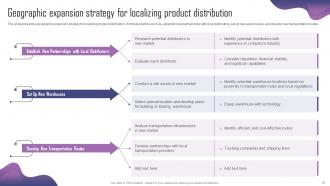
Slide 68: This slide displays a geographic expansion strategy for localizing product distribution.
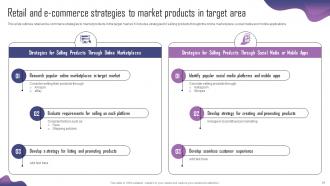
Slide 69: This slide illustrates retail and e-commerce strategies to market products in the target market.
Slide 70: This slide is in continuation with a Table of Contents slides, briefing about Examining Product Characteristics Before and After Product Adaptation.
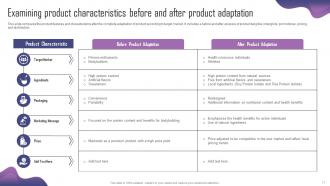
Slide 71: This slide compares the product features and characteristics after the complete adaptation of product.
Slide 72: This slide is in continuation with a Table of Contents slides, briefing about Product adaptation strategy implementation plan.
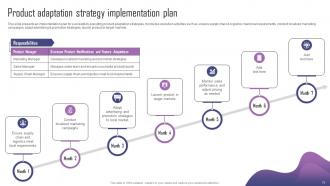
Slide 73: This slide presents an implementation plan for successfully executing product adaptation strategies.
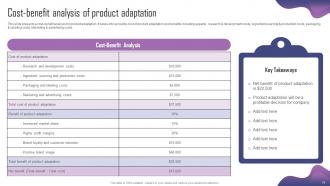
Slide 74: This slide contains a cost-benefit analysis for product adaptation.
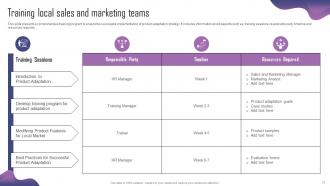
Slide 75: This slide illustrates a comprehensive training program to ensure the successful implementation of product adaptation strategy.
Slide 76: This slide is in continuation with a Table of Contents slides, briefing about Business Impact.
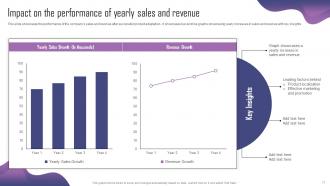
Slide 77: This slide showcases the Impact on the performance of yearly sales and revenue with the help of Graph and Chart.
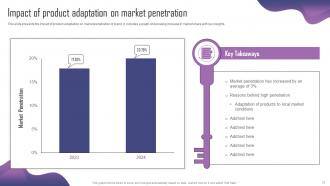
Slide 78: This slide presents an Impact of product adaptation on market penetration with the help of Graph.
Slide 79: This slide is in continuation with a Table of Contents slides, briefing about Dashboard Tracking.
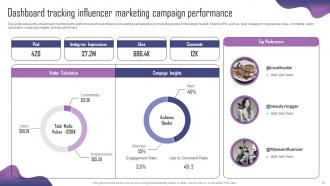
Slide 80: This slide represents Dashboard tracking influencer marketing campaign performance with the help of diagrams.
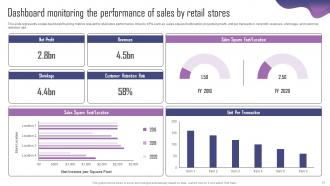
Slide 81: This slide contains Dashboard monitoring the performance of sales by retail stores.
Slide 82: This slide shows all the icons included in the presentation.
Slide 83: This slide is a thank-you slide with address, contact numbers, and email address.
Product Adaptation Strategy For Localizing International Marketing Strategy CD with all 88 slides:
Use our Product Adaptation Strategy For Localizing International Marketing Strategy CD to effectively help you save your valuable time. They are readymade to fit into any presentation structure.







FAQs for Product Adaptation Strategy For Localizing International
Honestly, there's four things you can't mess up: what locals actually want, legal stuff, cultural vibes, and who you're competing against. Research goes way deeper than just translating - like, maybe they hate certain colors or use products totally differently than you expected. Legal compliance is boring but it'll destroy your timeline if you ignore it. Check out local competitors too and see how they're positioning similar stuff. The tricky part? You've got to adapt enough so you don't look like some clueless foreign brand, but don't lose what makes your product special in the first place.
Honestly, cultural differences will totally make or break your product launch. Colors are a perfect example - what screams "luxury" here might mean death or mourning somewhere else. Ouch. Your audience's daily habits, values, and how they communicate all shape whether they'll actually want to use what you've made. Don't just look at basic demographics either, that's not nearly enough. You need to dig deep into the cultural stuff that actually matters. Also, test everything locally first - I can't stress this enough. Way better to catch issues before you've already committed to a full launch, you know?
Honestly, customer feedback is like having a cheat code for fixing your product. It shows you exactly what's broken and what people actually want - not what you think they want. Set up surveys, interviews, support tickets, whatever works. The real trick is actually doing something with it though. I've watched companies collect tons of feedback then just... sit on it? Makes no sense. Sort everything into themes first. Then tackle the stuff that'll help the most users. Sometimes you'll get complaints that totally flip your whole perspective on a feature. Pretty eye-opening when it happens.
Dude, regulations will literally make or break your product launch. You can't sell anything without meeting their safety standards, labeling rules, ingredient restrictions - all that boring but crucial stuff. I've seen companies get completely blindsided by data privacy laws they didn't even know existed. Sometimes you'll end up reformulating your entire product just to comply. The packaging redesigns alone can eat your budget if you're not careful. Honestly, just do yourself a favor and research all the regulatory requirements first thing. Map them out before you get too deep into planning. Trust me on this one.
Oh McDonald's is the perfect example here! They totally get it - rice burgers in Taiwan, paneer stuff in India, zero beef there too. KFC serves congee in China which is smart. Netflix crushed it with those Korean shows that everyone got obsessed with. Even Oreos had to be less sweet for Chinese people (weird right?). The thing is, you can't just slap a translation on your product and call it good. You actually need to figure out what people in that market actually want. It's way more work but it pays off.
Look, you don't want to blow your budget adapting everything - I've watched companies do that and totally regret it. Research what locals actually care about first, plus any regulatory stuff you can't avoid. Most of the time you can keep your core brand but tweak the features that genuinely matter to each market. Test small before going big though, seriously. The goal is finding that sweet spot where adaptation costs make sense for the revenue boost you'll get. Don't change things just because you can - focus on what'll actually move the needle for customers there.
Dude, the worst case? Your product just flops because locals don't connect with it at all. I've literally watched companies crash and burn thinking they could copy-paste their strategy everywhere. Cultural missteps can create serious backlash too - like if your messaging feels tone-deaf to local values. Then there's all the boring but crucial stuff: regulatory headaches, pricing that makes no sense, distribution nightmares. Meanwhile your competitors who actually did their homework will eat your lunch. Honestly, just do some basic market research first to figure out what absolutely needs tweaking before you launch.
Focus on the numbers that actually matter - market penetration, revenue growth, and how much you're spending to get new customers. User stuff is critical too: retention rates, how long people stick around, which features they're using. But honestly, the feedback from your local teams is gold since they're talking to users every day. Customer satisfaction surveys help, but I'd also do some kind of cultural fit assessment. Oh, and track your adaptation costs against what you think you'll make back. Don't go crazy trying to measure everything though - pick 3 or 4 metrics that match your main goals first.
Dude, tech has totally changed the game for product adaptation. Data analytics shows you what locals actually want in real-time. Then you can customize features or interfaces super quickly for different markets. AI predicts what'll work where (though sometimes it's wrong, but whatever). Digital platforms let you test stuff without blowing your budget upfront. Cloud systems are clutch too - your teams everywhere can work together instantly on changes. The trick is staying agile with all these tools. Don't get paralyzed by having too many options, you know?
Look, when you rush into a market, you're basically sacrificing perfect customization for speed. Your product won't be dialed in perfectly at first - kinda stressful, I know, but not always a disaster. The upside? You get first-mover advantage and start collecting real feedback right away. Way better than guessing what people want from your desk, honestly. Then you can tweak things based on what users actually tell you. Just make sure your main value still makes sense there, even if the smaller stuff needs work. I'm all about that "ship it and figure it out" approach over endless perfecting.
Honestly, you gotta figure out what's totally off-limits versus what you can mess with. Your logo and core values? Don't touch those - they're what people recognize. But everything else can bend to fit local markets. McDonald's nailed this - golden arches everywhere, but they're serving rice burgers in Taiwan (which actually sounds pretty good tbh). Start by making a list of your absolute must-haves that can't change. Then let your local teams run wild customizing everything else. You'll definitely flip-flop on some choices, but that's just part of it.
Honestly, the worst mistake is thinking you can just make some quick tweaks to your existing product and boom - localized. That's not how it works. Research is everything too - I've watched teams completely bomb because they guessed wrong about what locals actually want. Oh, and don't go crazy adapting everything to every market at once. You'll burn out fast. Pick one market first and really nail it there. Also watch out for over-adapting - you can mess around so much that your product loses what made it special in the first place.
Honestly, if your competitors are already doing localization stuff - tweaking their pricing, messaging, features for different markets - you kinda have to keep up or you'll look totally out of touch. Think of it like showing up to a themed party in jeans and a t-shirt. Sure, you're dressed, but everyone notices. The more crowded your market is, the more you'll need to adapt. Sometimes tiny changes make a huge difference in winning customers over. I'd start by checking what your top 3 competitors do differently in each market, then figure out what you should tackle first.
Honestly, social media is like having a direct line to what people actually think about your product. Comments sections are brutal but so useful - way better than those awkward focus groups where everyone's being polite. Set up alerts for your brand and competitors, then just lurk and take notes. People will literally tell you what features they want or what's driving them crazy. Watch which posts get engagement too, that shows what actually matters to users. Oh, and don't forget hashtags - sounds cheesy but you'll spot trends early. I spent way too much time doing this last month but found gold.
Honestly, partnerships are your best bet here. Find local distributors who already get the market - they'll save you tons of headaches. Regional suppliers are gold too since they know all the compliance stuff you don't. Joint ventures with established players give you instant street cred and split the costs. I know it sounds counterintuitive, but sometimes even competitors make decent partners. Weird flex but it actually works. Map out what you're clueless about in that market, then hunt for partners who eat, sleep, and breathe that knowledge. Their strengths should cover your weak spots perfectly.
-
Out of the box and creative design.
-
A fantastic collection of templates. I'll likely use this as my go-to resource for future templates and support.