


Product Portfolio Monitoring Dashboard Developing Managing Product Portfolio




Try Before you Buy Download Free Sample Product
 Impress Your
 Audience
 100%
100% Editable
 Save Hours
 of Time


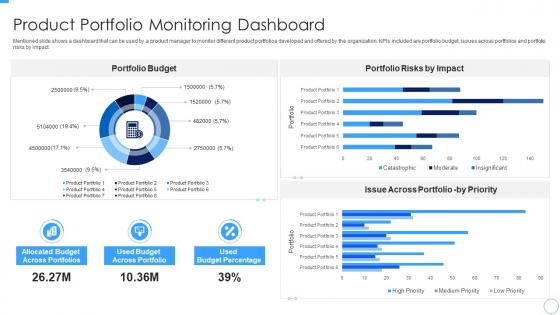
Mentioned slide shows a dashboard that can be used by a product manager to monitor different product portfolios developed and offered by the organization. KPIs included are portfolio budget, issues across portfolios and portfolio risks by impact.
People who downloaded this PowerPoint presentation also viewed the following :
Product Portfolio Monitoring Dashboard Developing Managing Product Portfolio with all 7 slides:
Use our Product Portfolio Monitoring Dashboard Developing Managing Product Portfolio to effectively help you save your valuable time. They are readymade to fit into any presentation structure.





FAQs for Product Portfolio Monitoring Dashboard Developing
Look, you've got three main things to nail down: strategic alignment, resource allocation, and performance tracking. Don't spread yourself too thin across projects - that's where most people screw up. Mix your high-risk bets with safer stuff that brings steady returns. Quarterly reviews are honestly make-or-break here, even though teams hate doing them. Check each product's ROI, where it sits in the market, how well it fits your goals. Sounds boring but catching duds early saves you tons of headache later. Start with these basics and you won't end up like those companies juggling random products with no real plan.
Track revenue growth and profit margins first - that's your baseline. Market share matters too, but don't obsess over it if you're in a niche. I'd also look at where each product sits in its lifecycle and check customer satisfaction scores. The growth-share matrix thing actually works better than I thought it would - helps you see which products are just bleeding resources. Oh, and some products look profitable on paper but require way too much babysitting. Quarterly reviews should catch most issues before they snowball.
Think of market research as your roadmap - shows you what's worth investing in and what needs to get cut. You can spot gaps, figure out what customers actually want, and see where competitors are headed. Without good research? You're basically gambling with your budget. The data helps you decide where to put your time and money, plus when to launch stuff. I've seen too many companies skip this step and regret it later. Just start by writing down the specific questions you need answers to about your market, then work backwards from there.
Honestly, I always start with a scoring matrix - saves me from making emotional calls on products I'm attached to. Three things matter: how well it fits your company strategy, the financials (revenue, profit potential, growth), and where you stack up against competitors. Products showing strong market demand that match your direction? Develop those. Underperformers sucking up resources with no strategic upside? Cut 'em loose. I learned the hard way that you gotta trust the data over your gut, even when it hurts. Sometimes your favorite product just isn't working.
Honestly, focus on the basics first - revenue growth and profit margins by product line. Those tell the real story. Customer acquisition cost versus lifetime value is huge too, otherwise you're just bleeding money. Market share matters but don't obsess over it daily. I'd definitely track customer satisfaction and NPS scores because replacing angry customers sucks and costs a fortune. Inventory turnover and time-to-market are solid operational ones to watch. But here's the thing - pick maybe 3-5 metrics max that actually match your goals. I see too many founders drowning in dashboards they never use. Set up something simple you'll actually check weekly.
Honestly, do the 70-20-10 thing. Most of your budget goes to safe bets that you know will work, then 20% on moderate risks, and just 10% on the crazy experimental stuff. We got burned so bad at my old job putting everything into one "revolutionary" project that totally flopped. Set up checkpoints where you can kill projects early if they're not working - don't let them bleed money for months. Oh, and audit what you're doing now first. I bet you'll find you're being way too cautious without even knowing it. Short bursts on the risky stuff, but don't skip them entirely.
Honestly, most people spread themselves way too thin trying to manage like 15 different products at once. Big mistake. You gotta be ruthless about killing the ones that aren't working - I know it's hard when you've put months into something, but data doesn't lie. Another thing I see all the time? Teams get obsessed with building new stuff while totally ignoring their boring old products that actually make money. Those cash cows pay the bills! Set up clear rules for what stays and what goes, then actually stick to them. Do regular check-ins where you make real decisions, not just endless meetings about maybe possibly considering changes.
So basically, you gotta match your spending to where each product is in its lifecycle. Growth stage stuff gets the big bucks. Mature products? Just keep them running without throwing much money at them. Declining ones should probably get the axe - though honestly, sometimes those old products just refuse to die and keep making money. The trick is having products spread across different stages so you're not screwed when everything tanks at once. Just map out where each one sits, then shift your resources around. Don't put all your eggs in one lifecycle basket.
Tech makes portfolio management so much easier, honestly. Data collection happens automatically, and you get real-time insights without manually tracking everything. The AI analytics help with forecasting - way more accurate than my old spreadsheets were. Dashboards are a game changer for spotting trends quickly, and stakeholders actually understand what you're showing them. Collaboration tools keep everyone on the same page with priorities. I spend way less time on reports now and more time thinking strategically. Just pick whatever addresses your biggest headache first - don't try to fix everything at once.
Honestly, make customer feedback part of every portfolio decision you're making. Talk to users constantly - surveys, interviews, analytics, whatever works. But here's the thing: you'll get buried in opinions if you're not careful. Some feedback matters way more than others, so prioritize based on who's giving it and whether it fits your strategy. I've seen too many teams collect tons of feedback then do absolutely nothing with it. Use that stuff! Cut features that aren't working, build what people actually want. Your customers are basically telling you exactly what gaps exist in your portfolio.
First thing - map out how your products actually connect instead of treating them like separate things. Check where customers drop off between products and find those natural upgrade paths. Honestly, the biggest mistake I see is teams treating their own products like competitors fighting for budget. That's so backwards. Think ecosystem instead - shared platforms, consistent experience, features that work better together. Oh and do brutal portfolio reviews regularly. If something doesn't fit the bigger strategy, cut it. Sounds harsh but you'll thank me later when everything actually makes sense together.
Okay so first thing - build a simple scoring system. Revenue potential, how well it fits your strategy, what resources you'll actually need. Then map everything on a portfolio matrix (BCG works, or make your own). Trust me, most people get way too in the weeds here and never actually DO anything with the analysis. Set up quarterly reviews where you can move money around based on real performance data. Track the stuff that predicts success, not just what already happened. That way you're not throwing good money after bad when something tanks. Oh and definitely watch leading indicators - they'll save you from wasting months on dead ends.
Honestly, you've gotta align your portfolio with corporate strategy or you'll waste so much money. I've watched teams blow their budgets on shiny features nobody actually uses - it's painful to see. Map each product to your main business goals first. Then cut everything that doesn't help you win. This gives you way better resource decisions and clearer trade-offs when tough calls come up. Without alignment, your products become this random collection that doesn't reinforce anything. Smart portfolio management means your competitive position gets stronger instead of just... existing, I guess?
Honestly, you've got to get those teams talking to each other or you'll keep making terrible decisions in the dark. Engineering knows what's actually doable, sales knows what customers are screaming for, and finance... well, they know where the money is. When they're all in silos, everyone just guesses wrong about everything else. I'd start with monthly sessions where each team has to present their stuff with real numbers - no BS allowed. It's messy at first but way better than having marketing promise features that engineering can't build for two years. Trust me on this one.
Look, competitive analysis is your sanity check when making portfolio calls. It shows where you're crushing it versus getting demolished by others. Use it to spot market gaps you can actually jump on - because honestly, nobody wants to spend months building stuff competitors perfected ages ago. Map out your products against key players every quarter. Look for patterns in what they're launching. This helps you figure out which products deserve more investment and which ones are toast. You can also get ahead of their next moves instead of always playing catch-up. The white space opportunities? That's where the real money is.
-
The team is highly dedicated and professional. They deliver their work on time and with perfection.
-
“Ample and amazing variety of templates available, really helpful for making professional PPT for day to day workings.”