


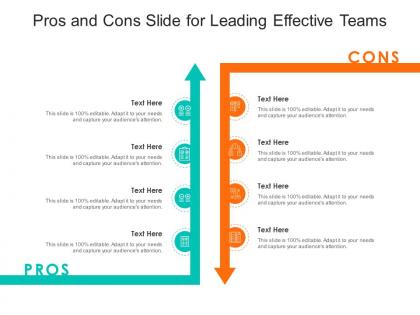
Pros and cons slide for leading effective teams infographic template




Try Before you Buy Download Free Sample Product
 Impress Your
 Audience
 100%
100% Editable
 Save Hours
 of Time


Give your usual presentation a brand new look by enhancing its aesthetics using this Pros And Cons Slide For Leading Effective Teams Infographic Template. This PPT slide is drafted using different vector based icons, graphics, and other visual content that can be used by any industry professional. As such, it can be used to display and share information on any topic. With a combination of invaluable information and visual content, this is a great template to use for impressing your viewers, staff, management, or any other individual. This template is designed in such a way that it will not only help you give clarifiers but also reinforce positive actions by your target audience. The feature of in built editable components further adds to the versatility of this slide. Therefore, download it now.
People who downloaded this PowerPoint presentation also viewed the following :
Pros and cons slide for leading effective teams infographic template with all 2 slides:
Use our Pros And Cons Slide For Leading Effective Teams Infographic Template to effectively help you save your valuable time. They are readymade to fit into any presentation structure.
FAQs for Pros and cons slide for leading effective
Honestly? Communication and empathy are game-changers. Like, actually listening to your team instead of just waiting for your turn to talk. Figure out what makes each person tick - some need detailed instructions, others just want the end goal. Also, ditch the rigid "do it my way" approach because that's dead now. Adaptability is clutch when everything inevitably goes sideways (and it will). Oh, and don't be afraid to make decisions when your team's looking to you for direction. Start by watching how everyone actually works best, then adjust from there.
Build trust first - nobody's gonna speak up if they think they'll get fired for it. Do regular check-ins where you actually shut up and listen. Ask stuff like "what's your honest take?" instead of questions they can just nod at. Here's the thing though - most managers completely blow it when they DO get feedback by getting all defensive. Don't be that person. Own your mistakes out loud and ask the team for real input on decisions you're stuck on. I'd literally start your next meeting with something you're genuinely unsure about.
Honestly? Emotional intelligence makes or breaks team leadership. I've watched brilliant people crash and burn because they couldn't read the room or connect with anyone. You gotta manage your own reactions first - especially when things get heated. Then focus on creating that safe space where your team actually feels heard. The best leaders I know don't just react immediately. They pause, figure out what emotions are really driving a situation, then respond thoughtfully. It sounds simple but it's hard work. Start small - just try stopping for a beat before jumping into tense conversations.
Don't wait on this stuff - jump on conflicts fast before they blow up. Get everyone together and just let them hash it out while you stay neutral. I swear, some managers think team drama will magically disappear if they ignore it long enough (newsflash: it gets worse). Keep the focus on what's actually wrong, not who's being annoying. Let them figure out the fix together instead of telling them what to do. Oh, and circle back later to make sure whatever they agreed on is actually working.
Honestly, three things work best: recognition, autonomy, and growth stuff. People absolutely love being acknowledged publicly for good work - like, way more than you'd think. Don't micromanage every little thing either. Give them actual ownership of projects. I swear micromanaging just sucks the life out of everyone. Oh, and invest in their development through training or new challenges that'll stretch them. One-on-ones are clutch too since everyone's motivated by different things. Maybe start small - pick someone this week and just ask what kind of project would actually get them excited.
Look, your leadership style basically sets how your whole team vibes and performs. Autocratic gets you quick decisions but kills creativity - micromanaging sucks for everyone. Democratic boosts engagement since people feel heard, though decisions take forever sometimes. Laissez-faire? Perfect for experienced teams but total chaos with newer folks. Honestly, I think matching your style to what your team actually needs matters most. Try assessing how you currently lead and ask them for real feedback. You might be shocked at what they say - I was when I finally asked my team last year.
Match people to what they're actually good at - that's half the battle right there. Be super clear about deadlines and what "done" looks like. I learned this the hard way after just throwing tasks at people and getting... well, chaos. Give them the why behind it too. Then step back! Check in when you said you would, but don't breathe down their necks. Here's what really clicked for me though - delegate the end goal, not every tiny step. Let them figure out their own path. With newbies, start small and build up as they prove themselves.
Honestly, it all comes down to doing what you say you're gonna do. Every time. When you screw up (and you will), just own it instead of making excuses. Be upfront about tough decisions even if people won't like them. Actually listen when your team talks - don't just nod and ignore their ideas. That whole "my door's always open" thing? Totally useless unless people actually feel safe coming to you. Oh, and always have their backs when things get messy. Maybe start with keeping just one promise this week and see how it goes.
Honestly, clear goals are like giving your team a GPS instead of just saying "go that way." Everyone stops wandering around doing random stuff and actually works together. The accountability part is huge too - nobody wants to be the one who screws up when targets are obvious. I've watched teams do complete 180s just by switching from fuzzy "let's improve" goals to actual numbers and deadlines. Oh, and break big goals into weekly chunks. Celebrating small wins keeps people motivated way better than waiting months for the big payoff.
Start with making people feel safe to share dumb ideas - nobody's gonna speak up if they think you'll judge them. I ask stuff like "what if we tried..." and actually listen, even to the weird suggestions. Honestly, scheduled brainstorm sessions work way better than expecting people to be creative randomly. Mix up your team for different projects too. The "yes, and..." thing from improv is gold - keeps ideas flowing instead of shutting them down right away. People build on each other's thoughts and you end up with solutions you'd never think of alone.
Mix hard numbers with the softer stuff - that's where you'll get the real picture. Track completion rates, quality scores, deadlines hit. But honestly? The team dynamics matter just as much. How do people actually work together when things get messy? One-on-ones and retrospectives will give you way more insight than spreadsheets sometimes. Monthly pulse surveys work great too. Oh, and don't go crazy trying to measure everything - pick 3-4 key things and stick with those. You can always add more later once you've got the rhythm down.
Honestly, diverse teams just perform better - it's wild how much of a difference it makes. You get way more creative solutions when people bring different experiences to the table. Problem-solving becomes so much stronger too. Teams with varied backgrounds catch things homogeneous groups totally miss, which saves you from those "how did we not see this?" moments later. People actually feel comfortable being themselves at work, and that psychological safety thing is huge for getting everyone to speak up. Oh, and you avoid groupthink, which... yeah, that's always dangerous. Start by genuinely asking for different perspectives in meetings and make sure people feel safe sharing them.
Look, everyone on your team is wired differently. Ask them straight up how they like feedback and direction - saves so much awkwardness later. I had this one dev who clearly hated our weekly check-ins, turns out he just wanted to send me async updates instead. Some people want you hovering with detailed guidance, others will literally hide from you if you micromanage. Watch how they react to criticism too. Half my team wants it direct, the other half shuts down unless I cushion it with something positive first. Honestly took me way too long to figure this out.
Dude, the worst thing you can do is micromanage every little thing. Also avoid playing favorites - seriously kills team morale so fast. Don't assume people know what you want without telling them clearly. I learned this the hard way, but give feedback right when stuff happens, not just during those awkward annual reviews. Most new managers try making every decision themselves instead of letting their team actually think. Oh, and skipping difficult conversations? That'll bite you later. Really though, it comes down to communication. Be super clear about deadlines and goals, then check in without being annoying about it.
Honestly, start with making people feel safe to mess up - that's like 90% of it. Nobody's gonna take risks or speak up if they're terrified of failing. One-on-ones are clutch for building that trust (seriously, schedule them this week). Give people projects that stretch them a bit, celebrate wins publicly when you see them. The feedback thing is huge too - don't save it all for reviews, just give it as you go. Both the good stuff and the "hey let's work on this" stuff. Oh and definitely tie their work to where they actually want their careers to go. Makes everything click better.
-
Informative design.