


Quality By Design For Generic Drugs Powerpoint Presentation Slides




Try Before you Buy Download Free Sample Product
 Impress Your
 Audience
 100%
100% Editable
 Save Hours
 of Time


Drug discovery and development are the essential translational research efforts that contribute to human health and well-being. Check out our professionally designed Quality By Design for Generic Drugs template that will benefit the pharmaceutical companies that want to develop a tablet to treat any particular disease. The presentation begins with the introduction section, which will help the company overview its pharmaceutical development of tablets. The company will be able to address information about product composition and its physicochemical description through the section, namely Active Pharmaceutical Ingredients API. The risk impact and assessment section will help the company evaluate the risk of critical quality attributes, manufacturing process and mixing process, and their impact on the product. The section titled manufacturing process development will help the company address the information about the steps of the product manufacturing process with equipment details, associated intermediated, and flow diagram. At last, the product development roadmap and lifecycle slides will help the company highlight product development activities and product lifecycle stages, namely introduction, growth, maturity, and decline. Download it now.
People who downloaded this PowerPoint presentation also viewed the following :
Content of this Powerpoint Presentation
Slide 1: This slide displays title i.e. 'Quality by Design for Generic Drugs' and your Company Name.
Slide 2: This slide presents agenda.
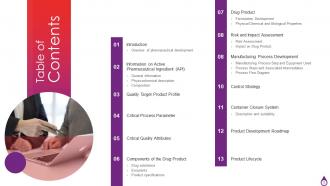
Slide 3: This slide exhibits table of contents.
Slide 4: This slide depicts title for one topic that is to be covered next in the template.
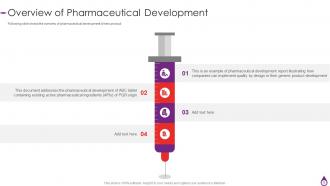
Slide 5: This slide shows the overview of pharmaceutical development of new product.
Slide 6: This slide depicts title for three topics that are to be covered next in the template.
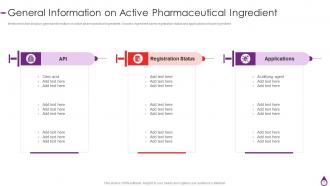
Slide 7: This slide displays general information on active pharmaceutical ingredients.
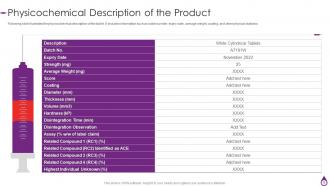
Slide 8: This slide illustrates the physicochemical description of the tablet.
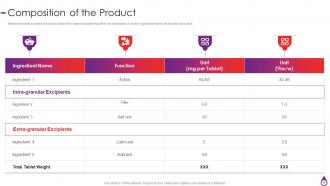
Slide 9: This slide provides the composition information about the tablet to be developed.
Slide 10: This slide depicts title for three topics that are to be covered next in the template.
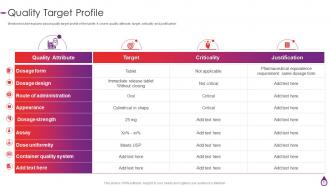
Slide 11: This slide explains about quality target profile of the tablet.
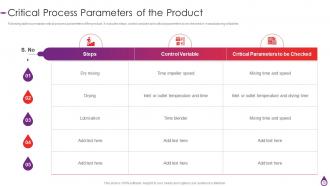
Slide 12: This slide summarize critical process parameters of the product.
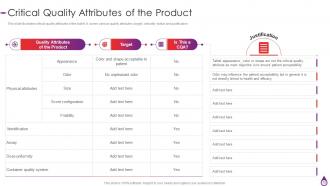
Slide 13: This slide illustrates critical quality attributes of the tablet.
Slide 14: This slide depicts title for three topics that are to be covered next in the template.
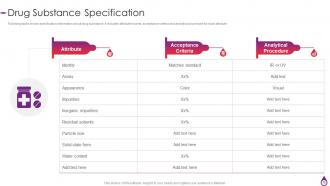
Slide 15: This slide shows specification information about drug substance.
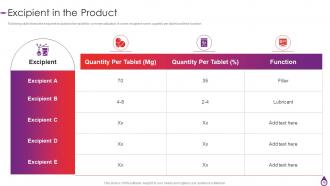
Slide 16: This slide shows the excipient included in the tablet for commercialization.
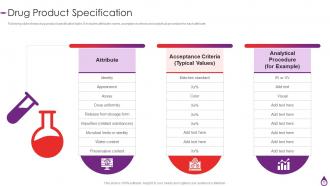
Slide 17: This slide shows drug product specification table.
Slide 18: This slide depicts title for four topics that are to be covered next in the template.
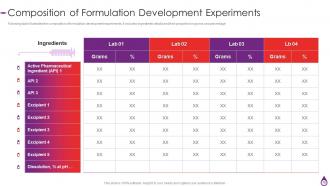
Slide 19: This slide illustrates the composition of formulation development experiments.
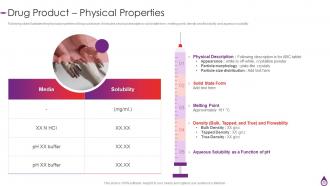
Slide 20: This slide illustrates the physical properties of drug substance.
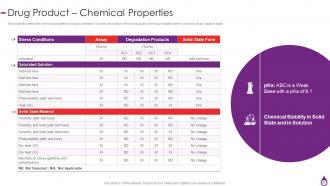
Slide 21: This slide illustrates the chemical properties of drug substance.
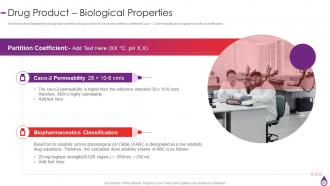
Slide 22: This slide illustrate the biological properties of drug substance.
Slide 23: This slide depicts title for four topics that are to be covered next in the template.
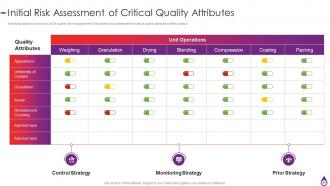
Slide 24: This slide is based on ICH Q9 quality risk management. It illustrates risk assessment of critical quality attributes of the product.
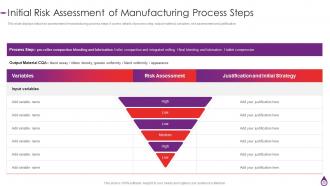
Slide 25: This slide displays initial risk assessment of manufacturing process steps.
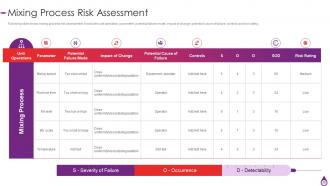
Slide 26: This slide shows mixing process risk assessment.
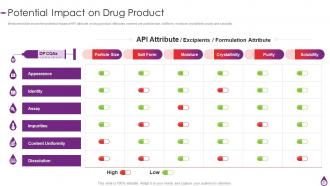
Slide 27: This slide shows the potential impact of API attribute on drug product.
Slide 28: This slide depicts title for three topics that are to be covered next in the template.
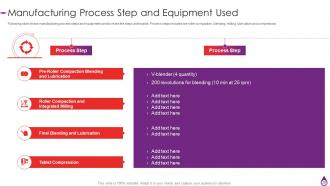
Slide 29: This slide shows manufacturing process steps and equipment used to make the steps achievable.
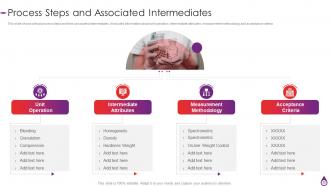
Slide 30: This slide shows critical process steps and their associated intermediates.
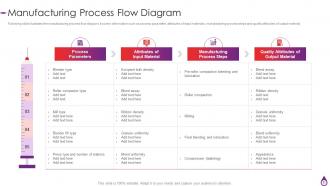
Slide 31: This slide illustrates the manufacturing process flow diagram.
Slide 32: This slide depicts title for two topics that are to be covered next in the template.
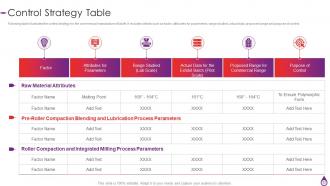
Slide 33: This slide illustrates the control strategy for the commercial manufacture of tablet.
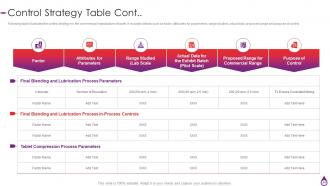
Slide 34: This slide illustrates the control strategy for the commercial manufacture of tablet.
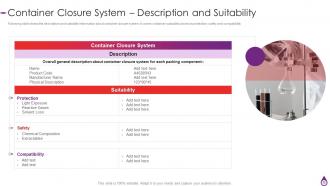
Slide 35: This slide shows the description and suitability information about container closure system.
Slide 36: This slide depicts title for two topics that are to be covered next in the template.
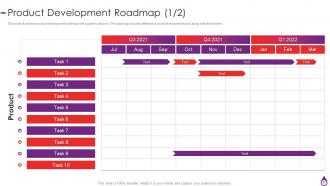
Slide 37: This slide illustrates product development roadmap with quarterly division.
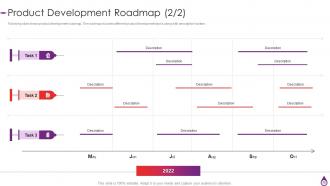
Slide 38: This slide shows product development roadmap.
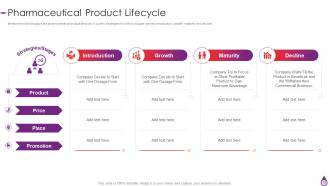
Slide 39: This slide displays the pharmaceutical product lifecycle.
Slide 40: This is the icons slide.
Slide 41: This slide presents title for additional slides.
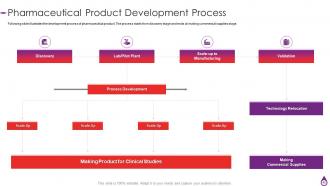
Slide 42: This slide illustrates the development process of pharmaceutical product.
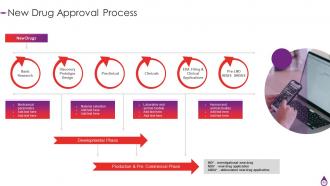
Slide 43: This slide displays New Drug Approval Process.
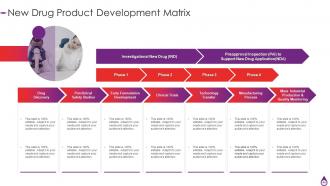
Slide 44: This slide presents New Drug Product Development Matrix.
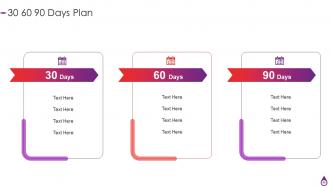
Slide 45: This slide depicts 30-60-90 days plan for projects.
Slide 46: This slide presents your company's vision, mission and goals.
Slide 47: This slide shows details of team members like name, designation, etc.
Slide 48: This slide shows about your company, target audience and its client's values.
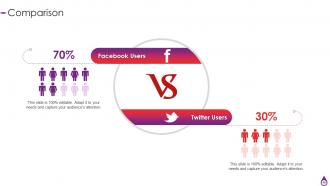
Slide 49: This slide highlights comparison of products based on selects.
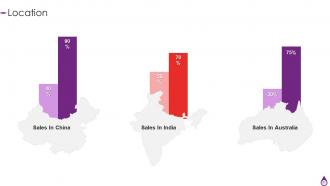
Slide 50: This slide shows location of company in different regions of the world.
Slide 51: This slide exhibits ideas generated.
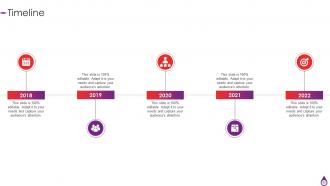
Slide 52: This slide exhibits yearly timeline.
Slide 53: This is thank you slide & contains contact details of company like office address, phone no., etc.
Quality By Design For Generic Drugs Powerpoint Presentation Slides with all 58 slides:
Use our Quality By Design For Generic Drugs Powerpoint Presentation Slides to effectively help you save your valuable time. They are readymade to fit into any presentation structure.







FAQs for Quality By Design For Generic Drugs
So QbD basically flips how you think about quality - instead of testing everything at the end, you build it in from day one. Map out what "quality" actually means for your product first. Then dig deep into your process through risk assessment and figure out the critical stuff that really impacts performance. Honestly, this part takes forever but it's worth it. The third thing is using real data (not just hunches) for continuous improvement. It's way more proactive than the old school approach. Start by working backwards from what quality looks like for your specific situation.
So QbD makes regulatory approval way less painful because you're actually building quality into everything from the start. Instead of just testing at the end and hoping for the best. Regulators eat this stuff up - they want to see you understand your product inside and out. Think of it like showing your work in math class, honestly. When you map out your critical quality attributes early, you can catch problems before they blow up. Plus here's the kicker - once you're approved, you'll have way more flexibility to make changes since you've already proven you know what you're doing.
Risk assessment is what drives your entire QbD strategy - it shows you which parameters actually matter for safety and efficacy. Use FMEA or risk ranking to evaluate potential failures systematically. Way better than the old "test everything" mess we used to deal with. This assessment tells you where to focus your design space studies instead of wasting time on pointless variables. Honestly, just start by mapping your process and think about what could go wrong. That brainstorming session will become your roadmap for the whole thing.
So QbD basically makes you stop guessing and actually figure out what's happening in your process. You map out the quality stuff that matters, then run designed experiments to see which parameters actually affect things (honestly, it's usually way fewer variables than people expect). The experiments show you how inputs connect to outputs, which gives you real data about what your process can handle. Way better than the whole "we've always done it this way" approach - though I get why that's tempting sometimes. End result? You've got actual control strategies backed by data instead of just hoping everything works out.
Okay so first thing - figure out what quality stuff actually matters and what could mess it up during your study. I'd map out everything from finding patients to collecting data. Sounds boring but trust me, it saves headaches later. Risk assessment tools help you figure out what to focus on first (don't try to fix everything at once, you'll go crazy). Build in some monitoring so you can catch problems early instead of scrambling at the end. Honestly, I'd pick just one part of your protocol to start with and get that dialed in before moving on.
Look, QbD basically means doing your homework upfront instead of fixing disasters later. Figure out what actually matters for quality early on - way cheaper than scrambling when things go wrong. The old trial-and-error thing is honestly just expensive guessing. With systematic risk assessment and smart experiments, you'll understand your process from the start. Fewer batch failures, less rework, regulators love it because you can prove you know what you're doing. Honestly took me way too long to realize this, but map out your quality drivers first - that's where the real money gets saved.
So you'll want to watch a few things to see if QbD is actually paying off. Process capability indices (Cpk) should get better as you figure out your design space. Right-first-time rates matter too, plus how often you're getting deviations. The paperwork is honestly brutal at first - but stick with it. Your dev cycle times should drop since you're baking quality in upfront instead of scrambling later. Track how well you're hitting critical quality attributes within spec. That's really what tells you if your design space can handle real-world manufacturing chaos.
Honestly, QbD gives you way more room to play around because you actually get *why* your formulation works instead of just copying recipes. Map out your design space first - then you'll know how your ingredients and processes mess with each other. Makes trying new combos so much easier when you're not guessing. It's kinda like having GPS for development, you know? You see exactly where the limits are. Plus regulators love it when you can show you understand your stuff. Oh, and define what "quality" means for YOUR product specifically before you do anything else. That's your north star for everything.
So the main pain points are cultural pushback and money, basically. Teams hate QbD because it means tons more upfront work - all that planning and testing feels like torture compared to the old way. Plus you're looking at serious cash for new equipment, training, maybe hiring some stats people. Oh and regulatory folks are still figuring it out themselves, which is fun. Start with small pilot projects though - once you show it actually works, people get on board way faster. Much easier than trying to flip the whole company at once.
So basically, don't treat QbD like a one-and-done thing. Keep feeding new data back into your design space - performance metrics, customer complaints, whatever you're learning from actually running the process. It's kinda like how your GPS reroutes when traffic sucks. Your risk assessments and control strategies should get updated as you understand the process better. Set up feedback loops that automatically capture insights and update your quality attributes, process parameters, all that stuff. Honestly, most companies just use QbD to check compliance boxes, but if you do it right, your product quality actually improves over time instead of staying static.
So QbD flips everything - you're catching problems before they even happen instead of scrambling to fix them later. Map out your critical quality attributes right from the start. You'll actually understand why your process works, which makes regulatory stuff way smoother. Fewer batch failures, faster approvals, less time putting out fires. Honestly wish more companies would just commit to this approach from day one instead of learning the hard way. It's like... why wouldn't you want that crystal ball effect? Way cheaper to fix issues early than deal with manufacturing headaches down the road.
Honestly, digital tools totally change the game for QbD. You can model everything before stepping foot in the lab - saves so much headache. Design of experiments software helps optimize formulations, while process analytical tech gives you real-time monitoring. Statistical tools make your design space way clearer too. Machine learning is getting pretty wild for predicting failures now. But here's the thing - don't pick tools that'll just create more data chaos. Find something that actually fits your workflow. I'd start with whatever's annoying you most right now and solve that first.
Start with statistical thinking and risk management - that's your foundation. Teams also need design of experiments, process analytical technology, and the ICH Q8-Q12 regs. The stats part honestly trips everyone up at first, but you can't skip it. They've gotta understand critical quality attributes and process parameters too. I'd do a solid QbD fundamentals course first, then build up the technical stuff. Oh, and make sure people start thinking about preventing problems instead of just catching them later - that mindset shift is huge.
So QbD makes you build quality into each step instead of just testing at the end - way smarter approach honestly. Your suppliers need to really get your quality specs and hit them every time. Yeah, it's a nightmare to implement at first, I won't lie. But the risk assessments you'll do are so much better at catching problems early. Plus regulators expect this level of supply chain control now. Start figuring out which suppliers can actually handle your requirements. Trust me, better to know now than when you're scrambling later.
Get everyone in the room from day one - regulatory, manufacturing, R&D, quality, even commercial teams. Seriously, don't make the mistake I've seen a million times where people get looped in late and suddenly you're redesigning everything. Set up cross-functional teams with clear roles and have regular check-ins. Make sure everyone gets how their decisions actually impact patients (that usually motivates people). Document everything in a shared space so nobody can pull the "wait, I wasn't consulted" card later. Oh, and start mapping out who your key stakeholders are like, now.
-
Top Quality presentations that are easily editable.
-
Time saving slide with creative ideas. Help a lot in quick presentations..