


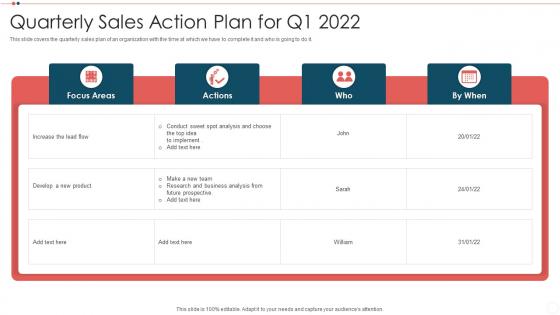
Quarterly Sales Action Plan For Q1 2022




Try Before you Buy Download Free Sample Product
 Impress Your
 Audience
 100%
100% Editable
 Save Hours
 of Time


This slide covers the quarterly sales plan of an organization with the time at which we have to complete it and who is going to do it.
People who downloaded this PowerPoint presentation also viewed the following :
Quarterly Sales Action Plan For Q1 2022 with all 6 slides:
Use our Quarterly Sales Action Plan For Q1 2022 to effectively help you save your valuable time. They are readymade to fit into any presentation structure.





FAQs for Quarterly Sales Action Plan
For quarterly tracking, I'd go with revenue targets and conversion rates at each funnel stage - those are your bread and butter. Average deal size matters too, plus sales cycle length. Activity stuff like calls made and demos scheduled actually drive those bigger numbers, so don't skip them. Pipeline coverage gives you that future visibility you need. Oh, and customer acquisition cost is crucial if you're doing renewals. Honestly, cap it at maybe 5-7 metrics tops because I've seen teams drown trying to track literally everything. Start simple, you can always add more later.
Basically, seasonal patterns control when we push products and how we split up resources each quarter. Q1 gets most of our marketing budget since that's when customers are super active. Then Q4 is all about keeping existing clients happy - everyone evaluates their vendors before year-end, you know? Once you spot the pattern it's pretty obvious, honestly. But your area probably has its own weird seasonal stuff going on, so definitely mix in your local data when planning. Oh, and check that historical performance section - shows you exactly which months to go all-out versus just nurturing current accounts.
Look, competitive analysis is basically your sanity check for quarterly planning. Track what your main competitors are doing - pricing changes, product drops, marketing pushes. I can't tell you how many times I've watched teams crash because they set pie-in-the-sky numbers without checking what the competition was up to. You'll spot opportunities they're missing and figure out how to stand out better. Plus it keeps your revenue targets realistic instead of wildly optimistic. Start with maybe 3-5 key players and check on them weekly. Trust me on this one.
Weekly check-ins are your best friend here - have your team review metrics against quarterly goals. Pipeline progress, conversion rates, revenue stuff. Honestly? Skip the fancy dashboards for now. Just use a basic spreadsheet everyone can actually update without wanting to die. During check-ins, get each rep to share wins, what's sucking, and their priorities for next week. Track the stuff that predicts success - calls made, demos booked - not just closed deals. Oh, and set up some kind of alert system when you're behind. Way better than panicking in month three when it's too late to fix anything.
Honestly, start with a solid CRM - Salesforce or HubSpot will handle your pipeline tracking without you having to think about it. Then grab something like Asana or Monday.com to actually break those big quarterly goals into stuff you can tackle week by week. I've been using Notion obsessively lately because it does planning, tracking, AND documentation all in one spot (probably overkill but whatever). Google Sheets works fine too if you're more of a spreadsheet person. Just pick whatever your team won't abandon after two weeks - the shiniest tool is useless if nobody opens it.
Dude, you need everyone rowing in the same direction or you'll be fighting uphill all quarter. Get marketing, product, customer success, and finance in a room together first - like a proper kickoff meeting where you actually sync timelines and priorities. Otherwise marketing's running campaigns while you're focused on totally different deals, product's building stuff nobody wants, and finance is... well, being finance. When they're all aligned though? Marketing hits prospects right when you need them to, product builds what actually closes deals, and customer success keeps existing clients happy so you're not constantly backfilling churn. Game changer, honestly.
Look at your team's numbers from the last few quarters first - that's your reality check. Factor in stuff like new people, market shifts, whatever's actually changing. Honestly, I think most managers either go way too soft or completely unrealistic. You want that sweet spot around 10-15% stretch beyond what they're comfortable with. Break it down monthly too so you're not scrambling at the end going "oh crap, we're behind." The goal is challenging them without making them want to throw their laptop out the window, you know?
Here's what I do - spend a few hours going through support tickets, surveys, and sales notes before finalizing quarterly plans. The patterns you find in complaints and feature requests? Pure gold for updating your messaging. My team always finds stuff we totally missed during the quarter. Use those insights to tweak target segments or fix your pitch decks. Sometimes it even changes product conversations (though sales influence there is... limited lol). Don't wait - start collecting this feedback systematically now. You'll thank yourself when you're not scrambling through random notes next quarter trying to remember what customers actually said.
Break that quarterly goal into smaller chunks - monthly, then weekly. People need to see they're actually making progress, you know? Weekly check-ins help a ton for celebrating wins and fixing problems as they come up. Pizza parties are weirdly effective (don't judge me on this). But tie real rewards to hitting those milestones too - bonuses, recognition, extra time off. Your team has to understand why this stuff matters, not just what they're supposed to do. Start by figuring out what actually motivates each person individually.
Honestly? Check that thing monthly, bare minimum. Weekly's even better if you're not swamped. I got burned last year thinking my Q1 plan would cruise through March - spoiler alert, it didn't. Markets change crazy fast these days. Monthly reviews help you spot issues before you're stuck wondering why your numbers suck halfway through the quarter. Just block 30 minutes on your calendar, same day each month. Pull your data and figure out what's actually working vs what needs fixing. Trust me, it's way better than scrambling at the end.
Honestly, the worst thing you can do is set targets that make your team want to quit before they even start. Been there! Instead of saying "increase sales," get specific - like "boost enterprise deals by 20%." Way more actionable. Don't ignore timing either. I've watched so many plans crash because they forgot about Q4 holiday slowdowns or whatever cycle hits your industry. Oh, and here's the thing - resist cramming every bright idea into three months. Stick to 2-3 priorities max or you'll spread everyone too thin. Quick tip: look at what actually worked last quarter first.
Honestly, I just bake training right into my quarterly planning. Check your Q1 numbers first - what bombed? Objection handling? Product knowledge? Whatever it is, block out specific weeks for that stuff. I'm weird about this, but I always do training super early in the quarter so people actually have time to use what they learned. Role-plays work great, or bring in someone who actually knows their shit. Sometimes online courses do the trick too. Just make sure whatever training you pick actually helps hit your revenue goals. Otherwise you're just burning time.
Look, SWOT analysis is basically your game plan for the quarter. Map out what you're crushing (top reps, hot products), what needs work, opportunities you can actually grab, and stuff that might tank your numbers. I swear, most sales teams just throw darts at goals without this step. Big mistake IMO. When you build your targets around real data from a SWOT, you're not just guessing anymore. Plus it only takes like 30 minutes - way better than scrambling mid-quarter wondering why nothing's working. Do it before you set any goals.
Honestly, I'd focus on both the daily stuff and the big picture numbers. Track your calls, demos booked, and how fast deals move through your pipeline - that shows you're actually working. But also watch the results: closed deals, revenue, conversion rates. Pipeline velocity is my favorite metric though, it tells you everything about what's coming. Set targets for maybe 4 metrics at the start of each quarter, then check weekly so you can catch problems early. More than 5 metrics and you'll ignore half of them anyway.
The economy totally dictates how hard you should push each quarter. Strong market? Go aggressive with those targets and expansion plans. But when things tank (which honestly feels like every other month lately), you've gotta flip to damage control mode. Focus on keeping current clients happy instead of chasing shiny new deals. Buyers get super paranoid about spending when they're worried about layoffs or budget cuts. I'd build some kind of economic check into your planning - maybe track unemployment rates or whatever makes sense for your industry. Short wins beat moonshot deals when everyone's scared.
-
“I always have a wonderful experience with SlideTeam. It's my ""go to"" when I need a template.”
-
I really liked their customized design services. I got my desired template made by their expert team. Thank You!