


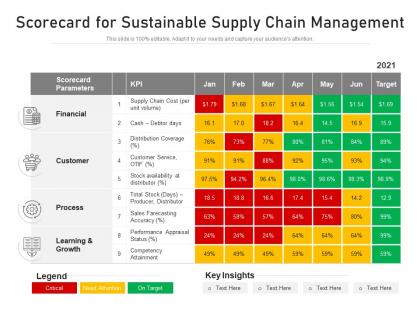
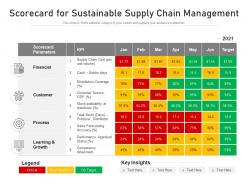
Scorecard for sustainable supply chain management




Try Before you Buy Download Free Sample Product
 Impress Your
 Audience
 100%
100% Editable
 Save Hours
 of Time


Our Scorecard For Sustainable Supply Chain Management are topically designed to provide an attractive backdrop to any subject. Use them to look like a presentation pro.
People who downloaded this PowerPoint presentation also viewed the following :
Scorecard for sustainable supply chain management with all 2 slides:
Use our Scorecard For Sustainable Supply Chain Management to effectively help you save your valuable time. They are readymade to fit into any presentation structure.
FAQs for Scorecard for sustainable
So you'll want to cover four main buckets: environmental stuff (carbon footprint, waste, water), social responsibility (how they treat workers, supplier diversity, community stuff), economic performance (costs, financial stability), and governance (compliance, risk). Carbon tracking is honestly a pain at first but super worth it. Try to measure both your direct suppliers and their suppliers too if you can swing it. Oh, and definitely include forward-looking stuff like certifications and improvement goals. Start with maybe 8-12 key metrics - any more and your team won't actually look at the data.
Honestly, start by mapping out your whole supply chain - raw materials all the way to delivery. Then bug your suppliers for emissions data using something like GHG Protocol. Scope 3 emissions are a total pain (all that indirect stuff), but you can work around it with supplier surveys or spend-based calculations. Third-party databases help fill the gaps too. Getting your big suppliers to actually track their own carbon footprint is half the battle. Focus on your biggest spend categories first - way more bang for your buck that way.
Your suppliers are honestly the make-or-break factor for sustainability. They're running the show on everything - sourcing materials, managing workers, handling waste, emissions, you name it. Most companies have zero clue what their deeper supply chain is actually doing though, which is kinda wild when you think about it. You could have the best green policies ever, but if suppliers aren't on board? You're basically spinning your wheels. I'd start by actually mapping who's in your supply chain, then create scorecards tracking their environmental and social performance. Then here's the key part - use those scores when making purchasing decisions.
Honestly, the biggest thing is getting real-time visibility instead of relying on those BS vendor reports that are always weeks behind. IoT sensors can monitor working conditions, blockchain tracks materials from start to finish, and AI automatically crunches all the supplier performance data. I'd probably start with your main tier-1 suppliers first - don't try to boil the ocean right away. The cool part is you can actually share all this transparency with customers now, which they're demanding anyway. It catches problems way earlier than the old methods. Digital platforms make the whole sharing piece pretty straightforward too.
First thing - map out your whole supply chain. I know, sounds boring as hell, but you gotta know where your biggest problems are. Set KPIs that actually matter to your bottom line, like carbon reduction per revenue dollar or how much waste you're diverting. Work backwards from those goals to create real requirements for suppliers - renewable energy targets, circular packaging, that stuff. Don't make sustainability some separate thing though. Build it right into your supplier scorecards and buying decisions. Honestly? Just focus on your top 20% of suppliers by spend first. That's where you'll move the needle fastest without losing your mind trying to manage everyone at once.
Honestly, scorecards are game-changers for figuring out which suppliers actually care about sustainability vs. just putting on a show. You get real data on stuff like carbon emissions and labor practices instead of guessing. Pick 3-5 metrics that align with what your stakeholders want - trust me, you don't need to track everything at first. The best part? You can spot the greenwashers immediately. Focus your partnerships on suppliers who're crushing it. For the ones falling behind, create improvement plans. It's way better than operating blind and hoping for the best.
Honestly, the data collection is gonna be your biggest headache. Suppliers either don't track environmental stuff or they're sketchy about sharing it - some literally just don't want anyone looking too closely at their operations. Plus everyone measures sustainability differently, so comparing suppliers is like comparing apples to weird industrial oranges. Your procurement team will probably push back too since they care more about costs than carbon footprints. My advice? Start with your main suppliers first. Pick maybe 3-4 metrics that actually matter and ignore the rest for now. Trying to track everything from day one is a recipe for burnout.
Set up regular check-ins with your key stakeholders - suppliers, customers, community groups. Quarterly surveys work great, or even just simple feedback forms. Honestly, suppliers give the best insights since they're dealing with this stuff every day. Ask specific questions that tie back to your actual scorecard metrics instead of vague "how's it going" stuff. Here's the thing though - you gotta actually use their feedback in your scoring, not just collect it to look good. I'd start with maybe 3-4 main stakeholder groups first, then add more once you get the hang of it.
Track your material usage rates first - that's the big one. Water and energy per unit matter too, plus waste-to-output ratios. Carbon metrics are kinda unavoidable now with all the reporting stuff companies want. Oh, and don't sleep on packaging efficiency and transport load factors - I've seen people find some really obvious fixes there. Honestly though, pick like 3-4 things max that actually relate to what you're doing. Don't go crazy trying to measure everything at once. Start simple with whatever data you can already grab easily, then add more later.
Look, your sustainability scorecard will tank without real employee buy-in. People need to actually get WHY they're doing green stuff - not just checking boxes because corporate said so. When they're engaged, they'll catch waste issues you'd miss sitting in meetings all day. I've watched companies completely bomb this when they just mandated changes from above. Nobody likes feeling like they're doing busy work, right? You want your procurement team, drivers, everyone actively hunting for better suppliers and ways to cut waste. Start by showing them how it connects to stuff they already care about. Skip the lecture approach - that never works.
Working with suppliers on sustainability stuff is actually huge - you can't do nearly as much flying solo. They bring their expertise and cool innovations, you share your resources and knowledge. Most companies totally miss this opportunity, which is crazy to me. The relationship building alone pays off with better pricing and they'll prioritize you when supply gets tight. Instead of just measuring them on scorecards, get them actually invested in the goals. Start small though - grab one or two suppliers who seem interested and pick something specific you can track together first.
You'll want to get everyone using the same KPIs - stuff like carbon emissions, water usage, waste reduction. Pretty standard across most industries. The real pain is getting them all to measure and report the same way though. I'd suggest creating templates and maybe some training materials to help out. Third-party platforms can be clutch for normalizing all that messy data from different sources. Oh, and don't make your requirements too crazy for smaller suppliers - learned that one the hard way. They might have great practices but zero budget for fancy reporting systems. Keep it realistic so you don't accidentally cut out the good ones.
Policy changes are happening crazy fast right now. The EU just dropped this deforestation regulation that's honestly pretty intense. Carbon reporting, human rights due diligence - regulations are popping up everywhere. But here's the thing: governments aren't just cracking down. Tax breaks and grants are there if you play the sustainability game right. Don't sit around waiting for new rules to smack you. Start tracking your supply chain metrics now because once these policies hit, you'll be scrambling. Trust me, getting ahead of this stuff is way easier than playing catch-up later.
Start small - just add 2-3 circular metrics to whatever scorecard you're already using. Track your recycling rates and how much virgin material you're avoiding (that old take-make-waste thing is basically dead anyway). Measure product durability too, plus any refurbishment programs you've got running. Your suppliers need scorecards that rate their circular stuff - are they actually closing material loops or just talking about it? Product lifecycle extension is huge. Don't try overhauling everything at once though, you'll just stress yourself out. Focus on waste reduction and material reuse first, then build from there.
So for tracking supply chain sustainability, EcoVadis is your best bet - it's like getting report cards on all your suppliers covering environmental stuff, labor practices, the whole deal. If you're already on SAP Ariba, they've got sustainability modules baked right in which saves you a headache. Sedex is solid for ethical trade monitoring, and CDP Supply Chain handles carbon tracking pretty well. Honestly though, don't overthink it. Pick whatever plays nice with your current systems instead of adding another random platform to juggle. Figure out which sustainability metrics actually matter to your business first, then grab a tool that measures those specific things. Way easier than trying to track everything at once.
-
Unique and attractive product design.
-
Top Quality presentations that are easily editable.