


Six sigma process analysis and approach complete powerpoint deck with slides





Try Before you Buy Download Free Sample Product
 Impress Your
 Audience
 100%
100% Editable
 Save Hours
 of Time


Are you looking for a complete pre made six sigma model PPT sample? No problem! With our pre built six sigma process analysis and approach PowerPoint presentation you have an ideal chance to make a good impression on your audience. To help further here we are sharing few ideas to use this PowerPoint slide deck. This six sigma process PPT model helps to lay emphasis on lean manufacturing or lean enterprise approach so as to motivate employees for judicious use of resources. Furthermore, you can accomplish more in your business by using our PPT sample file as a symbolic visual message to employees for improving quality, reduce waste and go for team formation. Besides this, our presentation deck is conceptualized in a way to portray various other related concepts like lean six sigma tools, six sigma dmaic, dmaic methodology, total quality management, statistical quality control, design for six sigma and many more. So why wait? Instantly download our exclusive PPT example and take your manufacturing and business processes to the next level. Get thousands of hours of design work into your next presentation. Six Sigma Process Analysis And Approach Complete Powerpoint Deck With Slides are at your fingertips mere seconds away.
People who downloaded this PowerPoint presentation also viewed the following :
Content of this Powerpoint Presentation
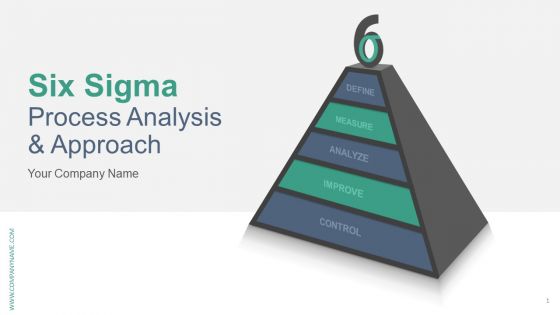
Slide 1: This slide introduces Six Sigma Process Analysis & Approach. State Your Company Name and get started.
Slide 2: This is an Agenda slide. State your agendas here.
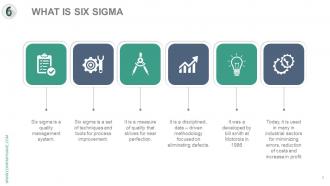
Slide 3: This slide showcases What is Six Sigma with the following content- Six sigma is a quality management system. Six sigma is a set of techniques and tools for process improvement. It is a measure of quality that strives for near perfection. It is a disciplined , data – driven methodology focused on eliminating defects. It was a developed by bill smith at Motorola in 1986 To day, it is used in many in industrial sectors for minimizing errors, reduction of costs and increase in profit
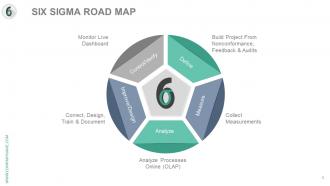
Slide 4: This slide shows a Six Sigma Road map with the following subheadings- Build Project From Nonconformance, Feedback & Audits, Monitor Live Dashboard, Collect Measurements, Correct, Design, Train & Document, Analyze Processes Online (OLAP) as Define, Measure, Analyze, Improve/Design, Control/Verify.
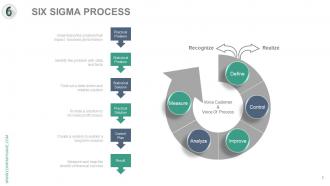
Slide 5: This slide presents the Six Sigma Process with the following content- Practical Problem: Understand the problem that impact business performance. Statistical Problem: Identify the problem with data and facts Statistical Solution: Find out a data driven and reliable solution Practical Solution: Provide a solution to increase profit reduce Control Plan: Create a system to sustain a long term solution Result: Measure and reap the benefit of financial success as Recognize Realize Measure Analyze Control Improve Define Voice Customer & Voice Of Process.
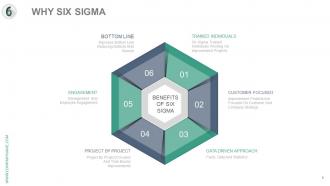
Slide 6: This slide shows WHY SIX SIGMA with the following subheading Benefits Of Six Sigma divided into- Customer Focused, Data Driven Approach, Bottom Line, Enagagement, Trained Individuals, Project By Project.
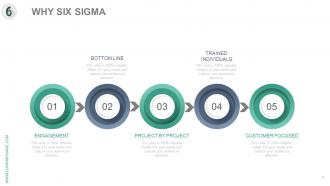
Slide 7: This slide shows WHY SIX SIGMA with the following subheadings- Customer Focused, Data Driven Approach, Bottom Line, Enagagement, Trained Individuals, Project By Project.
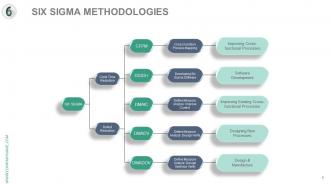
Slide 8: This slide shows Six Sigma Methodologies showing- Defect Reduction, Cycle Time Reduction, CFPM, DSSS+ DMAIC, DMADV, DMADOV, Design & Manufacture, Designing New Processes, Improving Existing Cross-functional Processes, Software Development, Improving Cross-functional Processes, Cross Function Process Mapping, Developing Six Sigma Software, Define Measure Analyze Design Verify, Define Measure Analyze Design Optimize Verify, Define Measure Analyze Improve Control.
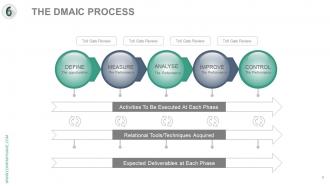
Slide 9: This slide showcases the DMAIC Process showcasing- Relational Tools/Techniques Acquired Expected Deliverables at Each Phase Activities To Be Executed At Each Phase DEFINE: The opportunities MEASURE: The Performance ANALYSE: The Performance IMPROVE: The Performance CONTROL: The Performance and Toll Gate Review.
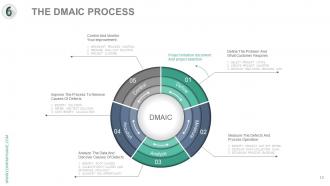
Slide 10: This slide presents The DMAIC Process showing- Project initiation document And project selection Define The Problem And What Customer Requires 1. SELECT PROJECT –CTO’S 2. CREATE PROJECT CHARTER 3. DEVELOP HIGH-LEVEL PROCESS MAP Measure The Defects And Process Operation 1. IDENTIFY PROJECT OUT PUT METRIC 2. DEVELOP DATA COLLECTION PLAN 3. ESTABLISH PROCESS BASELINE Analyze The Data And Discover Causes Of Defects 1. IDENTIFY ROOT CAUSES 2. VALIDATE ROOT CAUSES AND DETERMINE..VITALFEW’’ 3. QUANTIFY THE OPPORTUNITY Improve The Process To Remove Causes Of Defects 1. IDENTIFY SOLUTION 2. REFINE AND TEST SOLUTION 3. COST BENEFIT CALCULATION Control And Monitor Your Improvement 1. IMPLEMENT PROCESS CONTROL 2. PREPARE ROLL-OUT SOLUTION 3. PROJECT CLOSURE Define, Measure, Analyze, improve, Control.
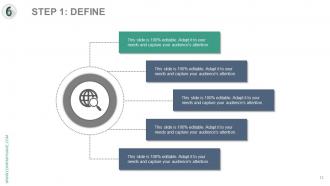
Slide 11: This slide elaborates STEP 1: DEFINE.
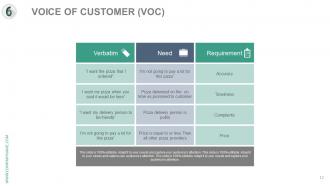
Slide 12: This slide presents the Voice Of Customer with- Need, Requirement, Verbatim.
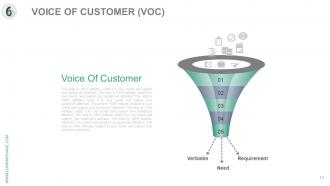
Slide 13: This slide showcases VOICE OF CUSTOMER (VOC) in funnel form.
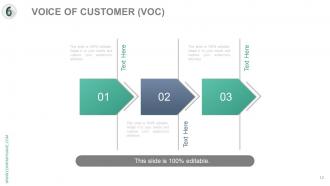
Slide 14: This slide showcases VOICE OF CUSTOMER (VOC) in arrow form.
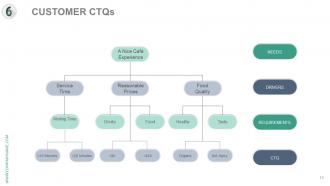
Slide 15: This slide showcases Customer CTQs in hierarchy form displaying- REQUIREMENTS, CTQ, DRIVERS, NEEDS.
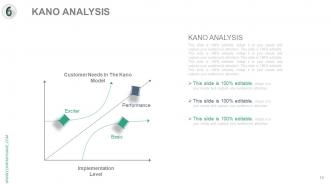
Slide 16: This slide showcases Kano Anlaysis with- Exciter, Performance, Basic, Customer Needs In The Kano Model, Implementation Level.
Slide 17: This slide showcases Project Charter displaying- Resources, Team Roles, Project, Milestone, Project Scope, Problem, Statement, Goal Statement, Business Case.
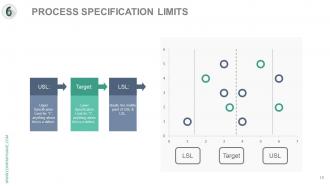
Slide 18: This slide showcases Process Specificiation Limits showing- LSL USL Target USL: Upper Specification Limit for ‘Y’, anything above this is a defect. Target: Lower Specification Limit for ‘Y’, anything above this is a defect.. LSL: Ideally the middle point of USL & LSL in bubble chart form.
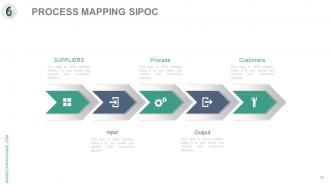
Slide 19: This slide showcases Process Mapping SIPOC with- C- CUSTOMER, O- OUTPUT, P- PROCESS, I- INPUT, S- SUPPLIERS.
Slide 20: This slide showcases Suppliers, Process, Customers, Output, Input.
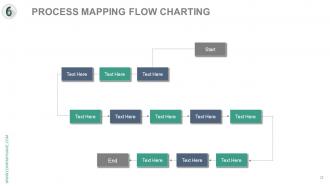
Slide 21: This slide shows Process Mapping Flow Charting.
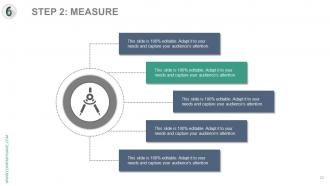
Slide 22: This slide showcases STEP 2: MEASURE.
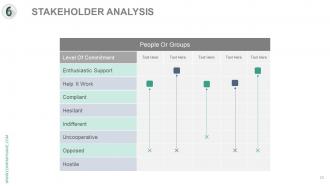
Slide 23: This slide shows Stakeholder Analysis in tabular form.
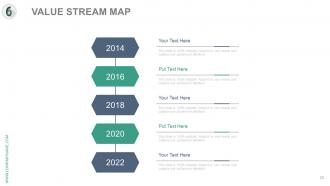
Slide 24: This slide showcases a Value Stream Map.
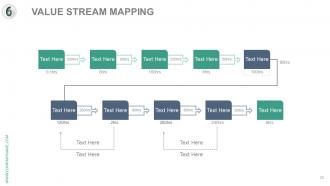
Slide 25: This slide also presents Value Stream Mapping.
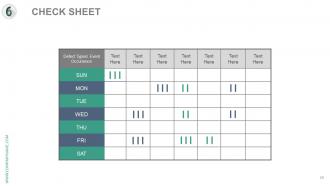
Slide 26: This is a CHECK SHEET slide in tabular form.
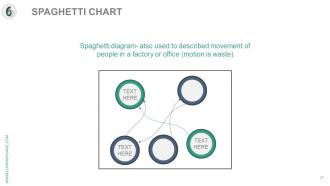
Slide 27: This slide displays a Spaghetti Chart diagram- also used to described movement of people in a factory or office (motion is waste)
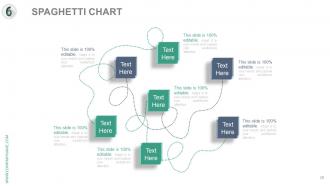
Slide 28: This slide displays a Spaghetti Chart.
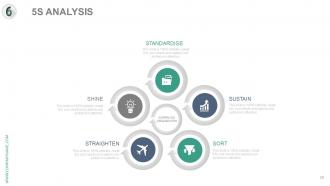
Slide 29: This slide shows 5S ANALYSIS namely- STRAIGHTEN, SORT, SHINE, SUSTAIN, STANDARDISE.
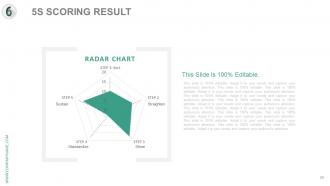
Slide 30: This slide shows 5S SCORING RESULT namely- Sustain, Straighten, Shine, Standardize.
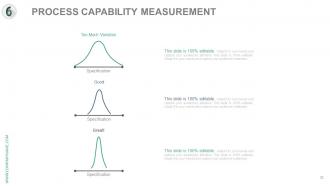
Slide 31: This slide shows Process Capability Measurement in crest graph form.
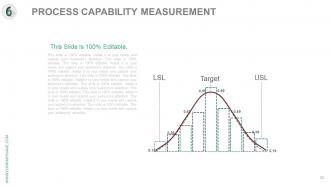
Slide 32: This slide also shows Process Capability Measurement in crest graph form displaying LSL, USL and TARGET.
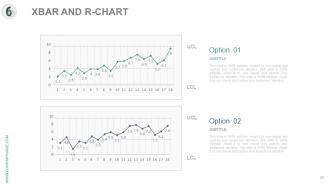
Slide 33: This slide showcases a XBAR AND R-CHART for presenting monitored variable data.
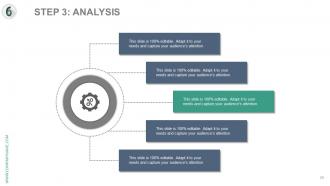
Slide 34: This slide displays STEP 3: ANALYSIS.
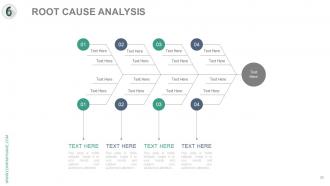
Slide 35: This slide shows Root Cause Analysis diagram.
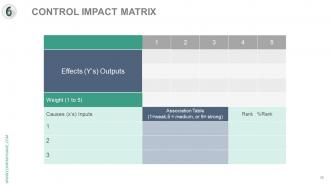
Slide 36: This slide shows a CONTROL IMPACT MATRIX.
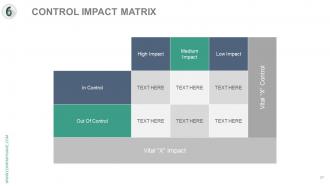
Slide 37: This slide also shows a CONTROL IMPACT MATRIX.
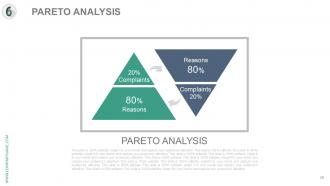
Slide 38: This slide displays Pareto Analysis.
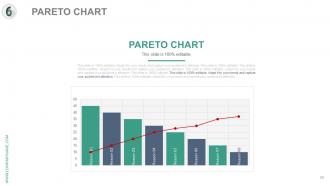
Slide 39: This slide displays Pareto Chart Analysis in graph form.
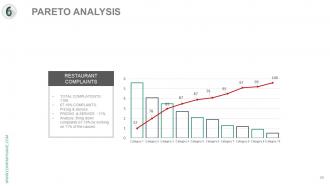
Slide 40: This slide also displays Pareto Analysis in graph form.
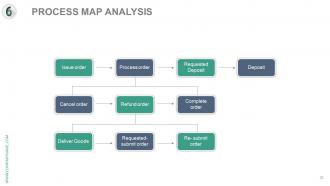
Slide 41: This slide shows PROCESS MAP ANALYSIS displaying- Issue order, Cancel order, Deliver Goods, Process order, Refund order, Requested- submit order, Requested Deposit, Complete order, Re- submit order, Deposit.
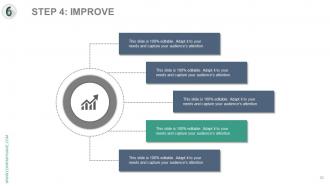
Slide 42: This slide shows STEP 4: IMPROVE.
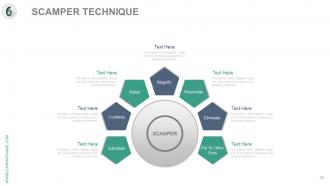
Slide 43: This slide displays the SCAMPER TECHNIQUE- Substitute Combine Adapt Magnify Rearrange Eliminate Put To Other Uses.
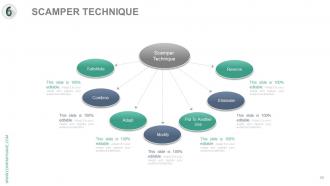
Slide 44: This slide displays the Scamper Technique showing- Reverse, Eliminate, Put To Another Use, Modify, Adapt, Combine, Substitute.
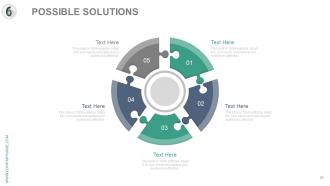
Slide 45: This slide is titled POSSIBLE SOLUTIONS in puzzle image form.
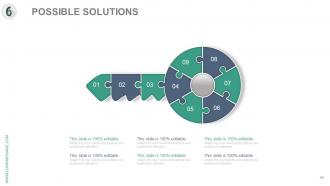
Slide 46: This slide is titled POSSIBLE SOLUTIONS in puzzle key image form.
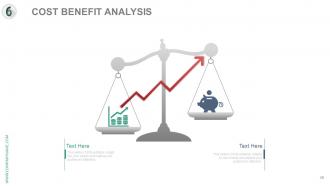
Slide 47: This slide shows Cost Benefit Analysis in balance image form.
Slide 48: This slide too shows Cost Benefit Analysis in balance image form.
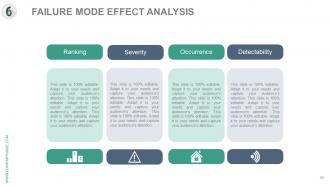
Slide 49: This slide showcases Failure Mode Effect Analysis displaying- Ranking, Severity, Occurrence, Detectability.
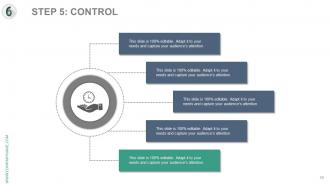
Slide 50: This slide shows STEP 5: CONTROL
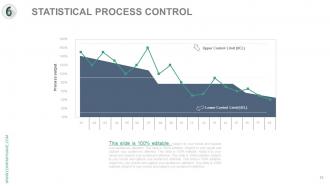
Slide 51: This slide shows STATISTICAL PROCESS CONTROL displaying- Upper Control Limit (UCL), Lower Control Limit (UCL) with Process output.
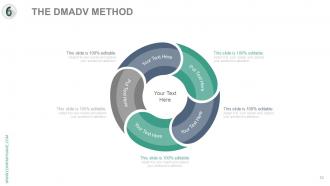
Slide 52: This slide presents The DMADV Method.
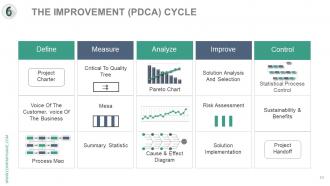
Slide 53: This slide elaborates The Improvement (PDCA) Cycle showcasing- Analyze: Pareto Chart, Cause & Effect Diagram. Improve: Solution Analysis And Selection, Solution Implementation, Risk Assessment. Control: Sustainability & Benefits, Project Handoff, Statistical Process Control. Meaure: Summary Statistic, Critical To Quality Tree. Define: Project Charter, Voice Of The Customer, voice Of The Business, Process Map.
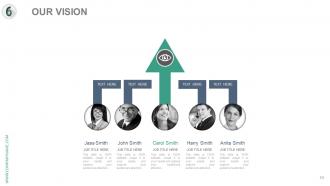
Slide 54: This is Our Vision slide. State it here.
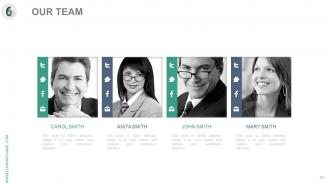
Slide 55: This is Our team slide with name, designation and text boxes to state information.
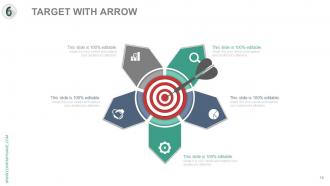
Slide 56: This is a Target with Arrow slide. State your targets here.
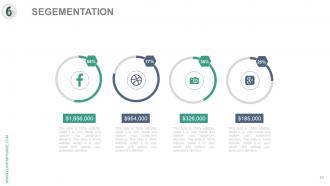
Slide 57: This slide is titled Segmentation to showcase market segments, product segments etc.
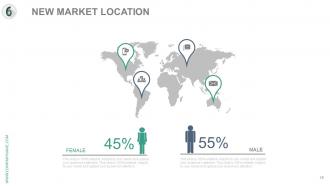
Slide 58: This is New Market Location slide of world map image. Mark specific locations for company growth, market etc. here.
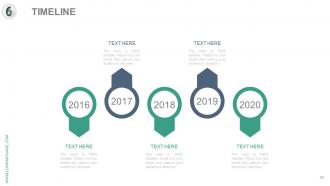
Slide 59: This is a Timeline slide to present important dates, evolution, milestones etc.
Slide 60: This is a Thank You slide for acknowledgement with image.
Six sigma process analysis and approach complete powerpoint deck with slides with all 60 slides:
Use our Six Sigma Process Analysis And Approach Complete Powerpoint Deck With Slides to effectively help you save your valuable time. They are readymade to fit into any presentation structure.



FAQs for Six sigma process analysis and approach complete powerpoint
Honestly, Six Sigma isn't that complicated once you break it down. Customer focus, data-driven decisions, systematic process improvement - that stuff. Getting your whole team involved matters too. DMAIC is the framework everyone talks about (Define, Measure, Analyze, Improve, Control) and it actually works pretty well for tackling problems step by step. I've seen companies use it everywhere - manufacturing cuts waste, hospitals reduce wait times, banks speed up loan approvals. You just adapt the tools to whatever industry you're in. My advice? Pick one annoying process and try DMAIC on it first. Don't overthink it.
Think of DMAIC like having a game plan instead of just winging it. First you figure out what's actually broken and why customers care. Measure everything with real data - none of that guessing nonsense. Then analyze to find the real root cause, not just surface-level stuff. The improve step is where you test actual solutions. Control makes sure your fix doesn't fall apart later (which honestly happens way too often). It sounds boring but it's surprisingly logical once you try it. Next time don't jump straight to fixing - walk through each step first.
Here's the deal - TQM is basically a company-wide mindset about getting better at everything gradually. Six Sigma? Totally different beast. It's all about the numbers and specific tools to fix problems fast. With TQM, you're trying to get everyone involved and make customers happy through small improvements over time. Six Sigma uses these structured phases (like DMAIC - yeah, I had to look that up once too) and gets super statistical about measuring results. Honestly, if you need concrete tools to work with, Six Sigma's your best bet. TQM requires changing how everyone thinks.
Stats is seriously the foundation of Six Sigma - like, you literally can't improve processes without actually digging into the numbers. DMAIC depends on tools like control charts and hypothesis testing to turn your gut feelings into real proof. I'd honestly start with basic statistical concepts first (sounds boring but trust me). Then jump into the Six Sigma-specific stuff. You'll use stats to measure how things are performing now, spot patterns in variation, and prove your changes actually worked. Without that statistical backbone, you're basically just throwing darts blindfolded and hoping something sticks.
Track your defect rates, cycle times, and cost savings first - that's the bread and butter stuff. Customer satisfaction scores too, obviously. But here's the thing: the cultural shift matters just as much. Are people actually getting certified? Is your team using Six Sigma without you breathing down their necks? Employee engagement tells you if it's really sticking or just going through the motions. Monthly dashboards work great for staying on top of everything. Oh, and make sure you've got solid baseline data from before you started - otherwise you're just guessing if things actually improved.
Honestly, there's a ton of tools but they match up with each phase pretty well. Problem definition uses process maps and VOC analysis. Control charts and measurement system analysis come during the measuring phase. Root cause analysis and fishbone diagrams are huge in the analyze phase - those fishbone ones actually do look like fish skeletons, which is kinda cool. DOE and mistake-proofing happen when you're improving stuff. Then control plans and SOPs wrap things up. Oh, and definitely start with the basics first. I made the mistake of jumping around too much when I started and it just confused me more.
Honestly, the whole Six Sigma training landscape is kinda all over the place. Some providers are obsessed with manufacturing examples, others do service stuff. Time-wise you're looking at anything from crazy 5-day bootcamps to programs stretched over months. ASQ and IASSC are the big names but they've got totally different requirements and exam styles - which is annoying when you're trying to compare. My advice? Figure out what certs your industry actually cares about first. Then check if the provider's examples match what you do day-to-day. Their track record matters too. Don't just pick whoever's cheapest though.
Honestly, the biggest pain is getting people on board - nobody wants change when it feels like more work dumped on their plate. Leadership says they're committed but then gets impatient when projects take months to pay off. Training costs get crazy expensive too, especially with all those belt certifications. Oh, and some companies become total methodology nerds instead of actually fixing business problems (which is kind of missing the point). My take? Pick a couple high-impact projects first. Show some quick wins to get momentum going before you try rolling it out everywhere.
So here's what I'd do - use DMAIC as your backbone but don't let it kill your sprint speed. Six Sigma's great for the data stuff and finding bottlenecks. Agile handles the quick iterations and customer feedback. Honestly, the documentation part of Six Sigma can be a total drag, so keep your metrics light. Try doing PDCA cycles inside your sprints instead of these massive formal processes. Oh, and throw control charts into your retros - that's actually been super helpful for tracking trends. The trick is mixing the quality focus with staying nimble.
So Six Sigma basically fixes all the stuff that makes customers want to scream at your company. You know how frustrating it is when things don't work right? That's what it tackles. Instead of guessing what's wrong, you use actual data to find the real problems. Customers get better products, faster service, less headaches. The whole thing revolves around their feedback too - which honestly makes way more sense than companies just doing whatever they think is best. I'd start simple though. Pick one customer journey, maybe checkout or onboarding, and see where people get stuck.
Honestly, you need both the obvious stuff and the sneaky metrics that catch people off guard. Financial wins are clear - cost savings, revenue bumps, ROI on projects. Process stuff matters too: fewer defects, faster cycle times, happier customers. But here's what trips up most programs - they ignore the people metrics entirely. How engaged are your employees? Are they actually finishing certifications? Do projects stick around after the initial push? I learned this the hard way at my last company. Start small with maybe 3 core metrics instead of going crazy with spreadsheets everywhere.
Honestly, you've gotta show your team this isn't just another flavor-of-the-month thing that'll vanish by Christmas. Jump into projects yourself and make a big deal about celebrating wins - yeah, even the tiny ones. Give people actual time and money to work on this stuff instead of dumping it on their already crazy workload. Start asking "what's the data say?" in meetings. Let people experiment without freaking out if something doesn't work perfectly. Oh, and definitely build continuous improvement into their performance reviews - that's where the rubber meets the road. Show them you're serious about data-driven decisions, not just talking about it.
So Jack Welch's GE is like the poster child for Six Sigma - they literally saved billions in the late 90s rolling it out everywhere. Motorola actually invented the whole thing and used it to fix their manufacturing defects. Amazon's obsessed with it for logistics (honestly explains why my stuff arrives so ridiculously fast). Even Mayo Clinic uses Six Sigma to cut down patient wait times and reduce medical errors. If you're thinking about pitching this at work, these examples show it works pretty much anywhere. Just don't go crazy - start with one process and see how it goes.
Basically, Six Sigma uses data to hunt down what's making your processes inconsistent, then kills those root causes. The whole thing follows five steps - DMAIC they call it. Define your problem, measure everything (and I mean everything), analyze the data, improve the process, then control it moving forward. Most quality issues happen because processes are unpredictable, so when you reduce variation, defects naturally drop. Honestly, just start by mapping out your current process first. Find your biggest headaches - that's where you'll get quick wins and actually see results fast.
Honestly, you can't solve Six Sigma problems with just one department - they're usually way more complex than that. Like if a customer's pissed off, it probably involves sales screwing up the order, operations missing deadlines, AND quality control letting defects slip through. Different people see different pieces of the puzzle. When you mix perspectives, teams catch stuff that would totally fly under the radar otherwise. The implementation goes smoother too because everyone's already bought in from working on it together. Oh, and make sure you actually get people from every area that touches your problem - not just the obvious ones.
-
Excellent template with unique design.
-
Unique and attractive product design.
-
Presentation Design is very nice, good work with the content as well.
-
Great experience, I would definitely use your services further.
-
Great quality slides in rapid time.
-
Top Quality presentations that are easily editable.
-
Unique research projects to present in meeting.
-
Unique research projects to present in meeting.
-
Unique research projects to present in meeting.