


Smart Action Plan For Call Center Agents Powerpoint Presentation Slides






Try Before you Buy Download Free Sample Product
 Impress Your
 Audience
 100%
100% Editable
 Save Hours
 of Time


A call center is a centralized department that manages inbound and outbound calls from potential customers. Check out our professionally designed Smart Action Plan for Call Center Agents PowerPoint presentation. Firstly, It covers the company background information overview, geographical presence, organizational structure, and journey roadmap from 2008 to 2021. The deck also includes the solutions offered by the BPO company with inbound and outbound call volume rates. Furthermore, this Call Center Business Plan PPT includes the problems faced by the BPO center and its impact on the company. It also mentions the recent technological improvements in the industry and the strategies, including telephone etiquette for support agents and dealing with unsatisfied customers. Additionally, our performance management module includes the wrong and right approach to handling customers and Strategies for customer complaints and faults. It also mentions how to improve business processes with IT services, including IT services for BPO and training programs for call center agents. At last, the template highlights the improvement plans expected growth, including call center key performance indicators and dashboards. Download this 100 percent editable presentation and get access to our highly researched and skillfully designed product.
People who downloaded this PowerPoint presentation also viewed the following :
Content of this Powerpoint Presentation
Slide 1: This slide introduces Smart Action Plan for Call Center Agents. State your company name and begin.
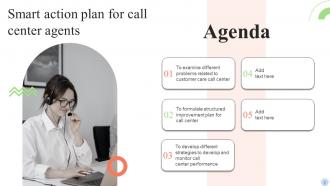
Slide 2: This slide states Agenda of the presentation.
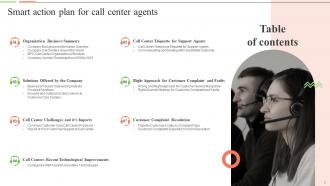
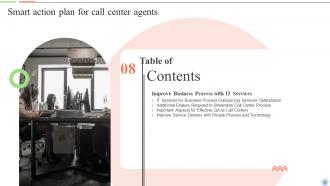
Slide 3: This slide shows Table of Content for the presentation.
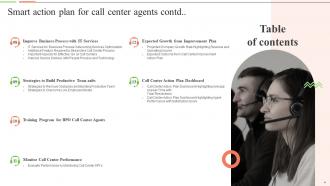
Slide 4: This is another slide continuing Table of Content for the presentation.
Slide 5: This slide highlights title for topics that are to be covered next in the template.
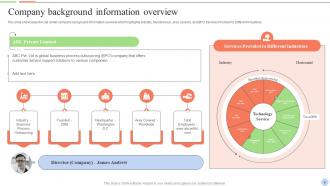
Slide 6: This slide presents Company background information overview.
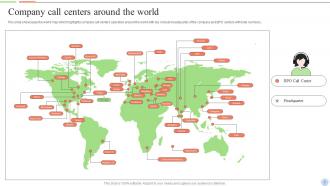
Slide 7: This slide displays Company call centers around the world.
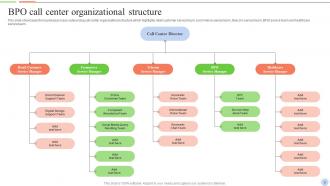
Slide 8: This slide represents BPO call center organizational structure.
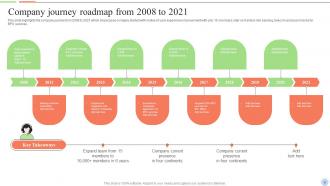
Slide 9: This slide showcases Company journey roadmap from 2008 to 2021.
Slide 10: This slide highlights title for topics that are to be covered next in the template.
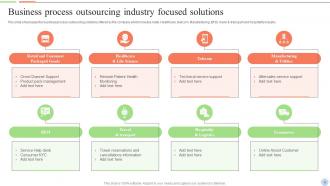
Slide 11: This slide shows Business process outsourcing industry focused solutions.
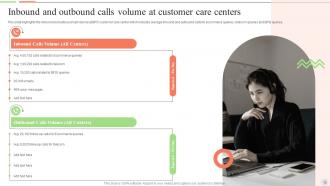
Slide 12: This slide presents Inbound and outbound calls volume at customer care centers.
Slide 13: This slide highlights title for topics that are to be covered next in the template.
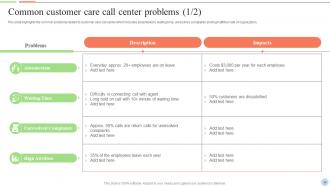
Slide 14: This slide displays Common customer care call center problems.
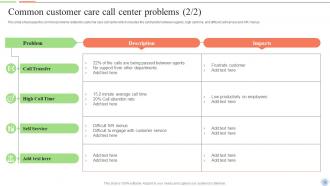
Slide 15: This is another slide continuing Common customer care call center problems.
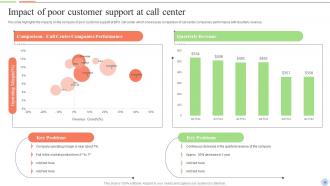
Slide 16: This slide presents Impact of poor customer support at call center.
Slide 17: This slide highlights title for topics that are to be covered next in the template.
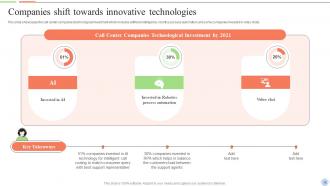
Slide 18: This slide represents Companies shift towards innovative technologies.
Slide 19: This slide highlights title for topics that are to be covered next in the template.
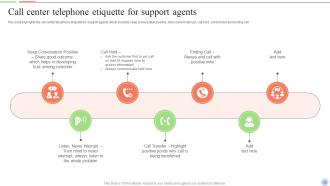
Slide 20: This slide showcases Call center telephone etiquette for support agents.
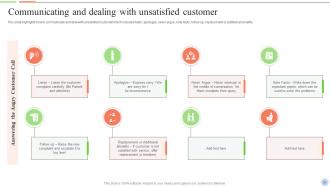
Slide 21: This slide shows Communicating and dealing with unsatisfied customer.
Slide 22: This slide highlights title for topics that are to be covered next in the template.
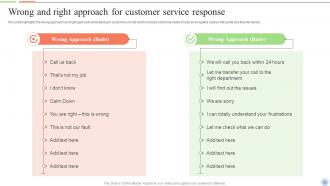
Slide 23: This slide presents Wrong and right approach for customer service response.
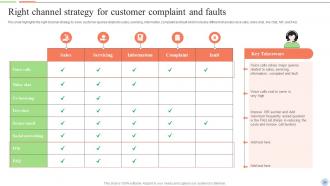
Slide 24: This slide displays Right channel strategy for customer complaint and faults.
Slide 25: This slide highlights title for topics that are to be covered next in the template.
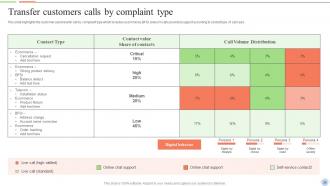
Slide 26: This slide represents Transfer customers calls by complaint type.
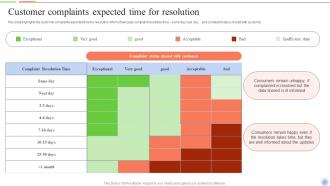
Slide 27: This slide showcases Customer complaints expected time for resolution.
Slide 28: This slide highlights title for topics that are to be covered next in the template.
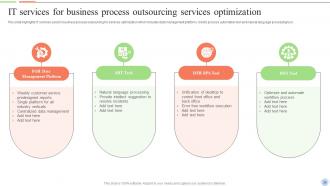
Slide 29: This slide shows IT services for business process outsourcing services optimization.
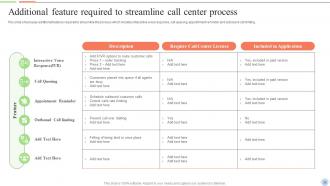
Slide 30: This slide presents Additional feature required to streamline call center process.
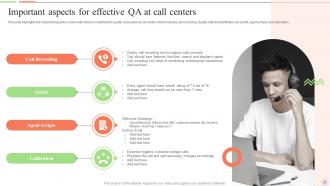
Slide 31: This slide displays Important aspects for effective QA at call centers.
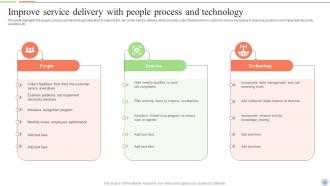
Slide 32: This slide represents Improve service delivery with people process and technology.
Slide 33: This slide highlights title for topics that are to be covered next in the template.
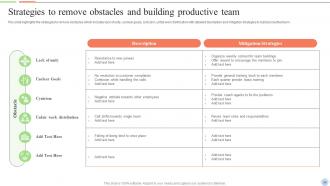
Slide 34: This slide showcases Strategies to remove obstacles and building productive team.
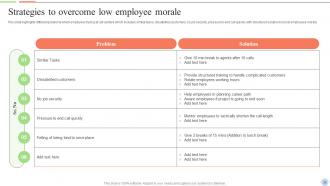
Slide 35: This slide shows Strategies to overcome low employee morale.
Slide 36: This slide highlights title for topics that are to be covered next in the template.
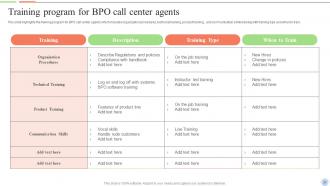
Slide 37: This slide presents Training program for BPO call center agents.
Slide 38: This slide highlights title for topics that are to be covered next in the template.
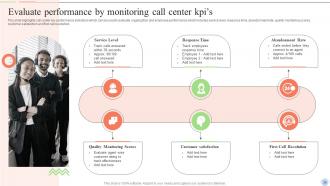
Slide 39: This slide displays Evaluate performance by monitoring call center kpi’s.
Slide 40: This slide highlights title for topics that are to be covered next in the template.
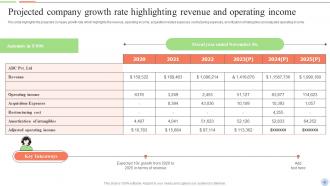
Slide 41: This slide represents Projected company growth rate highlighting revenue and operating income.
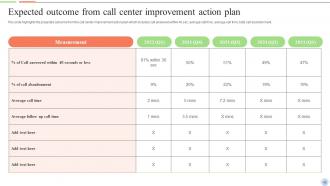
Slide 42: This slide showcases Expected outcome from call center improvement action plan.
Slide 43: This slide highlights title for topics that are to be covered next in the template.
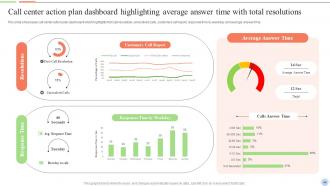
Slide 44: This slide shows Call center action plan dashboard highlighting average answer time with total resolutions.
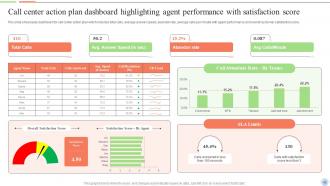
Slide 45: This slide presents Call center action plan dashboard highlighting agent performance with satisfaction score.
Slide 46: This slide contains all the icons used in this presentation.
Slide 47: This slide is titled as Additional Slides for moving forward.
Slide 48: This slide provides 30 60 90 Days Plan with text boxes.
Slide 49: This slide shows Post It Notes. Post your important notes here.
Slide 50: This slide contains Puzzle with related icons and text.
Slide 51: This slide presents Roadmap with additional textboxes.
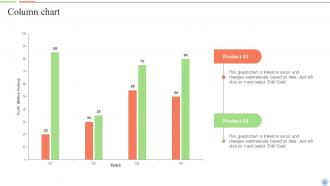
Slide 52: This slide displays Column chart with two products comparison.
Slide 53: This is a Timeline slide. Show data related to time intervals here.
Slide 54: This slide depicts Venn diagram with text boxes.
Slide 55: This is a Thank You slide with address, contact numbers and email address.
Smart Action Plan For Call Center Agents Powerpoint Presentation Slides with all 60 slides:
Use our Smart Action Plan For Call Center Agents Powerpoint Presentation Slides to effectively help you save your valuable time. They are readymade to fit into any presentation structure.









FAQs for Smart Action Plan For Call Center Agents
Start by mapping what you're doing now - that'll show you the biggest gaps. You need solid objectives and KPIs (call resolution time, customer satisfaction, that stuff). Set up clear escalation procedures too. Here's the thing though - most teams totally mess up the coaching piece, which is honestly where the magic happens. Weekly one-on-ones are crucial. Document your best practices for common issues and create a feedback system. Oh, and don't forget skill assessments. The coaching separates your okay agents from the rockstars, so don't skip it.
Okay so the impact-urgency matrix thing actually works - put high impact + urgent stuff first, duh. Customer escalations and anything time-sensitive should be your immediate focus. After that, tackle high-impact tasks that aren't screaming urgent yet, like those follow-ups that prevent bigger headaches later. Honestly used to just wing it daily and wow, what a mess that was. Now I spend like 15 minutes each shift start just writing down priorities and updating them when crazy new stuff pops up. Sounds boring but it genuinely saves so much stress later on. Trust me on this one.
Honestly, the tech stuff is what makes your plans actually click. Your CRM shows customer history right away so you're not going in blind. Call routing sends you the calls that match what you're good at. There's even real-time coaching that whispers tips during tricky calls - sounds weird but it's actually helpful. Analytics show which tactics work and which don't, so you can switch things up quickly. I know some people hate all the tech, but seriously use whatever tools they give you. Makes everything way less stressful than just winging it.
Don't just throw training at people once and call it done - you gotta make it ongoing. Schedule monthly check-ins to see where everyone's struggling, then build quick learning sessions around those gaps. Honestly, most companies treat this stuff like an afterthought and wonder why nothing sticks. Block out actual time for it each week and tie everything to their personal goals. Track progress weekly so you can pivot if something's not working. Oh, and start small - pick your biggest 3 problem areas this quarter and build focused training around those first.
Track the basics first - call resolution rates, handle time, customer satisfaction, first-call resolution. But honestly? Those numbers don't tell the whole story. I'd also watch how agents actually engage with new processes, show up to coaching sessions, give feedback voluntarily. Set your baseline before rolling anything out, then check progress every week or two. Don't go crazy tracking everything though - stick to maybe 3-5 key metrics. More than that and you'll just drown in data without seeing what's actually moving the needle.
Customer feedback is literally gold - seriously, pay attention to it! When multiple people mention the same issue, that's a huge red flag to change your approach. I track everything in my CRM notes (positive and negative stuff). Then each week I'll review them looking for patterns. Customers saying you talk too fast? Slow it down. They love your simple explanations? Do that every time. Honestly, most agents just nod and forget about feedback instead of actually using it. Don't be that person - let it shape how you handle similar situations going forward.
Get specific with your goals - like "cut handle time by 30 seconds" instead of wishy-washy stuff like "be more efficient." Weekly mini-goals work better than huge targets that freak people out. Pair your struggling agents with your rockstars for shadowing - honestly, this is where you'll see the biggest wins. Check in weekly to see what's actually working. But here's the thing - let your agents come up with their own improvement ideas too. They deal with the calls all day, so they know what's broken better than anyone sitting in an office.
Build buddy systems so agents can shadow each other on tricky calls - honestly, this helps way more than most training programs. Quick team huddles work great for sharing solutions to tough cases. But here's the thing: managers need to actually block out time for this stuff instead of hoping it happens between calls. Track collaboration in performance reviews, not just individual numbers. Oh, and celebrate team wins! Cross-training opportunities are solid too. Make peer feedback part of regular check-ins. I've seen teams completely turn around when they start sharing knowledge instead of hoarding it.
Your call center software probably already has dashboards showing real-time metrics - call resolution rates, satisfaction scores, that kind of stuff. Quality management tools like Verint or NICE are solid for monitoring specific behaviors you're trying to change. But honestly? Sometimes a basic spreadsheet tracking weekly goals works just as well, maybe even better since everyone knows how to use them. Don't skip the one-on-ones with your agents though. They'll tell you what's actually happening that the numbers miss. I'd just start with whatever you already have and go from there.
Honestly, weekly check-ins are a game changer - do them with yourself or your boss to track what's working. Some days you'll feel completely behind though, that's just how it goes. I'd break those big goals into tiny daily wins so you don't get overwhelmed. Sticky notes everywhere help too, or set random phone reminders. Find someone who'll call you out when you're slacking - could be a coworker or your manager. Oh, and actually celebrate the small stuff! Even if it feels silly, those little victories add up way more than you'd think.
Honestly, the worst thing you can do is set fuzzy goals like "be better at customer service." What does that even mean? Get specific with actual numbers instead. Don't go crazy ambitious either - I've watched managers create these insane plans that nobody can follow. Each person on your team is different, so avoid cookie-cutter approaches. You'll want to check in regularly too, because without follow-up those plans just sit there doing nothing. Keep everything realistic and measurable, then do weekly reviews to see if you're actually making progress.
So basically you just map the plans to what each person actually does. New people get the basics - call handling, product stuff. Senior folks? Give them mentoring goals or let them deal with the crazy escalated calls (honestly, they're better at it anyway). Different teams need totally different metrics though. Sales cares about conversions, support teams track resolution times. Makes sense, right? I'd start by writing down all your roles first, then figure out what matters most for each one. Build your training and KPIs around that. Way easier than trying to force everyone into the same box.
So I'd do weekly one-on-ones and monthly reviews to track how things are going. Watch those KPIs - call resolution time, customer satisfaction, first-call resolution rates. Call recordings are honestly where you'll find the best stuff though, they show you exactly what's not clicking. Your agents will have the real insights since they're dealing with customers all day, so actually ask them what's working and what sucks. Oh and quarterly team sessions help too - gives everyone a chance to brainstorm improvements. Set up some easy way for agents to suggest changes based on what they're seeing in actual calls.
Having a solid action plan is like having a GPS for customer calls - you'll sound way more confident because you know exactly what comes next. Customers can totally tell when you're winging it versus when you're prepared. The best part? You can solve common problems faster since you already know the steps, so people don't get passed around between departments (which honestly drives everyone crazy). Resolution times improve, and nobody's sitting on hold forever. I know it sounds boring to stick to the plan every single time, but even when you think there's a quicker way, trust the process. It really does make your satisfaction scores jump.
Start with specific goals tied to your key metrics - call times, customer satisfaction, whatever matters most. Each task needs a deadline and clear outcome so there's zero confusion about success. Break it into 30-60-90 day chunks. New agents get overwhelmed otherwise, but you still want momentum building. Weekly check-ins with supervisors work best initially, then maybe bi-weekly later. Honestly, I've watched so many vague development plans just... die. The regular touchpoints keep everyone honest and catch problems early before they spiral.
-
SlideTeam is the way to go when you are in a time crunch. Their templates have saved me many times in the past three months.
-
SlideTeam has helped me take my presentation to the next level. Everyone at the office is impressed! I’ll be using their designs for a long-long time.