


Smart Grid Infrastructure Powerpoint Presentation Slides




Try Before you Buy Download Free Sample Product
 Impress Your
 Audience
 100%
100% Editable
 Save Hours
 of Time


Check out our professionally designed Smart Grid Infrastructure PPT, which provides a concise overview of intelligent grid technology. This Smart Grid Technology presentation introduces the smart grid, its key features, and a brief contrast with the traditional grid system and its associated challenges. Moreover, our Smart Grid Infrastructure deck includes exploring the market size, objectives, and the importance of smart grid technology. Additionally, the Smart Grid Technology PPT addresses the interplay between the smart grid and the Internet of Things IoT, user engagement and energy decentralization in the smart grid, the innovative grid maturity model, and a diverse array of smart grid technologies. Lastly, the Smart Grid Maturity Model deck delves into the modernization costs associated with traditional grids, an evolutionary roadmap, and introduces an innovative home dashboard for appliance monitoring. Access our fully editable and customizable template, compatible with Google Slides, to gain comprehensive knowledge about Smart Grid Infrastructure and Technology.
People who downloaded this PowerPoint presentation also viewed the following :
Content of this Powerpoint Presentation
Slide 1: This slide introduces Smart Grid Infrastructure.
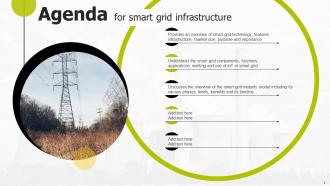
Slide 2: This slide depicts the Agenda of the presentation.
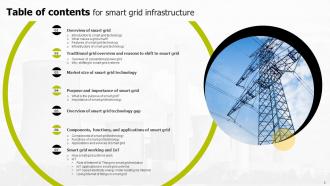
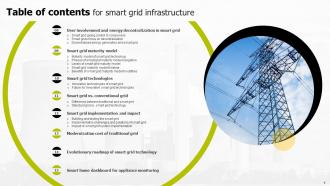
Slide 3: This slide includes the Table of contents.
Slide 4: This slide highlights the Title for the Topics to be covered further.
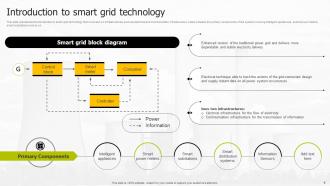
Slide 5: This slide represents the introduction to smart grid technology.
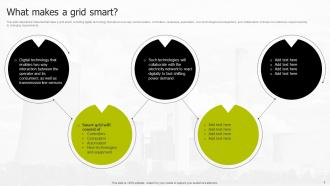
Slide 6: This slide depicts the features that make a grid smart.
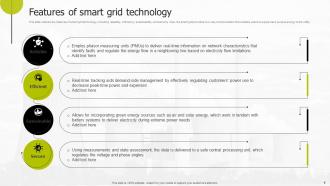
Slide 7: This slide outlines the features of smart grid technology.
Slide 8: This slide displays the infrastructure of smart grid technology divided into four sections.
Slide 9: This slide includes the Heading for the Contents to be discussed next.
Slide 10: This slide portrays the overview of the conventional power grid.
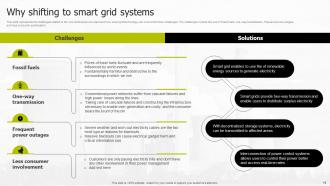
Slide 11: This slide represents the challenges related to the conventional power plant and how smart grid technology can overcome those challenges.
Slide 12: This slide contains the Title for the Ideas to be covered in the upcoming template.
Slide 13: This slide depicts the market size of smart grid technology.
Slide 14: This slide highlights the Heading for the Ideas to be discussed in the next template.
Slide 15: This slide represents the purpose of a smart grid.
Slide 16: This slide reveals the Importance of smart grid technology.
Slide 17: This slide exhibits the Title for the Contents to be covered in the upcoming template.
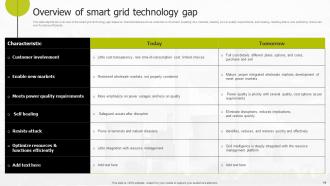
Slide 18: This slide depicts the overview of the smart grid technology gap.
Slide 19: This slide includes the Title for the Contents to be covered in teh upcoming template.
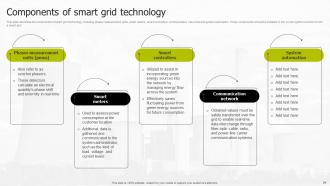
Slide 20: This slide describes the components of smart grid technology.
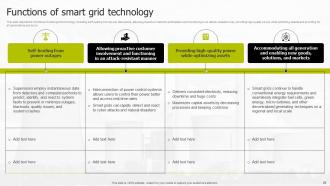
Slide 21: This slide depicts the functions of smart grid technology.
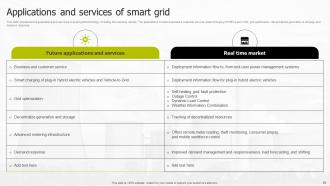
Slide 22: This slide represents the applications and services of smart grid technology, including the real-time market.
Slide 23: This slide portrays the Heading for the Topics to be discussed further.
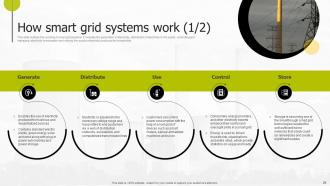
Slide 24: This slide outlines the working of smart grid systems.
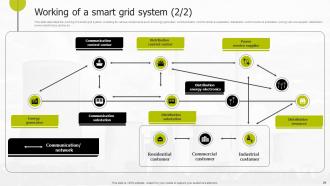
Slide 25: This slide describes the working of a smart grid system.
Slide 26: This slide includes the Title for the Topics to be covered in the upcoming template.
Slide 27: This slide represents the role of the internet of things in the evolution of the smart grid.
Slide 28: This slide describes the real-world applications internet of things in smart grid systems.
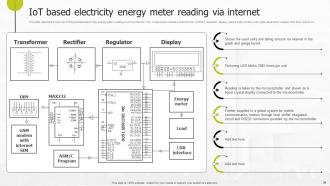
Slide 29: This slide depicts the internet of things based electricity energy meter reading over the internet.
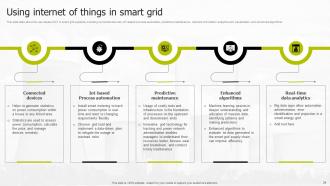
Slide 30: This slide talks about the use cases of IoT in smart grid systems.
Slide 31: This slide includes the Heading for the Contents to be discussed enxt.
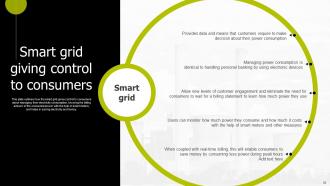
Slide 32: This slide outlines how the smart grid gives control to consumers.
Slide 33: This slide portrays how smart grids focus on decentralization.
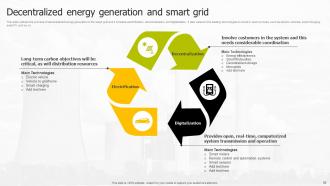
Slide 34: This slide exhibits the process of decentralized energy generation in the smart grid.
Slide 35: This slide presents the Title for the Idaes to be covered in the upcoming template.
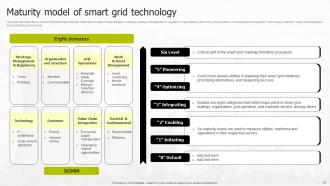
Slide 36: This slide describes the overview of the smart grid maturity model that consists of eight domains.
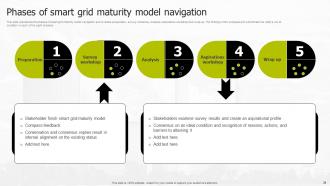
Slide 37: This slide reveals the Phases of smart grid maturity model navigation.
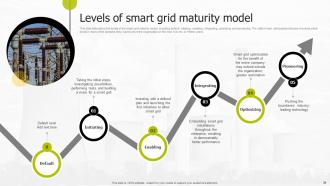
Slide 38: This slide talks about the levels of the smart grid maturity model.
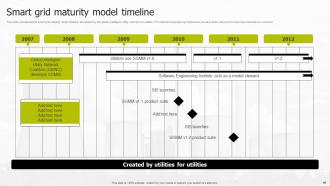
Slide 39: This slide represents the smart grid maturity model timeline developed by the global intelligent utility network for utilities.
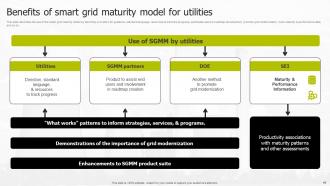
Slide 40: This slide describes the use of the smart grid maturity model by electricity providers.
Slide 41: This slide reveals the Heading for the Ideas to be discussed further.
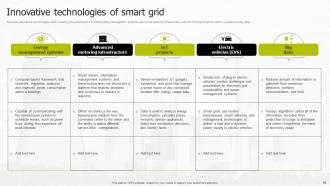
Slide 42: This slide depicts the technologies used in smart grid systems.
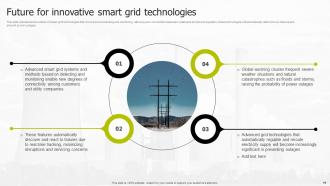
Slide 43: This slide shows the Future for innovative smart grid technologies.
Slide 44: This slide displays the Title for the Contents to be covered in the upcoming template.
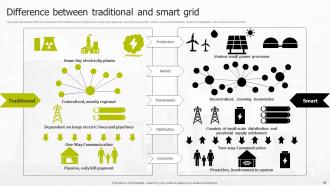
Slide 45: This slide highlights the Difference between traditional and smart grid.
Slide 46: This slide depicts the comparison between conventional grid and smart grid technology.
Slide 47: This slide includes the Heading for the Topics to be discussed in the upcoming template.
Slide 48: This slide represents that a smart grid will take decades to build and test as it consists of millions of parts and components.
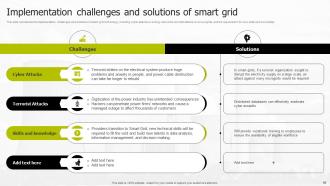
Slide 49: This slide deals with Implementation challenges and solutions of smart grid.
Slide 50: This slide highlights the Impact of smart grid system implementation.
Slide 51: This slide includes the Title for the Topics to be covered in the upcoming template.
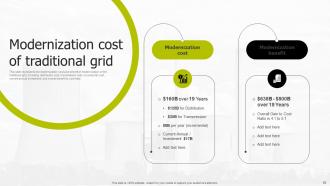
Slide 52: This slide represents the modernization cost and benefit of modernization of the traditional grid.
Slide 53: This slide presents the Heading for the Contents to be further discussed.
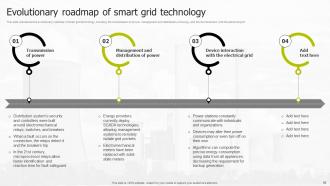
Slide 54: This slide represents the evolutionary roadmap of smart grid technology.
Slide 55: This slide contains the Title for the Ideas to be covered in teh next template.
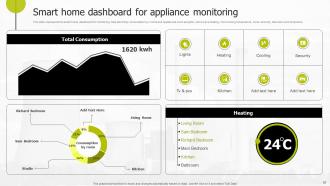
Slide 56: This slide represents the smart home dashboard for monitoring total electricity consumption by rooms and appliances.
Slide 57: This is the Icons slide containing all the Icons used in the plan.
Slide 58: This slide is used for depicting some Additional information.
Slide 59: This is the Quotes slide for motivation.
Slide 60: This slide elucidates information related to the Financial topic.
Slide 61: This slide exhibits the Mind map of the company.
Slide 62: This slide includes the organization's mission, vision, and values.
Slide 63: This is the 30,60,90 days plan slide for effective planning.
Slide 64: This is the Venn diagram slide.
Slide 65: This slide exhibits the firm's Timeline.
Slide 66: This is the Idea Generation slide for encouraging fresh ideas.
Slide 67: This is the Target slide. State your company-targets here.
Slide 67: This slide exhibits the firm's Roadmap.
Slide 69: This is the Thank You slide for acknowledgement.
Smart Grid Infrastructure Powerpoint Presentation Slides with all 75 slides:
Use our Smart Grid Infrastructure Powerpoint Presentation Slides to effectively help you save your valuable time. They are readymade to fit into any presentation structure.





















FAQs for Smart Grid Infrastructure
So smart grids have five key parts you need to know. First, there's advanced metering infrastructure - basically those digital meters that can actually communicate with utilities. Communication networks handle the data flow between everything. Then you've got automated control systems that jump into action when outages happen. Energy storage (like batteries) is probably the coolest part right now, honestly. Analytics platforms crunch all the data to make sense of it. When these work together, your grid becomes way more efficient than old-school systems. Just make sure whatever solution you're looking at has good integration between all these pieces - that's where most fail.
Basically smart grids show you exactly when you're burning through electricity - no more guessing. They can shift power around during busy times and balance everything automatically. Way better at handling solar and wind too. The meters actually communicate back to the utility instead of just tracking usage, which is pretty neat if you think about it. Outages get caught super fast before they spiral into bigger problems. You'll see like 20-30% better efficiency overall, and the power stays way more stable. Oh, and definitely ask about time-of-use rates - that's where you can actually save some cash.
Honestly, renewables are what's driving the whole smart grid thing. Solar and wind are super unpredictable, right? So the grid needs to balance everything in real-time, which old school grids suck at. Smart grids have all these sensors and AI that can predict when your panels will actually produce power and adjust automatically. Pretty cool that you can sell extra energy back too. Oh and definitely - check what smart grid stuff your utility has before you install anything at your place. Could save you headaches later.
So smart grids are basically like having a brain for your power system. When disaster hits, they automatically reroute electricity around damaged spots and shut down problem areas before everything goes to hell. Repair crews get real-time data showing exactly where issues are - no more driving around aimlessly which is honestly such a waste. Hospitals and emergency services get power priority when things are tight. They're also way better at handling solar panels and battery storage than old-school grids. Oh, and if you're doing upgrades? Map out your weakest connection points first - that's where you'll get hit.
So the main stuff you need: smart meters (those are the obvious ones), AMI systems, and two-way communication networks. Distribution management systems automatically reroute power when things go down - pretty cool actually. Energy storage like batteries helps balance everything out. Data analytics platforms process all the grid info, though honestly the sheer amount of data is kinda overwhelming. Grid automation systems tie into all this too. If you're looking at solutions, I'd start with making sure the different systems actually talk to each other. Interoperability is huge but companies don't always prioritize it.
Dude, smart grids are actually pretty cool - you get real-time data instead of just that confusing monthly bill. Your utility gives you apps and smart meters so you can literally watch your AC drain money or see what that dishwasher cycle costs. Honestly made me way more conscious about when I run stuff. Now I do laundry during off-peak hours because why pay more? You go from just blindly using electricity to actually knowing what's happening. Check if your utility has these tools yet - some areas are still rolling them out but it's worth looking into.
Cyber attacks are probably your biggest headache - these connected devices create so many entry points. Customer data breaches are another nightmare since you're collecting tons of usage info. Power distribution disruption is terrifying too, honestly. Multi-layered security protocols help a lot. Regular audits, encrypted communication between components, strong device authentication - all crucial stuff. Oh, and don't make the mistake of thinking energy infrastructure is somehow special. Treat it like any critical IT system. I'd start by identifying every connection point first. That's where most vulnerabilities hide anyway.
So smart grids basically make charging your EV way less of a headache. Your car can automatically charge when electricity's cheaper - usually at night when everyone's asleep. The coolest part? Your EV can actually sell power back to the grid when demand's high. Pretty wild, right? Two-way communication means the grid knows exactly what's needed and balances everything out. Oh, and definitely check if your utility offers time-of-use rates - my neighbor saves like $40 a month that way. Makes the whole EV thing way more appealing honestly.
So basically, smart grids generate insane amounts of data from all their sensors and meters. Analytics processes all that info to predict when demand will spike, catch faults before they cause outages, and balance loads across the network. Pretty cool stuff, honestly. The system can automatically redistribute power and integrate renewables way more smoothly. Oh, and it'll predict maintenance issues before equipment actually breaks down - saves a ton of headaches. I'd start with demand forecasting algorithms first though. That's where you'll see the biggest efficiency gains right off the bat.
So basically smart grids let utilities see what's happening with energy demand in real time. Your house can actually talk back to the grid now - like your smart thermostat automatically turns down the AC when everyone's cranking theirs, or your car charger waits until midnight when electricity's cheaper. The grid gets pretty good at predicting when demand's gonna spike and can manage all those rooftop solar panels too. Honestly, the whole thing runs itself once you're set up. Definitely sign up for demand response programs if your utility has them - you'll save cash and help avoid those annoying summer blackouts.
Honestly, regulations are like the gatekeepers for smart grid projects. They control what utilities can spend money on and how fast infrastructure gets upgraded. The approval process? Total nightmare - it drags on forever when you're trying to roll out tech that's already outdated by the time it's approved. Data privacy rules and rate structures can either help or completely kill your project. But here's the thing - supportive policies like renewable mandates actually speed things up. My advice? Figure out your regulatory mess first, then build those compliance headaches into your timeline. Trust me on this one.
So basically you're looking at huge cost savings and totally new ways to make money. Automated systems cut way down on maintenance costs, and energy efficiency improvements will slash your bills. Peak demand management saves utilities millions - that part's pretty wild actually. Plus there's all these new opportunities opening up with energy storage and EV integration. Oh, and fewer outages means less money lost there too. Honestly? Check out some pilot programs near you first. They'll show you actual ROI numbers instead of just theoretical stuff.
So smart grids are basically what makes EV charging not completely crash the power system. When everyone plugs in at once, the grid can shift that load to off-peak hours automatically - saves you money too. Your EV can actually push power back during outages, which is wild. Real-time data helps prevent your neighborhood from going dark when five Teslas start charging simultaneously. If you're doing company fleet stuff, definitely check that your utility has this tech already running. Trust me, you don't want to be the reason the office loses power every evening.
Honestly, the key thing is getting everyone on board from the start - utilities, regulators, residents, the whole crew. Amsterdam and Barcelona nailed this by running small pilot programs first instead of going citywide immediately. Copenhagen was pretty clever too, focusing just on preventing outages rather than promising the world. You absolutely need dedicated teams who can deal with all the technical mess and bureaucratic nonsense that'll pop up. Oh, and don't try to be a hero - start tiny, show it works, then grow from there.
So smart grids are about to get crazy different. AI's gonna run most of it - like predicting when stuff breaks and managing energy flow automatically. Then there's all the distributed energy stuff getting connected - your neighbor's solar panels, Tesla batteries, EV chargers all talking to each other. Honestly, the cybersecurity angle freaks me out a bit since utilities are just now realizing how exposed they are. The whole thing flips from one-way power delivery to this massive two-way network. You guys should probably start planning for how that's gonna mess with your current setup.
-
Mesmerized with the fantastic collection! Super sleek, relevant infographics.
-
Designs have enough space to add content.