


Smart Grid IT Powerpoint Presentation Slides




Try Before you Buy Download Free Sample Product
 Impress Your
 Audience
 100%
100% Editable
 Save Hours
 of Time


Check out our PowerPoint presentation on Smart Grid IT that gives a brief idea about intelligent grid technology, including its comparison with traditional grids, market size, objective, importance, technology gap, and its working with IoT. It covers an overview of the intelligent grid covering its introduction, features, infrastructure, what makes a grid smart, and a brief idea of the traditional grid system and its problems. Our Smart Grid Infrastructure deck contains the market size, objective, and importance of smart grid technology. It also includes an overview of the smart grid technology gap, its components, functions, and applications in different areas. Also, Smart Grid Technology PPT consists of the relationship between the smart grid and the Internet of Things IoT, user involvement and energy decentralization in the smart grid, the innovative grid maturity model, and different smart grid technologies. It further caters to a comparison between intelligent and traditional grids, implementation, and impact of smart grid technology. Moreover, this Smart Grid Maturity Model deck comprises a modernization cost of the conventional grid, an evolution roadmap, and an innovative home dashboard for appliance monitoring. Download our 100 percent editable and customizable template, which is also compatible with Google Slides.
People who downloaded this PowerPoint presentation also viewed the following :
Content of this Powerpoint Presentation
Slide 1: This slide introduces Smart Grid (IT). Commence by stating Your Company Name.
Slide 2: This slide depicts the Agenda of the presentation.
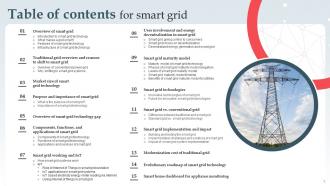
Slide 3: This slide includes the Table of contents.
Slide 4: This slide highlights the Title for the Topics to be covered further.
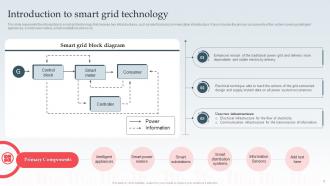
Slide 5: This slide represents the introduction to smart grid technology.
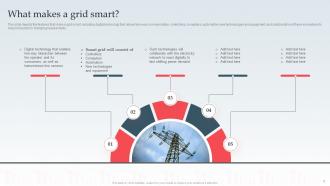
Slide 6: This slide depicts the features that make a grid smart.
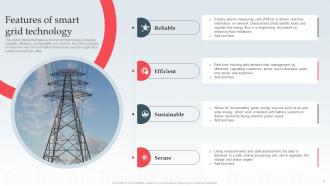
Slide 7: This slide outlines the features of smart grid technology.
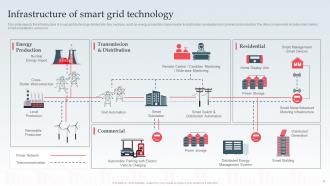
Slide 8: This slide displays the infrastructure of smart grid technology divided into four sections.
Slide 9: This slide includes the Heading for the Contents to be discussed next.
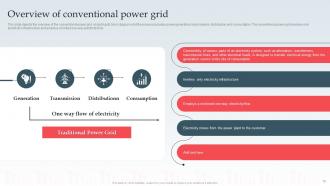
Slide 10: This slide portrays the overview of the conventional power grid.
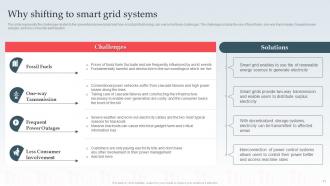
Slide 11: This slide represents the challenges related to the conventional power plant and how smart grid technology can overcome those challenges.
Slide 12: This slide contains the Title for the Ideas to be covered in the upcoming template.
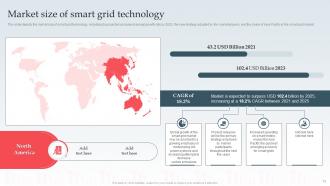
Slide 13: This slide depicts the market size of smart grid technology.
Slide 14: This slide highlights the Heading for the Ideas to be discussed in the next template.
Slide 15: This slide represents the purpose of a smart grid.
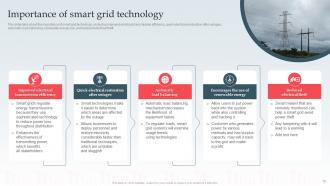
Slide 16: This slide reveals the Importance of smart grid technology.
Slide 17: This slide exhibits the Title for the Contents to be covered in the upcoming template.
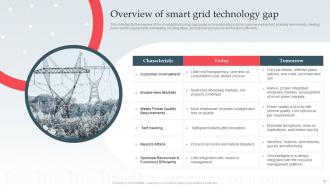
Slide 18: This slide depicts the overview of the smart grid technology gap.
Slide 19: This slide includes the Title for the Contents to be covered in teh upcoming template.
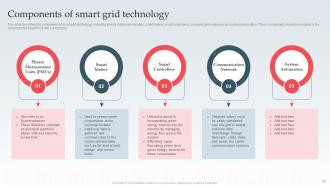
Slide 20: This slide describes the components of smart grid technology.
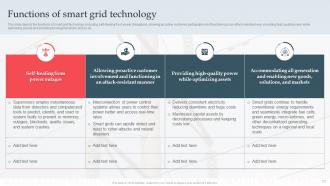
Slide 21: This slide depicts the functions of smart grid technology.
Slide 22: This slide represents the applications and services of smart grid technology, including the real-time market.
Slide 23: This slide portrays the Heading for the Topics to be discussed further.
Slide 24: This slide outlines the working of smart grid systems.
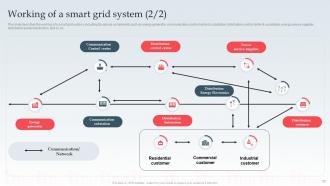
Slide 25: This slide describes the working of a smart grid system.
Slide 26: This slide includes the Title for the Topics to be covered in the upcoming template.
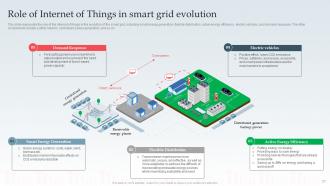
Slide 27: This slide represents the role of the internet of things in the evolution of the smart grid.
Slide 28: This slide describes the real-world applications internet of things in smart grid systems.
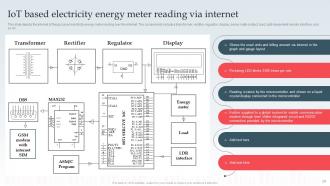
Slide 29: This slide depicts the internet of things based electricity energy meter reading over the internet.
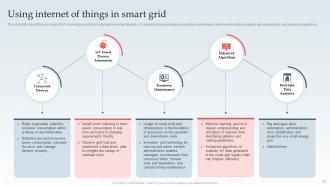
Slide 30: This slide talks about the use cases of IoT in smart grid systems.
Slide 31: This slide includes the Heading for the Contents to be discussed enxt.
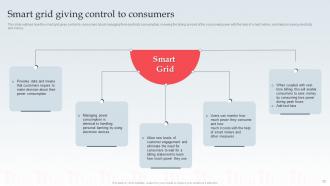
Slide 32: This slide outlines how the smart grid gives control to consumers.
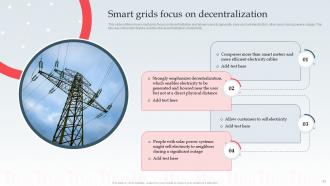
Slide 33: This slide portrays how smart grids focus on decentralization.
Slide 34: This slide exhibits the process of decentralized energy generation in the smart grid.
Slide 35: This slide presents the Title for the Idaes to be covered in the upcoming template.
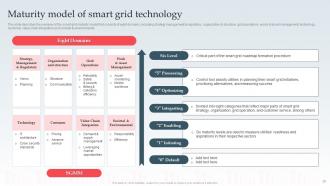
Slide 36: This slide describes the overview of the smart grid maturity model that consists of eight domains.
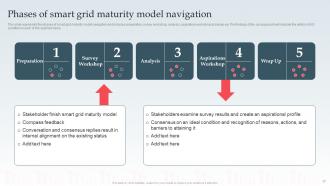
Slide 37: This slide reveals the Phases of smart grid maturity model navigation.
Slide 38: This slide talks about the levels of the smart grid maturity model.
Slide 39: This slide represents the smart grid maturity model timeline developed by the global intelligent utility network for utilities.
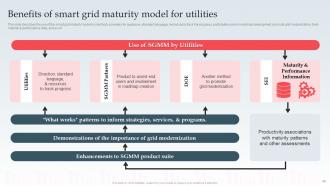
Slide 40: This slide describes the use of the smart grid maturity model by electricity providers.
Slide 41: This slide reveals the Heading for the Ideas to be discussed further.
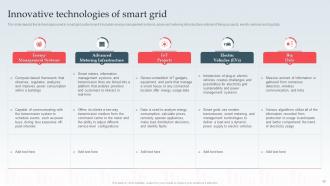
Slide 42: This slide depicts the technologies used in smart grid systems.
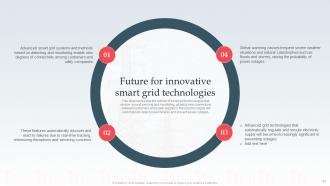
Slide 43: This slide shows the Future for innovative smart grid technologies.
Slide 44: This slide displays the Title for the Contents to be covered in the upcoming template.
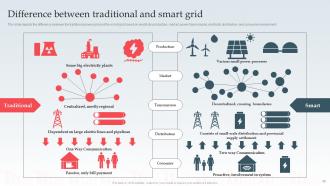
Slide 45: This slide highlights the Difference between traditional and smart grid.
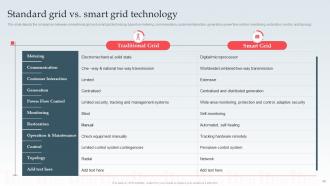
Slide 46: This slide depicts the comparison between conventional grid and smart grid technology.
Slide 47: This slide includes the Heading for the Topics to be discussed in the upcoming template.
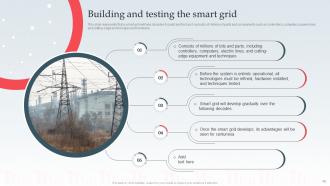
Slide 48: This slide represents that a smart grid will take decades to build and test as it consists of millions of parts and components.
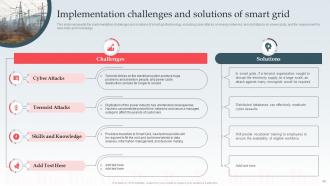
Slide 49: This slide deals with Implementation challenges and solutions of smart grid.
Slide 50: This slide highlights the Impact of smart grid system implementation.
Slide 51: This slide includes the Title for the Topics to be covered in the upcoming template.
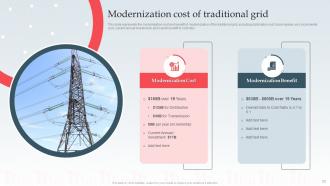
Slide 52: This slide represents the modernization cost and benefit of modernization of the traditional grid.
Slide 53: This slide presents the Heading for the Contents to be further discussed.
Slide 54: This slide represents the evolutionary roadmap of smart grid technology.
Slide 55: This slide contains the Title for the Ideas to be covered in teh next template.
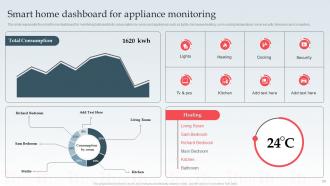
Slide 56: This slide represents the smart home dashboard for monitoring total electricity consumption by rooms and appliances.
Slide 57: This is the Icons slide containing all the Icons used in the plan.
Slide 58: This slide is used for depicting some Additional information.
Slide 59: This is the Quotes slide for motivation.
Slide 60: This slide elucidates information related to the Financial topic.
Slide 61: This slide exhibits the Mind map of the company.
Slide 62: This slide includes the organization's mission, vision, and values.
Slide 63: This is the 30,60,90 days plan slide for effective planning.
Slide 64: This is the Venn diagram slide.
Slide 65: This slide exhibits the firm's Timeline.
Slide 66: This is the Idea Generation slide for encouraging fresh ideas.
Slide 67: This is the Target slide. State your company-targets here.
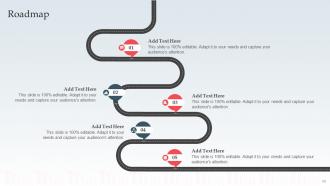
Slide 67: This slide exhibits the firm's Roadmap.
Slide 69: This is the Thank You slide for acknowledgement.
Smart Grid IT Powerpoint Presentation Slides with all 74 slides:
Use our Smart Grid IT Powerpoint Presentation Slides to effectively help you save your valuable time. They are readymade to fit into any presentation structure.






















FAQs for Smart Grid IT
You're gonna need AMI systems, distribution management, and solid communication networks - that's your foundation. Data analytics platforms handle all the meter info, plus you absolutely need cybersecurity since this is critical infrastructure stuff. Customer information systems too, obviously. Communication is honestly where everything gets messy - fiber, cellular, mesh networks depending on where you are. I'd map your current setup first, see what needs upgrading for two-way data. The geography thing always throws people off more than they expect.
So smart grid IT gives you eyes on your whole energy network in real-time. Sensors catch outages and equipment problems instantly, then the system automatically reroutes power before customers lose electricity. Pretty slick stuff honestly. The two-way communication thing is where it gets interesting though - you can pull solar power back from customer panels when you need it and integrate renewables way smoother. My advice? Map out where you're currently flying blind first. Those spots are gonna give you the biggest reliability improvements right off the bat.
Smart grids basically run on big data - they're processing millions of data points every second from all the sensors and meters. Pretty crazy when you think about it. The system uses that info to predict when you'll need more power, spot equipment that's about to fail, and balance everything automatically. Algorithms make split-second calls about where to route electricity and how to blend in solar/wind sources. Honestly, the whole thing would collapse without real-time analytics. I'd start by mapping out what data you're already collecting - that'll show you the best spots to add smart grid tech and get the most bang for your buck.
Dude, build security in from day one - don't just slap it on after. Network segmentation is huge for protecting your critical stuff. Strong authentication and encryption for everything that talks to each other. The whole attack surface thing honestly freaks me out sometimes lol, there's just so many entry points. You'll need continuous monitoring since old-school perimeter defense is pretty much dead. Regular security assessments, solid incident response plan. Oh and definitely train your ops team well - they're usually where things go sideways, not the tech itself.
Oh man, legacy systems are the worst part - you're basically trying to jam modern tech into stuff from the 80s. Cybersecurity becomes a total headache when you're dealing with that mess. Plus the data volumes are insane and need instant processing. Don't even get me started on training your whole team to understand both old-school power grids AND IT systems. Costs blow up fast too. Honestly? Start with small pilot programs first. Way smarter than trying to fix everything at once. Each region has different regulations which just adds more complexity.
Smart meters are like the nervous system of the grid - they're constantly sending data back and forth between your house and the utility company. Instead of some dude coming to read your meter monthly (do they even still do that?), these things automatically track your energy use, voltage, outages, all that stuff. The real-time info lets grid operators actually see what's happening and balance everything out way better. Plus you get dynamic pricing and they can flip your power on/off remotely. Honestly, without all that data flowing in, a "smart" grid would just be a regular grid with expensive computers that can't see anything.
Dude, the smart grid stuff is getting insane right now. Edge computing sensors are processing data locally instead of sending everything to headquarters - way more efficient. 5G is making real-time monitoring actually work properly for once. These new meters can literally make their own decisions without bothering the main system constantly, which is wild if you think about it. AI analytics are happening right at the device level now too. Digital twins let companies test changes virtually before screwing anything up in real life. Honestly? Focus on edge intelligence plus solid wireless - that's where the money is.
So ML is honestly a game-changer for demand forecasting. It crunches way more data than old-school methods - weather patterns, usage history, seasonal stuff, even random events that cause demand spikes. Neural networks work great, or you could try ensemble methods for predictions days ahead. The algorithms actually learn as they go, which is pretty sick. Your smart meters feed them real-world data constantly. I'd start simple though - just plug your historical data into a basic model and see how it stacks up against whatever you're using now. Way less guesswork involved.
Ugh, the regulatory stuff is honestly a nightmare. GDPR and state privacy laws are gonna be your biggest pain since these systems hoover up customer data like crazy. NERC CIP standards are mandatory for grid security - that's non-negotiable in North America. Your utility commission will want to approve any rate changes or new tech rollouts, which... yeah, expect delays. Environmental compliance kicks in for hardware installs too. Oh, and don't forget reliability standards. Seriously though, loop in your legal team from day one. I learned that the hard way on my last project.
Honestly, the cloud is perfect for smart grids because you're dealing with insane amounts of data - like millions of sensor readings pouring in every second from meters and weather stations. Traditional systems just can't keep up. With cloud computing, everything scales automatically when demand spikes, plus you get that built-in backup protection. The cool part? You can roll out AI models way faster to predict problems before the lights go out. Oh, and accessing all that data from anywhere doesn't hurt either - pretty huge advantage over old-school on-premise setups that honestly feel ancient at this point.
Smart grid tech basically fixes the main problem with renewables - they're super unpredictable. Real-time monitoring kicks in when your solar cuts out or wind stops. The system automatically switches between sources and stores extra power when you're making more than you need. What's cool is it handles two-way flow, so excess energy goes right back to the grid. Honestly, the predictive stuff is pretty impressive too. Just make sure whatever renewable project you're doing has IT that can actually handle all this dynamic switching around - learned that one the hard way!
Real-time data is huge - smart meters and apps showing exactly what people are spending gets them hooked fast. Make it actionable though - personalized tips, peak hour alerts, maybe some gamification stuff. Demand response programs work too where you literally pay customers to use less during busy times. Honestly the interface matters more than people think. Nobody's downloading your app if it looks ancient. Time-of-use pricing alerts are clutch since most people have no clue when electricity costs more. Keep the recommendations simple and you'll see way better engagement rates.
Honestly, start with only grabbing the data you actually need - don't be greedy about it. Encrypt everything (both when it's moving around and when it's sitting in storage). Set up proper access controls so random people can't peek at customer usage patterns. For analytics stuff, aggregate everything anonymously. Oh, and don't be that company that hoards data forever - set up deletion schedules. The big thing though? Get real consent from customers about what you're doing with their info. Give them actual control over their settings too. Privacy-by-design from the start saves you so much headache later.
So basically smart grids run on SCADA systems, AMI, and a bunch of IoT sensors all talking to each other. Data moves through protocols like DNP3 and IEC 61850 - plus wireless mesh networks connecting everything from big transformers down to your house meter. The timing's crazy tight though, like millisecond-level for critical stuff. Edge computing handles most processing locally, then feeds into central control systems that'll catch outages or voltage problems automatically. Honestly the whole setup's pretty impressive when it works. I'd map out what communication infrastructure you've got first - that'll show you where the blind spots are.
So microgrids are like mini power networks that can work solo or plug into the main grid - kinda like backup generators but way smarter. When the big grid crashes, your neighborhood just keeps humming along with local solar or batteries. Pretty cool resilience factor there. They're also great for testing new tech without breaking everything (learned that one the hard way at my last job). The biggest advantage? They handle power locally instead of shipping it across miles of lines. I'd say start with a small pilot project first - you'll hit weird integration issues you never saw coming.
-
Happy to found you SlideTeam. You guys are value for money. Amazing slides.
-
“Excellent information with easy access.”