

Staff Mentoring Playbook Powerpoint Presentation Slides




Try Before you Buy Download Free Sample Product
 Impress Your
 Audience
 100%
100% Editable
 Save Hours
 of Time


The coaching playbook emerges as a training guideline for employees at the workplace. It caters as a game plan for optimizing employee performance and leveraging existing talent pools. Grab our readymade and 100 percent editable Staff Mentoring Playbook template. It covers workforce coaching program criteria based on different learning practices, talent growth for employees, various employee coaching methods, the importance of coaching for employees and employers, and engaging employees across the firm. The playbook covers a workforce coaching program highlighting a game plan for an employee coaching roadmap for a successful employee coaching program. The workforce required coaching across different departments, objectives of coaching offered to employees, trainee competency assessment matrix, workforce coaching requirements identification form, employee skills and knowledge requirements, and workforce coaching meeting schedule. Different coaching modules highlight effective employee onboarding, skills enhancement, sales team coaching, and an efficient customer support team. Moreover, it caters to trainers and coaching initiatives for employee coaching, communication skills coaching for executives, etc. Workforce coaching effectiveness and cost estimation are highlighted along with the workforce coaching performance tracking dashboard. Get access now.
People who downloaded this PowerPoint presentation also viewed the following :
Content of this Powerpoint Presentation
Slide 1: This slide introduces Staff Mentoring Playbook. State Your Company Name and begin.
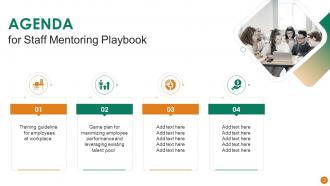
Slide 2: This slide shows Agenda for Training Playbook Template.
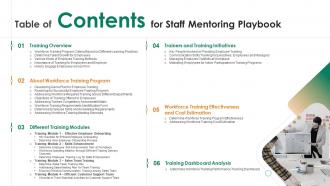
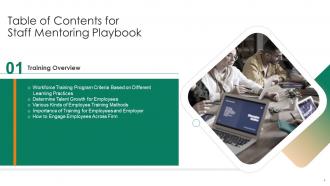
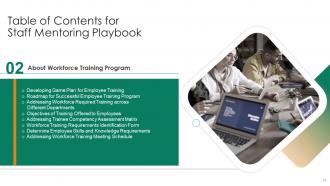
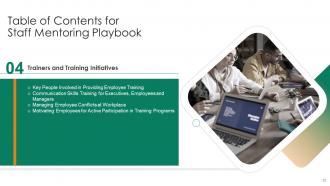
Slide 3: This slide presents Table of Contents for Training Playbook Template.
Slide 4: This slide shows title for topics that are to be covered next in the template.
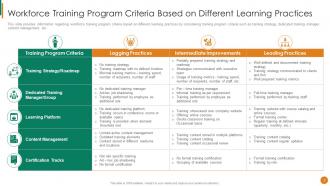
Slide 5: This slide displays Workforce Training Program Criteria Based on Different Learning Practices.
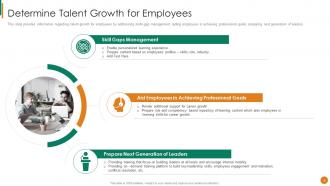
Slide 6: This slide provides information regarding talent growth for employees by addressing skills gap.
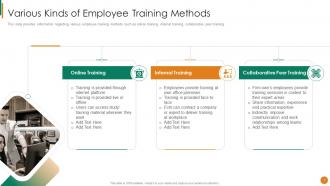
Slide 7: This slide represents Various Kinds of Employee Training Methods.
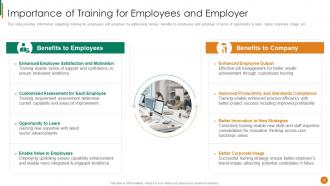
Slide 8: This slide showcases training for employees and employer by addressing various benefits to employees.
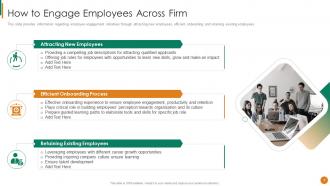
Slide 9: This slide shows Providing a compelling job descriptions for attracting qualified applicants.
Slide 10: This slide shows title for topics that are to be covered next in the template.
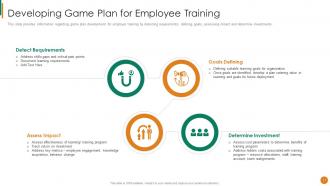
Slide 11: This slide presents Developing Game Plan for Employee Training.
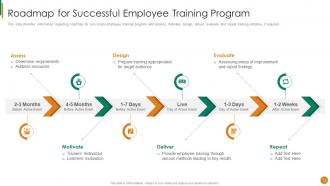
Slide 12: This slide displays Roadmap for Successful Employee Training Program.
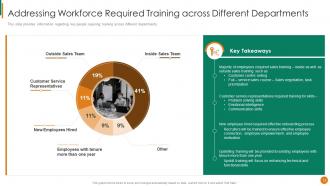
Slide 13: This slide represents Addressing Workforce Required Training across Different Departments.
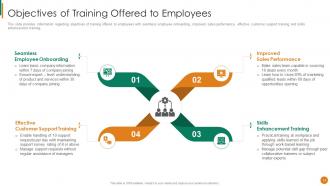
Slide 14: This slide showcases Objectives of Training Offered to Employees.
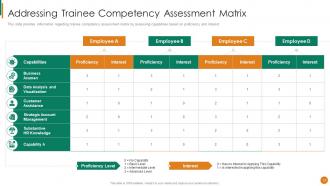
Slide 15: This slide shows Addressing Trainee Competency Assessment Matrix.
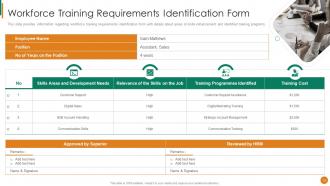
Slide 16: This slide represents Workforce Training Requirements Identification Form.
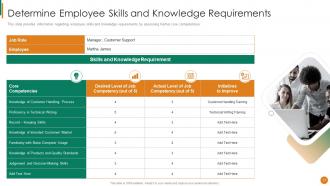
Slide 17: This slide showcases Determine Employee Skills and Knowledge Requirements.
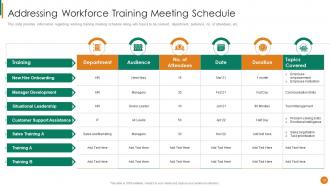
Slide 18: This slide shows Addressing Workforce Training Meeting Schedule.
Slide 19: This slide shows title for topics that are to be covered next in the template.
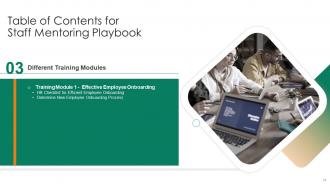
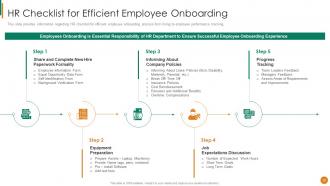
Slide 20: This slide displays HR checklist for efficient employee onboarding process from hiring to employee performance tracking.
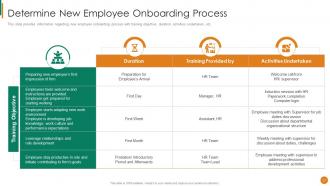
Slide 21: This slide represents Determine New Employee Onboarding Process.
Slide 22: This slide shows title for topics that are to be covered next in the template.
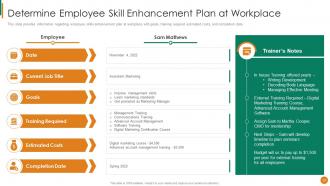
Slide 23: This slide presents Determine Employee Skill Enhancement Plan at Workplace.
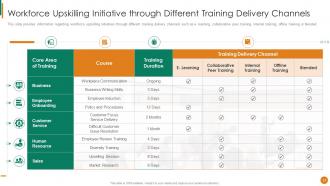
Slide 24: This slide displays Workforce Upskilling Initiative through Different Training Delivery Channels.
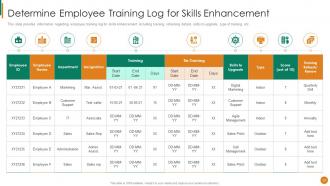
Slide 25: This slide represents Determine Employee Training Log for Skills Enhancement.
Slide 26: This slide shows title for topics that are to be covered next in the template.
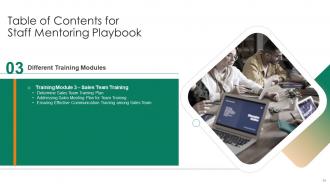
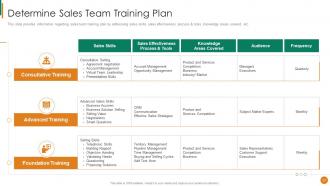
Slide 27: This slide provides information regarding sales team training plan by addressing sales skills.
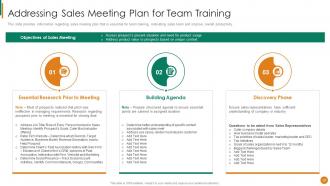
Slide 28: This slide represents Addressing Sales Meeting Plan for Team Training.
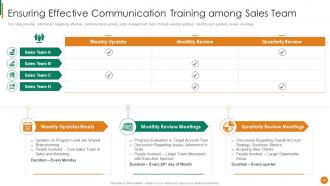
Slide 29: This slide showcases Ensuring Effective Communication Training among Sales Team.
Slide 30: This slide shows title for topics that are to be covered next in the template.
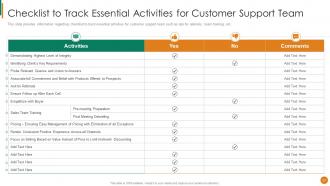
Slide 31: This slide presents Checklist to Track Essential Activities for Customer Support Team.
Slide 32: This slide shows title for topics that are to be covered next in the template.
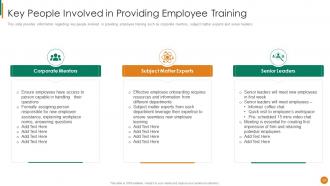
Slide 33: This slide displays Key People Involved in Providing Employee Training.
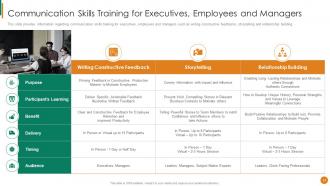
Slide 34: This slide represents Communication Skills Training for Executives, Employees and Managers.
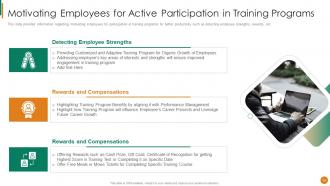
Slide 36: This slide showcases Motivating Employees for Active Participation in Training Programs.
Slide 37: This slide shows title for topics that are to be covered next in the template.
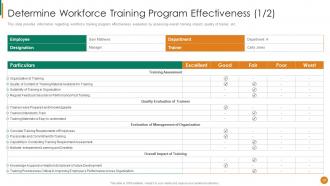
Slide 38: This slide presents Determine Workforce Training Program Effectiveness.
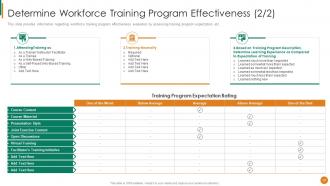
Slide 39: This is another slide continuing Determine Workforce Training Program Effectiveness.
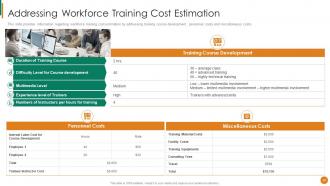
Slide 40: This slide provides information regarding workforce training cost estimation.
Slide 41: This slide shows title for topics that are to be covered next in the template.
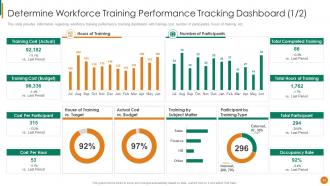
Slide 42: This slide presents Determine Workforce Training Performance Tracking Dashboard.
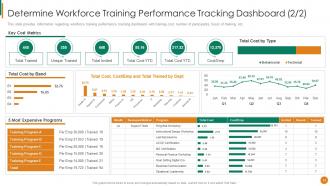
Slide 43: This is another slide continuing Determine Workforce Training Performance Tracking Dashboard.
Slide 44: This slide displays Icons for Staff Mentoring Playbook.
Slide 45: This slide is titled as Additional Slides for moving forward.
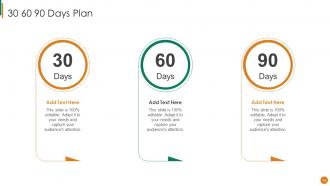
Slide 46: This slide provides 30 60 90 Days Plan with text boxes.
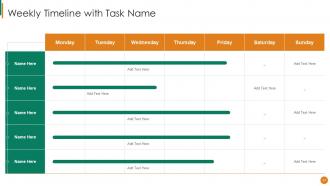
Slide 47: This slide showcases Weekly Timeline with Task Name.
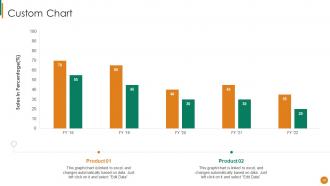
Slide 48: This slide displays Custom chart with two products comparison.
Slide 49: This slide shows Post It Notes. Post your important notes here.
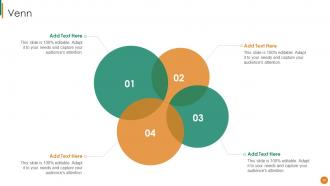
Slide 50: This slide depicts Venn diagram with text boxes.
Slide 51: This is Our Goal slide. State your firm's goals here.
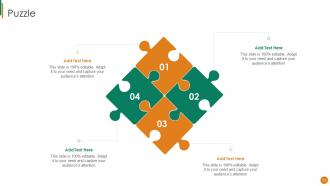
Slide 52: This slide contains Puzzle with related icons and text.
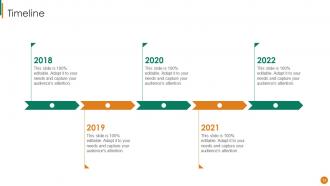
Slide 53: This is a Timeline slide. Show data related to time intervals here.
Slide 54: This is a Thank You slide with address, contact numbers and email address.
Staff Mentoring Playbook Powerpoint Presentation Slides with all 59 slides:
Use our Staff Mentoring Playbook Powerpoint Presentation Slides to effectively help you save your valuable time. They are readymade to fit into any presentation structure.





FAQs for Staff Mentoring Playbook
Honestly, start with a pilot program - way easier to figure out what clicks with your team that way. The knowledge transfer piece is massive because people get real personalized guidance instead of generic training. Plus your senior folks actually get better at leadership through mentoring, which is kinda a win-win situation. Retention improves too since employees feel more supported. Oh, and the networking benefits are probably underrated - people build way stronger relationships across teams. Skills develop faster, collaboration gets better. The ROI makes sense because you're using internal resources to create a more connected workforce. I'd definitely test it small first though.
Honestly, detailed profiles are everything here. Go way beyond job titles - I've seen junior devs paired with product managers because they wanted to switch tracks, and it worked perfectly. Map out their tech skills, career goals, and how they actually work. HR loves doing random pairings but that's a disaster waiting to happen! Survey both sides about specific goals, then match mentors who've been there. Personality matters too since awkward chemistry kills these relationships. Oh, and definitely build in a trial period because sometimes people just don't click, you know?
Honestly, mentoring is a game-changer for keeping people around. Your employees need someone in their corner who actually gives a damn about where they're headed. It makes them feel supported, you know? Regular feedback and guidance builds their confidence too. Nobody wants to feel invisible at work - that's just basic human nature. Strong relationships inside the company make it harder to leave (though I've seen people bounce anyway when things get really toxic). Start simple if you're not doing this yet. Even pairing people up casually can shift how valued your team feels day to day.
You gotta track the hard stuff - retention rates, promotions, engagement scores. Compare participants vs everyone else. But honestly? The real gold is in regular check-ins with people. Do quick surveys asking how mentors and mentees actually feel about it. Goal achievement rates matter too since that's kinda the whole point. I always think quarterly reviews work best for pulling all this together - you get both the relationship quality and actual career results. The data's only half useful without knowing if people are genuinely happy with their matches.
Honestly, it comes down to three things: actually listening (not just waiting for your turn to talk), asking good questions, and giving feedback that doesn't make you sound like a know-it-all. The listening piece is probably the hardest part - I still catch myself planning what I'm gonna say next instead of really hearing them out. Being genuinely curious about what they want helps too. Don't just push your own ideas on them, you know? I always start by asking what success looks like to them first, then figure out how to help them get there.
So I've been doing this mentoring thing for a while now and tech honestly makes it so much easier. Video calls are obvious but super helpful when your mentor's in like another state or whatever. Between sessions, I just use Slack to fire off quick questions instead of waiting weeks. Google docs have been clutch for keeping track of goals - way better than my old messy notebook approach. Some people use those learning platforms too where mentors can share courses, though I haven't tried that yet. Don't overcomplicate it though. Pick one tool first and see how it goes.
Honestly? The worst part is when expectations don't line up at all. Your mentee wants a promotion tomorrow, but you're focused on building actual skills - super frustrating for everyone. Communication gets messy too, especially when you're both crazy busy. I've learned to just schedule regular quick check-ins instead of waiting for the "perfect" deep conversation that never happens. Some people aren't ready for real feedback yet, which is awkward but you can usually tell pretty fast. Oh, and personality clashes are real - definitely worth talking about communication styles upfront so you know what success looks like.
Honestly, start collecting baseline data before you even launch - trust me on this one. Compare performance reviews, promotion rates, and retention between mentored vs non-mentored employees over like 12-18 months. That's where you'll see the real difference. Survey everyone quarterly about goal progress and skill development. Don't forget engagement scores either - mentored people usually stick around way longer, which saves you a ton in recruiting costs. Oh, and track whatever specific skills you're actually trying to build through the program. The data gets pretty compelling once you have enough to compare.
Okay so first thing - don't just pair people with the obvious matches. Mix up backgrounds, departments, different experience levels. Your mentor training needs to cover unconscious bias stuff (which honestly everyone should know by now but whatever). Create multiple ways for people to communicate since not everyone clicks the same way. The whole psychological safety thing matters from literally day one. Oh and audit your current mentors to see what gaps you're missing - being proactive about inclusion beats crossing your fingers and hoping it works out naturally. Clear expectations help too.
Honestly, having a good mentor is like having a cheat code for your career. They'll share the real deal about how to actually move up - not just the stuff you read in job descriptions. The networking alone is worth it since they can introduce you to people you'd never meet otherwise. When opportunities pop up, they're already thinking of you and putting your name out there. Oh and they're great for navigating tricky projects without stepping on landmines. Just be clear about your goals when you meet so they don't waste time on generic advice.
So formal mentoring is like the official stuff - HR sets you up with someone, you have scheduled meetings, actual goals to hit. Pretty structured. Informal is just... life, basically? Like when you chat with that senior person in marketing who always has good insights, or someone DMs you career advice. I'd say go formal when you need to learn specific skills or want real accountability (deadlines matter). Informal's better for getting different perspectives or just bouncing ideas around. Honestly though, why pick one? Having both gives you the best of everything - structure when you need it, casual wisdom when you don't.
Honestly, reverse mentoring is pretty brilliant when done right. Junior people get face time with leadership and build confidence they'd never get otherwise. Senior folks? They finally understand what's actually happening day-to-day - plus they learn about new tech and trends. It's wild how out of touch executives can get sometimes. Both sides have to see the real value though, not just go through the motions. I'd match people based on where their skills complement each other, not just who's been around longest. Makes way more sense that way.
Honestly, it all comes down to making them feel safe to actually talk to you. Share your own screwups first - trust me, vulnerability works way better than trying to look perfect. Ask open questions and listen without immediately jumping in to fix everything. Sometimes they just need someone to hear them out, you know? Set up regular one-on-ones where they control the agenda, not you. And whatever you do, follow through on what you discuss and keep things between you two. Next time, skip the work stuff and just ask "What's really on your mind?" See what happens.
Oh man, this is so important! Don't just throw mentors into the deep end - they actually need training first. Teach them active listening, how to give feedback that doesn't suck, basic goal-setting stuff. I've watched so many "programs" turn into awkward coffee meetings with zero structure (such a waste). Set clear expectations upfront about time, boundaries, what success looks like. Role-playing helps tons too. Monthly check-ins or mentor peer groups work well for ongoing support. Start with your natural mentors and train them first - they'll help sell others on it.
Honestly, feedback is what makes mentoring actually work - otherwise you're just chatting with no real progress. I do quick weekly check-ins to see what's clicking and what's not. Your mentee might think they're crushing it when they're actually missing the mark (happens more than you'd think). Don't wait for formal reviews either. Give feedback right when you notice something, and pivot fast if an approach isn't working. That's literally why you're there! Course-correcting in real time beats letting problems build up.
-
I am so thankful for all of the templates I've found on your site. They have saved me hours every week and helped make my presentations come alive. Keep up with these amazing product releases!
-
Such amazing slides with easy editable options. A perfect time-saver.