


Lagerbestandsbeschaffungs- und Lagerverwaltungssystem Powerpoint-Präsentationsfolien




Try Before you Buy Download Free Sample Product
 Impress Your
Audience
 100%
Editable
 Save Hours
of Time


Lagerbestandsbeschaffung und -verwaltung helfen einer Organisation bei der Bestandsverfolgung in Echtzeit und der Beschaffung von Waren von Lieferanten. Holen Sie sich unsere aufschlussreiche Vorlage für Lagerbestandsbeschaffungs- und Lagerverwaltungssysteme. Es trägt dazu bei, die Betriebskosten zu senken und die Verschwendung von Inventar zu reduzieren. Unser Lagerverwaltungsdeck zeigt zunächst Prozesse zur Aufrechterhaltung eines optimalen Lagerbestands. Dies geschieht durch den Kauf genauer Warenmengen von Lieferanten. Das PPT umfasst außerdem Bedarfsprognosen, um auf der Grundlage historischer Verkaufsdaten das optimale Niveau der erforderlichen Bestandsmenge zu ermitteln. Es behandelt auch Methoden wie die wirtschaftliche Bestellmenge und den Meldepunkt, um die erforderliche Bestandsmenge zu bestimmen. Unsere Präsentation Lagerbestandsbeschaffung zeigt auch verschiedene Lageroptimierungsstrategien. Dazu gehören ABC-Analysen und Lagerautomatisierung, die dazu beitragen können, Bestandsverschwendung zu reduzieren. Darüber hinaus zeigt es ein automatisiertes Nachverfolgungssystem, um die Verschwendung von Lagerbeständen zu minimieren und den idealen Zeitpunkt für die Bestellung von Lagerbeständen zu bestimmen. Es zeigt auch verschiedene Strategien für eine genaue Auftragserfüllung und die Vermeidung von Fehlbeständen auf. Der PPT hebt auch die angefallenen Kosten und Herausforderungen hervor, denen sich Unternehmen bei der Bestandsverwaltung gegenübersehen. Schließlich enthält es Dashboards und KPIs zur Verfolgung von Lagervorgängen und Beständen. Jetzt zugreifen.
People who downloaded this PowerPoint presentation also viewed the following :
Inhalt dieser Powerpoint-Präsentation
Folie 1 : Diese Folie stellt das Lagerbestandsbeschaffungs- und Lagerverwaltungssystem vor. Beginnen Sie mit der Angabe Ihres Firmennamens.
Folie 2 : Diese Folie zeigt die Agenda der Präsentation.
Folie 3 : Diese Folie erläutert das Inhaltsverzeichnis.
Folie 4 : Diese Folie hebt den Titel für die weiter zu behandelnden Themen hervor.
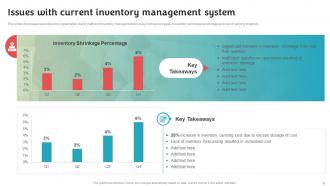
Folie 5 : Diese Folie zeigt Probleme, mit denen Unternehmen aufgrund eines ineffizienten Bestandsverwaltungsprozesses konfrontiert sind.
Folie 6 : Diese Folie stellt die Probleme dar, mit denen Organisationen bei der Verwaltung des Inventars und des Lagers konfrontiert sind.
Folie 7 : Diese Folie erläutert die Überschrift für die weiter zu behandelnden Inhalte.
Folie 8 : Diese Folie zeigt Lösungen, die von Organisationen implementiert werden können, um Bestandsverwaltungsprobleme anzugehen.
Folie 9 : Diese Folie nennt den Titel für die als nächstes zu diskutierenden Ideen.
Folie 10 : Diese Folie zeigt Prozesse, die der Organisation bei der Bestandskontrolle und -verwaltung helfen können.
Folie 11 : Diese Folie erwähnt die Überschrift für die Ideen, die in der kommenden Vorlage behandelt werden sollen.
Folie 12 : Diese Folie hebt die Vorteile der Prognose der Lagernachfrage hervor.
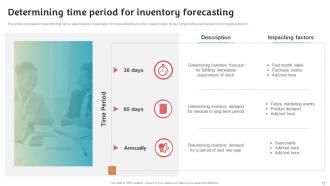
Folie 13 : Diese Folie befasst sich mit den Zeiträumen, die von Organisationen für die Prognose des Bestandsbedarfs festgelegt werden können.
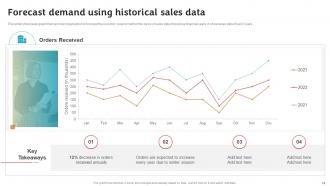
Folie 14 : Diese Folie bietet Informationen über die prognostizierte Nachfrage anhand historischer Verkaufsdaten.
Folie 15 : Diese Folie zeigt den Prognosebedarf verschiedener Produkttypen.
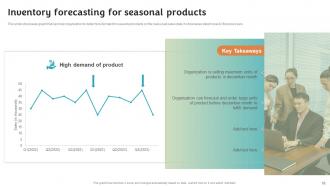
Folie 16 : Diese Folie konzentriert sich auf die Bestandsprognose für saisonale Produkte.
Folie 17 : Diese Folie zeigt den Titel für die als nächstes zu besprechenden Komponenten.
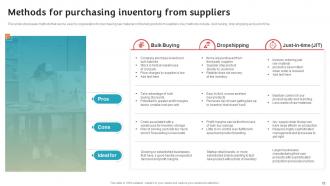
Folie 18 : Diese Folie erläutert die Methoden zum Einkauf von Inventar von Lieferanten.
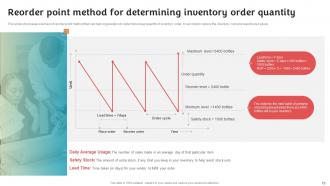
Folie 19 : Diese Folie bietet einen Überblick über die Reorder-Point-Methode, die Unternehmen dabei helfen kann, die ideale Menge der Bestandsbestellung zu bestimmen.
Folie 20 : Diese Folie zeigt, dass die EOQ-Methode Organisationen dabei helfen kann, die ideale Bestandsauftragsgröße für Unternehmen zu bestimmen.
Folie 21 : Diese Folie skizziert den Plan, der Unternehmen dabei helfen kann, Inventar von Lieferanten zu kaufen.
Folie 22 : Diese Folie enthält die Überschrift für die als nächstes zu diskutierenden Themen.
Folie 23 : Diese Folie zeigt die Strategien zur Verbesserung des Lagerbetriebs.
Folie 24 : Diese Folie zeigt den Prozessablauf, der der Organisation helfen kann, das Lager zu verwalten und zu optimieren.
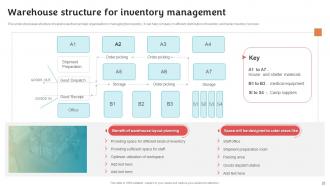
Folie 25 : Diese Folie zeigt die Lagerstruktur für die Bestandsverwaltung.
Folie 26 : Diese Folie zeigt die ABC-Analyse, die der Organisation bei der Zusammenstellung des Inventars für das Lager helfen kann.
Folie 27 : Diese Folie veranschaulicht die Etikettierung für eine effektive Lagerverwaltung.
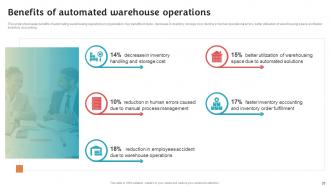
Folie 28 : Diese Folie zeigt die Vorteile der Automatisierung von Lagervorgängen in der Organisation.
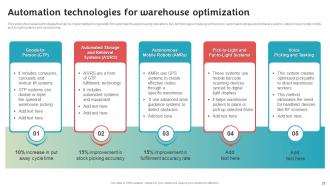
Folie 29 : Diese Folie zeigt die Technologien, die in Organisationen implementiert werden können, um die Lagervorgänge zu automatisieren.
Folie 30 : Diese Folie konzentriert sich auf die digitale und physische Prozessautomatisierung für das Lager.
Folie 31 : Diese Folie enthält die Titel für die weiter zu diskutierenden Themen.
Folie 32 : Diese Folie zeigt den Vergleich von manuellen und automatisierten Bestandsverfolgungssystemen.
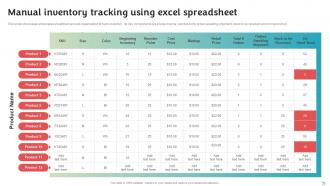
Folie 33 : Diese Folie zeigt die manuelle Bestandsverfolgung mithilfe einer Excel-Tabelle.
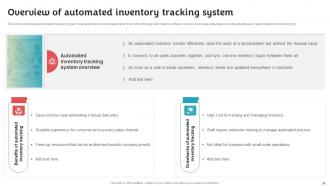
Folie 34 : Diese Folie zeigt eine Übersicht über automatisierte Bestandssysteme, die Unternehmen dabei helfen können, Lagerbestände mithilfe von Automatisierungssoftware zu verfolgen.
Folie 35 : Diese Folie enthält die Tools, die die Organisation bei der automatisierten Bestandsverwaltung unterstützen und die Verschwendung von Ressourcen reduzieren können.
Folie 36 : Diese Folie erläutert die Überschrift für den Inhalt, der in der demnächst erscheinenden Vorlage behandelt werden soll.
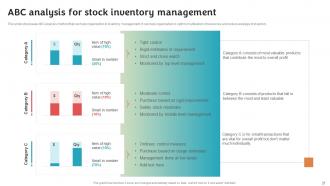
Folie 37 : Diese Folie stellt die ABC-Analysemethode dar, die bei der Organisation der Bestandsverwaltung helfen kann.
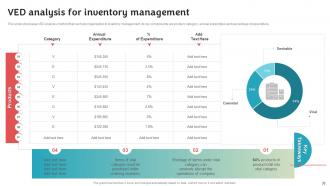
Folie 38 : Diese Folie zeigt die VED-Analysemethode, die die Organisation bei der Bestandsverwaltung unterstützen kann.
Folie 39 : Diese Folie zeigt die LIFO- und FIFO-Methode für die Bestandsverwaltung.
Folie 40 : Diese Folie veranschaulicht die HML-Analyse für die Bestandsverwaltung.
Folie 41 : Diese Folie zeigt den Titel für die weiter zu behandelnden Themen.
Folie 42 : Diese Folie konzentriert sich auf die Herausforderungen und Lösungen für die Bestandsverwaltung.
Folie 43 : Diese Folie erläutert die Überschrift für die als nächstes zu besprechenden Komponenten.
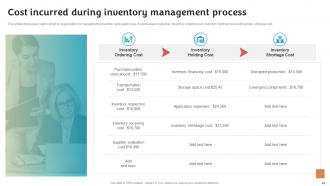
Folie 44 : Diese Folie zeigt die Kosten, die der Organisation bei der Verwaltung des Inventars und des Lagers entstehen.
Folie 45 : Diese Folie nennt den Titel für die Komponenten, die in der folgenden Vorlage behandelt werden sollen.
Folie 46 : Diese Folie veranschaulicht die KPIs zur Überwachung der Bestandsverwaltungsleistung.
Folie 47 : Diese Folie enthält die Überschrift für die weiter zu diskutierenden Themen.
Folie 48 : Diese Folie befasst sich mit den Auswirkungen des Bestandsmanagements auf die Organisation.
Folie 49 : Diese Folie zeigt die Titel der als nächstes zu diskutierenden Themen.
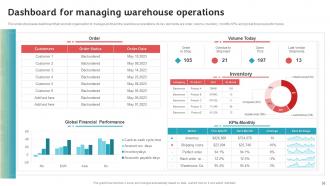
Folie 50 : Diese Folie zeigt das Dashboard für die Verwaltung von Lagervorgängen.
Folie 51 : Diese Folie zeigt das Dashboard zur Verfolgung der Bestandsverwaltungs-KPIs.
Folie 52 : Dies ist die Symbolfolie, die alle im Plan verwendeten Symbole enthält.
Folie 53 : Zweck dieser Folie ist es, zusätzliche Informationen zu präsentieren.
Folie 54 : Diese Folie konzentriert sich auf den Vergleich von Bestandsverwaltungskennzahlen mit Wettbewerbern.
Folie 55 : Diese Folie umreißt die Clustered-Spalte.
Folie 56 : Dies ist die Folie zur Ideengenerierung, um neue Ideen zu fördern.
Folie 57 : Diese Folie hebt die Mission, Vision und Ziele der Organisation hervor.
Folie 58 : Diese Folie dient zum Vergleich.
Folie 59 : Diese Folie zeigt die Unternehmenschronik.
Folie 60 : Dies ist die Folie Lernen Sie unser Team kennen. Geben Sie hier die Informationen zu Ihren Teammitgliedern an.
Folie 61 : Diese Folie präsentiert die Roadmap des Unternehmens.
Folie 62 : Dies ist die Dankesfolie für die Bestätigung.
Lagerbestandsbeschaffung und Lagerverwaltungssystem Powerpoint-Präsentationsfolien mit allen 67 Folien:
Verwenden Sie unsere Powerpoint-Präsentationsfolien für das Lagerbestandsbeschaffungs- und Lagerverwaltungssystem, um Ihnen effektiv dabei zu helfen, wertvolle Zeit zu sparen. Sie sind gebrauchsfertig und passen in jede Präsentationsstruktur.






























FAQs for Stock Inventory Procurement And Warehouse Management System
So you'll need demand forecasting first - that's basically predicting what you'll sell. Then figure out safety stock levels and reorder points. Track your supplier lead times too because those change more than you'd think. ABC analysis helps prioritize your expensive stuff vs the random widgets. Honestly, ditch spreadsheets early and get real inventory software or you'll hate your life later. The magic happens when you set up automatic reorders based on your sales history and seasonal trends. I'd start by counting what you actually have, then nail down forecasting since everything flows from there.
Dude, barcode scanners and RFID tags will save your sanity. Manual counting is where everything goes wrong - typos, miscounts, all that nonsense. Real-time updates mean you'll actually know what's on your shelves instead of guessing. Set up alerts for low stock so you're not panicking when you run out of stuff. I swear, once you get the hang of it, you'll wonder how you managed before. Oh, and if you're just starting out, basic barcode scanning is probably your best bet - don't overcomplicate it right away.
Look, demand forecasting is basically what keeps your whole inventory game from falling apart. You're trying to figure out what to order and when, so you don't end up with empty shelves OR a warehouse stuffed with junk nobody buys (trust me, both suck). The goal? Having enough product without tying up all your cash in overstock. Start by digging into your last 12-24 months of sales data - that's where the patterns hide. Seasonal trends, market shifts, all that stuff matters. Without decent forecasting, you're just throwing darts blindfolded and hoping for the best.
So NetSuite, Fishbowl, and QuickBooks Commerce are the heavy hitters everyone talks about. Zoho Inventory is solid for mid-sized stuff - their interface is way cleaner than you'd expect for what you pay. inFlow's decent too. Smaller shops should look at Sortly or ABC Inventory instead. Oh, and definitely pick something that plays nice with whatever software you're already using. Trust me, having everything scattered across different systems is such a headache. I'd grab free trials of maybe 2-3 options in your budget and test drive them. You'll know pretty quick which one feels right.
Ugh, don't just randomly slash prices - that's such a waste. Bundle your slow stuff with popular items instead. Flash sales are honestly your best friend here, people eat that stuff up. Target specific customers who'd actually want those products rather than blasting everyone. Your sales data should tell you what moves and when, so use it to fix your purchasing before you're drowning in stock again. Oh, and start checking turnover rates weekly - monthly is way too slow. You'll catch problems before they get ugly.
Track your inventory turnover ratio first - that one tells you everything about how fast you're moving stock. Also watch days sales outstanding, stockout frequency, and what percentage of inventory value goes to carrying costs. Turnover ratio is honestly where I'd put most of my focus since it shows efficiency better than anything else. Calculate it monthly and compare to industry benchmarks. Days sales outstanding shows how long stuff sits around, stockouts tell you if you're losing sales by running out too much. Oh and carrying costs - those add up quick so you'll want to keep tabs on that percentage.
So basically, just-in-time inventory frees up a ton of cash that would normally just sit there in your warehouse. You're ordering stuff right when you actually need it instead of hoarding everything. Way faster turnover that way. The tricky part is you really can't mess up your supplier relationships or demand forecasting - otherwise you'll be scrambling when you run out of something important. Honestly, it's kind of stressful but the cash flow benefits are pretty huge. You can actually use that money for other things instead of having it tied up in inventory for months.
Ugh, inventory sync is the absolute worst part. You'll be selling on your website, Amazon, maybe a physical store - and nothing talks to each other properly. So you oversell something online when your last unit just walked out the door, or you're telling people stuff's out of stock when you actually have plenty. Each platform has different return times and shipping speeds too, which makes it even trickier. I swear it feels like you're just putting out fires all day instead of actually running your business. Decent inventory software helps a ton though - gives you one place to see everything so you're not guessing where to put your stock.
Honestly, you gotta start way earlier than it feels right - like 6 months out for big seasonal stuff. Look at last year's numbers but definitely pad your orders because forecasting is basically educated guessing (trust me on this one lol). The supplier thing is huge though - having backup vendors saved my butt when my main guy couldn't deliver last Christmas. Oh and don't lock yourself into massive warehouse space year-round. Flexible storage during peak times makes way more sense. I'd start mapping out your next cycle now and set those calendar reminders before you forget!
Yeah stockouts are brutal - you lose sales immediately and customers get pissed off. I'd start with decent demand forecasting using your past data, then keep safety stock for your bestsellers. Automated reorder points are a lifesaver so you're not constantly watching inventory levels. Having backup suppliers matters too, though building those relationships takes time. Oh and focus on your top SKUs first - trying to perfect everything at once is overwhelming. My old manager used to say stockouts keep you awake way more than overstock does.
Honestly, both will save you so much headache with data entry mistakes. Barcoding lets you scan stuff instead of typing everything manually - way faster and fewer screwups. RFID's pretty sweet though, you can read multiple items without even seeing them directly, just walk around with the scanner. Real-time stock tracking with either one. I'd probably go barcode first since it won't break the bank, then maybe upgrade to RFID later if you're dealing with crazy volume. My buddy's warehouse switched last year and he says it was a game changer.
Honestly, start with FIFO if you're not already - moving older stuff first. Sounds basic but places screw this up constantly when they get swamped. Track your sales patterns super closely so you can predict what you'll need, especially with seasonal stuff. Try getting smaller deliveries more often instead of huge batches that might go bad - your suppliers will work with you on this if you build good relationships with them. Oh, and get temperature monitoring set up plus clear date labels. The forecasting thing is probably the trickiest part but makes the biggest difference once you nail it.
So ABC analysis is basically sorting your inventory into three buckets. You rank everything by how much money it brings in annually, then split it up - A items are your cash cows (like 20% of products but 80% of revenue), B is middle tier, C is the small stuff. Honestly, it's just common sense but with a fancy name. Your A items need babysitting - constant monitoring, tight controls, the works. C items? Don't stress too much about those. Oh and it's the Pareto principle thing if you've heard of that. Start by looking at your annual dollar volume per product and you'll see the pattern emerge pretty quickly.
I'd do quarterly audits for most stuff, but if you've got items flying off the shelves, monthly might be better. Compare what your system says versus what's actually sitting there - start with expensive items since those mess up your numbers the worst. Early mornings are clutch, way less people running around creating chaos. Between full counts, throw in some cycle counting to catch problems before they get weird. Oh, and don't let the person who just received or moved inventory do the counting - that's asking for trouble. Write down everything and jump on any big variances right away. Small problems become expensive headaches fast.
Training your team really cuts down on inventory screwups. Proper procedures for receiving and storing stuff means way fewer "wait, where did that go?" moments. Your people catch problems early too - damaged items, low stock, whatever - before things get messy. The upfront time investment? Totally worth it IMO. Staff move faster when they're not constantly asking questions or fixing their own mistakes. Oh, and start with whatever process is causing you the biggest headaches right now. That's where you'll see results fastest.
-
SlideTeam just saved my project! Thank you so much. The variety of templates helped me showcase multiple perspectives easily.
-
The best part about SlideTeam is their meticulously prepared presentations (complete-decks and single-slides both), infused with high-quality graphics and easy to edit. All-in-all worthy products.