

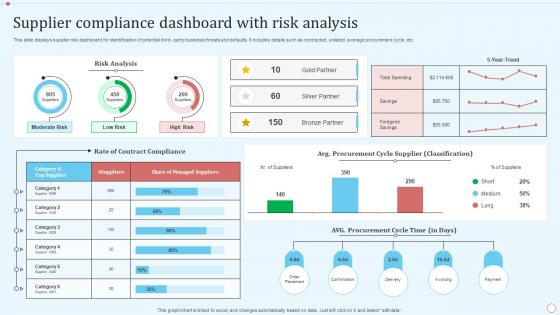
Supplier Compliance Dashboard With Risk Analysis




Try Before you Buy Download Free Sample Product
 Impress Your
 Audience
 100%
100% Editable
 Save Hours
 of Time


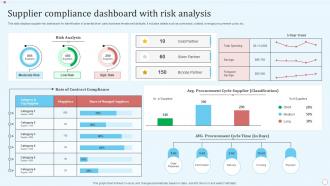
This slide displays supplier risk dashboard for identification of potential third party business threats and defaults. It includes details such as contracted, unlisted, average procurement cycle, etc.
People who downloaded this PowerPoint presentation also viewed the following :
Supplier Compliance Dashboard With Risk Analysis with all 7 slides:
Use our Supplier Compliance Dashboard With Risk Analysis to effectively help you save your valuable time. They are readymade to fit into any presentation structure.





FAQs for Supplier Compliance Dashboard
Honestly, start by writing down what standards you actually have right now - that's your baseline. You need clear policies, obviously, but also regular audits and a decent onboarding process for new suppliers. Set specific compliance standards from day one, then actually follow through on monitoring them. Too many companies just check the box and move on, which drives me crazy. Track violations and what you're doing about them. Train your team AND the suppliers - both sides need to know what's expected. Oh, and treat every vendor the same way regardless of how much business they bring you.
Start with regular check-ups - site visits plus reviewing their paperwork to make sure they're actually following industry rules. Get compliance certificates, training records, and licenses right when you're bringing them on. Some suppliers can be sketchy with documentation, so don't just trust everything they hand you. Quarterly check-ins work well, and make them tell you immediately if their compliance status changes. The whole thing needs to be ongoing - not just something you do once and forget about.
Audits are your best way to actually verify suppliers aren't just talking a good game. Don't take their word for it - go check their facilities yourself and review their processes to make sure they're hitting quality and safety standards. It's like a health inspection but way more detailed. Both surprise visits and scheduled ones work well since you'll see how they really operate day-to-day. Honestly, catching problems early beats dealing with major disasters later. Plus regular audits keep suppliers on their toes when they start getting sloppy.
Honestly, automated dashboards are a game changer for compliance stuff. Set up alerts that ping you when suppliers miss deadlines or their certifications expire. Some tools even scan public records for violations - which is kind of wild when you think about it. The trick is getting everything in one place instead of drowning in spreadsheets. I'd start with your biggest pain points first. Find tools that watch those automatically and only bug you when something actually needs fixing. Way better than manually checking everything constantly.
Dude, supplier non-compliance is a nightmare. You'll get hit with delivery delays, quality problems, and cost overruns that'll tank your budget. Customers blame YOU when suppliers screw up - they don't care about your excuses. Legal disputes can drag on forever too, which nobody has time for. Honestly, regulated industries are the worst for penalties. Set up regular check-ins with your main suppliers and always have a Plan B ready. I learned this the hard way once. When suppliers drop the ball, you're the one scrambling to fix everything at the last minute.
Start with your non-negotiables - labor stuff, environmental standards, basic ethics. Turn those into actual requirements suppliers can follow (not vague corporate speak that means nothing). Get your procurement people involved early since they're stuck dealing with this daily. Draft clear consequences for when people screw up, plus regular check-ins. Honestly, half the codes I've seen are total fluff because nobody thought about enforcement. Have legal review it, then train everyone properly. New suppliers should sign off immediately - that part's easy enough to implement right away.
Honestly, start with your contracts - that's where most gaps hide. Make everything crystal clear so there's no "oh I thought you meant..." BS later. Set up some automated monitoring too, because finding problems months after they happen sucks. I've watched companies skip this and kick themselves later. Incentives work way better than just threats - throw in compliance bonuses or preferred supplier status for the good ones. The carrot beats the stick every time. Three things really: nail down clear communication, monitor regularly, and reward the suppliers who actually follow through.
Dude, cultural stuff can absolutely wreck your supplier compliance if you're not paying attention. Business practices are so different everywhere - like gift-giving is totally normal in some places but looks sketchy as hell to auditors here. Communication styles vary too, which gets messy fast. You've gotta adjust your frameworks for local customs without throwing your standards out the window. Honestly, I'd find some local compliance people who actually know the region. They can help train your suppliers and save you from stepping on cultural landmines you didn't even know existed.
Honestly? Set up check-ins monthly or quarterly - depends how sketchy they are lol. Always follow up calls with written summaries because I got burned once when a supplier swore they "never heard" about new safety rules. Total BS but I couldn't prove it. Ask them straight up about compliance instead of hoping they've got it handled. Oh and make a shared calendar with all the deadlines! Sounds boring but it actually saves your butt when things get crazy. Document everything, even the obvious stuff.
So basically, you want to track stuff like delivery times, quality scores, and audit results to catch patterns early. When suppliers start slipping or missing certification deadlines, that's your red flag right there. Honestly, I can't believe how many companies are still doing this with spreadsheets - it's wild. Set up alerts for the critical deadlines so you're not scrambling last minute. Predictive models help too, they'll flag risky suppliers based on what's happened before. First step though? Map out what data you actually have and figure out which metrics really move the needle for your business.
Oh man, that's rough. Financial penalties are just the start - they can terminate your contract or even blacklist you from future bids. Fines hurt, obviously, but the reputation damage is honestly worse long-term. Other clients will hear about it and that makes everything harder down the road. Then there's all the paperwork nightmare of getting back into compliance (ugh). Legal action's possible too depending on what regs you violated. Honestly, I'd start doing regular compliance check-ins with your team like, yesterday. Way easier than dealing with this mess after the fact.
Start with interactive modules for your main compliance stuff - safety, quality, regulations. Different roles need different training though, so don't give procurement the same content as manufacturing suppliers. Real case studies work way better than generic examples, trust me on this. Nobody wants another death-by-PowerPoint situation. Set up assessments and track certifications so people actually learn the material. Mix up the formats - online courses, webinars, downloadable guides. Oh, and definitely do quarterly updates because regulations change constantly and you don't want anyone working off outdated info.
Honestly, supplier compliance can be a pain but it's worth doing right. Check their financials and licenses first - you don't want them vanishing halfway through a project. Labor practices and environmental stuff matters too, plus whatever industry regs apply to your space. Data security is non-negotiable if they're touching any sensitive info. Oh, and ask about their own supplier processes since sketchy third parties can bite you later. I'd make a standard questionnaire covering all this and always demand documentation. Don't just take their word for it.
Ugh, yeah this stuff moves fast - usually 30-60 days after new laws drop. You'll have to push updated rules down to your suppliers, and honestly? Half of them will just nod along without actually doing anything. Super annoying. The trick is catching regulatory changes early so you're not panicking at the last second. Set up some kind of tracking system for your industry's rule changes. Also make suppliers confirm compliance in writing - verbal promises are worthless. Oh, and maybe create a calendar to stay on top of deadlines. Trust me, it beats scrambling when auditors show up.
Dude, getting stakeholders involved in supplier compliance is a game changer. Your customers, local communities, NGOs - they'll spot problems way before your official audits catch anything. I've seen this work really well because suppliers actually behave when they know multiple groups are watching, not just procurement. You need good reporting channels though - like actually good ones where people feel safe speaking up. Oh and here's the thing that trips people up: you have to follow through when stakeholders flag issues. Otherwise they'll stop telling you stuff and you're back to flying blind.
-
Really like the color and design of the presentation.
-
I am really satisfied with their XYZ products. Used their slides for my business presentations and now I am taking their help for my son's high-school assignments. Super satisfied!!