


Supplier Development Program Training Calendar For Suppliers Coaching




Try Before you Buy Download Free Sample Product
 Impress Your
 Audience
 100%
100% Editable
 Save Hours
 of Time


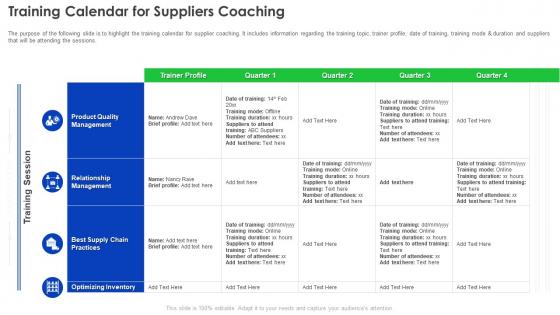
The purpose of the following slide is to highlight the training calendar for supplier coaching. It includes information regarding the training topic, trainer profile, date of training, training mode and duration and suppliers that will be attending the sessions.
People who downloaded this PowerPoint presentation also viewed the following :
Supplier Development Program Training Calendar For Suppliers Coaching with all 6 slides:
Use our Supplier Development Program Training Calendar For Suppliers Coaching to effectively help you save your valuable time. They are readymade to fit into any presentation structure.





FAQs for Supplier Development Program Training Calendar
So basically you're building a game plan to help your suppliers get better at what they do. Map out which ones are most critical first - those are your priority. Then schedule stuff like training or check-ins throughout the year, maybe quarterly chunks work best. Honestly, being ahead of problems beats scrambling to fix them later. It's like having a workout routine but for your supply chain instead. You want them hitting quality targets and delivery deadlines consistently. Track how they're doing over time so you can see what's actually working. Way better than just hoping everything goes smoothly.
So basically it's like making a shared calendar for you and your suppliers - keeps everyone knowing what's coming up. Schedule quarterly check-ins, training stuff, performance reviews. Honestly game-changer for avoiding those "wait, what were we supposed to do?" moments. Your suppliers can actually plan ahead instead of scrambling, and you'll get way more consistent results. When problems hit (and they will), you've already got meetings built in to tackle them fast. I'd probably start with your biggest suppliers first - map out who matters most and get those quarterly sessions locked in.
Track the obvious stuff - quality scores, delivery rates, cost savings, compliance. But communication response time? That's honestly where you catch problems early, way before your other metrics tank. Innovation contributions matter too. Monthly check-ins work best - review the numbers together instead of just hoarding data on your end. Oh, and if you're doing development projects with them, track milestone completion rates. I know it sounds like a lot, but the relationship metrics often tell you more than the hard numbers do.
Honestly, quarterly works for most suppliers, but it totally depends on how critical they are. Monthly reviews for your high-risk ones or anyone giving you headaches. Low-risk suppliers? Maybe twice a year is fine. Here's what I learned - don't do annual reviews because December hits and suddenly everyone's "too busy" and it never happens. Pick whatever schedule works but actually stick to it! These meetings always run long too, so block extra time. Oh, and figure out your metrics beforehand or you'll just be winging it the whole time.
So start with the non-negotiable stuff - quality standards, safety, all that regulatory compliance your suppliers absolutely have to nail. After that, throw in the skill-building workshops like lean manufacturing or digital transformation. Communication training is huge but honestly gets skipped way too often, which is dumb because bad communication kills partnerships fast. I'd survey your main suppliers first to figure out their biggest gaps, then build everything around fixing those issues. Oh, and definitely schedule regular check-ins and feedback sessions. The soft skills workshops might seem boring but they're actually clutch for long-term relationships.
Look, seasonal demand will mess with your supplier development timing big time. Map out when your suppliers get slammed early in the year - then avoid planning anything major during those periods. Seriously, nobody has time for new quality standards right before Black Friday madness hits. Schedule your big assessments and training stuff during their slow months instead. That's when they can actually pay attention to what you're trying to accomplish. I learned this the hard way tbh. Block out those crazy busy periods as "hands-off" time on your calendar and thank me later.
Honestly, you're gonna want to automate as much as possible here. Connect your calendar to your ERP and procurement systems so data updates automatically - saves you from constantly entering stuff manually. Set up alerts for deadlines and milestones so nothing sneaks up on you. AI tools are pretty decent at spotting potential supplier issues before they blow up, which is nice. The trick is getting your data feeds configured right from the start. Oh, and definitely audit what systems you can actually connect first - some legacy stuff is a pain to integrate. Once it's running though, your calendar basically maintains itself.
Oh man, cross-functional teams are a game changer for supplier calendars. You get procurement, quality, engineering, ops - all these different perspectives catching stuff you'd miss otherwise. Suppliers actually show up prepared when they see multiple departments in the room too, which is honestly refreshing. Each team brings their own expertise to assessments and planning sessions. The trick is setting up regular reviews so nobody's stepping on each other's toes or confusing the suppliers with contradictory feedback. It's like having a full orchestra instead of just one instrument - way more impact.
First thing - figure out when your suppliers are swamped and avoid those times like the plague. Nobody wants to deal with audits during their crunch periods. Always add extra time between stuff because everything runs late (learned this when we did training right before year-end... disaster). Your suppliers actually know their own constraints way better than you do, so just ask them what works. Try to sync things with your procurement calendar and budget cycles too. Oh, and keep it flexible enough for urgent fires but structured enough that development doesn't get constantly bumped for "critical" issues.
Start with quarterly check-ins or quick calls after big events. Ask what's actually working and where they're feeling squeezed on timelines. They probably know stuff about busy seasons you haven't thought of - honestly, suppliers usually have better intel than we do. Send out a simple feedback form after each activity too. But here's the thing that matters most: you've gotta actually use their input. Update your calendar based on what they say and tell them you made changes because of their feedback. Otherwise it's just pointless paperwork.
Honestly, the biggest pain point is getting suppliers to actually care - they're swamped with their own stuff and see this as more work. Scheduling is a total headache too when you're juggling multiple suppliers and internal teams. Plus maintaining momentum after launch? Way harder than it looks. My advice: start with just your key suppliers first. Be super clear about what's in it for them upfront. Get some decent scheduling tools that actually work together, and definitely assign someone to babysit the whole thing. Without an owner, these calendars just die a slow death. Oh, and build in flexibility from day one - rigid schedules never survive reality.
So basically, you want to time your supplier improvements around what matters most to your business. Like, schedule those quality audits before your busy season hits. Line up cost reduction stuff with your budget planning. I always think it's smart to build supplier capabilities right before you launch new products - the timing just makes sense. Think of it as your roadmap keeping everyone on track (way less headaches that way). You can actually see if your supplier investments are paying off and hitting your targets. Just start with your big business milestones and work backwards from there to plan what supplier development you'll need.
Honestly, milestones are a game-changer for keeping everyone on the same page. You'll have clear checkpoints to track progress and spot problems before they blow up your budget. Your suppliers love it too because they finally know exactly what you expect and when - no more awkward "so...how's it going?" conversations. Those quarterly reviews become way less stressful when everyone's actually hitting targets. Building trust happens naturally when both sides can see real progress. Oh, and definitely review your milestone setup every six months or so. Things change, and what worked last year might not work now.
Color-coding is seriously underrated - it'll show you at a glance which suppliers are crushing it vs struggling. Templates save you so much time because you're not starting from scratch each time. Gantt charts work great for timelines, and dashboard views give you those quick status updates you need. Progress bars and milestone markers help track where everyone's at in their development. Oh, and checklists are clutch for making sure stuff doesn't get forgotten. Honestly, just pick whatever visual thing fixes your biggest headache first - like if delays are killing you, start there.
When stuff goes sideways, first figure out which suppliers got hit and what deliverables are actually critical. Get your main people in a room fast - these meetings are usually a mess but you gotta do it. Push back anything that's not essential, build in some breathing room for the suppliers dealing with issues. Find backup plans where you can. Here's the thing though - don't sit around waiting for all the details to come in. Just make calls with what you know and adjust later. Oh, and tell everyone about changes right away or you'll have angry people wondering what's happening.
-
Crisp and neat slides. Makes it fun and easier to curate presentations.
-
Exclusive and extensive collection of templates. Really helped me create a professional presentation in just no time.