


Team building exercises chart activity organizational team building program




Try Before you Buy Download Free Sample Product
 Impress Your
 Audience
 100%
100% Editable
 Save Hours
 of Time


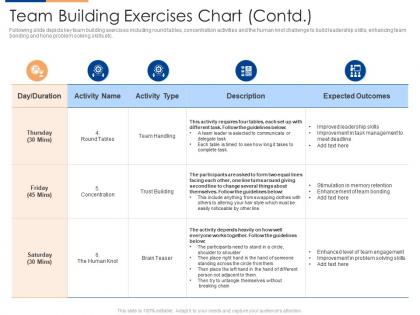
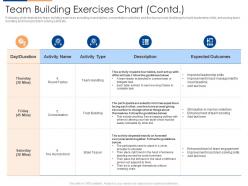
Following slide depicts key team building exercises including round tables, concentration activities and the human knot challenge to build leadership skills, enhancing team bonding and hone problem solving skills etc.
People who downloaded this PowerPoint presentation also viewed the following :
Team building exercises chart activity organizational team building program with all 2 slides:
Use our Team Building Exercises Chart Activity Organizational Team Building Program to effectively help you save your valuable time. They are readymade to fit into any presentation structure.
FAQs for Team building exercises chart activity organizational
Effective remote team building exercises include virtual escape rooms, online trivia competitions, collaborative cooking sessions, digital scavenger hunts, and video game tournaments. These activities enhance communication, foster trust, and strengthen relationships by creating shared experiences, encouraging creative problem-solving, and building camaraderie, with many organizations finding that regular virtual team building significantly improves remote employee engagement and productivity.
Icebreaker activities enhance team cohesion in diverse groups by breaking down communication barriers, encouraging personal sharing, and creating common experiences that transcend cultural differences. Through structured interactions like storytelling exercises or collaborative challenges, teams across industries from healthcare to technology find these activities build trust, improve cross-cultural understanding, and ultimately deliver stronger workplace relationships.
Team building exercises enhance communication skills by creating structured opportunities for active listening, clear expression, collaborative problem-solving, and constructive feedback exchange. Through activities like role-playing scenarios and group challenges, organizations strengthen interpersonal dynamics, reduce workplace misunderstandings, and build trust among team members, ultimately delivering improved project coordination and enhanced overall productivity.
**INPUT**: How can you measure the success of a team building activity? **OUTPUT**: Team building success can be measured through improved communication frequency, enhanced collaboration quality, increased trust levels, better conflict resolution, and stronger workplace relationships. Organizations typically assess these through post-activity surveys, peer feedback sessions, and performance metrics, with many finding that successful initiatives ultimately deliver higher productivity, reduced turnover, and more cohesive project outcomes across departments.
Creative outdoor team building exercises for large groups include scavenger hunts, obstacle course challenges, outdoor escape rooms, adventure races, and collaborative problem-solving activities like bridge building or treasure mapping. These activities enhance communication, trust, and leadership skills while fostering collaboration across departments, with many organizations finding that outdoor environments naturally break down hierarchical barriers and encourage innovative thinking, ultimately delivering stronger workplace relationships and improved team dynamics.
Cultural backgrounds significantly influence team building effectiveness through varying communication styles, leadership expectations, individualism versus collectivism preferences, and comfort levels with different activities. While some cultures thrive with competitive exercises and direct feedback, others prefer collaborative approaches and consensus-building activities, with many multinational organizations finding that culturally-adapted exercises deliver stronger engagement, improved cross-cultural understanding, and ultimately more cohesive global teams.
Popular online tools for virtual team building include Zoom, Microsoft Teams, Kahoot, Miro, Slack, Breakout Room platforms, and specialized apps like TeamBuilding.com and Confetti. These platforms streamline virtual collaboration by enabling interactive games, creative workshops, and real-time communication, with many organizations finding that strategic tool combinations significantly enhance remote team engagement and ultimately deliver stronger workplace culture.
Team building exercises can be tailored by incorporating industry-specific scenarios, role-relevant challenges, and sector-appropriate communication styles that mirror real workplace dynamics. Financial services teams might engage in risk assessment simulations, while healthcare professionals could participate in patient care coordination exercises, ultimately enhancing collaboration skills directly applicable to their daily responsibilities.
Common mistakes include choosing activities that exclude team members with physical limitations, focusing solely on fun without clear objectives, forcing participation in uncomfortable scenarios, selecting overly competitive exercises that create division, and failing to debrief afterward. Many organizations find that successful team building requires inclusive planning, defined goals, and voluntary engagement, ultimately delivering stronger collaboration and trust rather than awkwardness or resentment among colleagues.
The best way to integrate team building exercises into regular meetings involves starting with brief icebreakers, incorporating collaborative problem-solving activities, and scheduling monthly dedicated sessions for deeper engagement exercises. These approaches enhance communication, build trust, and strengthen workplace relationships by seamlessly blending team development with routine business discussions, ultimately delivering improved collaboration and higher team performance across organizations.
Team building activities contribute to employee engagement and retention by fostering stronger interpersonal relationships, improving communication skills, and creating shared experiences that build trust and collaboration. These strategic initiatives enhance workplace satisfaction, reduce turnover costs, and strengthen team cohesion, with many organizations finding that employees who participate in regular team building demonstrate higher loyalty and performance levels.
Budget-friendly team building exercises include problem-solving challenges, volunteer projects, skill-sharing workshops, outdoor scavenger hunts, and collaborative brainstorming sessions. These activities enhance communication, trust, and collaboration by encouraging cross-departmental interaction, leveraging existing employee expertise, and creating shared experiences, with many organizations finding that simple, well-structured exercises deliver stronger team cohesion and improved workplace dynamics.
Team building exercises resolve conflicts by facilitating open communication, building empathy through perspective-sharing activities, and creating neutral environments for addressing underlying tensions. Through structured problem-solving challenges, role-playing scenarios, and collaborative workshops, teams develop stronger interpersonal relationships, improve trust, and establish better conflict resolution frameworks, ultimately delivering enhanced workplace harmony and increased productivity.
Team building activities deliver significant psychological benefits including increased confidence, reduced workplace stress, enhanced sense of belonging, improved communication skills, and stronger interpersonal trust. These exercises create positive mental health outcomes by fostering collaboration and mutual support, with many organizations finding that employees demonstrate greater resilience, job satisfaction, and emotional well-being after participating.
Leadership involvement in team building exercises amplifies impact through direct participation, transparent communication about organizational goals, and modeling collaborative behaviors during activities. When executives actively engage alongside their teams in problem-solving challenges, trust-building workshops, and strategic planning sessions, it demonstrates commitment to team development while breaking down hierarchical barriers, ultimately fostering stronger workplace relationships and improved organizational culture.
-
Understandable and informative presentation.
-
Best Representation of topics, really appreciable.