

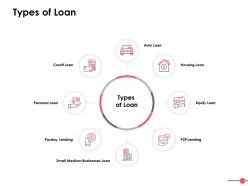
Types of loan ppt powerpoint presentation file slide download





Try Before you Buy Download Free Sample Product
 Impress Your
 Audience
 100%
100% Editable
 Save Hours
 of Time


Our Types Of Loan Ppt Powerpoint Presentation File Slide Download instill confidence. Display assuredness in front of the audience.
People who downloaded this PowerPoint presentation also viewed the following :
Types of loan ppt powerpoint presentation file slide download with all 5 slides:
Encourage folks to indulge in exploration with our Types Of Loan Ppt Powerpoint Presentation File Slide Download. Advocate an intrepid approach.
FAQs for Types of loan ppt powerpoint presentation
So basically, secured loans make you put up something valuable as collateral - your car, house, whatever. Unsecured ones don't. The trade-off? Secured loans give you way better interest rates since the bank can just take your stuff if you don't pay. Unsecured loans are riskier for them, so rates are higher. But honestly, at least you won't lose your house over it. Credit cards are unsecured, mortgages are secured - classic examples. Go secured for big purchases, unsecured for smaller amounts when you need cash fast.
Dude, avoid payday loans if you can. Those things are insane - we're talking 400% APR or higher. Personal loans are way more reasonable at 6-36% APR. Plus you get years to pay back a personal loan instead of scrambling to find cash in 2-4 weeks. The monthly payments are fixed too, so you won't get surprised by random fees. I mean, my cousin got stuck in this payday loan mess last year and it was brutal watching her try to dig out. Shop around for personal loans first - they're just not trying to bleed you dry like payday places.
Look, it really comes down to how much uncertainty you can stomach. Fixed rates mean your payments never change - super predictable for budgeting, but you'll pay more upfront. Variable rates start cheaper but who knows where they'll go? I've seen people get burned when rates shot up unexpectedly. How long are you keeping this loan? If it's just a few years, variable might work. But if you're the type who loses sleep over money stuff, just go fixed and call it a day. Peace of mind is worth something too.
So there's a few ways your loans can get wiped out. Public service forgiveness is probably the best deal - work for government or a nonprofit for 10 years while making payments and boom, done. Teacher forgiveness exists too if you teach at low-income schools for 5 years. Income-driven plans will forgive whatever's left after 20-25 years of payments (feels like forever though). Oh, and if you become permanently disabled, that'll discharge them completely. Just heads up - the paperwork is absolutely brutal. You'll need to submit stuff annually and double-check you're on the right payment plan. Definitely worth looking into though!
So business loans are all about your company's financials and business plan - they want proof your business actually works. Personal loans? Just your credit score and income. Business loans usually have better rates and longer payback periods, which is nice. But honestly, you'll probably still have to personally guarantee it anyway, so what's the point sometimes? Personal loans are way more straightforward - fixed payments, no business plan required. Oh, and if you go the business route, you're building credit for your company too. I'd say go business loan if it's actually for business stuff. The terms are usually better once you get approved.
So basically, home equity loans dump all the cash on you at once with a fixed rate. HELOCs are more like having a credit card backed by your house - you can tap it whenever, but the rate bounces around. If you know you need exactly $50k for that kitchen reno, the loan's probably smarter. Your payment won't change. HELOCs are nice when you're not sure about timing, but man, those variable rates can really screw you over if they spike. Plus there's something weirdly tempting about having all that available credit just sitting there waiting. One-time expense? Go loan. Need flexibility? HELOC it is.
Your credit score is basically the key to everything. 740+ and you're golden - best rates, jumbo mortgages, whatever you want. Between 670-739? Still pretty good, just expect slightly higher rates. Fair credit around 580-669 is where things get annoying - you're stuck with FHA loans and secured cards mostly. Below 580 is rough territory. You'll need co-signers or those sketchy alternative lenders that charge way too much. I'd definitely check your score first so you don't waste time applying for stuff you won't get approved for anyway.
So a co-signer is basically someone who promises to pay your loan if you can't. Banks love this because suddenly you're not such a risky bet. You'll probably get approved easier or score better rates. But honestly? Your co-signer is taking a huge gamble. Miss a payment and boom - their credit score tanks right along with yours. They're stuck with the full debt if things go sideways. Money drama ruins friendships fast, trust me. Only ask if you're 100% sure you can handle the payments, and don't sugarcoat the risks when you explain it to them.
Honestly, personal loans are probably your easiest bet - no collateral but higher interest rates. HELOCs and home equity loans give you way better rates since you're borrowing against your house value, though that's obviously riskier. Some contractors have their own financing too, which is super convenient but definitely read the fine print on those. Oh, and for smaller stuff, those 0% credit card promos can work if you pay it off quick. I'd check your home equity first, then shop around for rates. My neighbor went the HELOC route and saved a ton compared to a personal loan.
Go federal first, trust me on this one. Fixed rates and way better protection if things go sideways financially. You'll get income-based payments and forgiveness programs that private loans just won't touch. Private might seem tempting with lower rates if your credit's good, but honestly? You're gambling away all the safety nets. Federal gives you deferment options, forbearance, even that Public Service forgiveness thing if you end up working for the government or whatever. Max out federal aid completely before you even think about private loans.
Dude, title loans are brutal - you're basically betting your car for quick cash. Those interest rates are absolutely ridiculous, like 300% APR sometimes. Miss that 30-day deadline? Your car's gone. I know someone who got stuck in one of those rollover traps where the debt just keeps growing. It's honestly a nightmare scenario. Only consider it if you're about to get evicted or lose power. First try asking family for help, check if your credit union has emergency loans, or see if you can work out payment plans with whoever you owe. If you absolutely have to do this, map out exactly how you'll pay it back beforehand.
Dude, definitely look into government loans before going conventional. FHA lets you put down just 3.5%, and if you're military, VA loans can be literally zero down - which is insane when you think about it. Credit requirements aren't as strict either. Since the government backs these loans, lenders don't worry as much about risk, so they'll work with people who might get rejected elsewhere. I actually wish I'd known about this stuff when I was first looking. Seriously though, check if you qualify for either program first - could save you a ton upfront.
Dude, first thing - shop around for rates because even half a percent difference is huge money over years. Don't borrow more than you need just because they'll give it to you. Hidden fees are everywhere so actually read that boring contract stuff. Oh and get your paperwork together first - I've seen people panic and accept terrible terms just to close fast. Your debt-to-income ratio matters way more than you think, so don't apply if you're already maxed out. Also space out applications since each credit pull hurts your score a bit.
So basically, lenders charge different rates based on how risky they think you are. Mortgages get the best rates since your house backs the loan. Credit cards? Total rip-off with sky-high rates because there's nothing securing them. Personal loans sit in between. Your credit score matters a ton, plus your income and how much you're borrowing. Oh, and loan length too - forgot that one. The Fed and economy stuff affects everyone's rates. Definitely shop around though. I was shocked how much rates varied when my sister was loan hunting last year.
So there's three main types - rate-and-term to lower your payment, cash-out to pull equity, or cash-in to pay down what you owe. Makes sense when rates drop way below yours, your credit's gotten better, or you're switching from adjustable to fixed. That old 1% rule? Pretty outdated honestly. These days even 0.5% can work if you're staying forever. Oh, and it's solid for ditching PMI or doing cash-out to pay off credit cards. Just do the math on break-even - if closing costs pay for themselves in 2-3 years, definitely worth a look.
No Reviews