


Waste management tracking dashboard waste disposal and recycling management ppt powerpoint samples




Try Before you Buy Download Free Sample Product
 Impress Your
 Audience
 100%
100% Editable
 Save Hours
 of Time


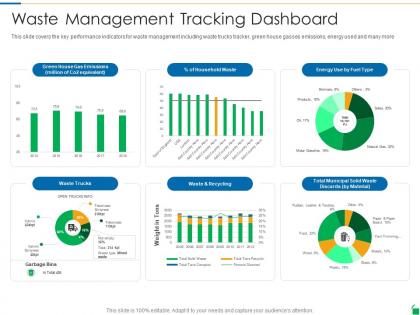
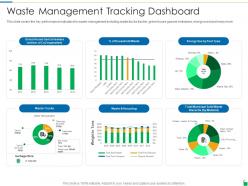
This slide covers the key performance indicators for waste management including waste trucks tracker, green house gasses emissions, energy used and many more.
People who downloaded this PowerPoint presentation also viewed the following :
Waste management tracking dashboard waste disposal and recycling management ppt powerpoint samples with all 2 slides:
Use our Waste Management Tracking Dashboard Waste Disposal And Recycling Management Ppt Powerpoint Samples to effectively help you save your valuable time. They are readymade to fit into any presentation structure.
FAQs for Waste management tracking dashboard waste disposal and recycling management
Okay so there's basically four things you need to nail down. GPS tracking and weight sensors for real-time data collection. Route optimization software keeps your drivers from taking stupid detours. Comprehensive reporting dashboards - though honestly most companies drown themselves in useless metrics here. And integration with whatever systems you're already running. Oh, and compliance tracking is huge now since regulations keep getting tighter. My advice? Don't try to do everything at once or you'll lose your mind. Pick one solid piece and build from there. The reporting thing is where I've seen people really mess up - they track everything but can't figure out what actually matters.
Oh man, you should totally look into IoT sensors and GPS tracking for this stuff. Real-time data on fill levels and pickup schedules beats doing manual checks any day - honestly who even has time for that anymore? RFID tags are pretty cool too, drivers just scan containers and boom, records update instantly. Mobile apps make everything smoother. The reporting thing is probably my favorite part though - you can generate compliance reports automatically instead of drowning in spreadsheets for hours. I'd start small with something like route optimization software first, then add more tech as you go.
So data analytics is like the secret sauce for waste management. Track your current stuff first - collection schedules, fuel costs, complaints. You'll start seeing patterns pretty quick. The really cool part is machine learning can predict seasonal changes, so you're not scrambling when leaf season hits or whatever. Routes get way more efficient when you know which bins fill up fastest. Honestly, even basic tracking shows you obvious wins. Instead of just reacting to problems, you can actually get ahead of waste hotspots before they blow up. Saves money too.
Honestly, start with a digital waste audit - most companies are blown away by what they're actually tossing. Smart bins with sensors are game-changers for tracking fill levels and waste types in real-time. No more overflowing dumpsters, plus you optimize pickup schedules. Barcode scanning helps categorize everything properly, which sounds tedious but really isn't. Set up automated dashboards to track your progress over time. I'd say pick one department first, then expand from there. You'll probably slash disposal costs by 20-30% just from having better visibility into what's happening.
Honestly, the worst part is how inconsistent everyone tracks their waste data. Most companies are still doing manual logging or using ancient systems that don't sync up - super annoying when you need real numbers. Different departments will fight you on tracking too, they see it as busywork. Your waste contractors probably give you garbage reporting (pun intended), so you're basically flying blind on disposal costs and methods. I'd start by getting everyone to record waste the same way across all sites first. Then lean on your contractors for better reporting - you're paying them, after all.
Honestly, tracking systems are a lifesaver for staying on top of regulations. They automatically document everything - waste volumes, disposal methods, compliance dates. No more scrambling to pull reports together at the last second (been there, it sucks). You can catch issues before they become violations, like when you're hitting permit limits. The reports generate themselves instead of you digging through spreadsheets for hours. Set up alerts for deadlines and you'll actually sleep better knowing you won't miss anything important.
Honestly, you've gotta capture everything right when it happens - weight, type, where it came from, how you disposed of it. Don't wait weeks because then you're just guessing at numbers (trust me, we tried reconstructing a whole month from memory once and it was a disaster). Get everyone using the same forms or whatever system you pick. Short sentences work better than long ones for this stuff. Store it all in one place with backups, and make sure your whole team can actually access the data when they need it. Oh, and train everyone the exact same way so you're not mixing up measurement methods later.
Make your waste data visual and turn it into a game. Weekly dashboards showing recycling percentages going up? People eat that stuff up. Set department challenges - seriously, you'd be shocked how intense people get about compost numbers. When someone's idea cuts waste by 20%, celebrate it publicly. The trick is making those numbers feel real to everyone, not just boring spreadsheet data. Oh, and definitely start with one metric that's super simple - gives everyone something to actually care about. Competition works way better than lectures.
Honestly, just focus on diversion rate and cost per ton first - those'll tell you if you're actually making progress. Contamination rates in recycling are super important too since dirty streams mess everything up. Recovery rates for metals and electronics can bring in real money, which is nice. Oh, and don't ignore compliance stuff because regulatory fines are the worst. I made that mistake once at my last job. Pick maybe 3-4 things max though. You'll go crazy trying to track everything, and most metrics don't actually help you make better decisions anyway.
Yeah, most systems integrate pretty easily with whatever hauler you're using now. API connections handle most of it. Check if your company already does digital tracking - the big ones like Waste Management usually have partnerships set up. Those little RFID tags on dumpsters? They actually work really well for this stuff. Real-time pickup data and weights just flow right into your dashboard. I'd start by calling your hauler first - they'll know what they support. Honestly might be way easier than you think. Some of these integrations are basically plug-and-play at this point.
Manual tracking is such a pain - you're stuck with spreadsheets and handwritten logs that are full of mistakes. Takes forever too. Automated systems grab everything instantly with sensors and RFID tags, no human error. Sure, manual's cheaper upfront, but trust me, it becomes a total headache once you're dealing with more than a handful of bins. The automated route costs more initially. However, you'll get way better data and your team can focus on actual work instead of boring data entry. Plus compliance reporting becomes a breeze. Honestly? If you're tracking regularly, go automated and save yourself the stress.
So basically, waste tracking gives you real numbers to back up your CSR claims instead of just saying "we care about the environment" or whatever. Your sustainability reports will actually mean something when you can show concrete recycling rates and waste reduction. It helps spot where you're still being wasteful too - which is honestly pretty eye-opening once you start digging into the data. Customers and investors eat this transparency stuff up. My advice? Pick one type of waste first and get really good at tracking that. Then build from there once you've figured out what works.
WasteLogics, Routeware, and AMCS are the heavy hitters - they basically own the enterprise market with solid tracking and route optimization. There's also some newer cloud stuff like Waste Advantage and CompuWeigh that's pretty decent if you need more flexibility than those clunky legacy systems. Honestly depends what you're tracking though - municipal, commercial, or specialized waste all need different approaches. I'd figure out your exact needs first, then demo maybe 2-3 options that fit your workflow and budget. Don't get too caught up in the bells and whistles until you know what you actually need day-to-day.
Cultural stuff totally changes how waste tracking works in different places. Japan's crazy detailed sorting systems? That's their whole precision and group responsibility thing. But lots of cultures rely on informal waste networks that work better than you'd think, just harder to track digitally. Religious beliefs matter too, plus how communities are structured and whether people even want to use tech systems. Honestly, traditional methods sometimes beat fancy tracking programs. If you're rolling something out, research the local culture first or you'll hit so many roadblocks.
Dude, waste tracking tech is getting insane right now. IoT sensors are everywhere - bins, trucks, you name it. They're giving real-time data on how full things are and contamination levels. Machine learning is doing some crazy predictive stuff too, like forecasting waste volumes and optimizing routes on the fly. Computer vision has gotten really good at automated sorting. Oh, and blockchain's becoming a thing for audit trails, though honestly half these companies probably don't even need it lol. If you're upgrading anything, start with IoT sensors first - best bang for your buck.
-
Use of icon with content is very relateable, informative and appealing.
-
The content is very helpful from business point of view.
-
Best Representation of topics, really appreciable.
-
Best way of representation of the topic.