


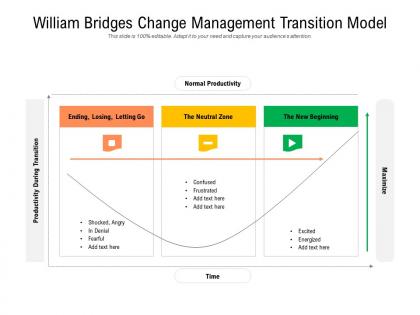
William bridges change management transition model




Try Before you Buy Download Free Sample Product
 Impress Your
 Audience
 100%
100% Editable
 Save Hours
 of Time


Our William Bridges Change Management Transition Model are explicit and effective. They combine clarity and concise expression.
People who downloaded this PowerPoint presentation also viewed the following :
William bridges change management transition model with all 2 slides:
Give your audience a fulfilling experience. They will find our William Bridges Change Management Transition Model elevating.
FAQs for William bridges change
So Bridges breaks change into three phases. First is Endings - getting people to let go of how things used to be. Honestly the worst part because everyone hates change. Then you hit the Neutral Zone which is basically chaos - nothing feels certain and it's messy as hell. New Beginnings comes last when people finally accept the new way. Here's the thing though - you can't rush anyone through these phases. Like, I've seen managers try to skip straight to the "yay new beginnings" part and it never works. Just figure out where your team is and help them through that specific phase.
So basically, most change models just focus on the logistics - timelines, phases, all that tactical stuff. Bridges is different though. He's way more interested in the emotional side of things, like how people actually *feel* when everything gets flipped upside down. You've got three parts: helping people say goodbye to the old way (which honestly takes longer than you'd think), then dealing with that weird limbo period where nobody knows what's happening, and finally getting excited about the new direction. It's messier but way more realistic than just announcing changes and hoping people adapt.
Yeah, so the transition phase is where all the emotional chaos happens - people go through denial, anger, confusion, the whole mess. It's literally make-or-break time for most change efforts. Here's the thing though: those feelings aren't roadblocks you need to bulldoze through. They're actually part of how people process letting go of old habits and accepting new ones. Honestly, I think leaders mess this up constantly by trying to rush everyone to the "exciting new beginning" part. Give people actual time and space to feel their feelings first. Otherwise you'll just end up with fake buy-in that crumbles later.
First thing - don't rush straight into selling the "amazing new changes." People are literally mourning what they're losing, which honestly makes total sense. Give them space to talk about it, whether in team meetings or just casual one-on-ones. Be upfront about what's actually ending versus what's staying the same. Let them process and even celebrate the stuff that worked well before. I've seen so many leaders mess this up by immediately jumping to the shiny new vision. Instead, just validate that endings suck and that's completely normal.
Communication is everything right now - keep everyone in the loop even when you're honestly just winging it half the time. Set up some quick wins or temporary fixes so people have something solid to grab onto. Make it okay for your team to mess up while they're figuring things out. This phase sucks for everyone, and just saying that out loud actually helps more than you'd think. Oh, and definitely encourage people to try weird new approaches. The tricky part is keeping things moving without rushing the whole process, but you've got this.
Honestly, Bridges is perfect for nonprofits - you're always dealing with funding chaos and staff turnover anyway. Figure out what transition phase you're in first. People get super attached to programs (sometimes too attached, tbh), so spend real time on the "endings" part. Let them grieve what they're losing before pushing new stuff. The middle phase is tricky since everyone's already stretched thin, but try small pilots instead of big overhauls. When you hit "new beginnings," make a big deal about wins and tie everything back to your mission. Oh, and don't rush it - these transitions take forever in nonprofits.
Oh man, the worst thing companies do is rush people through letting go of the old stuff - like you can just announce change and boom, everyone's on board. Not happening. They also completely skip over that awkward middle phase where people are just... confused? That's actually where all the important mental processing goes down. People bounce between stages too, it's not some neat little checklist. Honestly, I think most places underestimate how long this stuff takes. Give your team way more time than feels reasonable for each phase, and don't push forward until they've actually worked through where they're at.
Different cultures handle change totally differently, so you can't just copy-paste your approach everywhere. The middle phase is brutal because people are stuck between two worlds - I'd pair them with cultural mentors or mix up the teams. When celebrating new wins, what looks like success varies wildly by culture. Getting local experts involved from day one is way smarter than trying to force some generic Western model on everyone. Oh, and definitely rethink your "letting go" strategies based on how each culture actually processes endings.
Honestly, just watch your retention rates and engagement scores - those tell you everything. If people are bailing or checking out mentally, your transition's tanking. I'd also track productivity and sick days since those usually go haywire when changes get messy. Don't sleep on surveys either. Ask people directly about role clarity and whether they trust leadership - that emotional stuff matters more than you'd think. Break it down by each Bridges phase so you know where you're losing people. Set up monthly check-ins to catch problems early. Way easier than fixing a disaster later.
Bridges totally falls apart without solid communication - that's what actually gets people unstuck from each phase. Tell them straight up why the change is happening and own the fact that the messy middle part is gonna suck. But you gotta sell the vision of where you're headed too. I swear, bad timing kills everything though. You'll see teams stuck in limbo forever if your messaging is off or feels fake. Don't just focus on the process stuff - people need to hear you get the emotional side of it. Honestly? Map this out before you do anything else.
So basically map team emotions to your sprint ceremonies - like during retros, figure out where everyone is on Bridges' transition curve. Are people still in denial about that new process? Sprint planning is perfect for calling out "neutral zone" confusion when you're rolling out new tools. Daily standups help catch resistance before it gets ugly. Oh and here's what I learned the hard way - teams always rush through the emotional stuff and it totally backfires. You've gotta actually allocate story points to change management work. I know it sounds weird but treat the feelings part like real work that needs time, same as you'd handle technical debt.
Honestly, start with a solid communication plan - that's your foundation. You can map out different messages for each phase people go through. Change readiness assessments are clutch for figuring out where everyone's head is at (hint: probably not where you think). Don't forget stakeholder mapping to spot your champions and your biggest resisters. Pulse surveys work way better than just hoping people are adapting. Oh, and throw in some resilience training - sounds cheesy but it actually helps. Build up gradually though, don't dump everything on them at once.
Honestly, three things will save you here: talk to people constantly, set up buddy systems, and celebrate every tiny win. Don't let uncertainty fester - it's way worse than just telling them the truth upfront. I've watched this play out so many times. Your employees need to actually process what they're losing before moving forward, which managers always forget. Give them training for new skills they'll need. Short updates work better than long meetings. Also, those peer support networks? Game changer. People handle change way better when they're not doing it alone, and hitting those small milestones keeps everyone from giving up halfway through.
So Microsoft used Bridges during their huge shift to cloud stuff - helped people deal with basically changing their entire work identity. Kaiser Permanente did it too when rolling out new medical records systems, which honestly sounds like a nightmare to manage. GE focused big time on that middle "neutral zone" part where everyone feels completely lost. The pattern I noticed? You can't just rush people into the new thing. They actually need time to process what they're losing first. Oh, and each phase needs totally different communication - not just one massive company-wide email blast.
Yeah, Bridges' thing works great for career stuff! Your old job becomes the "ending" - you've gotta actually grieve leaving it behind. That awkward in-between phase? That's the neutral zone where you're figuring out what you even want. I know it feels gross and uncertain, but honestly that's where all the good stuff happens. Don't rush it by immediately firing off applications everywhere (guilty of this myself). The new beginning comes when you finally start feeling like your new professional self. Really sit with the messy middle part - it's worth it.
No Reviews