


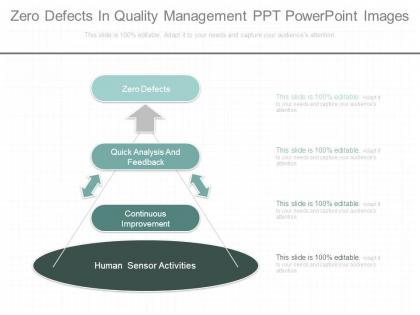
Zero defects in quality management ppt powerpoint images




Try Before you Buy Download Free Sample Product
 Impress Your
 Audience
 100%
100% Editable
 Save Hours
 of Time


Can your presentation stand up under pressure? Be confident that it can with our Zero Defects In Quality Management Ppt Powerpoint Images.
People who downloaded this PowerPoint presentation also viewed the following :
Zero defects in quality management ppt powerpoint images with all 7 slides:
Business will evolve with our Zero Defects In Quality Management Ppt Powerpoint Images. You will grow to become a great entrepreneur.





FAQs for Zero defects in quality management
So Zero Defects is basically Crosby's "get it right the first time" approach - way better than fixing mistakes later. Four main things: prevent problems instead of just catching them, aim for actually zero defects (not "good enough"), measure quality by what screwups cost you, and make everyone own quality, not just QC. Honestly, the mindset shift is huge - you stop accepting defects as normal. My old boss was obsessed with this stuff. Start by figuring out where you're bleeding the most quality-wise, then dig into what's actually causing those issues at the root level.
First things first - you'll need leadership on board, but don't promise they'll see perfection overnight. This is about shifting culture so defects just aren't acceptable anymore. Get your teams digging into root causes instead of slapping band-aids on symptoms. Most quality problems? They're actually broken processes wearing a disguise. Better training and clearer procedures help prevent issues upfront. Track your defect rates and make a big deal when things improve - people love seeing progress. Oh, and don't dump everything on QC. Everyone needs to own quality. Start with a small pilot program to show it actually works.
Dude, training is everything with Zero Defects. Most screw-ups happen because people don't know the right way to do something or they miss key details. You want everyone thinking "do it right the first time" - that's when they start spotting problems before they blow up. Here's the thing though: one training session won't cut it. Make it ongoing. I'd start by figuring out where your biggest quality issues are happening, then build specific training around those problem areas. When your team really understands why quality matters at each step, not just how to do their tasks, that's when you'll see real change.
Honestly, Zero Defects and Six Sigma work great together. Six Sigma gives you the actual tools and data to figure out where things go wrong. Zero Defects is more about getting everyone in the right mindset - you know, that "get it right the first time" mentality. I'd start with Six Sigma's DMAIC process on your biggest problem areas first. The stats help you see patterns you might miss otherwise. Think of it this way: Zero Defects sets the goal, Six Sigma shows you how to hit it. They're different approaches but they definitely complement each other well.
Track defect density first - that's defects per unit you're putting out. Then add first-pass yield and how many defects actually escape to customers. Cost of poor quality is huge too, plus how fast you catch issues before they blow up. Mean time between failures works great for equipment stuff. Honestly, most companies track way too many metrics that don't mean anything. Pick 3-4 that actually show what's happening in your process. Check them weekly, set targets you can hit, and make sure your team can actually do something about the numbers. Otherwise you're just collecting data for no reason.
Honestly, tech is a game-changer for spotting defects early. IoT sensors can monitor your equipment 24/7, and those AI vision systems catch stuff we'd totally miss. Predictive analytics will tell you when machines are about to go wonky - super helpful. I'd probably start with automated inspection first rather than going crazy with everything at once. Statistical process control software tracks trends really well. Digital workflows keep your team on the same page too, which is huge. The automation part alone saves you so many headaches, trust me.
Honestly, cost is gonna be your biggest headache. Zero defects means dumping serious money into training and new systems upfront - I've seen leadership teams nope out real quick when they see those numbers. Your team will probably hate it at first too since they're basically relearning their entire job. Plus there's this weird thing where people get so obsessed with perfection they just... freeze up and stop doing anything. Start with like one small department first. Get some wins under your belt before trying to flip the whole company - way less painful that way.
Honestly, your team can smell BS from a mile away when it comes to quality standards. If you're pushing crazy deadlines while preaching "zero defects," they'll see right through it. Actually celebrate when someone catches an error early - don't just say you will. I've watched so many managers talk a big game about quality then pressure people to rush everything. Your daily actions speak louder than any company poster. Make it part of regular check-ins, invest in decent training, and reward the people who take time to do things right. Oh, and model what you want - if you're cutting corners, they will too.
Yeah, the upfront costs are brutal - training, new processes, quality systems. But most companies get that money back in 1-2 years from way less waste and customer complaints. Your warranty costs drop like crazy, plus keeping customers happy is honestly where the real money is. Getting leadership to sign off is the hardest part since the payoff isn't instant. Here's what worked for me: add up everything you're losing to bad quality right now - defects, returns, angry customers walking away. Use those numbers to make your case.
Look, your customers are literally the reason Zero Defects exists. They want perfection - and honestly, who can blame them? One tiny screw-up gets blasted all over social media these days. Rising standards mean you can't just aim for "good enough" anymore. You've got to actually eliminate problems instead of accepting some failure rate. Here's the thing though - don't go crazy chasing perfection just because. Focus on what your specific customers actually care about. That's where Zero Defects makes sense. Otherwise you'll burn out your team fixing stuff nobody notices.
Toyota's probably the best example - their production system is legendary for a reason. Aerospace companies like Boeing and Airbus have it down too, along with pharma and auto manufacturing. The secret sauce? Everyone has to buy into it, not just executives preaching from above. Training never stops, and you need solid quality systems that catch problems early. Healthcare's gotten really good at this since, well, people die when you mess up. Oh, and don't try to do everything at once - start with your most critical stuff first, then expand once you've got proof it actually works.
Look, feedback loops are like having checkpoints scattered throughout your whole process - you're constantly measuring and tweaking based on what you find. Kind of like how your GPS reroutes when there's traffic, except you're fixing quality issues instead. The trick is making them happen fast and often. That way you catch problems right away instead of realizing you've made 500 broken widgets (learned that one the hard way at my last job). Pick your most critical spots first and do daily check-ins there. Speed matters more than perfection when you're starting out.
Look, you can't hit zero defects if your suppliers are shipping you garbage - it's just impossible. Even with flawless internal processes, one crappy batch ruins everything. The tricky part? You're relying on people outside your company. I'd start by auditing your main suppliers first - figure out who's actually reliable. Set up clear quality agreements with real metrics they have to hit. You'll also need solid incoming inspection protocols. Honestly, extending your standards upstream is probably harder than fixing your own stuff, but there's no way around it.
Dude, cross-functional teams are game-changers for zero defects. You get engineering, production, QA, and sales all working together upfront instead of playing that awful telephone game where problems just snowball. Different perspectives catch stuff early - way better than one department missing something obvious. My old boss used to say it's like having extra insurance, which sounds cheesy but honestly? True. These teams spot design flaws before they're expensive, prevent those annoying handoff mistakes, and everyone feels accountable. Try starting small - grab people from different areas for your next project and meet weekly to review quality numbers together.
Honestly, the best part is watching your team start catching their own mistakes before stuff moves forward. Customers begin trusting you way more when they know your work's solid. The time savings are insane too - way less firefighting and redoing things that should've been right the first time. People stop just passing problems along and actually own their work quality. Oh, and celebrate when someone spots their own screw-up early. That mindset shift alone is huge. You'll be amazed how much smoother everything runs once quality becomes everyone's thing, not just QA's problem.
-
Enough space for editing and adding your own content.
-
Understandable and informative presentation.