


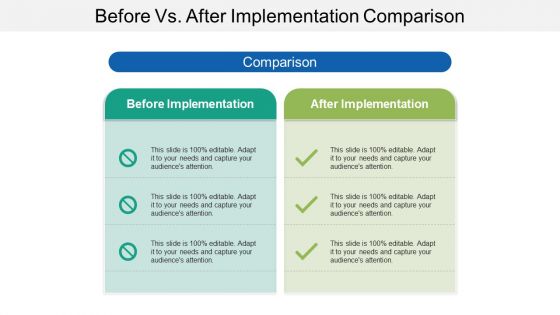
Before vs after implementation comparison





Try Before you Buy Download Free Sample Product
 Impress Your
 Audience
 100%
100% Editable
 Save Hours
 of Time


Ensure efficient functioning of the jig with our Before Vs After Implementation Comparison. Issue effective instructions.
People who downloaded this PowerPoint presentation also viewed the following :
Before vs after implementation comparison with all 5 slides:
Exercise your choice with our Before Vs After Implementation Comparison. Give them cause to accept your decision.



FAQs for Before vs
So basically, top-down means you map out the big picture first, then drill into specifics. Bottom-up is the opposite - build individual pieces, then connect them up. Top-down gives you better control over how everything fits together. You'll catch weird integration problems early too. Downside? It feels kinda abstract when you're starting out. Bottom-up lets you prove stuff works right away, which honestly feels way more satisfying. But you might build yourself into a corner without realizing it. I'd go top-down if your architecture needs to be rock solid. Bottom-up works better when requirements are still fuzzy or you need quick wins.
Honestly, your tech choice determines everything about how messy (or smooth) your rollout gets. Healthcare? You're stuck with compliance hell, so boring legacy-compatible stuff usually wins over shiny new tools. Manufacturing folks hate risk - they want proven tech that won't crash their production lines, which makes sense tbh. Fintech companies can actually move fast with newer frameworks since they're designed for it. Really depends on your industry's risk appetite and what regulatory nightmare you're dealing with. Map out your constraints first, then pick what actually works for your situation instead of what sounds cool.
Honestly, it comes down to what you're actually trying to achieve. I'd track three main things: how well it's performing (speed, uptime, errors), whether people are using it (active users, which features get clicked), and if it's helping the business (saving money, making money, whatever). Don't go crazy measuring every little thing - I've seen teams drown in dashboards they never look at. Pick maybe 3-5 metrics that directly connect to why you're building this thing. Oh, and get your baseline numbers first! You'll look pretty silly trying to prove success without knowing where you started. Measure from day one, then check in monthly.
Yeah, so it totally depends on what framework you pick. Screw waterfall - that thing only gets stakeholders involved at the very start and finish, which is honestly pretty useless. Agile stuff like Scrum is way better because you're constantly showing demos and getting feedback. PRINCE2 actually has stakeholder management baked into the whole process, which is nice I guess. But here's the thing - you gotta match how your stakeholders actually work with whatever framework you choose. Like, if they're busy executives who can't attend weekly meetings, don't force Scrum on them. You'll just end up with angry people and missing requirements.
Dude, culture is everything with these rollouts. I've watched perfect systems crash and burn because nobody bothered with change management - like, leadership just assumed people would magically adapt. Your team will literally sabotage stuff if they don't get why you're doing it. But here's the thing: when people actually embrace learning, even janky implementations somehow work out. Teams just figure it out together, you know? My advice? Check your culture situation first. Are people generally cool with change or do they hate everything new? Then bake that reality into your whole plan from the start.
Both industries are compliance nightmares, but healthcare's way worse. You'll deal with HIPAA and patient safety stuff that takes forever to test since, you know, people could actually die. Finance has SOX and PCI-DSS but moves faster - it's more about protecting data than lives. The documentation requirements are brutal either way. Here's the real kicker though: doctors absolutely hate new systems and will fight you on everything, while finance people are usually pretty tech-savvy. I'd budget at least 30% more time for healthcare implementations. Trust me on that one.
Dude, scope creep will kill you every time - nobody can stick to the original plan. Communication breaks down immediately too. Teams skip testing because they're rushing to hit impossible deadlines. Resource issues pop up constantly, and risk planning? What's that, right? Different industries have their own special disasters. Tech projects get hit with requirement changes halfway through. Construction gets stuck in regulatory hell. Healthcare always underestimates how long training takes (learned that one the hard way). Build in buffer time for everything. Document scope changes like your life depends on it. Over-communicate with stakeholders until they're sick of hearing from you.
So waterfall is like planning your entire vacation down to the minute before you leave - requirements, design, coding, testing, all mapped out in rigid phases. Agile's totally different though. You work in 2-3 week sprints and actually deliver working stuff constantly. Way less nerve-wracking honestly! Instead of waiting forever to see if anything works, you're getting feedback and pivoting quickly. I'd say try it on just one small project first - stakeholders get weirdly excited when they see progress that often. Oh, and you'll stop having those awful "surprise, nothing works" moments at the end.
Honestly, cross-functional teams are huge for big implementations. They totally smash those department silos that usually wreck everything. When your IT guy is sitting right next to someone from finance during planning, they'll actually build something that works for real people - not just on paper. I've watched this cut projects from like 18 months down to 6. Wild difference. You want to grab key people from every department that's getting hit by this change and get them talking from the very beginning. Trust me, catching problems early beats scrambling later.
Look, when tech's moving fast in your field, you've gotta build stuff that can actually bend without breaking. Assume whatever you're building today will need major changes in like 12-18 months - that's just how it is now. Go modular, keep your infrastructure adaptable, and honestly? Stop trying to make everything perfect from day one. I've watched so many teams crash and burn doing that. Get your core stuff working solid first. Then - and this is key - build in specific checkpoints where you can step back and totally shift direction if needed.
So with products, you're mostly worried about stuff breaking - defects, testing, whether users actually accept what you built. Pretty straightforward. Services are way messier though. You've got process risks, training issues, change management headaches. The annoying thing about services? Problems don't show up right away. Users might hate it but you won't know for months when nobody's using it anymore. Products break during testing so you can fix them early. But services need constant monitoring of how people actually behave. Your risk planning should totally reflect this - technical fixes vs operational stuff need completely different approaches.
So here's what I'd do - set up feedback collection everywhere customers interact with you. Post-purchase emails, checkout surveys, support follow-ups, the works. Then actually use that data to guide your dev team's priorities. Mobile checkout keeps getting complaints? Boom, that's your next sprint. I learned this the hard way when we ignored checkout feedback for months. A/B testing helps validate fixes before you roll them out to everyone. Oh, and create alerts when customer sentiment tanks so you're not waiting around for quarterly reports to notice problems.
Honestly, you can't just copy-paste change management across industries - each one's got its own weird quirks. Healthcare? Super slow rollouts because nobody wants the patient care system crashing. Manufacturing workers aren't glued to their phones like the rest of us, so you need face-to-face training during each shift. Financial services will audit everything twice (at minimum), while tech companies usually embrace the chaos of moving fast. My advice? Map out what makes your industry tick first. What are the real constraints? Then build your timeline and communication strategy around those realities instead of some generic playbook.
Split people into groups based on their jobs - teachers need different stuff than IT folks or admins. Find those naturally tech-savvy people early and turn them into your go-to helpers (seriously, they're lifesavers). Mix up how you train people: live sessions, videos they can rewatch, actual hands-on time. Phase it out instead of overwhelming everyone at once - nobody learns well when they're drowning in new info. Here's the thing though - set up your help channels before you even start training. Those first few weeks are gonna be chaotic no matter what, so people need to know exactly where to go when stuff breaks.
Look, tight budgets will absolutely wreck your timeline. Can't afford enough people? Tasks drag on forever. Should take weeks, ends up being months - drives me crazy honestly. Plus you're always choosing between what you actually need vs what sounds good on paper. Here's what saved me though: pad your estimates big time. Like 40% minimum, maybe even half again as long. Sounds excessive but trust me, when stuff inevitably goes sideways you'll thank yourself. Better to finish early than explain why you're three weeks behind, you know?
No Reviews