


Budget Variance Powerpoint Presentation Slides




Try Before you Buy Download Free Sample Product
 Impress Your
 Audience
 100%
100% Editable
 Save Hours
 of Time


Manage your business expenses and revenues with our content ready Budget Variance PowerPoint Presentation Slides. Incorporate standard costing and variance analysis PowerPoint graphics to talk about the causes of budget variance. The business budgeting PowerPoint complete deck comprises of topic-specific templates such as actual cost vs budget, month-wise forecasting, overhead cost analysis, quarterly budget analysis, variance analysis, actual vs target variance, budget vs plan vs forecast, forecast, and projection, etc. The content given in this budget projection presentation deck is extensively researched by our team of experts. Discuss the role of variance analysis in business management using the financial projection PPT visuals. Make use of the professional-looking budgeting process PPT slides to maintain control over the business. Furthermore, you can also utilize the self-explanatory financial planning analysis PPT visuals to allocate and monitor the budget. Thus, download our high quality visually appealing finance budgeting PowerPoint presentation to set and attain your financial goals. Get your customers abreast with our Budget Presentation Slides. Brief them on any fresh applications.
People who downloaded this PowerPoint presentation also viewed the following :
Content of this Powerpoint Presentation
Slide 1: This slide introduces Budget Variance. State Your Company Name and begin.
Slide 2: This slide shows Actual Cost vs Budget in tabular form.
Slide 3: This slide presents Month Wise Budget Forecasting.
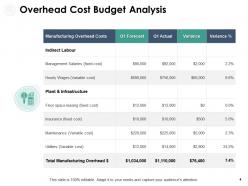
Slide 4: This slide displays Overhead Cost Budget Analysis.
Slide 5: This slide represents Quarterly Budget Analysis in tabular form.
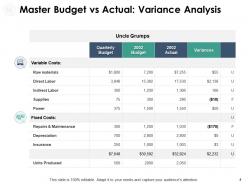
Slide 6: This slide showcases Master Budget vs Actual: Variance Analysis with variable and fixed costs.
Slide 7: This slide shows Actual vs Budget Analysis with categories as original budget, variable cost per unit and flexible budget.
Slide 8: This slide presents Actual vs Target Variance.
Slide 9: This slide displays Budget vs Plan vs Forecast. You can add data as per requirements.
Slide 10: This slide represents Forecast vs Actual Budget.
Slide 11: This slide showcases Forecast and Projection on monthly basis.
Slide 12: This slide shows Budget vs Forecast vs Actual.
Slide 13: This slide displays icons for Budget Variance.
Slide 14: This slide is titled as Additional Slides for moving forward.
Slide 15: This slide shows Clustered Bar chart with two products comparison.
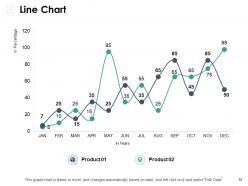
Slide 16: This slide presents Line Chart with two products comparison.
Slide 17: This is Our Mission slide with related imagery and text.
Slide 18: This is Our Team slide with names and designation.
Slide 19: This is a Financial slide. Show your finance related stuff here.
Slide 20: This is About Us slide to show company specifications etc.
Slide 21: This is a Thank You slide with address, contact numbers and email address.
Budget Variance Powerpoint Presentation Slides with all 21 slides:
Use our Budget Variance Powerpoint Presentation Slides to effectively help you save your valuable time. They are readymade to fit into any presentation structure.











FAQs for Budget Variance
Budget variances? Yeah, scope creep is the worst offender - clients always want "just one tiny addition." Poor initial estimates mess things up too. Resource costs change, timelines get pushed around, and suddenly you're dealing with quality issues that need fixing. Oh, and external stuff you can't control like vendor price hikes or market changes. I swear, some projects feel cursed from day one. Track these different categories separately in your reports though. You'll start seeing patterns and actually get better at predicting this chaos for next time.
Honestly, just hook up some automated dashboards straight from your accounting software - way less headache than those Excel spreadsheets we all hate. Set them to pull budget vs actual numbers weekly or monthly. Start with your biggest expenses and revenue first, then worry about the small stuff later. Oh, and definitely set up alerts when things go over budget by like 10% or whatever makes sense for you. The trick is actually having someone review these reports and take action, not just let them pile up in their inbox. Most ERP systems make this pretty straightforward now, which is nice for once.
Honestly, it's usually poor planning from the start that screws you over. Scope creep is a killer too - projects just keep growing and growing until your budget's toast. Market prices jump when you're not expecting it, and let's be real, we're all way too optimistic during planning. Like, every single time. Resource needs get underestimated constantly. Timeline delays pile on emergency costs. My advice? Build in buffer money and check your assumptions regularly - they're probably more wishful thinking than reality.
Here's the thing - track where your budget forecasts keep screwing up, then fix those blind spots next time. Always underestimating marketing by 15%? Build that buffer in. Overly optimistic about Q1 sales every single year? Honestly, we all do this, but dial it back. The monthly trends are where the real insights live. Watch for seasonal stuff, which departments always go over, external curveballs that hit you. Don't wait for next budget season either - check your variance patterns monthly so you can pivot mid-year when things go sideways.
Look, talking to your departments regularly is a total game-changer for budget stuff. I can't stress this enough - weekly check-ins with department heads will save your butt. They know exactly why expenses went crazy or dropped off, while you're just staring at spreadsheets wondering what the hell happened. When they give you heads up about potential overruns, you can actually fix things instead of panicking at month-end. Trust me on this one - getting real-time info beats trying to piece together explanations after the fact. It's honestly such a simple fix but makes all the difference.
So variance analysis is basically your financial GPS - it shows you exactly where you're overspending vs. your budget. Those consistent problem areas? That's where you'll find the best cost-cutting opportunities. I always tell people to look at patterns over several months, not just random one-time spikes (those happen to everyone). Start with your biggest dollar variances first - makes the most sense, right? Materials, labor, overhead... whatever's bleeding the most money. Then dig into why it's happening before you start slashing budgets. The data really does make it pretty obvious once you know what to look for.
Excel's probably your best bet to start - just make some basic charts showing actual vs budget, maybe throw in some conditional formatting to make the big variances pop. If you want something fancier, Tableau and Power BI have really nice dashboards where you can dig deeper into the numbers. Google Sheets works fine too, especially if other people need to see it. Honestly though, I've worked with finance teams that spend way too much time picking the "perfect" tool when a simple Excel chart would've worked just as well. There are specialized tools like Adaptive Insights if you're doing serious financial planning, but I'd start with whatever you already have access to.
Yeah, external stuff totally wrecks budget planning. Market shifts kill your revenue forecasts when demand changes overnight. Supply chain issues? They'll spike your material costs way beyond what you planned for. Currency swings are brutal if you're dealing internationally - we got hammered by that last quarter. Interest rates mess with financing costs too. Competitors can force pricing changes you didn't see coming, which honestly is the worst because there's no warning. I'd say build in some cushion when forecasting and watch for early warning signs so you can pivot quick.
Check your budget way more often than you think you need to. Monthly at minimum, but honestly? Weekly is where it's at for the stuff that matters most. You'll catch problems while they're still fixable instead of getting blindsided by huge overruns later. Small issues turn into disasters fast if you're not paying attention. The cool thing is people spend more carefully when they know you're actually looking at the numbers regularly - accountability is weird like that. Quick fixes beat crossing your fingers and hoping everything works out.
When you hit 10% over budget, that's your cue to call feedback sessions. Department heads first - they know what's actually happening with the money. Finance should be your second call because honestly, they catch stuff everyone else misses (and get cranky if you don't include them early). Don't just ask "what went wrong?" - dig into specifics like resource changes or surprise costs. Document what they tell you, then follow up showing how you're fixing it. The whole point is getting real info to either move money around or fix your forecasts going forward.
Start with the headline - are you over or under budget and by how much? Your executives literally have seconds to process this stuff, so hit them with the big number first. Then break down your top 3-4 problem areas that are causing the mess. Skip the minor stuff - nobody cares about office supplies being $50 over. Throw in some visuals because walls of text are brutal. Color coding works great for this. Oh, and don't just dump problems on them. Come with your forecast for what's coming and actual fixes you're putting in place. Trust me, solutions get way better reactions than just "we're screwed."
Here's my rewrite: Check your last 2-3 years of budget data for patterns. Seasonal spikes, departments that always overspend, stuff like that. I swear marketing teams lose their minds in Q4 every single time. Once you spot the trends, figure out what causes them. Build buffer zones into next year's budget based on what you find. Don't just track the dollar amounts - write down WHY variances happened. Monthly reviews help catch problems early. Compare your actuals against both the current budget AND historical trends. Way easier to fix small issues before they blow up.
Dude, budget variances seriously mess with people's heads. Your team starts feeling like they're screwing up even when they're crushing it otherwise. Creates this weird blame game vibe where everyone's super tense. Favorable variances boost morale though - just watch out for people getting too comfortable. Honestly, communication is everything here. Frame it as "what can we learn" instead of "who messed up" and your team won't hate these conversations. Oh, and definitely celebrate small wins when you can. Context matters way more than just throwing numbers at people.
So here's the deal - manufacturing companies are super strict about budget variances because they can actually control their processes pretty well. Tech startups? Totally different story. They're cool with bigger swings since everything's chaotic and growing fast. Healthcare and government are a pain though - they document every single variance because of all the compliance stuff. Retail's more about rolling with seasonal changes and staying flexible. Honestly, you should just see what similar companies in your space are doing for variance policies. Match whatever makes sense for how unpredictable your industry actually is.
Look at percentages first - that's where the real insights are. Like, a $10K variance sounds terrifying until you see it's only 2% of your budget, then you're like "oh, never mind." Don't get caught up in month-to-month jumps either, they'll drive you crazy. Track trends over a few months instead. Dollar amounts still matter for cash flow stuff obviously. Oh, and definitely track how accurate your forecasts are - that's been a game changer for me. Set some thresholds too, like investigating anything over 5%. Otherwise you'll be chasing down every small fluctuation.
-
Unique research projects to present in meeting.
-
Understandable and informative presentation.
-
Excellent Designs.
-
Use of icon with content is very relateable, informative and appealing.