

Business due diligence powerpoint presentation slides




Try Before you Buy Download Free Sample Product
 Impress Your
 Audience
 100%
100% Editable
 Save Hours
 of Time


Our Business Due Diligence Powerpoint Presentation Slides are topically designed to provide an attractive backdrop to any subject. Use them to look like a presentation pro.
People who downloaded this PowerPoint presentation also viewed the following :
Content of this Powerpoint Presentation
Slide 1: This slide introduces Business Due Diligence. State Your Company Name and begin.
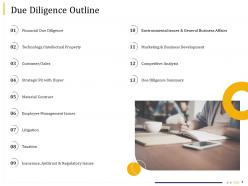
Slide 2: This slide shows Table of Content for the presentation.
Slide 3: This slide presents Financial Due Diligence with related imagery.
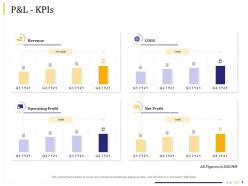
Slide 4: This slide displays P&L - KPIs with the help of bar graphs.
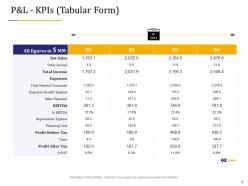
Slide 5: This slide shows P&L - KPIs in Tabular Form.
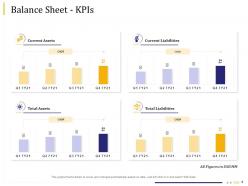
Slide 6: This slide represents Balance Sheet - KPIs describing- Total Liabilities, Current Liabilities, Current Assets, etc.
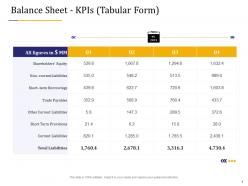
Slide 7: This slide shows Balance Sheet - KPIs in Tabular Form.
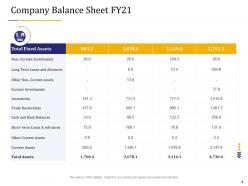
Slide 8: This slide presents Company Balance Sheet FY21.
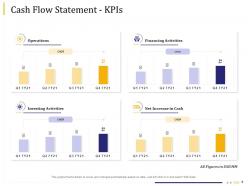
Slide 9: This slide displays Cash Flow Statement - KPIs describing- Investing Activities, Operations, Financing Activities, etc.
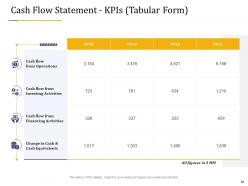
Slide 10: This slide shows Cash Flow Statement - KPIs in Tabular Form.
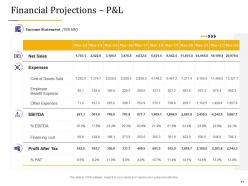
Slide 11: This slide represents Financial Projections – P&L describing Income Statement.
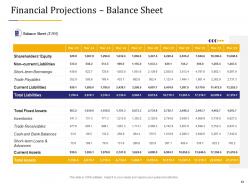
Slide 12: This slide shows Financial Projections – Balance Sheet.
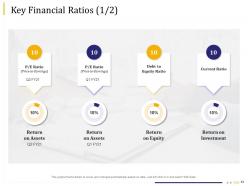
Slide 13: This slide presents Key Financial Ratios describing- P/E Ratio, Return on Assets, Debt to Equity Ratio, etc.
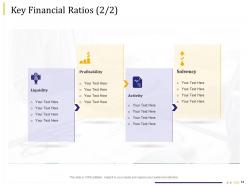
Slide 14: This slide displays Key Financial Ratios describing- Solvency, Profitability, Liquidity, etc.
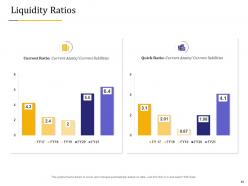
Slide 15: This slide shows Liquidity Ratios describing- Current Ratio, Quick Ratio, etc.
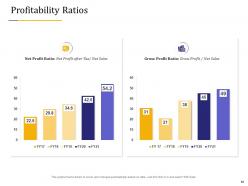
Slide 16: This slide represents Profitability Ratios describing- Net Profit Ratio, Gross Profit Ratio, etc.
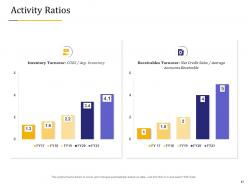
Slide 17: This slide shows Activity Ratios describing- Receivables Turnover, Inventory Turnover, etc.
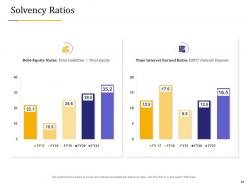
Slide 18: This slide presents Solvency Ratios describing- Time Interest Earned Ratio, Debt-Equity Ratio, etc.
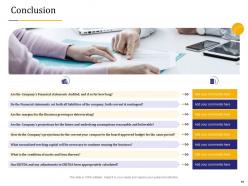
Slide 19: This slide displays Conclusion with related imagery.
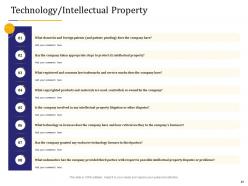
Slide 20: This slide shows Technology/Intellectual Property with related imagery.
Slide 21: This slide represents Technology/Intellectual Property with data in tabular form.
Slide 22: This slide shows Customers/Sales with related imagery.
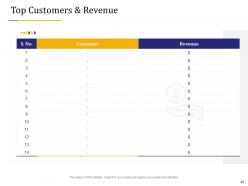
Slide 23: This slide presents Top Customers & Revenue with data in tabular form.
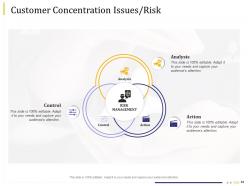
Slide 24: This slide displays Customer Concentration Issues/Risk describing- Analysis, Action, Control, etc.
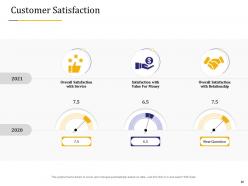
Slide 25: This slide shows Customer Satisfaction describing- Satisfaction with Value For Money, Overall Satisfaction with Service, Overall Satisfaction with Relationship, etc.
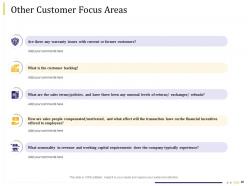
Slide 26: This slide represents Other Customer Focus Areas.
Slide 27: This slide shows Strategic Fit with Buyer.
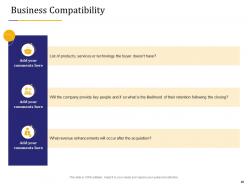
Slide 28: This slide presents Business Compatibility with List of products, services or technology.
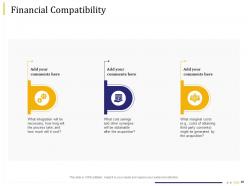
Slide 29: This slide displays Financial Compatibility with related icons and text.
Slide 30: This slide shows Material Contract with related imagery.
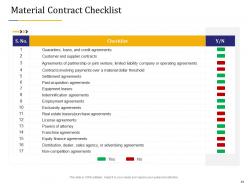
Slide 31: This slide represents Material Contract Checklist.
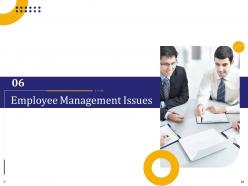
Slide 32: This slide shows Employee Management Issues with related imagery.
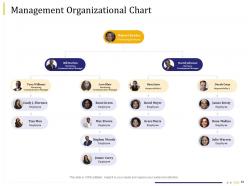
Slide 33: This slide presents Management Organizational Chart with names and designation.
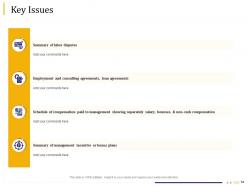
Slide 34: This slide displays Key Issues with related icons
Slide 35: This slide shows Litigation with related imagery.
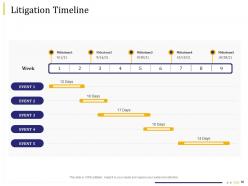
Slide 36: This slide represents Litigation Timeline.
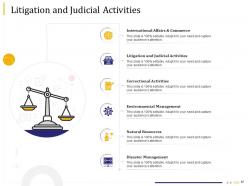
Slide 37: This slide shows Litigation and Judicial Activities.
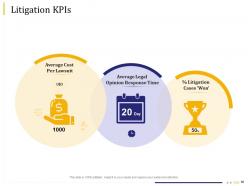
Slide 38: This slide presents Litigation KPIs describing- Average Cost, Average Legal, Opinion Response Time, etc.
Slide 39: This slide displays Taxation with related imagery.
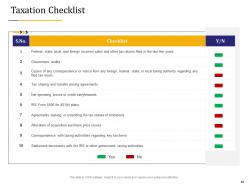
Slide 40: This slide shows Taxation Checklist.
Slide 41: This slide represents Insurance, Antitrust & Regulatory Issues.
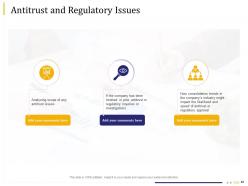
Slide 42: This slide shows Antitrust and Regulatory Issues.
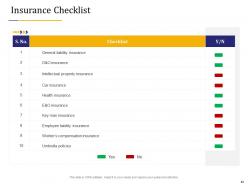
Slide 43: This slide presents Insurance Checklist.
Slide 44: This slide displays Environmental issues & General Business Affairs.
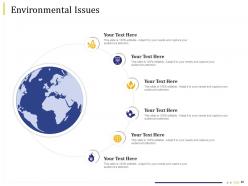
Slide 45: This slide shows Environmental Issues with related imagery.
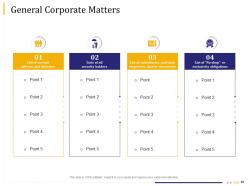
Slide 46: This slide represents General Corporate Matters.
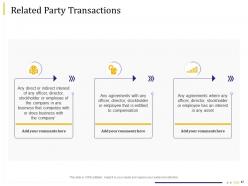
Slide 47: This slide shows Related Party Transactions.
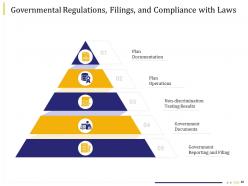
Slide 48: This slide presents Governmental Regulations, Filings, and Compliance with Laws.
Slide 49: This slide Highlights the documents which are found satisfactory during Due Diligence process.
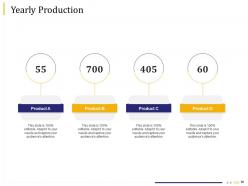
Slide 50: This slide displays Yearly Production with related icons and text.
Slide 51: This slide represents Marketing & Business Development with additional textboxes.
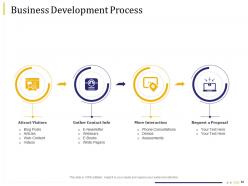
Slide 52: This slide shows Business Development Process.
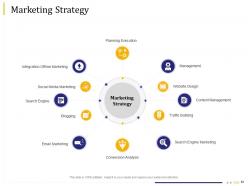
Slide 53: This slide presents Marketing Strategy describing- Content Management, Search Engine Marketing, Email Marketing, etc.
Slide 54: This slide displays Competitive Analysis with related imagery.
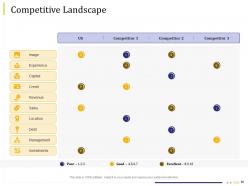
Slide 55: This slide shows Competitive Landscape with additional textboxes.
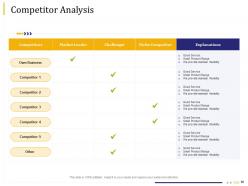
Slide 56: This slide represents Competitor Analysis with data in tabular form.
Slide 57: This slide shows Summary with related imagery.
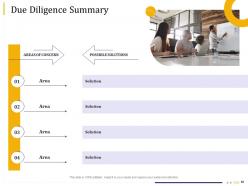
Slide 58: This slide presents Due Diligence Summary with text boxes.
Slide 59: This slide displays Icons for Business Due Diligence.
Slide 60: This slide is titled as Additional Slides for moving forward.
Slide 61: This is Our Mission slide with related imagery and text.
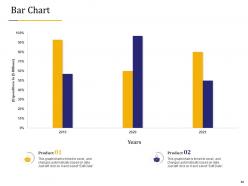
Slide 62: This slide displays Bar chart with two products comparison.
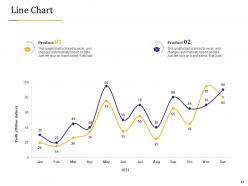
Slide 63: This slide presents Line chart with two products comparison.
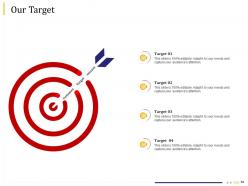
Slide 64: This is Our Target slide. State your targets here.
Slide 65: This slide shows Post It Notes. Post your important notes here.
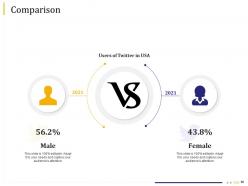
Slide 66: This is a Comparison slide to state comparison between commodities, entities etc.
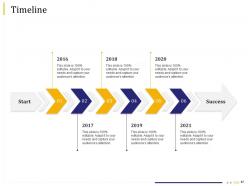
Slide 67: This is a Timeline slide. Show data related to time intervals here.
Slide 68: This is a Thank You slide with address, contact numbers and email address.
Business due diligence powerpoint presentation slides with all 68 slides:
Use our Business Due Diligence Powerpoint Presentation Slides to effectively help you save your valuable time. They are readymade to fit into any presentation structure.












FAQs for Business due diligence
Focus on four key areas: financial, legal, operational, and strategic stuff. Start with the money side - dig into their books, cash flow, debt situation. Legal's equally crucial because contracts and litigation can seriously screw you over later. I'd tackle those two first since they're potential deal-killers. After that, look at operations - their business model, key customers, how solid the management team is. Strategic comes last: market position, competition, growth prospects. Honestly, the financial and legal homework is where most people either save themselves or walk into disasters they could've avoided.
Definitely dig into their financial statements first - cash flow, profit margins, debt over the last few years. Declining revenue is a huge red flag. So is relying too heavily on just one customer (learned that one the hard way). Get their tax returns and bank statements, not just the polished presentation they'll show you. Your accountant should look at everything too - they catch stuff you won't. Oh, and compare their numbers to industry standards. Sometimes companies look profitable but are actually underperforming compared to competitors. Don't skip the accounts receivable reports either.
Dude, legal due diligence is basically your safety net before buying a company. You're digging for lawsuits, contract issues, IP problems - anything that'll bite you later. It's like getting a full medical checkup on the business (because who wants to inherit a mess of legal drama?). The stuff you find will totally change what you're willing to pay or if you even want the deal. Get your lawyers involved early and make sure they see everything important. Honestly, I've seen deals fall apart because people waited too long to start this process. Don't be that person.
Three big buckets to focus on: legal, financial, and operational stuff. Check all the lawsuits, regulatory headaches, and compliance gaps first - that's where the ugly surprises usually live. Financial side means debt structures, pension obligations, and any weird off-balance-sheet commitments. Operational risks are things like environmental problems or product defects. Your legal and finance teams should tag-team this since these issues overlap constantly. Oh, and create some kind of matrix to score each risk by probability and impact. Honestly, you can't manage what you can't measure, right? That way you'll actually know what mess you're inheriting.
Honestly, I'd start with market size and growth trends - grab both industry-wide data and break it down by customer segments. Customer interviews are pure gold if you can swing them. Also dig into what competitors are doing and how they're pricing stuff. Regulatory stuff can totally screw you over so don't skip that part. I always get way too deep in the weeds here but whatever. The real trick is figuring out where the market's going, not just where it is now. What could mess everything up? Get data from multiple places though - one report will lie to you.
So first, interview leaders and employees at all levels to see how they actually manage and communicate. Employee surveys are super telling - plus check turnover rates because if people are jumping ship constantly, that's your red flag right there. Honestly, the coffee chats with random team members will give you way more truth than any official meeting. Watch how their meetings actually run too. Don't just read their values online - see if people live them. Also pay attention to how they handle conflict and what work-life balance really looks like day-to-day.
So there's actually a bunch of stuff that'll help speed things up. Virtual data rooms are clutch - Intralinks or Box work great for sharing docs and controlling who sees what. Kira Systems is this AI tool that scans contracts and pulls out key terms automatically, which honestly saves you from going cross-eyed reading everything. For tracking deadlines and staying organized, Asana's solid. FactSet handles the financial number-crunching pretty well too. Oh, and some firms are using automated red flag detection now - fancy stuff. I'd start with a decent data room and maybe one AI contract thing. You'll notice the difference right away.
Honestly, startup due diligence is totally different from established companies. With startups, you're mostly betting on the team and their vision since there's barely any financial history. I mean, what else can you really analyze? Established companies though - you've got years of solid financials, customer data, all that good stuff to dig through. For startups, I'd focus way more on the founders' backgrounds and IP they've built. Market positioning matters huge here. With bigger companies, you're looking at supply chains, regulatory stuff, market share trends. It's night and day - just match your checklist to whatever actual data exists.
Red flags I'd watch for: sketchy financial reports, people jumping ship left and right, ancient tech that barely works. Regulatory issues are deal killers, same with having like 90% of revenue from one customer. Missing key leadership is bad news too. Honestly, I've watched so many buyers get screwed by obvious stuff - suppliers who hate them, cooked books, processes that exist only on PowerPoint slides. When you're walking through their offices, trust your gut. Something seems weird? Don't ignore it. Ask the hard questions before you're stuck with their mess.
Honestly, data privacy stuff can totally sink your deal if you're not careful. GDPR fines hit up to 4% of revenue - that's insane money we're talking about. You'll want to know what data mess you're inheriting and whether their practices actually work with yours. Their breach history matters too, obviously. Get your privacy people involved right away instead of waiting. Ask for their data mapping and current policies upfront. I've seen deals fall apart because someone discovered major violations way too late in the process. Better to know early what you're getting into.
Look, you've got a few ways to handle this mess. Price adjustments are your friend - make them eat some of the cost through escrow or just straight up negotiating down. Warranties work great too, so if stuff hits the fan later, they're on the hook. Maybe push for more due diligence time or break payments into milestones? Honestly though, don't be afraid to just bail if it's too sketchy. I've seen people get burned trying to make deals work when they should've walked. Match whatever you do to how much risk you can actually stomach. Oh, and definitely loop in your lawyer early - trust me on that one.
So basically, whatever you find during due diligence becomes your ammo for negotiations. Found some sketchy stuff? Perfect - now you can demand they drop the price or fix things before closing. If everything looks spotless though, the seller holds all the cards and you're kinda stuck paying what they want. Think of it like having cheat codes in a video game. Smart buyers actually time when they reveal problems too - dropping bombshells at just the right moment to get better terms. It's honestly pretty cutthroat but that's M&A for you.
Dude, stakeholder interviews are where the gold is. Financial statements only tell you so much - the real story comes from actually talking to people. Employees might hint that half the leadership team is job hunting. Customers could reveal brewing contract disputes. I've seen deals fall apart because nobody bothered asking the right questions early on. Open-ended questions work best, and honestly? Pay attention to what they're NOT saying too. Sometimes a weird pause or deflection tells you everything. Way more valuable than staring at spreadsheets all day.
Your due diligence findings are basically your game plan for making integration actually work. They show you exactly what's broken, what's at risk, and where you'll hit roadblocks. Financial stuff tells you where to cut costs first. Operational findings? That's your priority list for which processes to merge. You'll spot the employees who might bail and figure out where teams will clash culturally. Honestly, I've seen companies skip this step and just... yeah, it doesn't end well. Create a solid 100-day plan from what you found - beats flying blind and crossing your fingers.
Honestly, sloppy due diligence will wreck you. I've watched people skip the deep dive and get slammed with environmental cleanups they never knew existed. Lawsuits come out of nowhere. You'll overpay for garbage or miss huge red flags that should've been obvious. The money you lose is bad enough, but your reputation? That's harder to rebuild. Shareholders will come after you if you're public. Even private deals can bankrupt you if you're not careful. My buddy learned this the hard way last year - thought he was saving time and money on DD. Spoiler alert: he wasn't.
-
Best Representation of topics, really appreciable.
-
Informative presentations that are easily editable.
-
It saves your time and decrease your efforts in half.
-
Perfect template with attractive color combination.
-
Enough space for editing and adding your own content.
-
Thanks for all your great templates they have saved me lots of time and accelerate my presentations. Great product, keep them up!
-
It saves your time and decrease your efforts in half.
-
Great product with effective design. Helped a lot in our corporate presentations. Easy to edit and stunning visuals.
-
Easily Understandable slides.
-
Unique research projects to present in meeting.
-
Page:
- You're currently reading page 1
- Page 2
-
