


Call Centre Employee Kpi Scorecard




Try Before you Buy Download Free Sample Product
 Impress Your
 Audience
 100%
100% Editable
 Save Hours
 of Time


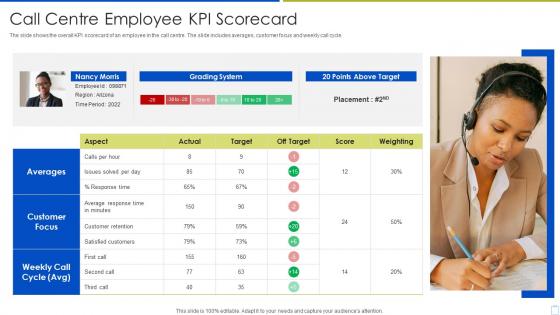
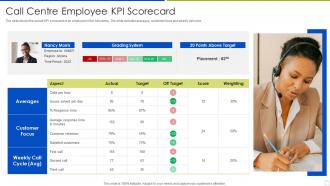
The slide shows the overall KPI scorecard of an employee in the call centre. The slide includes averages, customer focus and weekly call cycle.
People who downloaded this PowerPoint presentation also viewed the following :
Call Centre Employee Kpi Scorecard with all 6 slides:
Use our Call Centre Employee Kpi Scorecard to effectively help you save your valuable time. They are readymade to fit into any presentation structure.





FAQs for Call Centre
FCR and Average Handle Time are your bread and butter - gotta track those. CSAT too, obviously, plus Service Level to see if you're actually answering calls. Quality scores matter because fast but crappy calls are worthless, right? Agent Utilization rounds it out nicely. Honestly, those six give you everything without making your head spin. You could go crazy tracking like 20 different things, but start here. Speed's great until customers hate the experience, so these balance each other out pretty well.
Honestly, first figure out what actually matters to your business - customer happiness, cutting costs, or boosting revenue. Map your KPIs straight to those goals. So if keeping customers is crucial, focus on first call resolution and satisfaction scores instead of just how fast agents pick up. I used to track like 15 different metrics and it was a nightmare - total information overload. Pick maybe 4-6 that really matter for YOUR situation. Weight them based on what actually moves things forward. Oh, and review quarterly so you don't get stuck with outdated measures.
Look, customer satisfaction is honestly the metric that matters most on your call center scorecard. Everything else kinda revolves around it. Most places track it with post-call surveys, CSAT scores, or Net Promoter Score stuff - though I've seen some teams get obsessed with customer effort scores too. But here's what's cool about good CSAT numbers: they boost retention AND revenue. Plus your agents actually feel better when customers are happy. The trick is staying consistent with how you measure it, then actually using that feedback to tweak your training and processes. Don't just collect the data and forget about it.
Track cases that don't get follow-up calls within 7 days - that's your best FCR metric. Also survey people right after to ask if everything got resolved. For improvements, train your agents better and give them actual access to info during calls. Most teams get obsessed with call speed which is honestly backwards. You want agents solving stuff on the first try, not rushing people off. Oh and start with whatever's causing the most repeat calls - fix those root issues first. Way more effective than other approaches I've seen.
So AHT usually falls between 4-8 minutes, but it really depends on what you're dealing with. Basic customer service calls? You're probably looking at 4-6 minutes. Tech support gets messier - 6-8 minutes or more. Financial stuff lands around 5-7 minutes, though some of those mortgage calls... ugh, they drag on forever. Here's the thing though - don't get too hung up on industry averages. Your company's different. Track what you're doing now for a few weeks first. Then see where you can realistically improve without rushing people off calls. Nobody wants to be that company where customers hang up frustrated, you know?
Dude, turnover absolutely destroys your scorecard because you're measuring completely different people every month instead of actual improvements. Your metrics become totally useless - like trying to hit a moving target, you know? All your time gets eaten up training newbies on basic KPI stuff rather than actually optimizing anything. Here's the annoying part though: bad turnover creates worse metrics, which causes more turnover. It's this endless loop that sucks. Honestly, I'd throw employee satisfaction right onto your scorecard. Catch the warning signs early before everything goes to hell.
NPS is probably your best bet for measuring customer loyalty - way better than just tracking call times or whatever. Customers rate how likely they'd recommend your service on 0-10, then you subtract detractors from promoters. What's cool is it actually ties to revenue growth, not just operational stuff. Most other metrics only show if you're being efficient, but this one reveals whether people genuinely like dealing with your team. I'd run it monthly and use the comments to help agents improve specific things. Honestly, it's one of those rare metrics that bosses actually care about because it connects to real business results.
Keep those surveys super short - nobody's filling out 10 questions, trust me. Focus on the basics: was your issue resolved, was the agent helpful, rate your experience. That's it. The real trick is connecting those responses back to your actual KPIs. Low satisfaction scores? Maybe your team needs more training. People saying their problems weren't fixed? Your first-call resolution rate probably sucks. Oh, and don't just collect the feedback and forget about it. When you see patterns, fix them fast and track whether it actually moves the needle on your metrics.
So first thing - use red/yellow/green colors because honestly, your brain just processes that instantly. Don't cram more than 5-7 metrics on one page though, people zone out otherwise. Group similar stuff together, like put all your customer metrics in one spot and productivity numbers somewhere else. You'll want targets next to your actual numbers so there's context. Oh and those little trend arrows are clutch for showing if things are going up or down. The whole point is someone should be able to scan it in 30 seconds and know what's happening.
Honestly, your call center metrics need a total refresh with all this new tech. You're probably still tracking the usual stuff like call handling time, but now you should add chatbot deflection rates and sentiment scores too. The big shift? Stop obsessing over pure numbers and start caring about customer experience quality. Track how your team handles those awkward chatbot-to-human handoffs - that's where things get messy. Also monitor cross-channel resolution times since customers jump between chat, phone, whatever. My advice? Don't go crazy adding every possible metric. Just audit which ones actually tell you if customers are happy with their journey.
Ugh, data silos are the worst part honestly. Your KPI stuff gets spread across like five different systems - phone platform, CRM, workforce tools, whatever ticketing thing you're using. Nothing talks to each other so you get these weird inconsistent metrics that make zero sense when you try to match them up. Real-time reporting? Forget about it when agents are switching between apps that all track things differently. Plus manual data pulls are such a pain and always have errors. Oh and don't get me started on data quality issues - dropped calls just disappearing from logs. Get some integrated reporting tools that automatically pull everything together, trust me.
Honestly, I'd check the important stuff weekly. Monthly deep dives are good for bigger picture trends and strategy tweaks, but weekly keeps you on top of things before they spiral. Daily monitoring makes sense for metrics like abandon rates during crazy busy times - learned that the hard way at my last job. Some teams do monthly only but that feels too slow to me. You don't want to overwhelm everyone with constant changes though. Set up a calendar reminder now or you'll totally forget!
Dude, training is honestly your biggest win here. Good training makes first call resolution jump up and handle times drop without agents feeling rushed. Customer sat scores get way better too. I've literally watched teams improve their quality scores by like 20-30% after decent product training. Confidence goes through the roof when they actually know what they're doing. The trick though? Don't just do it once when people start. Monthly refreshers are clutch - otherwise people forget stuff and your numbers tank again.
Honestly, turn those KPIs into something people actually want to look at. Skip the boring spreadsheets - nobody checks those anyway. Try team challenges with stuff like first-call resolution rates and put up leaderboards where everyone can see who's crushing it. People eat that up! Make it visual and show each person their progress regularly so they know they're getting better. The magic happens when you tie wins to rewards people care about - better schedules, gift cards, extra time off. Just pick 2-3 metrics to start with though. Don't overwhelm them with everything at once.
QA is basically your reality check - shows you what's really going down on calls instead of what you assume. They listen in and score agents on stuff like first call resolution, customer satisfaction, all that. Catches problems before your metrics go to hell, which is clutch. The data feeds right into your dashboards so you can spot weird trends early. Here's the thing though - your QA criteria needs to match what you're actually measuring as KPIs. Otherwise you're just collecting random data that doesn't help anyone. It's like having a microscope on your whole operation, honestly.
-
The slides come with appealing color schemes and relevant content that helped me deliver a stunning presentation without any hassle!
-
Illustrative design with editable content. Exceptional value for money. Highly pleased with the product.