


Capital Project Performance Analysis Dashboard




Try Before you Buy Download Free Sample Product
 Impress Your
 Audience
 100%
100% Editable
 Save Hours
 of Time


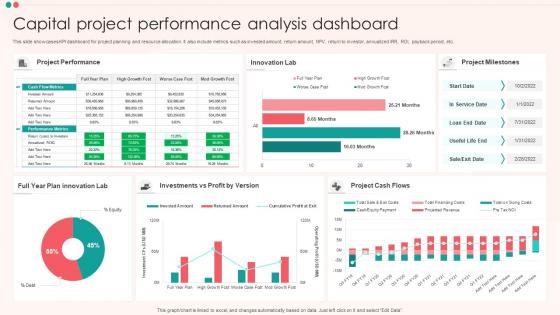
This slide showcases KPI dashboard for project planning and resource allocation. It also include metrics such as invested amount, return amount, NPV, return to investor, annualized IRR, ROI, payback period, etc.
People who downloaded this PowerPoint presentation also viewed the following :
Capital Project Performance Analysis Dashboard with all 7 slides:
Use our Capital Project Performance Analysis Dashboard to effectively help you save your valuable time. They are readymade to fit into any presentation structure.





FAQs for Capital Project
Honestly, focus on the basics first - are you hitting your milestones and staying on budget? Those are non-negotiables. Track scope compliance too because scope creep will kill you. Quality stuff like defect rates matter, but ROI is what the bosses actually look at during reviews. I'd throw in resource utilization and maybe some stakeholder surveys if you have time. Don't go overboard though - pick like 3-5 metrics max or you'll drown in spreadsheets. Set up something simple that updates weekly so you can catch problems before they get expensive. Trust me on this one.
Honestly, good risk management is what separates successful projects from total disasters. You'll want to identify potential problems during planning - not when you're already knee-deep in trouble. I always tell teams to run a risk workshop early and map out their top 3-5 threats. Then actually create response plans for each one. Sounds boring, I know, but it beats scrambling when things go sideways. The projects that crash hardest? Usually the ones where everyone just winged it and hoped nothing would go wrong. Don't be those people.
Dude, stakeholder engagement literally makes or breaks projects - I can't stress this enough. You've gotta get everyone involved from the start, not halfway through when things are already messy. Map out who matters early and set up regular check-ins. The feedback loops are huge because problems surface way before they explode into disasters. I've watched so many projects crash just because some VP felt ignored during planning. Communicate constantly about what's happening, what's not working, setbacks - all of it. Trust me, those early conversations save you from nightmare scenarios later when budgets are blown and timelines are toast.
Honestly, the data stuff makes a huge difference for capital projects. Real-time tracking shows you what's actually happening with costs and timelines instead of just guessing. Predictive analytics catches problems early - like way before your budget explodes. AI helps with scheduling too, which is surprisingly useful. Digital twins are kind of fascinating - you can test scenarios without blowing money on mistakes. My buddy's team saved weeks just by automating their reporting instead of doing spreadsheets manually. Don't go crazy though. Pick one or two tools first, see what works, then expand from there.
Honestly? Most projects crash because people rush the planning part. Poor scope definition kills you right away. Then you've got unrealistic deadlines that nobody questioned early on. Risk planning gets ignored until it's too late. I swear, teams always underestimate how messy integration work gets - it's never as simple as it looks on paper. Budget creep happens constantly when initial estimates are basically just guesses. Communication falls apart between teams and vendors, which makes everything ten times worse. My take? Spend forever in planning, lock down your stakeholders first, and pad your timeline and budget way more than feels comfortable.
Look, good budgeting literally makes or breaks your project. You need detailed cost estimates upfront - none of that ballpark nonsense that comes back to bite you later. Build in contingencies because something always goes sideways (trust me on this one). Track your spending against the budget religiously so you catch problems early. Stakeholders won't freak out about scope changes if you've got solid numbers to back up your decisions. The whole thing falls apart without realistic expectations from day one. Oh, and update your forecasts regularly - conditions change fast and you don't want to be caught off guard.
Honestly, I've learned this the hard way - break everything into smaller chunks first. Way easier to catch problems early that way. Then do regular check-ins with your team, like weekly or every two weeks. Don't skip these even when things look good! Always pad your timeline too (I do 15-20% extra). Figure out what tasks absolutely can't be delayed and watch those super closely. Oh, and have backup plans ready before stuff hits the fan. Trust me on that one - you'll thank yourself later when something inevitably goes sideways.
Oh man, compliance stuff will absolutely destroy your project if you're not careful. I've seen it happen so many times - everything's going smooth then BAM, you hit some environmental permit issue or safety reg you didn't think about. Delays, budget explosions, the whole mess. What really sucks is these problems usually pop up when you're already deep into construction and fixing them costs a fortune. Honestly, loop your compliance people in from day one during planning. Don't wait until you're breaking ground - that's way too late.
Honestly, NPV and IRR are your best bets - they actually factor in time value of money, which matters way more than people think for long-term stuff. I'd run NPV as your main calculation, then use IRR to compare against whatever your cost of capital is. Payback period is decent for a quick sanity check but don't rely on it alone. Oh, and definitely stress-test your assumptions because they're probably wrong anyway (they always are). For really complex projects with lots of decision points, real options analysis is worth looking into, though it gets pretty wonky fast.
Okay so post-implementation reviews are basically how you avoid making the same dumb mistakes again. Document everything that went wrong - budget stuff, timeline issues, scope creep, whatever. But here's where most teams mess up: they write it down then never look at it again. You need to actually build some kind of searchable database so future project teams can learn from your pain. I swear this step saves so much headache later. The whole point is comparing what actually happened vs what you planned. Then make those lessons easy to find when you're planning the next project.
Dude, good team collaboration can literally boost your project results by 25-40%. No joke. When engineering, procurement, and construction actually talk to each other from the start, you catch design problems early instead of scrambling later. I've watched so many projects tank because departments worked in silos - totally avoidable disasters. Weekly check-ins between all teams are clutch. Get some decent project management software too. Trust me, you'll avoid those nightmare scenarios where everyone's pointing fingers while deadlines whoosh past. Communication fixes like 80% of capital project headaches before they even happen.
Just pick 2-3 sustainability metrics and toss them on your project dashboard. Carbon footprint, energy savings, waste reduction - whatever matches your company's green goals. The data's probably already sitting around somewhere anyway. Set clear targets from day one though - like "cut energy use 20%" or hit LEED Gold. Then track it just like you would budget or timeline stuff. Honestly, it sounds harder than it is. Most project managers I know who've done this say it's pretty straightforward once you get going.
Honestly, benchmarking is like your sanity check - it tells you if your timelines and budgets are realistic or completely insane. You'll catch problems early and see what's actually working for other companies. When your boss starts questioning why you need more time or money, those industry standards become your best friend. Nothing shuts down pushback like showing them hard data about what everyone else is doing. The tricky part is finding benchmarks that actually match your situation - not all projects are created equal, you know? But once you do, you can fix things before they turn into disasters.
Honestly, it's all about managing expectations. People will judge your project way differently based on how you communicate, even if the actual results are identical. I've watched PMs with the exact same budget overruns get totally opposite reactions - one kept everyone updated weekly, the other went dark for months then dropped a bomb. Nobody likes getting blindsided by problems, especially when money's involved. Regular updates work way better than staying quiet. Even when you're delivering crappy news, stakeholders will actually respect you more if they saw it coming. Communication literally changes how people *feel* about your performance.
Look, change management can literally make or break your capital project - I've seen too many good projects go sideways because of this. Set up clear procedures for handling scope, timeline, or budget changes before you even start. Document everything and get sign-offs before moving forward with any changes. Trust me on this one. Otherwise you'll deal with scope creep, cost overruns, and stakeholders who have no clue why things suddenly shifted. Those "wait, didn't we agree on..." meetings are the worst. Having solid change control processes upfront saves you so much headache later.
-
SlideTeam offers so many variations of designs and topics. It’s unbelievable! Easy to create such stunning presentations now.
-
You know what? I'm so glad I opted for this PPT design. It has been a total game-changer for me and my presentations. Thank you!