


Investment Fund Performance Analysis Dashboard





Try Before you Buy Download Free Sample Product
 Impress Your
 Audience
 100%
100% Editable
 Save Hours
 of Time


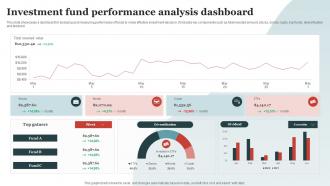
This slide showcases a dashboard for analyzing and measuring performance of funds to make effective investment decision. It includes key components such as total invested amount, stocks, bonds, crypto, top funds, diversification and dividend.
People who downloaded this PowerPoint presentation also viewed the following :
Investment Fund Performance Analysis Dashboard with all 7 slides:
Use our Investment Fund Performance Analysis Dashboard to effectively help you save your valuable time. They are readymade to fit into any presentation structure.





FAQs for Investment Fund
Look at returns over 3-5 years, not just the recent flashy stuff. Expense ratios matter way more than people realize - those fees add up fast. The Sharpe ratio is clutch because it shows if you're actually getting paid for the risk you're taking. Compare everything against the benchmark too. Honestly, I always check max drawdown because I hate surprises when markets tank. Volatility tells you how wild the ride gets. Just grab the fund's fact sheet and stack it up against similar options. Oh, and don't get sucked in by one amazing year - that's usually a red flag.
So benchmarks are basically how you figure out if your fund manager is actually good or just lucky. Compare your fund's returns to the right index - like S&P 500 or whatever sector it's in. Honestly, fund managers charge way too much to just match the market anyway. A 10% return seems awesome until you see the benchmark hit 15%, then you're like wtf am I paying fees for? Just make sure you're comparing against the right benchmark that actually matches what your fund invests in. Otherwise it's totally meaningless - like comparing a marathon runner to a sprinter.
Honestly, you gotta look at risk-adjusted returns if you want to know if your fund manager is actually good. Raw returns don't tell the whole story - some idiot could just throw money at super risky bets and get lucky for a year or two. The Sharpe ratio is clutch here because it shows you how much return you're getting per unit of risk. Makes it way easier to compare different funds on equal footing. Trust me, I learned this the hard way after chasing some flashy numbers that crashed later. Always check those risk metrics before you commit your cash.
You can't just look at raw returns - investment style matters way more than people think. Value funds usually suck during bull markets because everyone's going crazy for growth stocks, but they're solid when things fall apart. Growth funds do the opposite thing - they'll absolutely kill it when everyone's feeling good, then get destroyed in downturns. Here's what's annoying though: you need to compare your fund against the right benchmark that actually matches its style. Don't just use the S&P 500 for everything. Figure out what style your fund follows first, otherwise you'll think it's terrible when it's actually doing fine.
Yeah, experience matters but don't obsess over it. I'd want someone with at least 5-7 years who's been through different market cycles. Newer managers just haven't dealt with crashes and recoveries yet - they tend to freak out when things get volatile. Veterans are usually better at risk management, though some get cocky too which is annoying. The sweet spot is probably 10-15 years in whatever sector you're looking at. Don't just check their recent wins either - see how they handled the rough patches. That tells you way more about how they'll perform when markets go sideways again.
Dude, market conditions basically control everything with fund performance. When times are good, almost every fund manager looks genius. Bear markets though? That's when you see who actually has skills and who was just riding the wave. Your fund's numbers will look totally different depending on if you're checking during a recession vs a rally vs those boring flat years. Oh and interest rates mess with things too, plus inflation and all that sector rotation stuff. Honestly, don't just look at their highlight reel - check how they did across different cycles.
Dude, fees are sneaky as hell. They get pulled straight from your account AND they compound against you over time. Like if you're paying 1.5% annually, that money can't grow anymore - it's just gone. The math over 20+ years? Absolutely brutal. Even tiny differences hurt - 0.5% vs 1% can literally cost you tens of thousands down the road. Management fees, expense ratios, transaction costs... they all add up. Oh and pro tip - always dig up the expense ratio before you invest. They usually bury it deep in those boring prospectus documents but it's worth the hunt.
Look at risk-adjusted returns instead of just raw numbers - the Sharpe ratio shows how much return you get per unit of risk. Don't get fooled by one amazing year either. I always check performance across 1, 3, and 5 year periods minimum. Expense ratios matter more than people think since fees slowly chip away at your gains. Oh, and make sure you're comparing funds in the same category first - like growth vs growth funds. You can't really compare a tech fund to a dividend fund and expect that to mean anything useful.
Dude, asset allocation is huge - like 90% of your portfolio's performance comes down to this one thing. Way more than stock picking or trying to time markets (though that stuff's fun to think about, I guess). Basically your stock/bond mix determines everything. Young? Go heavier on stocks since you can ride out the bumps. Getting older? Start moving toward bonds for safety. The main thing is matching it to your timeline and how much risk makes you sweat at night. Then just rebalance once in a while. Don't stress too much, but definitely don't wing it completely.
Yeah, fund size totally matters but it's kinda backwards from what you'd think. Big funds actually perform worse a lot of the time - they can't buy smaller companies without accidentally controlling the whole stock price. It's ridiculous but true. Small funds can move fast and jump on opportunities, though they don't have as much money for research teams and stuff. I always check how a fund's returns changed as it grew bigger. If performance dropped off after they hit like $2 billion, that's usually a red flag.
Honestly, don't stress about the day-to-day ups and downs - that stuff is completely normal. Markets are just messy like that. I've watched so many people freak out and sell at exactly the wrong time because they got spooked by a couple rough weeks. Really dumb moves in hindsight. What you want to look at instead is how it's doing over 3-5 years compared to similar funds and its benchmark. Short-term noise doesn't tell you much. Just make sure the fund still makes sense for your timeline and how much risk you're comfortable with.
Turnover rate basically shows how much buying and selling a fund does. More trading = more fees and taxes hitting your returns. I usually avoid funds that churn through stocks constantly unless there's a good reason. Some strategies actually need higher turnover though - like if they're doing momentum plays or whatever. Lower turnover funds are generally cheaper and more tax-friendly, but they might miss opportunities. The key is checking if the fund's performance actually makes up for those extra costs. Don't just pick the lowest turnover rate - pick what makes sense for their strategy.
Check how the fund did in different markets - bull runs, crashes, flat periods. Sharpe ratio's clutch for risk-adjusted returns. Standard deviation shows you how volatile things get. Rolling 3-year returns beat looking at single years IMO - gives you way better insight. Compare it against the benchmark during each cycle too. Honestly I get way too into this analysis stuff, but consistency matters more than flashy one-year wins. Pull the fund's fact sheet and dig into at least 5-10 years of data. You'll spot patterns pretty quick.
Dude, you NEED to see exactly how your fund is performing - like actual numbers, fees, what they're investing in, all of it. Otherwise you're just guessing and hoping for the best, which is how people lose money. Clear reporting lets you compare funds properly instead of getting stuck with something that looks good on paper but has crazy hidden fees. I learned this the hard way with my first investment account lol. Look for funds that break everything down monthly or quarterly. If they're being sketchy about their performance or costs, run.
Yeah, so basically you want their actual moves to match what they're preaching. Like if they say they're "value investors" but keep buying trendy growth stocks, that's sketchy. I always check their real holdings instead of trusting the fancy brochures - marketing teams love to oversell everything. Some drift is totally normal when markets get crazy. But if there's a huge gap between what they claim and what they actually do? That usually means the management is either clueless or just chasing whatever's hot. Worth digging into before you hand over your cash.
-
Wonderful ideas and visuals. I'm really pleased with the templates, which are unique and up to date.
-
Their designing team is so expert in making tailored templates. They craft the exact thing I have in my mind…..really happy.