

Client financial and budget planning process powerpoint presentation slides





Try Before you Buy Download Free Sample Product
 Impress Your
 Audience
 100%
100% Editable
 Save Hours
 of Time


Looking to get noticed with your financial planning process? Just click and download our complete financial planning PPT model. You just have to put your data and figures in financial plan templates of this readymade PPT sample file and you are ready with an engaging PowerPoint presentation in no time. Best part is that with creative presentations themes like objectives of financial planning, responsibility of client and planner, cash flow analysis, cash flow control, budget monitoring process etc. our presentation deck is way ahead than its competitors. Additionally, you can utilize this PPT sample to underline the economic policy, investment policy as well as economic position of your company. Apart from this, you can also portray concepts like market position, trade inclination, money flow etc. by using this PPT presentation. In nut shell, from an investment advisor to financial planners and accounting professionals this PowerPoint slide deck comprehensively addresses the needs of all professionals.
People who downloaded this PowerPoint presentation also viewed the following :
Content of this Powerpoint Presentation
Slide 1: This slide introduces Financial Planning Process. State Your Company Name and begin.
Slide 2: This is an Agenda slide. Note down your agendas here.
Slide 3: This is Our Mission slide with Vision and Goals and text boxes to go with. State them here.
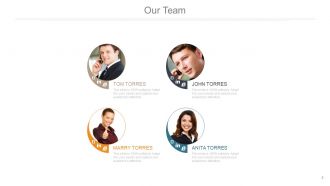
Slide 4: This is Our Team slide with names, designation and text boxes.
Slide 5: This is an About Us slide. State company/team specifications here.
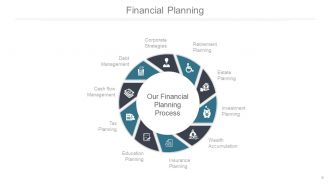
Slide 6: This slide shows Financial Planning displaying- Retirement Planning, Estate Planning, Investment Planning, Wealth Accumulation, Insurance Planning, Education Planning, Tax Planning, Cash flow Management, Debt Management, Corporate Strategies, Our Financial Planning Process.
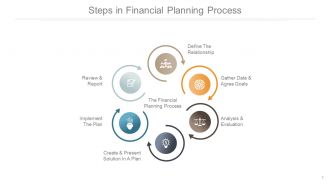
Slide 7: This slide shows Steps in Financial Planning Process with the following points- Gather Data & Agree Goals, Define The Relationship, Analysis & Evaluation Create & Present Solution In A Plan, Implement The Plan, Review & Report, The Financial Planning Process.
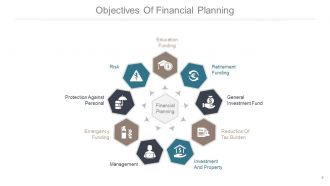
Slide 8: This slide shows Objectives Of Financial Planning with- Education Funding, Retirement Funding, General Investment Fund, Reduction Of Tax Burden, Investment And Property, Management, Emergency Funding, Protection Against Personal, Risk, Financial Planning.
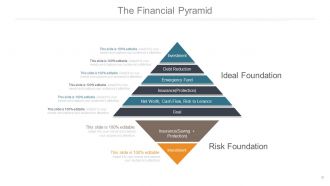
Slide 9: This slide presents The Financial Pyramid displaying- Ideal Foundation, Risk Foundation, Investment, Debt Reduction, Emergency Fund, Insurance(Protection), Net Worth, Cash Flow, Risk to Lerance, Goal, Investment, Insurance(Saving + Protection).
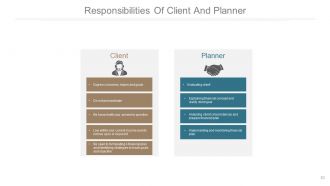
Slide 10: This slide shows Responsibilities Of Client And Planner displaying- Express concerns, hopes and goals, Do not procrastinate, Be honest with your answer to question, Live within your current income and do not live up to or beyond it, Be open to formulating A financial plan and identifying strategies to reach goals and objective of the Client and Implementing and monitoring financial plan, Analyzing client circumstances and prepare financial plan, Explaining financial concept and clarify client goal, Evaluating client’ of Planner.
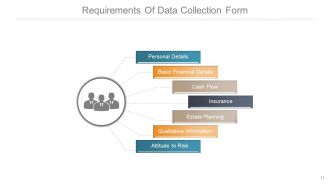
Slide 11: This slide shows Requirements Of Data Collection Form displaying- Personal Details, Basic Financial Details, Cash Flow, Insurance, Estate Planning, Qualitative Information, Attitude to Risk.
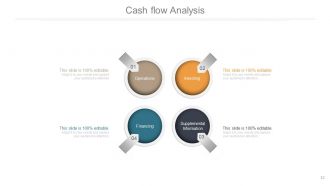
Slide 12: This Cash flow Analysis displaying- Investing, Operations, Supplemental Information, Financing.
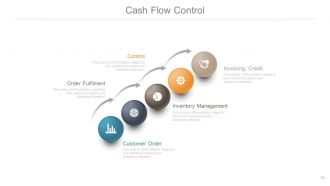
Slide 13: This slide displays Cash Flow Control showcasing- Customer Order, Inventory Management, Invoicing, Credit, Control, Order Fulfillment.
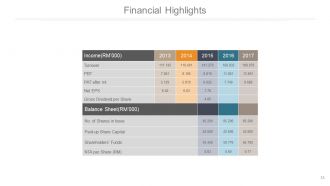
Slide 14: This is a Financial Highlights slide in tabular form.
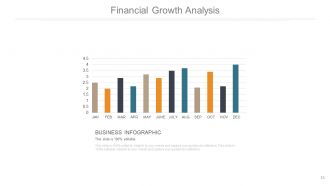
Slide 15: This is Financial Growth Analysis in tabular form.
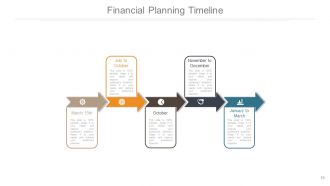
Slide 16: This is Financial Planning Timeline slide.
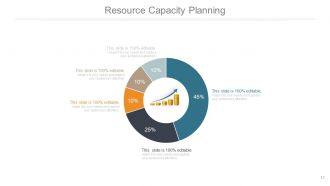
Slide 17: This slide shows Resource Capacity Planning.
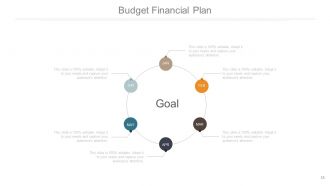
Slide 18: This is Budget Financial Plan slide.
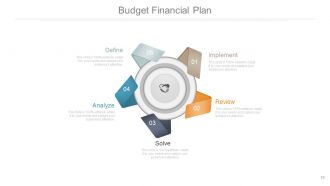
Slide 19: This is Budget Financial Plan slide showcasing- Review, Implement, Define, Analyze, Solve.
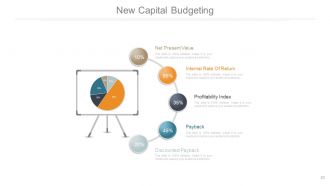
Slide 20: This slide presents New Capital Budgeting with- Net Present Value, Internal Rate Of Return, Profitability Index, Payback, Discounted Payback.
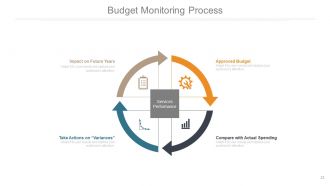
Slide 21: This slide shows Budget Monitoring Process displaying- Services Performance, Impact on Future Years, Take Actions on “Variances”, Approved Budget, Compare with Actual Spending.
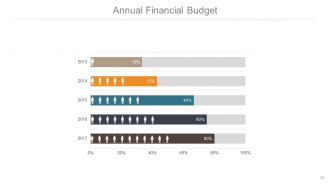
Slide 22: This slide showcases Annual Financial Budget in a creative graphical form.
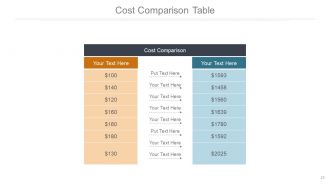
Slide 23: This slide presents a Cost Comparison Table.
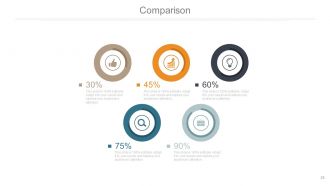
Slide 24: This slide displays Comparison. Compare different aspects etc. with creative icon imagery.
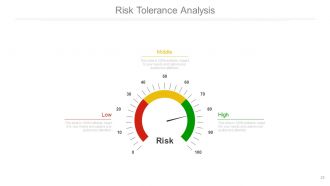
Slide 25: This slide shows Risk Tolerance Analysis in a metric scale form.
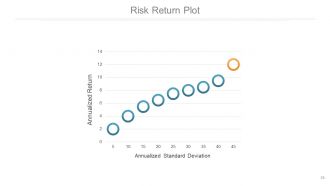
Slide 26: This slide showcases Risk Return Plot displaying- Annualized Return, Annualized Standard Deviation.
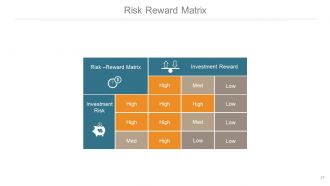
Slide 27: This slide presents a Risk Reward Matrix displaying- Investment Reward, Investment.
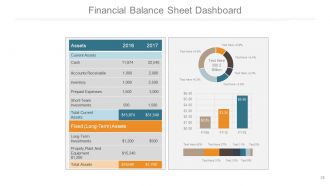
Slide 28: This slide shows a Financial Balance Sheet Dashboard.
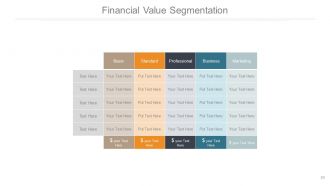
Slide 29: This slide showcases Financial Value Segmentation in tabular form.
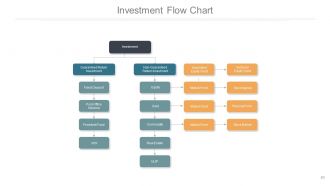
Slide 30: This is an Investment Flow Chart slide showcasing- Investment, Non-Guaranteed Return Investment, Guaranteed Return Investment, Fixed Deposit, Post-Office Scheme, Provident Fund, PPF, Equity, Gold, Commodity, Real Estate, ULIP, Mutual Fund, Physical Form, Mutual Fund, Stock Market, Sectorial Equity Fund, Diversified Equity Fund, Mutual Fund, Stock Market.
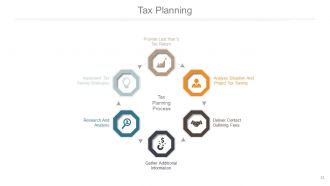
Slide 31: This slide showcases Tax Planning displaying- Provide Last Year’s Tax Return, Analyze Situation And Project Tax Saving, Deliver Contact Outlining Fees, Research And Analysis, Implement Tax Saving Strategies, Gather Additional Information, Tax Planning Process.
Slide 32: This is Post It slide for marking events, reminders, important information etc.
Slide 33: This is a Newspaper slide to show important information etc. You may alter the slide content as per need.
Slide 34: This is a Puzzle image slide. State information, specifications etc. here.
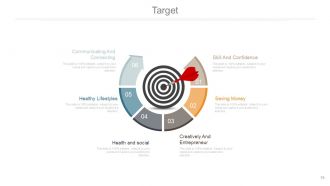
Slide 35: This is Our Target image slide. State targets, information, specifications etc. here. such as- Healthy Lifestyles, Saving Money, Creatively And Entrepreneur, Health and social, Skill And Confidence, Communicating And Connecting.
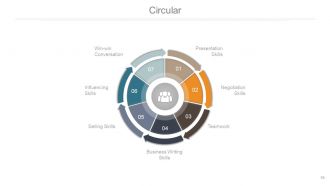
Slide 36: This is a Circular image slide. State information, specifications etc. here such as- Win-win Conversation, Negotiation Skills, Teamwork, Influencing Skills, Presentation Skills, Selling Skills, Business Writing Skills.
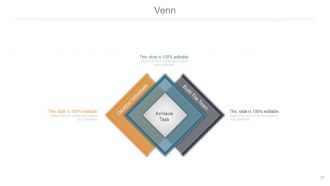
Slide 37: This is a Venn diagram image slide. State information, specifications etc. here. such as- Develop Individuals, Build The Team, Achieve Task.
Slide 38: This is a Mind Map image slide to show information, specifications etc.
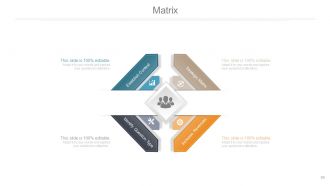
Slide 39: This slide presents a Low High Matrix for representing an information such as- Strategic Matrix, Establish Context, Identify Question Type, Increase Revenues.
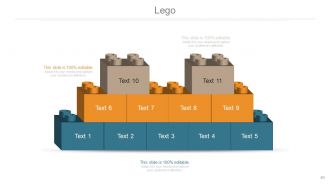
Slide 40: This is a Lego image slide with text boxes to show information, specifications etc.
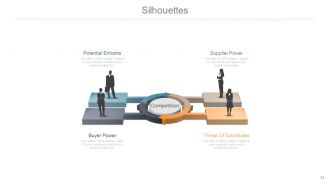
Slide 41: This slide shows Silhouettes with text boxes. State people related information, specifications etc. here. such as- Competition, Supplier Power, Potential Entrants, Buyer Power, Threat Of Substitutes.
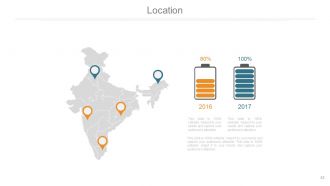
Slide 42: This is a Location slide of world map top show global marketing, growth, presence etc.
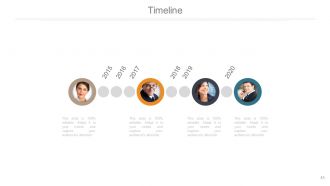
Slide 43: This is a Timeline slide to show milestones, evolution, growth highlights etc.
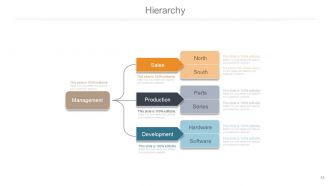
Slide 44: This is a Hierarchy slide with text boxes to show information, organization/team specifications etc.
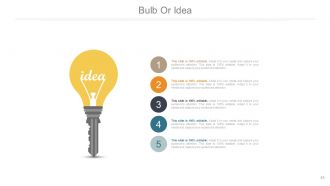
Slide 45: This is a Bulb or Idea slide to state a new idea or highlight innovative specifications/information etc.
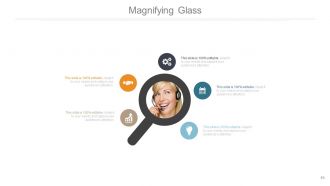
Slide 46: This is a Magnifying Glass image slide to show information, specifications etc.
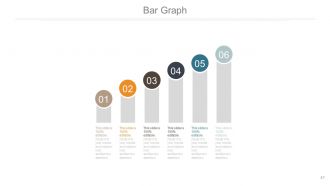
Slide 47: This is a Bar Graph slide to show product/entity comparison, specifications etc.
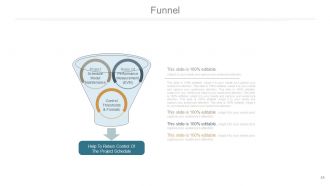
Slide 48: This is a Funnel image slide to show funneling aspects such as- Help To Retain Control Of The Project Schedule, Project Schedule Model Maintenance, Rules Of Performance Measurement (EVM), Control Thresholds & Formats.
Slide 49: This is an About Us slide. State company/team specifications here.
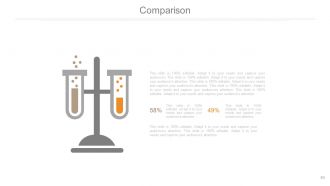
Slide 50: This slide showcases Comparison of two entities in creative test tube imagery form.
Slide 51: This slide showcases Comparison of two entities in tabular form.
Slide 52: This slide displays a Dashboard. State performance aspects here.
Slide 53: This is a Thank You slide for acknowledgement.
Client financial and budget planning process powerpoint presentation slides with all 53 slides:
Our Client Financial And Budget Planning Process Complete Powerpoint Deck generate good harmony. Everyone will act in chorus.





FAQs for Client financial and budget planning process
Ok so you'll want to hit six main things: current finances (income, expenses, what they own/owe), their goals with actual dates, how much risk they can stomach, taxes, insurance, and basic estate stuff. Honestly, I'd start with cash flow first - most people have zero clue where their money goes each month. Figure out timelines for big stuff like buying a house or retiring since that totally changes what investments make sense. The tricky part is matching their dreams with what's actually doable while leaving room for life to mess things up. Document everything so you can see if they're on track later.
Honestly, you've gotta dig into each client's specific situation first - their goals, how much risk they can handle, timeline, all that stuff. Cookie-cutter strategies are garbage (trust me, learned that one the hard way). Everyone's at different life stages with totally different needs. Some want aggressive growth, others just need steady income coming in. Really listen during those first meetings - like actually listen, not just wait for your turn to talk. Then customize everything based on what they told you. Oh, and don't forget to check back regularly since people's situations change constantly.
Honestly, risk assessment is huge for financial planning - it's basically driving every decision you make. Start with a questionnaire but the real good stuff comes from actual conversations. I walk clients through scenarios like "what if the market tanks 30%" or job loss situations, you know? You've got to figure out both what they can actually afford to lose AND what makes them panic at 2am. Those are totally different things. Match their investments and insurance to their real risk profile, not what they think sounds impressive. Oh and document everything - when markets go crazy later, you'll need those notes to remind them why you made certain choices.
Honestly, just break everything down into tiny chunks and use analogies they actually get. That eggs-in-one-basket thing? Still works perfectly for explaining diversification. I always watch their faces to see if they're following along - body language tells you everything. Visual stuff helps tons too, like simple charts they can take with them. Oh, and definitely start with what THEY want first, then explain why your strategies help them reach those goals. The key is checking in constantly with "make sense so far?" Trust me, always wrap up by repeating the main points in normal people language.
Honestly, the right tech will change everything for your planning business. Get good financial software that runs scenarios instantly - saves you hours. Interactive charts are huge because clients finally get what you're showing them instead of staring at confusing spreadsheets. Client portals let people check their stuff anytime, which cuts down on those random "how am I doing?" calls. Automation handles the boring rebalancing work so you're not stuck doing math all day. Robo-advisors cover basic portfolio stuff too. Just pick one solid platform first though - don't go crazy buying everything at once.
Documentation is your best friend - keep track of every client chat, recommendation, the works. Update their risk profiles regularly and get signatures on everything (yeah, it's boring but regulators eat this stuff up). Always be upfront about conflicts of interest, and honestly? Only recommend stuff that actually fits what they can handle risk-wise. When you're unsure about something, just ping compliance before doing anything. Trust me, they'd way rather help you avoid problems than deal with the aftermath later. Better safe than sorry.
Choppy markets? Here's what I'd do. Rebalance portfolios back to target - volatility messes up those allocations fast. Also check if clients still feel good about their risk tolerance, because honestly, everyone's a risk-taker until things get ugly. Dollar-cost averaging works great for new money too. Oh, and this is when you realize how smart it was pushing those emergency fund conversations earlier (even though clients probably rolled their eyes). Main thing is keeping them focused on the long game instead of freaking out over headlines. Don't wait for them to panic-call you either - reach out first.
Honestly, client education makes or breaks everything. When people actually get why you're doing something, they won't panic-sell during the next market crash. Visual stuff works best - cash flow charts, those "what if" scenarios that show different outcomes. I do regular check-ins to explain what's happening with their money. Nobody wants to read 10-page reports, so keep updates short and actually readable. Oh, and some advisors do quarterly webinars which seems smart. Bottom line - educated clients stick around and don't freak out when things get weird. They'll actually trust your advice instead of second-guessing everything.
Honestly, most people screw up in three big ways. First - and this one drives me crazy - advisors don't dig deep enough during discovery. They ask surface questions, miss crucial details, then wonder why their plan crashes later. Second thing? Clients walk in expecting some magic solution that'll make them rich overnight. You've gotta be real about timelines and what's actually possible. But here's the worst part: so many advisors just disappear after handing over the plan. Like, what's the point? Life changes constantly, so you need regular check-ins to tweak things. Otherwise you're just selling expensive paperwork.
Emergency fund and high-interest debt first - non-negotiable. After that, focus on stuff you can't postpone, like retirement (compound interest waits for no one) or your kid's college timeline. Most people stress about juggling everything at once, but you don't have to. Split your extra money between goals - maybe 60% retirement, 40% house down payment, whatever works. The key is picking your top three priorities and sticking with them. I learned this the hard way after spreading myself too thin across like seven different savings accounts. Trade-offs are real, so just be honest about what matters most right now.
Start with the basics - current age, when they want to retire, how long they'll probably live. That's your timeframe right there. Next, add up what they've got saved, any pensions, Social Security estimates. Healthcare is honestly gonna be way more expensive than they think, especially if they're still in their 40s or 50s. Figure out what lifestyle they actually want - not just "comfortable" but real numbers. Inflation's a killer over 20-30 years too. Oh, and ask about big stuff like helping kids with college or that Europe trip they keep talking about. Then you can see where the gaps are and fix them.
Honestly, regular feedback saves you from wandering into the wilderness for months thinking everything's fine. Your clients' situations change constantly - new jobs, kids, market freakouts, you name it. Check in quarterly (even just quick 15-minute calls) to catch their shifting priorities before they become problems. People's goals aren't as static as we pretend they are. The trust factor is huge too - they'll feel way more involved instead of just getting lectured at with your brilliant recommendations. It's one of those simple things that actually makes a difference.
Dude, tax strategies are honestly game-changers for building wealth. Your clients get to keep way more of what they make through stuff like tax-loss harvesting and putting assets in the right accounts. Plus retirement account optimization - that's huge. I always tell people it's probably the biggest bang for your buck service we offer. Better cash flow, lower tax bills over time, and all that money stays invested to compound. Oh and don't treat it like some year-end thing - you've gotta weave tax planning into every big financial move they make. Start by digging into their current situation first.
Honestly, I'd start with automating the long-term stuff first - retirement contributions, investments, whatever. Treat it like paying rent, just gone before you can spend it. Then tackle the urgent things with what's left. Emergency fund and debt payoff obviously can't wait, but don't let them completely kill your future savings. I usually suggest like 70% long-term, 30% short-term goals, but that's just a starting point. Really depends on your cash flow situation. The whole thing falls apart if you're miserable now though - gotta find that balance where you're not eating ramen every night just to fund your 401k.
Dude, three things you gotta stay on top of. ESG is everywhere now - people actually care where their money goes, not just returns. Inflation has everyone spooked (rightfully so tbh), so expect tons of questions about TIPS and I-bonds. Oh and retirement planning? Totally different game. Healthcare costs are insane, people live forever now, so that old 4% withdrawal rule is basically dead. Clients need way more saved and flexible strategies. I'd weave this stuff into every check-in if I were you.
-
Easily Understandable slides.
-
Editable templates with innovative design and color combination.