

Planning Cost Management Powerpoint Presentation Slides





Try Before you Buy Download Free Sample Product
 Impress Your
 Audience
 100%
100% Editable
 Save Hours
 of Time


ut efforts in accomplishing a successful project using Planning Cost Management PowerPoint Presentation Slides. Plan, organize and manage your next project and produce a specific outcome with the help of content-ready planning cost management PowerPoint templates. Add professionally designed project management PPT slides to achieve all project goals within a timeframe. This ready-to-use project planning complete PowerPoint presentation covers topics like project brief, project description, project process, project timeline, project management budget, and more. Turn your temporary endeavour to a product, service or result with the help of project management PowerPoint templates. Manage changes, risk, issues related to the project. Manage project budget and monitor project progress report. Do all these without any hassles. Incorporate ready-made planning cost management PowerPoint presentation slides to deliver the project on time without any roadblocks. Click the download button now. Put efforts in accomplishing a successful project using Planning Cost Management PowerPoint Presentation Slides. Plan, organize and manage your next project and produce a specific outcome with the help of content-ready planning cost management PowerPoint templates. Add professionally designed project management PPT slides to achieve all project goals within a timeframe. This ready-to-use project planning complete PowerPoint presentation covers topics like project brief, project description, project process, project timeline, project management budget, and more. Turn your temporary endeavour to a product, service or result with the help of project management PowerPoint templates. Manage changes, risk, issues related to the project. Manage project budget and monitor project progress report. Do all these without any hassles. Incorporate ready-made planning cost management PowerPoint presentation slides to deliver the project on time without any roadblocks. Click the download button now. Elaborate on the harmful after effects of intoxication with our Planning Cost Management Powerpoint Presentation Slides. Illustrate the ill effects.
People who downloaded this PowerPoint presentation also viewed the following :
Content of this Powerpoint Presentation
Slide 1: This slide introduces Planning Cost Management. State your company name and get started.
Slide 2: This is Project Brief slide. Use it to state the following aspects- Project Brief/ Summary, Status, Objectives, Expected Outcomes.
Slide 3: This is Project Description slide.Describe in detail, what the project is all about.
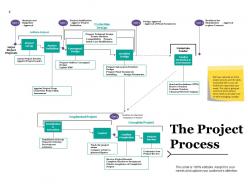
Slide 4: This slide displays The Project Process flowchart.
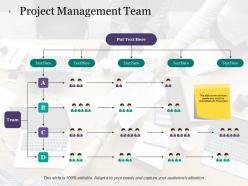
Slide 5: This slide presents Project Management Team. Covers all those people who would be associated with this project.
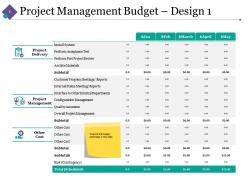
Slide 6: This slide showcases Project Management Budget – Design 1. Capture the budget estimates in this.
Slide 7: This slide showcases Project Management Budget- Design 2 (1/2). Capture the budget estimates in this.
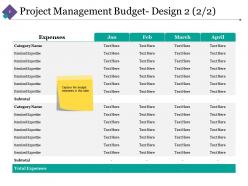
Slide 8: This slide also showcases Project Management Budget- Design 2 (2/2) to capture the budget estimates.
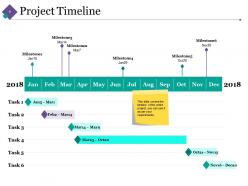
Slide 9: This slide presents Project Timeline to state project milestones etc. Use as per your requirement.
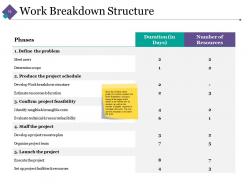
Slide 10: This slide shows Work Breakdown Structure with Phases to state.
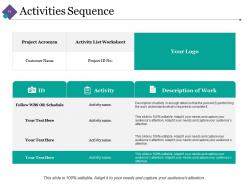
Slide 11: This slide shows Activities Sequence.
Slide 12: This slide displays Project Management Gantt Chart (1/2).
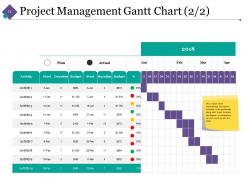
Slide 13: This slide also showcases Project Management Gantt Chart (2/2). This Gantt chart represents the various activities to be performed along with there duration and degree of completion, you can use it as per the need.
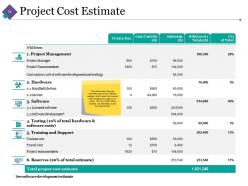
Slide 14: This slide showcases Project Cost Estimate. It covers the cost estimates split across different sections which would be involved while bringing the project in to action. You can modify these sections and estimates as per the requirements.
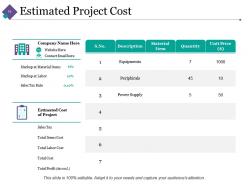
Slide 15: This slide helps depict Estimated Project Cost in a tabular form.
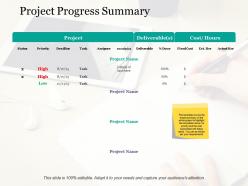
Slide 16: This slide presents Project Progress Summary template. This template covers the broad summary of the entire project to highlight the completion level, its priority and the cost associated with these tasks. You can use this as per your requirements.
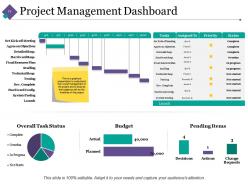
Slide 17: This slide displays Project Management Dashboard in charts and graphs.
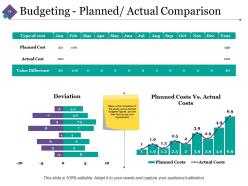
Slide 18: This slide showcases Budgeting - Planned/ Actual Comparison graph. You can alter them as per your requirements
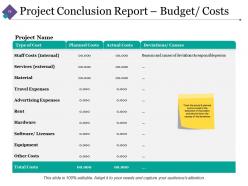
Slide 19: This slide presents Project Conclusion Report – Budget/ Costs. Track the actual and planned cost involved in the execution of the project and also list down the causes of the deviations.
Slide 20: This is Planning Cost Management Icon Slide. Use icons as per need.
Slide 21: This is a Coffee Break slide to halt. Alter/ modify as per need.
Slide 22: This slide is titled Charts & Graphs to move forward. You may change it as per requirement.
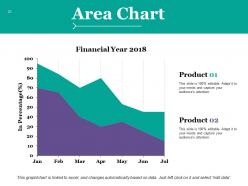
Slide 23: This is an Area Chart slide for product/ entity comparison.
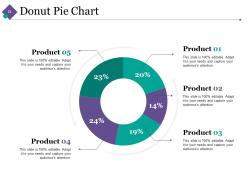
Slide 24: This is a Donut Pie Chart slide to present product/ entity comparison, specifications etc.
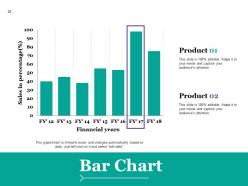
Slide 25: This is a Bar Chart slide to present product/ entity comparison, specifications etc.
Slide 26: This slide is titled Additional Slides. You can change the slide content as per your needs.
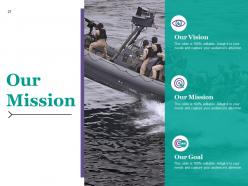
Slide 27: This is Our Mission slide with- Our Vision, Our Mission, Our Goal.
Slide 28: This slide presents Our Team with name and designation to specify.
Slide 29: This is an About Us slide. State team/ company specifications here.
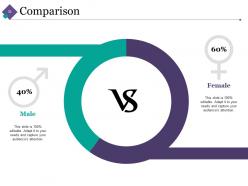
Slide 30: This slide showcases Comparison of two entities.
Slide 31: This is a Financial score slide. State financial aspects, information etc. here.
Slide 32: This is Our Goal slide. State your goals here.
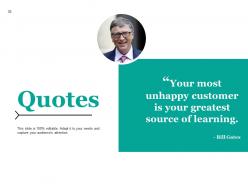
Slide 33: This is a Quotes slide to convey company/ organization message, beliefs etc. You may change the slide content as per need.
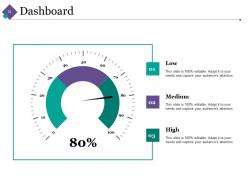
Slide 34: This is a Dashboard slide to state Low, Medium and High aspects, kpis, metrics etc.
Slide 35: This is Our Target slide with imagery and text boxes.
Slide 36: This is a Circular image slide. State specifications, information here.
Slide 37: This is a Venn diagram image slide to show information, specifications etc.
Slide 38: This slide presents a Timeline to show growth, milestones etc.
Slide 39: This is a Silhouettes slide to show people specific information etc.
Slide 40: This is a Mind Map image slide with text boxes to fill information.
Slide 41: This is a Bulb or Idea slide to state a new idea or highlight specifications/ information etc.
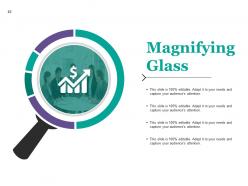
Slide 42: This slide shows a Magnifying glass with text boxes.
Slide 43: This is a Thank You slide with Address# street number, city, state, Contact Numbers, Email Address.
Planning Cost Management Powerpoint Presentation Slides with all 43 slides:
Focus on important bits of information with our Planning Cost Management Powerpoint Presentation Slides. It helps highlight critical inputs.











FAQs for Planning Cost Management
You'll need cost estimation methods and a solid budget baseline first. Set variance thresholds so you know when things go sideways. Figure out who can approve changes and how often you're checking actual vs planned costs. Honestly, stakeholders get really annoying when cost reports are messy, so nail down your reporting format early. Document your cost management tools and any earned value stuff you're tracking. But here's the big one - have a plan for scope creep because that's where budgets totally blow up. I've seen it happen so many times. Start with these essentials and tweak as you go.
Honestly, a good cost management plan is what saves your butt when projects start spiraling. It gives you clear sight lines on spending so you can catch problems early instead of scrambling later. Real-time tracking is huge - you'll know exactly where every dollar goes. Build in some buffer money too because something always goes sideways (learned that the hard way). Map out your cost buckets first, then set up regular check-ins to review everything. Stakeholders get way less cranky when you hit your numbers, and you won't be the person explaining budget overruns in awkward meetings.
Break everything down into tiny pieces first - that's bottom-up estimating and honestly it's the most reliable method. If you've done similar projects before, analogous estimating is a lifesaver (I probably use this way too much but whatever). Three-point estimating is solid too - you estimate best case, worst case, and realistic scenarios. There's also parametric estimating where you use statistical models, though that sounds fancier than it actually is. Pick whichever method fits your data and how complex things are. Start simple and you'll be fine.
Look, risk assessments are basically your financial crystal ball - they show you where your budget could take a hit. Once you spot the high-risk stuff, set aside contingency money and maybe have cheaper backup plans ready. Think of it like checking the weather before you leave the house. Map out each risk and figure out what it'd actually cost if everything went wrong. Then decide: do you accept it, try to prevent it, or pass the buck to someone else? Honestly, I always start with the risk register and just ask myself "okay, what's this really gonna cost us?"
Look, you absolutely need stakeholders on board from day one - they're controlling the purse strings anyway. Finance people obsess over ROI while ops teams worry about resources, and your executives? They want everything tied to strategy. Get them talking early or you'll be scrambling when budget cuts hit (learned this the hard way). Different voices help you spot realistic constraints and actually secure the funding you need. Oh, and don't wait until after you've built your whole cost model - that's backwards. Set up input sessions right at the start when you can still adjust things easily.
Weekly cost check-ins are your best friend here. More often if money's flying out the door. Compare what you planned to spend against reality and how much work actually got done - basically earned value management but without the corporate jargon. I'd set alerts when you're 5-10% over budget, depending on project size. Honestly, most people wait until the end to look at this stuff and by then you're screwed. Catch problems early when you can pivot or cut scope. Much better than explaining cost overruns to stakeholders later.
So basically, fixed costs never change - rent, salaries, insurance, all that stuff. Variable costs go up and down with how much you're actually producing or selling, like materials and shipping. Then there's semi-variable costs which are honestly just annoying to deal with because they're unpredictable. I always tell people to categorize everything first when you're budgeting. Makes it so much easier to spot where you can cut costs later. Plus you'll get way better at predicting your cash flow once you know which expenses will stay put and which ones fluctuate with your business activity.
Look, historical data is honestly your lifeline for decent cost estimates. It shows what really went down, not the fantasy numbers we all wish were true. You'll start seeing patterns - like which contractors always somehow need "just a bit more" or how lumber prices spike every spring (learned that one the hard way). Find projects with similar scope and complexity to yours. Build your own little database if you don't have one yet. Just remember to bump those old numbers up for inflation and whatever craziness is happening in the market right now.
Honestly, the worst part is dealing with people who think it's just more red tape. Teams hate new tracking stuff. Your data's probably a mess too - scattered across different systems, half of it wrong. Makes it impossible to know your real baseline costs. Leadership wants results yesterday, which is annoying but predictable. You won't have enough people or time to do this properly at first. My advice? Run a small pilot program somewhere first. Proves it actually works before you try rolling it out everywhere. Way easier to get buy-in when you've got real numbers to show people.
Look, spreadsheets for cost management are basically torture at this point. Get yourself some actual software - it'll track budgets automatically and send alerts before you blow past limits. Monday or Asana work great for monitoring costs across different projects. For deeper stuff like resource planning, try Planview or Microsoft Project. The scenario planning feature is clutch too - you can test out different budget scenarios before committing. Oh, and they generate reports in real-time which is honestly a lifesaver. Just figure out what's driving you crazy about your current setup first, then pick whatever fixes that specific headache.
So you'll definitely want to watch your budget variance and cost per unit - the basic stuff. But ROI alone won't tell you if things are actually improving. I'd also track cost trends month to month, plus efficiency ratios like your cost-to-revenue split. Oh, and don't ignore quality metrics while you're cutting costs - learned that one the hard way! Maybe set up a simple dashboard with your top 5 numbers. Honestly, earned value tracking is clutch if you're doing project work. Just check it monthly so you can catch problems before they spiral.
Look, good communication basically saves you from those "oh shit" moments where everyone's working with different budget numbers. Nobody wants to tell the boss they're 30% over - trust me on that one. Regular check-ins help you catch problems early instead of scrambling later. Your team will actually start brainstorming ways to cut costs if they know what's going on financially. I'd suggest weekly budget reviews, even if they're quick. Keeps everyone aligned and thinking about money before making decisions. It's honestly one of those boring things that prevents major headaches down the road.
Dude, set up a proper change control process right away - no budget tweaks without documentation and approval. Track every single request and figure out how it'll mess with your scope and timeline before getting stakeholder buy-in. I've watched so many projects completely implode because someone said yes to "tiny" changes that snowballed into budget disasters. Always be super clear about cost impacts when you talk to stakeholders. Update your baseline after changes get approved, and definitely keep some contingency money for the weird stuff that always pops up. Oh, and document everything now - even those casual hallway conversations should go through your process.
Look, your past project disasters are actually gold mines for future budgeting. Check what bombed vs. what worked - were your estimates trash or did scope creep destroy everything? Most teams just bury these reports which drives me crazy. Notice the patterns: maybe that one vendor always goes over, or you consistently lowball the testing phase. Build yourself a simple database of this stuff (seriously, just a spreadsheet works). Then actually USE it when planning your next project. It'll help you estimate better and plan more realistic buffers. Trust me, it beats making the same expensive mistakes twice.
Ugh, regulatory stuff is such a pain but you've gotta budget for it upfront. Figure out which rules actually hit your business - SOX, environmental regs, labor laws, GDPR if you handle data. Compliance costs add up fast. Don't forget audit expenses and potential fines (because let's be real, someone always messes something up). Legal review for contracts will eat into your budget too. The rules change constantly so build in some buffer. I'd honestly rather overestimate than get blindsided by a surprise requirement later.
-
Presentation Design is very nice, good work with the content as well.
-
Awesome presentation, really professional and easy to edit.