

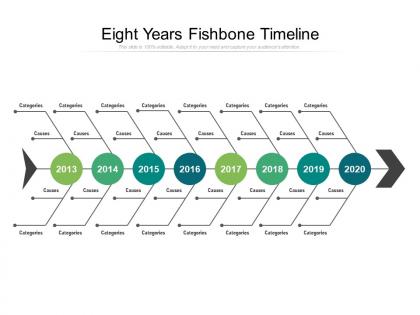
Eight years fishbone timeline




Try Before you Buy Download Free Sample Product
 Impress Your
 Audience
 100%
100% Editable
 Save Hours
 of Time


Identify common aspirations folks have with our Eight Years Fishbone Timeline. Get the group to act cohesively.
People who downloaded this PowerPoint presentation also viewed the following :
Eight years fishbone timeline with all 2 slides:
Bring folks to focus on errors with our Eight Years Fishbone Timeline. Enlighten individuals on how to avoid them.
FAQs for Eight
So basically you've got the "fish head" which is your main problem, then these "bones" branching off - stuff like People, Process, Equipment, Materials, Environment, Methods. Draw it all out and yeah, it actually does look like a fish skeleton when you're done lol. Each bone lets you dig deeper into what's causing issues in that area. The whole visual thing is pretty smart because your team can spot patterns they'd totally miss just talking it through. Oh and definitely nail down your problem statement first as the head, then just work through each category one by one. Way better than random brainstorming if you ask me.
Fishbone diagrams are honestly game-changers for team brainstorming. Instead of the usual chaos where everyone's throwing out random thoughts, you get actual structure. Each person can own a different "bone" category, which keeps the loud people from taking over - you know how that goes. What I really like is how it draws out the quiet team members since they have a clear spot to add their input. The visual aspect helps too because some people just think better that way. Pro tip: have everyone jot ideas on sticky notes first, then build it together. Way better participation that way.
You'll find fishbone diagrams all over manufacturing - they're crazy useful for tracking down defects. Healthcare uses them tons for patient safety stuff. Software teams love them for debugging too. Toyota basically built their whole quality system around this kind of thinking, which is pretty cool. Food safety investigations? Same thing. Really, any industry where you're dealing with recurring problems instead of just random one-offs. I swear, once your team starts mapping out those "bones," connections just start popping up that nobody saw before. Next time you're banging your head against the same issue, try it out.
So fishbone diagrams are actually pretty clever - they break down your production headaches into categories like people, processes, equipment, that sort of thing. Way better than just randomly guessing what's broken. Get your team in a room to brainstorm because they'll spot stuff you'd totally miss on your own. The visual layout is surprisingly satisfying too, if you're into that kind of thing. Once you've got everything mapped out, tackle the most likely culprits first. Start broad with the main categories, then drill down into the nitty-gritty details from there.
Fishbone diagrams let you brainstorm all possible causes at once - like people issues, process problems, equipment failures, whatever. Way better for team meetings since everyone can jump in with their ideas. 5 Whys is different - you're basically drilling down on one specific problem chain, asking "why" over and over until you find the real culprit. Honestly, I always reach for fishbone first when the problem feels messy or complicated. Multiple things could be going wrong, you know? But if you've got one clear symptom and need to trace it back, 5 Whys works great. Just depends on whether you're casting a wide net or following breadcrumbs.
Look, you really need data before diving into that fishbone diagram - otherwise you're just guessing at problems that might not even exist. I've seen teams waste weeks fixing stuff that was already working fine. Collect your metrics first, then use them to figure out which causes are actually legit versus what people just *think* is wrong. The numbers will show you where to focus your energy and give you something concrete to measure against later. Trust me, it beats wandering around trying to solve phantom issues. Data turns your fishbone from wishful thinking into an actual roadmap.
Yeah, so basically you just swap out those main categories for stuff that actually applies to your field. Like in healthcare, forget "Methods, Materials, Machines" - you'd use "Patient factors, Equipment, Procedures, Communication" instead. Way more relevant. Manufacturing would be totally different - maybe "Raw materials, Process parameters, Equipment maintenance, Operator training." The generic 6M thing is honestly pretty outdated anyway. Here's what works: think about the 4-6 biggest problem sources you actually deal with day-to-day, then make those your main branches. Don't overthink it - just pick what reflects your real headaches and you'll get way better insights.
Oh man, the biggest trap is when everyone just starts pointing fingers instead of actually figuring out what went wrong. Teams either go crazy broad or get laser-focused on the most obvious stuff. Half the time people rush through it - I swear I've seen fishbone diagrams that are literally just a bunch of complaints slapped on paper lol. Get someone neutral to run it who'll steer people back to processes when they start blaming. Set timers for each section so you actually dig deep. The "5 Whys" thing works great too. Pull in people from different departments - they'll catch things others miss completely.
Getting other people involved in your fishbone diagram is honestly a game-changer. Different departments will spot root causes that you'd totally miss on your own. When someone from operations looks at it versus someone from customer service, they're seeing completely different problems. Plus people are way more invested in fixing issues they helped identify - weird how that works, right? I'd suggest doing a quick workshop where everyone throws sticky notes on each section. You'll end up with way better data about what's really going wrong. The whole thing becomes collaborative instead of just your analysis.
Start with your problem statement, then walk through each major category before getting into specifics. I always prep the diagram ahead of time but leave room to add stuff - someone inevitably comes up with something brilliant mid-meeting. Different colors for each bone helps a ton visually. Don't overcrowd the boxes with text either. Here's the key part though: wrap up by picking your top 2-3 causes to actually investigate. Otherwise you'll end up with this gorgeous diagram that just sits there doing nothing. Been there, done that - it's frustrating as hell.
Oh totally! Fishbone diagrams are actually pretty solid for software stuff. We tried one last month when our deployments kept crashing and it helped way more than I expected. Basically you put your main problem at the head - like "production keeps breaking" - then brainstorm causes under categories like People, Process, Tech, Environment. Gets everyone thinking methodically instead of just throwing out random guesses, which honestly our team does way too much. Really useful during retrospectives when you're trying to figure out why something went sideways again. The visual aspect helps too since some people process that better than just talking through issues.
Honestly, just use Miro - their free version is perfect and you can share it instantly. Lucidchart's solid too if you want something more polished. I've tried Visio but it's kind of a pain unless you're already stuck using Microsoft everything. For quick stuff, Draw.io works fine (they renamed it to diagrams.net for some reason). Canva even has fishbone templates now, which is weird but whatever. The main thing is avoiding drawing these by hand because that's just torture. Miro's probably your best bet to start with.
Try color coding different categories - like red for people problems, blue for process stuff. Sticky notes work way better than just drawing lines (honestly makes the whole thing feel less corporate-boring). Throw in some simple icons next to major causes so they actually stand out. Make your "bones" thicker for bigger issues, thinner for minor ones. Build it together on a whiteboard where everyone can jump in - I've seen teams get so much more into it when it's collaborative. The goal is turning your fishbone into an actual visual story instead of some textbook diagram that puts people to sleep.
Try the "5 Whys" thing - it's honestly pretty good for digging deeper into stuff. Get people from different teams involved so you're not stuck in an echo chamber. I usually set timers for each part because it keeps everyone moving instead of getting stuck overthinking one thing. Let people throw out crazy ideas first. The weird suggestions sometimes lead to the actual good stuff. Oh, and use sticky notes if some people are too shy to speak up - anonymity helps. Quick tip: start your next meeting by going over what you missed last time.
Honestly, update them whenever you find new root causes or make process changes - don't let them sit there getting stale. I'd say at least quarterly though, maybe during your regular team reviews? The trick is actually keeping them current so they're useful when problems pop up. Quick updates right after you discover new causes work best. Oh, and definitely assign someone to own this - otherwise everyone assumes someone else is handling it and boom, six months later your diagram is totally outdated. Maybe tie the reviews to retrospectives or something you're already doing regularly. Sounds boring but it actually saves time later when you're troubleshooting issues.
No Reviews