


Financial Risk Management Strategies Powerpoint Presentation Slides





Try Before you Buy Download Free Sample Product
 Impress Your
 Audience
 100%
100% Editable
 Save Hours
 of Time


Financial risk management reduces losses by determining the adequacy of a banks capital and loan loss reserves at any given time. This process has long been difficult for financial institutions to master. Our Financial Risk Management Strategies presentation helps to establish an appropriate credit risk environment, maintaining an appropriate credit administration, measurement, and monitoring process. This credit risk management presentation includes various slides related to current analysis details such as key figures related to the bank, worldwide presence and alliances of the bank, market share and turnover related to the competitors, etc. It showcases the various problems associated with credit risk management with their primary causes. It also focuses on risks in the banking industry, principal risks components and ley parameters, data analysis on bank NPAs, etc. Also, this presentation covers slides for credit risk analysis, techniques for managing and mitigating various credit risks, technologies used to manage credit risks, etc. The module also concentrates on the credit rating process from issues and rating agencies, maintaining appropriate credit administration, setting up of credit management system, etc. In the end, it shows the positive effects of implementing the credit risk strategy on the company, such as a decrease in non-performing loans and credit risk recovery management details. Get access now.
People who downloaded this PowerPoint presentation also viewed the following :
Content of this Powerpoint Presentation
Slide 1: This slide introduces Financial Risk Management Strategies. State your company name and begin.
Slide 2: This slide states Agenda of the presentation.
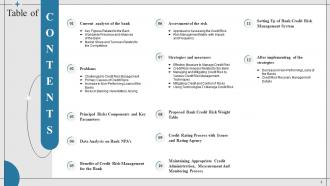
Slide 3: This slide shows Table of Content for the presentation.
Slide 4: This slide highlights title for topics that are to be covered next in the template.
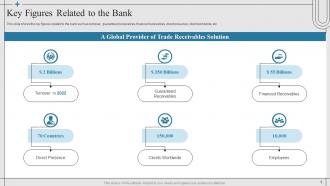
Slide 5: This slide presents Key Figures Related to the Bank.
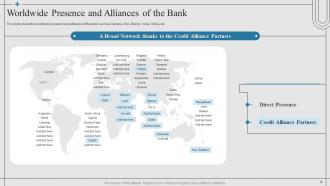
Slide 6: This slide displays Worldwide Presence and Alliances of the Bank.
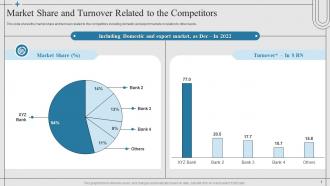
Slide 7: This slide represents Market Share and Turnover Related to the Competitors.
Slide 8: This slide highlights title for topics that are to be covered next in the template.
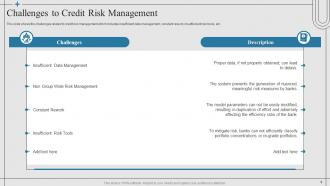
Slide 9: This slide showcases Challenges to Credit Risk Management.
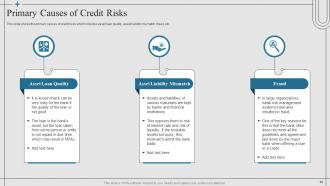
Slide 10: This slide shows Primary Causes of Credit Risks.
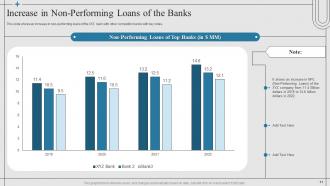
Slide 11: This slide presents Increase in Non-Performing Loans of the Banks.
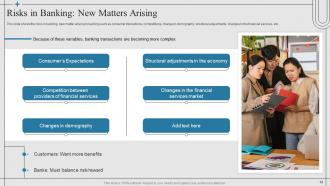
Slide 12: This slide displays Risks in Banking: New Matters Arising.
Slide 13: This slide highlights title for topics that are to be covered next in the template.
Slide 14: This slide represents Principal Risks Components and Key Parameters.
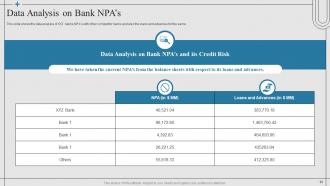
Slide 15: This slide showcases Data Analysis on Bank NPA’s.
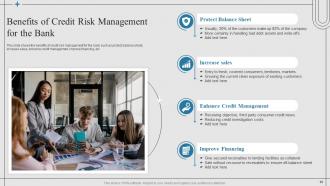
Slide 16: This slide shows Benefits of Credit Risk Management for the Bank.
Slide 17: This slide highlights title for topics that are to be covered next in the template.
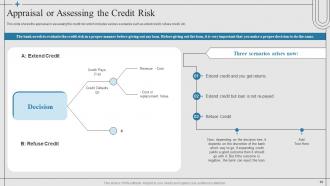
Slide 18: This slide presents Appraisal or Assessing the Credit Risk.
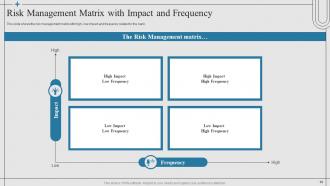
Slide 19: This slide displays Risk Management Matrix with Impact and Frequency.
Slide 20: This slide highlights title for topics that are to be covered next in the template.
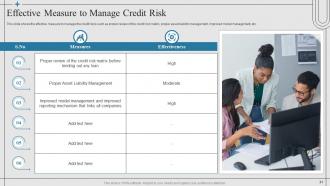
Slide 21: This slide represents Effective Measure to Manage Credit Risk.
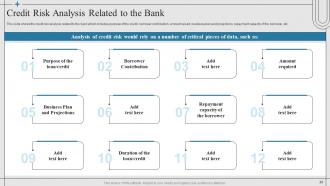
Slide 22: This slide showcases Credit Risk Analysis Related to the Bank.
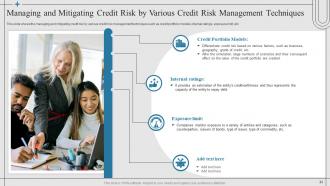
Slide 23: This slide shows Managing and Mitigating Credit Risk by Various Credit Risk Management Techniques.
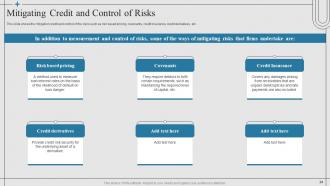
Slide 24: This slide presents Mitigating Credit and Control of Risks.
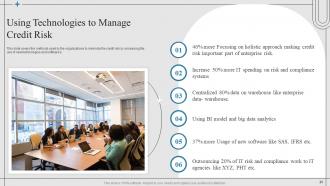
Slide 25: This slide displays Using Technologies To Manage Credit Risk.
Slide 26: This slide highlights title for topics that are to be covered next in the template.
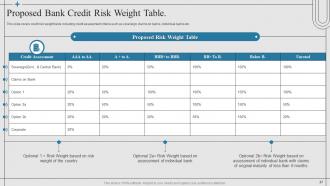
Slide 27: This slide represents Proposed Bank Credit Risk Weight Table..
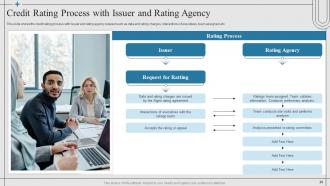
Slide 28: This slide showcases Credit Rating Process with Issuer and Rating Agency.
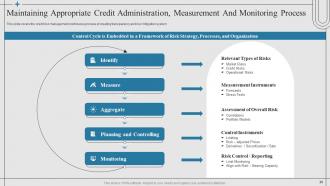
Slide 29: This slide shows Maintaining Appropriate Credit Administration, Measurement And Monitoring Process.
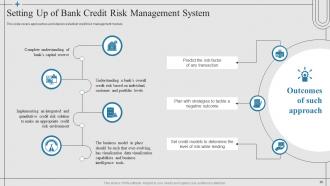
Slide 30: This slide presents Setting Up of Bank Credit Risk Management System.
Slide 31: This slide highlights title for topics that are to be covered next in the template.
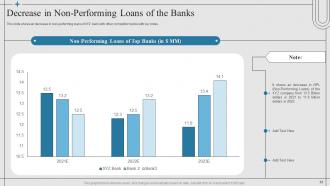
Slide 32: This slide displays Decrease in Non-Performing Loans of the Banks.
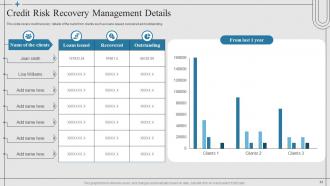
Slide 33: This slide represents Credit Risk Recovery Management Details.
Slide 34: This slide contains all the icons used in this presentation.
Slide 35: This slide is titled as Additional Slides for moving forward.
Slide 36: This slide presents Bar chart with two products comparison.
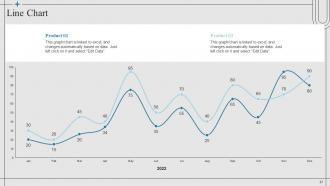
Slide 37: This slide describes Line chart with two products comparison.
Slide 38: This slide depicts Venn diagram with text boxes.
Slide 39: This slide displays Mind Map with related imagery.
Slide 40: This slide contains Puzzle with related icons and text.
Slide 41: This slide shows Post It Notes. Post your important notes here.
Slide 42: This is a Thank You slide with address, contact numbers and email address.
Financial Risk Management Strategies Powerpoint Presentation Slides with all 47 slides:
Use our Financial Risk Management Strategies Powerpoint Presentation Slides to effectively help you save your valuable time. They are readymade to fit into any presentation structure.





















FAQs for Financial Risk Management Strategies
**INPUT**: What are the key components of an effective financial risk management framework? **OUTPUT**: An effective financial risk management framework includes risk identification, assessment methodologies, monitoring systems, mitigation strategies, and governance structures. These components work together by establishing clear protocols, enabling real-time tracking, and facilitating swift responses to emerging threats, with many financial institutions finding that integrated frameworks significantly enhance operational resilience and regulatory compliance.
Organizations identify and assess financial risks through comprehensive risk mapping, quantitative modeling, stress testing, scenario analysis, and regular portfolio reviews. These methodologies enable banks, insurance companies, and investment firms to evaluate credit, market, operational, and liquidity exposures systematically, while regulatory frameworks increasingly require sophisticated risk measurement tools that ultimately deliver better capital allocation and competitive advantage.
Quantitative analysis provides the mathematical foundation for measuring, modeling, and predicting financial risks through statistical methods, probability distributions, Monte Carlo simulations, and algorithmic assessments. These analytical tools enable banks, investment firms, and insurance companies to calculate value-at-risk, optimize portfolio allocations, and automate risk monitoring, ultimately delivering more precise risk pricing and regulatory compliance.
Interest rate changes impact financial risk exposure by affecting borrowing costs, investment valuations, and cash flow patterns across company operations. Companies with variable-rate debt face higher expenses when rates rise, while those holding fixed-rate securities experience portfolio value fluctuations, with many financial institutions and real estate firms finding that rate volatility significantly influences their strategic planning and competitive positioning.
Primary hedging tools include derivatives like options and futures, diversification strategies, insurance products, currency hedging instruments, and credit default swaps. These financial mechanisms streamline risk management by protecting against market volatility, currency fluctuations, and credit defaults, with many banks and investment firms finding that strategic hedging ultimately delivers portfolio stability and enhanced returns.
Businesses can develop risk awareness culture through comprehensive training programs, clear communication channels, regular risk assessments, leadership modeling, and incentive alignment with risk management goals. By integrating risk considerations into daily workflows and decision-making processes, organizations empower employees to identify potential threats proactively, ultimately strengthening operational resilience and competitive positioning.
Companies should monitor financial risk using debt-to-equity ratios, liquidity ratios, cash flow volatility, value-at-risk measures, and credit risk indicators. These metrics enable organizations to track leverage, operational stability, and market exposure systematically, with many financial institutions and corporations finding that regular monitoring ultimately delivers early warning capabilities and enhanced strategic decision-making.
Regulatory compliance significantly shapes financial risk management strategies by mandating specific capital requirements, reporting standards, and risk assessment frameworks that institutions must integrate into their operations. Banks and financial services firms increasingly find that compliance-driven approaches enhance transparency, strengthen internal controls, and improve stakeholder confidence, ultimately delivering competitive advantage through robust governance structures.
Recent financial crises highlight the importance of comprehensive stress testing, diversified portfolios, robust liquidity management, and early warning systems for systemic risks. These lessons emphasize that effective risk management requires continuous monitoring, scenario planning, and regulatory compliance, with many financial institutions now implementing enhanced risk frameworks that ultimately deliver greater stability and competitive advantage.
Scenario analysis improves financial risk management decision-making by modeling multiple potential outcomes, stress-testing portfolios under various market conditions, and quantifying potential losses across different economic scenarios. This approach enables financial institutions to optimize capital allocation, adjust investment strategies proactively, and enhance regulatory compliance, ultimately delivering more resilient portfolios and competitive advantage.
Technology enhances risk assessment through advanced analytics, machine learning algorithms, real-time monitoring systems, automated reporting tools, and predictive modeling capabilities. These solutions streamline processes by identifying patterns faster, reducing human error, and enabling proactive decision-making, with financial institutions finding that automated systems deliver more accurate risk predictions and significantly improved operational efficiency.
Managing operational risk in financial institutions involves challenges like regulatory compliance complexity, cybersecurity threats, human error mitigation, legacy system integration, and third-party vendor oversight. These institutions increasingly find that while technology helps streamline monitoring and automate controls, balancing comprehensive risk coverage with operational efficiency requires strategic investment in both systems and staff training, ultimately delivering enhanced resilience and competitive advantage.
Credit risks vary significantly across sectors due to differing business models, cash flow patterns, regulatory environments, and market volatilities. For example, technology companies face rapid obsolescence risks while utilities enjoy stable revenues, and retail businesses experience seasonal fluctuations whereas healthcare providers maintain steady demand, ultimately requiring sector-specific risk assessment approaches.
Best practices for ongoing financial risk monitoring include real-time dashboard implementation, automated alert systems, regular stress testing, cross-departmental reporting protocols, and continuous market analysis integration. These approaches streamline risk detection by centralizing data flows, accelerating response times, and enhancing predictive capabilities, with many financial institutions finding that proactive monitoring ultimately delivers improved regulatory compliance and competitive advantage.
Stress testing helps organizations prepare for financial downturns by simulating adverse economic scenarios, identifying portfolio vulnerabilities, and assessing capital adequacy under extreme conditions. Through comprehensive modeling, banks and financial institutions can evaluate liquidity requirements, adjust risk appetites, and strengthen reserves, ultimately enhancing resilience and regulatory compliance while maintaining operational stability during market volatility.
-
Based on my personal experience, I would recommend other people to subscribe to SlideTeam. No one can be disappointed here!
-
SlideTeam has helped me take my presentation to the next level. Everyone at the office is impressed! I’ll be using their designs for a long-long time.