


Risk Management Plan In Business Powerpoint Presentation Slides





Try Before you Buy Download Free Sample Product
 Impress Your
 Audience
 100%
100% Editable
 Save Hours
 of Time


There might be inherent risk that cannot be avoided and thus a Risk Management Plan in Business PowerPoint Presentation Slides becomes lifeline in such cases. The data compiled and saved in PPT layout not only helps to minimize or eliminate the risk associated but also helps to deal with it effectively at the time of its occurrence. To foresee any risk, a risk assessment matrix is a must and the same is supplied from our end in a structured and professional manner in the presentation template. Line and flow charts in PPT template acts as the oxygen to eliminate risks like strategic, compliance, financial, operational and reputational hazards. The core risk management steps have been addressed carefully in the presentation slide which includes identification, analyzing, evaluation, ranking, monitoring and reviewing of the same. As far as business risk is concerned, a lot of factors come to play like sales volume, input cost and much more, thus every slide in PPT presentation pays special attention to the same. Our Risk Management Plan In Business Powerpoint Presentation Slides ensure thoughts appear extremely balanced. You will display great composure.
People who downloaded this PowerPoint presentation also viewed the following :
Content of this Powerpoint Presentation
Slide 1: This slide introduces Risk Management Plan In Business. State Your Company Name and begin
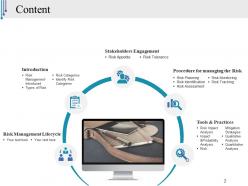
Slide 2: This slide presents Content showing these points and further subpoints- Risk Management Lifecycle, Introduction, Risk Management- Introduced, Types of Risk, Risk Categories, Identify Risk Categories, Procedure for managing the Risk, Risk Planning, Risk Identification, Risk Assessment, Risk Monitoring, Risk Tracking, Stakeholders Engagement, Risk Appetite, Risk Tolerance, Tools & Practices, Risk Impact Analysis, Impact &Probability Analysis, Risk Mitigation Strategies, Qualitative Analysis, Quantitative Analysis.
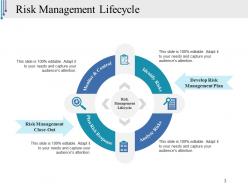
Slide 3: This slide presents Risk Management Lifecycle with these factors- Monitor & Control, Identify Risks, Analyze Risks, Plan Risk Response, Risk Management Lifecycle, Develop Risk Management Plan, Risk Management Close-Out.
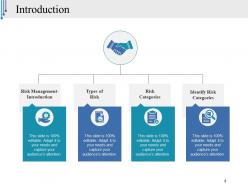
Slide 4: This slide showcases Introduction with these four categories- Risk Categories, Types of Risk, Risk Management- Introduction, Identify Risk Categories.
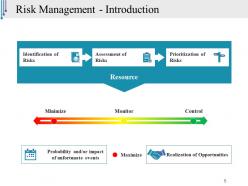
Slide 5: This slide presents Risk Management - Introduction with these steps- Identification of Risks, Prioritization of Risks, Assessment of Risks, Resource, Minimize, Monitor, Control, Maximize, Realization of Opportunities, Probability and/or impact of unfortunate events
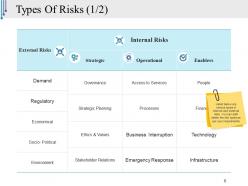
Slide 6: This slide presents Types Of Risks (1/2). Listed below are various types of internal and external risks. You can add/ delete the risk types as per your requirements.
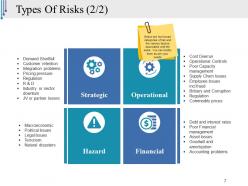
Slide 7: This slide showcases Types Of Risks (2/2) with these four types- Strategic, Hazard, Financial, Operational, Below are four broad categories of risk and the various factors associated with the same. You can modify them as per your needs
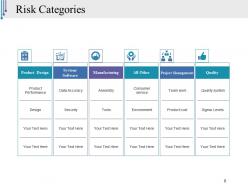
Slide 8: This slide presents Risk Categories with these important points- Quality system, Sigma Levels, Quality, Consumer service, Environment, All Other, Assembly, Tools, Manufacturing, Data Accuracy, Security, System/ Software, Product Performance, Design, Product Design, Team work, Product cost, Project Management.
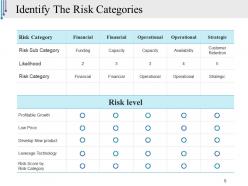
Slide 9: This slide presents Identify The Risk Categories. You can use to categorize the various fields.
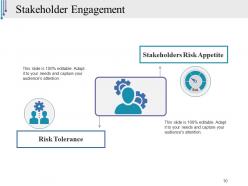
Slide 10: This slide showcases Stakeholder Engagement with these two factors- Risk Tolerance, Stakeholders Risk Appetite,
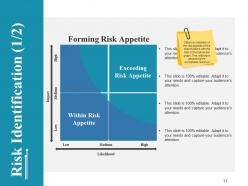
Slide 11: This slide showcases Risk Identification (1/2). Obtain an estimate of the risk appetite of the shareholders with the help of the below bar graph. This will help in assessing the acceptable risk level.
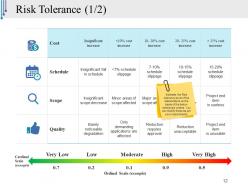
Slide 12: This slide shows Risk Tolerance (1/2). Estimate the Risk tolerance level of the stakeholders on the basis of the below mentioned criteria. You can modify these as per your requirements.
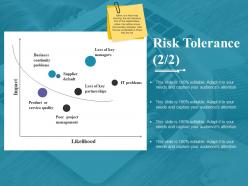
Slide 13: This slide presents Risk Tolerance (2/2) which can be measured by these parameters- Likelihood, Impact, Business continuity problems, Supplier, default, Loss of key partnerships, IT problems, Poor project management, Product or service quality, Loss of key managers, Below is a heat map showing the risk tolerance limit of the stakeholders, where the redline shows the boundary between risks that are acceptable & those that are not
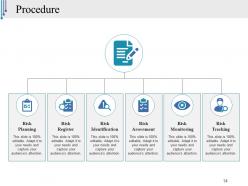
Slide 14: This slide showcases Procedure with these considerable points- Risk Monitoring, Risk Assessment, Risk Tracking, Risk Identification, Risk Register, Risk Planning.
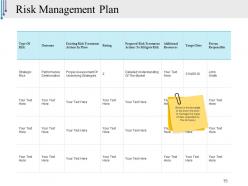
Slide 15: This slide showcases Risk Management Plan. This template is to list down the plan to manage the types of risks expected by the company.
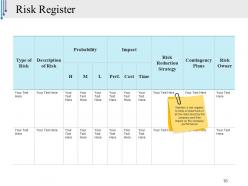
Slide 16: This slide presents Risk Register. Maintain a risk register to keep a close track of all the risks faced by the company and their impact on the company performance
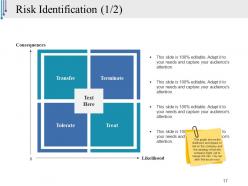
Slide 17: This slide shows Risk Identification (1/2) with these factors- Consequences, Likelihood, Transfer, Terminate, Treat, Tolerate, This graph shows the likelihood and impact of risk on the company and the strategy which the company might opt to mange the risk. You can alter this as per your
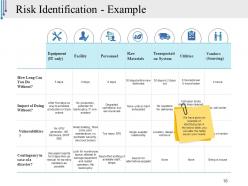
Slide 18: This slide showcases Risk Identification - Example. We have given an example of identifying risk in the below table, you can alter the fields as per your needs
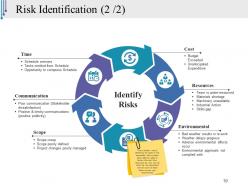
Slide 19: This slide presents Risk Identification (2 /2). This is another way of identifying the types of risk associated with a project basis different types of factors like cost, time, resources etc. You can list down the risk associated with all/ some of these factors as per your requirements
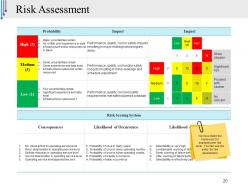
Slide 20: This slide showcases Risk Assessment. We have listed the framework for assessing the risk level. You can use the same for risk assessment
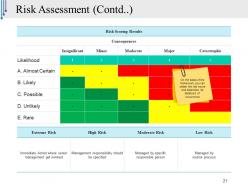
Slide 21: This slide presents Risk Assessment (Contd..). On the basis of the framework, you can obtain the risk score and determine its likelihood of occurrence.
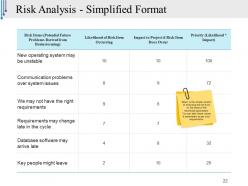
Slide 22: This slide shows Risk Analysis - Simplified Format. Below is the simple version of analysing the risk level on the basis of the mentioned parameters. You can alter these values & parameters as per your requirements
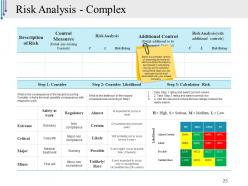
Slide 23: This slide presents Risk Analysis - Complex . This is a complex version of analysing the risk level. We have listed the steps to be followed in calculating the risk and its certainty. Using these steps you can estimate the risk level associated with your project/ company.
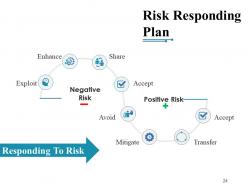
Slide 24: This slide shows Risk Responding Plan with these points- Mitigate, Transfer, Avoid, Accept, Responding To Risk, Positive Risk, Negative Risk, Enhance, Exploit, Share, Accep.t
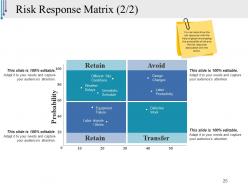
Slide 25: This slide presents Risk Response Matrix (2/2) with these factors listed as follows- Probability, Avoid, Transfer, Retain, Different Site Conditions, Weather Delays, Unrealistic, Schedule, Design Changes, Labor, Productivity, Defective Work, Equipment, Failure Labor dispute.
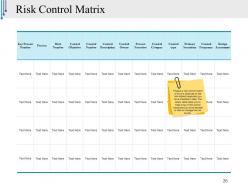
Slide 26: This slide shows Risk Control Matrix. Prepare a risk control matrix to have a close tap on the risk related measures you have intended to take. The below table helps you to keep a log of the control measures you have decided to take to manage the risk levels.
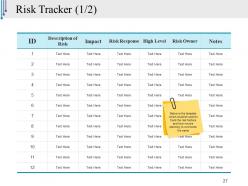
Slide 27: This slide showcases Risk Tracker (1/2). This is the template which could be used to track the risk factors and how we are planning to overcome the same
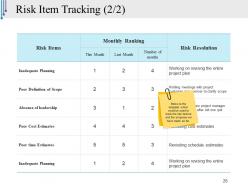
Slide 28: This slide presents Risk Item Tracking (2/2). This is the template which could be used to track the risk factors and the progress we have made so far.
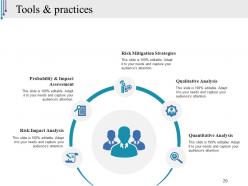
Slide 29: This slide displays Tools & practices with these- Risk Mitigation Strategies, Qualitative Analysis, Quantitative Analysis, Probability & Impact Assessment, Risk Impact Analysis.
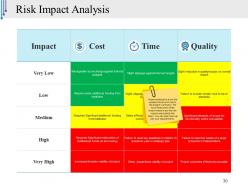
Slide 30: This slide showcases Risk Impact Analysis. Impact analysis is a tool the assess the level of risk on the project/ company. We have listed down three broad criteria's and the risk impact associated with them. You can alter them as per your requirements.
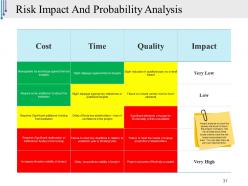
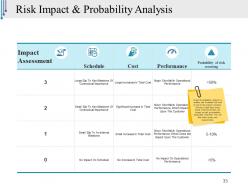
Slide 31: This slide presents Risk Impact And Probability Analysis. Impact analysis is a tool the assess the level of risk on the project/ company. We have listed down three broad criteria's and the risk impact associated with them. You can alter them as per your requirements.
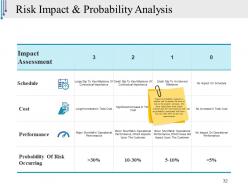
Slide 32: This slide shows about Risk Impact & Probability Analysis. Impact & probability analysis is another tool to assess the level of risk on the project/ company. We have listed down three broad criteria's and the risk impact as well as probability associated with them. You can alter them as per your requirements.
Slide 33: This slide presents Risk Impact & Probability Analysis. Impact & probability analysis is another tool to assess the level of risk on the project/ company. We have listed down three broad criteria's and the risk impact as well as probability associated with them. You can alter them as per your requirements.
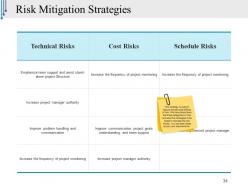
Slide 34: This slide showcases Risk Mitigation Strategies. This strategy is used to reduce the adverse effects of risk. We have listed down the three categories of risk and also the strategies to be opted to manage the risk levels. You can alter these as per your requirements.
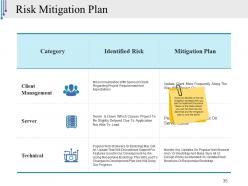
Slide 35: This slide shows Risk Mitigation Plan. Once you decide on the risk mitigation strategy then you plan to implement the same. Below is the table wherein you can list down the risk identified and the mitigation plan to curb the same.
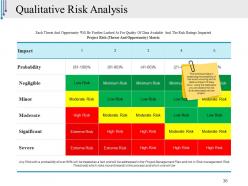
Slide 36: This slide presents Qualitative Risk Analysis. This technique helps in assessing the probability of risk event occurring and its relative impact if it does occur. Using the table below you can assess the risk level associated with the project.
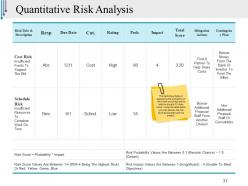
Slide 37: This slide shows Quantitative Risk Analysis. As technique helps in assessing the probability of risk event occurring and its relative impact if it does occur. Using the table below you can assess the risk level associated with the project.
Slide 38: This slide shows Coffee Break image.
Slide 39: This is shows Risk Management Plan In Business Icon Slide.
Slide 40: This slide displays the title Charts & Graphs.
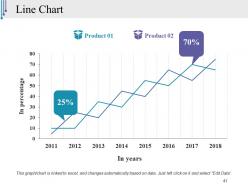
Slide 41: This slide shows a Line Chart for two product comparison.
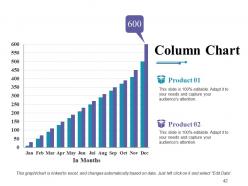
Slide 42: This slide showcases Column Chart. This can be help to compare for you business products.
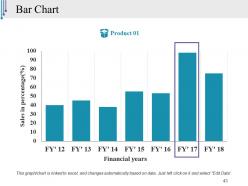
Slide 43: This is a Bar Graph image slide to show product comparison, growth etc.
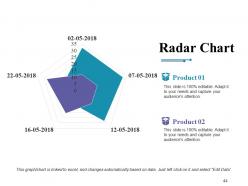
Slide 44: This slide presents a Radar Chart graph/chart. Compare Product 01, Product 02 and use as per required.
Slide 45: This slide is titled Additional Slides.
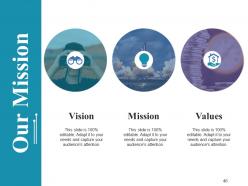
Slide 46: This slide represents Our Mission. State your mission, goals etc.
Slide 47: This slide showcases Our Team with Name and Designation to fill.
Slide 48: This slide helps show- About Our Company. The sub headings include- Creative Design, Customer Care, Expand Company .
Slide 49: This slide shows Our Goals for your company.
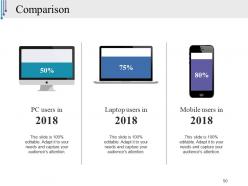
Slide 50: This slide shows Comparison of Positive Factors v/s Negative Factors with thumbsup and thumb down imagery.
Slide 51: This is a Post It slide for reminders of Direct Marketing.
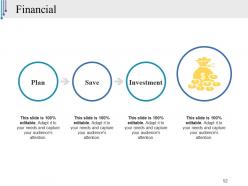
Slide 52: This is a Financial Score slide to show financial aspects here.
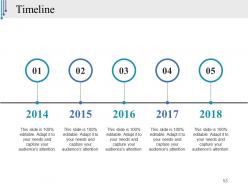
Slide 53: This is a Timelines slide to show- Plan, Budget, Schedule, Review.
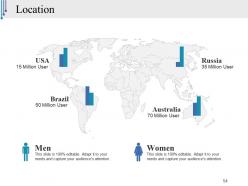
Slide 54: This is a Location slide to show global growth,presence etc. on world map.
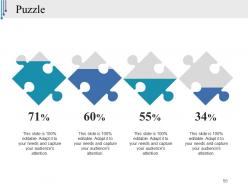
Slide 55: This slide showcases a Puzzle with imagery.
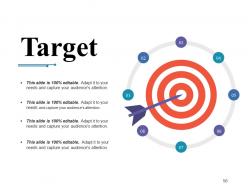
Slide 56: This slide shows Target image with text boxes.
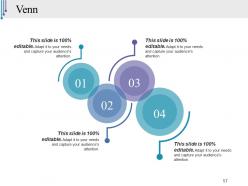
Slide 57: This is a Venn diagram image slide to show information, specifications etc.
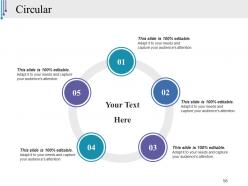
Slide 58: This is a Circular image slide to show information, specifications etc.
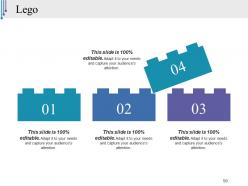
Slide 59: This is a Lego Box slide with the following subheadings- Teach, Encourage, Increase, Build.
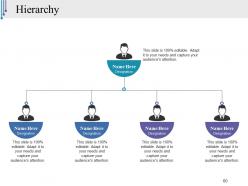
Slide 60: This is a Hierarchy slide showing- Supply Chain Manager, Supply Chain Council, Sourcing, Supplier Quality Engineer, Procurement, Logistics & Management, Supplier Management, Student, Contract Management.
Slide 61: This slide shows a Mind map for representing entities.
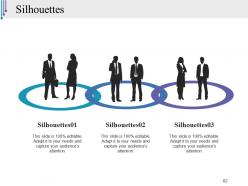
Slide 62: This is a Silhouettes image slide with the subheadings- INVENTORY, PAYMENT, CASH, CREDITCARD, CHECKOUT.
Slide 63: This is a Magnifying glass image slide to show information, scoping aspects etc
Slide 64: This slide displays a Bulb or idea image.
Slide 65: This is a Thank You image slide with Address, Email and Contact number.
Risk Management Plan In Business Powerpoint Presentation Slides with all 65 slides:
Facilitate further improvement with our Risk Management Plan In Business Powerpoint Presentation Slides. Identify factors that foster efficiency.








FAQs for Risk Management Plan In Business
Honestly, risk management sounds scary but it's pretty straightforward once you break it down. Start by listing out everything that could go wrong - I know, fun right? Then figure out how likely each thing is and how bad it'd be if it happened. Don't overthink this part; rough guesses work fine. Pick your response for each risk: avoid it, reduce it, pass it off to someone else, or just accept it. Set up some way to keep tracking these risks as time goes on. Most people forget this part - assign someone to actually own each risk. Otherwise nothing gets done. Just start with your worst 10 risks and go from there.
First thing - grab your team and brainstorm everything that could possibly go sideways. Scope creep, budget issues, tech problems, stakeholders changing their minds (ugh). I just use a basic spreadsheet for tracking risks - nothing fancy needed. Rate each one on probability and impact, maybe 1-5 scale. The high-high combos? Those are your nightmares to fix first. Don't miss external stuff like vendor delays either, since you can't control those. Oh, and set up regular check-ins throughout the project because new risks always pop up.
For risk analysis, I'd start with a basic risk matrix - gets everyone on the same page without being overwhelming. Monte Carlo simulations and decision trees are solid if you need deeper quantitative stuff later. SWOT analysis is everywhere (maybe too much honestly), but root cause analysis is clutch when you're trying to figure out where risks actually come from. Sensitivity analysis is another good one. Don't overthink it at first though - simple probability/impact grids work fine until your project gets more complex. Then you can layer in the fancy techniques.
Get everyone in the room early - like, from day one. Figure out who's actually affected, not just the obvious people but anyone who'd be screwed if stuff goes wrong. Run workshops where they can voice concerns, because trust me, they'll catch things you never thought of. Skip the fancy risk jargon though - nobody wants to decode that. Give people specific jobs monitoring risks in their own areas. Oh, and make it feel like a team effort, not some compliance thing you're forcing on them. Regular check-ins help too.
So basically qualitative risk assessment is when you use words like "high, medium, low" to describe risks. Way faster than crunching numbers. Quantitative gets all mathematical - you're calculating actual percentages and dollar amounts, which honestly can be a pain but gives you precise data. Thing is, most companies I've seen don't pick just one method. They'll do a quick qualitative sweep first to spot the obvious problems, then get nerdy with the quantitative stuff on whatever risks actually matter. Makes sense since you don't want to waste time doing complex math on every tiny risk that pops up.
Quarterly reviews are usually good, but honestly? Monthly might work better if your industry's crazy volatile or you're dealing with major changes. Don't be that person who only looks at their risk plan when everything's already on fire - been there, it sucks. New product launches or market expansions are perfect times to revisit things too. Oh, and definitely set those calendar reminders right now because let's be real, we all procrastinate on this stuff. The whole point is staying ahead of problems instead of scrambling to catch up later.
So contingency planning is basically your "oh shit" plan for when things actually go wrong. Most people get so caught up trying to prevent bad stuff that they totally forget to plan what happens when prevention fails. It's like having a fire extinguisher - you hope you'll never need it, but you're screwed if you don't have one ready. Map out specific steps your team can follow when risks hit. Keep it detailed enough that anyone could jump in and execute it, even when everyone's panicking. Honestly, this is where a lot of projects fall apart because nobody thought past the prevention stage.
So basically make a risk matrix - likelihood vs impact on a grid. The high impact/high probability stuff? That's your nightmare zone, tackle those first. Medium ones depend on your bandwidth and deadlines honestly. I color-code everything because I'm visual AF, but do whatever clicks for you. Low probability/low impact goes in the "keep an eye on it but don't lose sleep" pile. Just be real about the odds - don't let office drama make you think every tiny thing is gonna blow up. Work through your worst-case scenarios first, then move down the list.
So there's a few ways to handle risks after you spot them. Sometimes you can just avoid them completely by switching up your approach. Low-impact stuff? Just accept it and move on. Insurance or outsourcing works great for transferring risks to someone else. But honestly, mitigation is where you'll spend most of your time - basically putting safeguards in place to lower the chances something bad happens or reduce the damage if it does. Most decent plans mix all these approaches anyway. I'd say focus on your worst 3-5 risks first and pick whatever strategy makes the most financial sense for each one.
Look, communication is like the backbone of your whole risk management thing. You've gotta have clear ways for people to report stuff up the chain and get info back down to whoever's actually dealing with it day-to-day. Honestly, I've watched too many companies where risks just sit there getting worse because nobody talks to each other. Figure out who reports what and when - and actually test those channels! Don't just assume they work. Short version: everyone needs to know their part in keeping info flowing, or you'll get blindsided by problems that could've been caught early.
Track both the proactive stuff and reactive metrics to see if your risk plan's actually doing anything. I focus on risk identification rates, how often your mitigation actually works, incident frequency, and resolution time. Honestly, the cost ratio between prevention budget versus actual risk events is probably the most telling metric - it cuts through all the BS. Financial stuff like loss reduction matters too, obviously. Don't go overboard though. Pick maybe 3-4 that fit your situation instead of drowning yourself in spreadsheets. Monthly tracking works best - patterns show up pretty quick.
Yeah, so cultural stuff really messes with how people see risks. Your Japanese teammate might freak out about something your Brazilian colleague shrugs off completely. Plus communication styles are all over the place - some people will straight up tell you "this is broken," while others hint at problems or only talk to their boss about it. Time perspectives differ too. Some focus on what could blow up tomorrow, others worry about issues that won't hit for months. Honestly, it's kind of a nightmare for risk planning if you don't account for it. Best bet? Actually ask your international team members what worries them and give people different ways to report problems.
Start with compliance stuff - SOX if you're public, HIPAA for healthcare, GDPR if you touch EU data. Employment law matters too since risk plans mess with staffing and safety. Oh, and check your vendor contracts - some have weird clauses about how you can handle incidents. Licensing and regulatory reporting are obvious but easy to miss. Honestly, I'd just list every regulatory body that bugs your business and work backwards. Your legal team will catch things you won't, so bring them in early. Way cheaper than fixing mistakes later.
Honestly, automating your risk stuff will save you so much time. Risk assessment software can spot threats automatically and rank them by priority. Real-time dashboards are game-changers too - you'll see everything happening as it happens. We cut our reporting time in half just by letting the system handle it. Most platforms let you run "what if" scenarios and document everything properly. Oh, and automated alerts are clutch when risks spike. Don't try doing everything at once though - maybe start with digitizing your risk register first? That's usually the easiest win.
Don't tunnel vision on the obvious stuff - those weird edge cases will absolutely wreck you later. I've watched so many teams create these beautiful risk documents that just... sit there forever, never getting touched again. Get people from different departments involved, not just your usual crowd. Keep the scoring dead simple or nobody's gonna bother using it. Quarterly check-ins work pretty well to keep things current. Oh, and honestly? The teams that treat it like a living document instead of homework always seem way more prepared when things go sideways.
-
Wonderful templates design to use in business meetings.
-
Awesome use of colors and designs in product templates.