

Etapas del proceso de adquisición




Try Before you Buy Download Free Sample Product
 Impress Your
Audience
 100%
Editable
 Save Hours
of Time


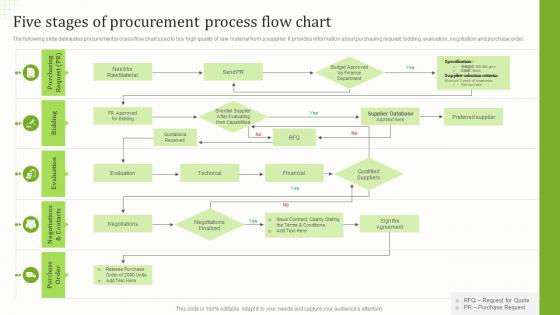
El proceso de adquisición de material prima de alta calidad de un proveedor se detalla en el siguiente diagrama de flujo. Proporciona información sobre la solicitud de compra, licitación, evaluación, negociación y orden de compra.
People who downloaded this PowerPoint presentation also viewed the following :
Contenido de esta presentación de Powerpoint
¡Borrador, banda elástica y cortaúñas! Estos artículos de uso diario desaparecen cuando más los necesitas. No encontrarás el par correcto de los calcetines cuando llegues tarde al trabajo. El desorden es la nueva normalidad de la generación actual.
Incluso cuando el usuario final pueda tener dificultades para encontrar las grapas, la adquisición de estos artículos no puede ser un paso fuera de orden o retrasado un día.
Sin embargo, no puedes arriesgarte con esfuerzos deficientes en el negocio de adquisiciones.
Todo debe estar en su punto, o podrías tener que lidiar con estrés financiero por muchas razones: sobrecompra de materias primas, licitaciones inadecuadas, ¡y más!
Las adquisiciones basadas en papel tienen un efecto dominó en la línea de fondo de una organización. Las ineficiencias manuales cuestan mucho dinero a las empresas a través de largos ciclos de compra, descuentos perdidos y disputas de transacciones. Acelerar los procesos de adquisición con herramientas anticuadas como hojas de cálculo y correos electrónicos es como intentar encender un microondas con acero y pedernal.
Las organizaciones deben abandonar las prácticas de adquisición obsoletas para beneficiarse de los descuentos por compra y pago anticipados y adoptar soluciones tecnológicas. Automatizar su proceso de adquisición con nuestra Plantilla de Diagrama de Flujo del Proceso de Adquisición es una excelente manera de lograrlo. Marca los pasos que debes seguir para asegurarte de que nada se omita. La naturaleza 100% editable y personalizable de nuestras Plantillas de PowerPoint te brinda la estructura y la flexibilidad deseada para editar tus presentaciones.
¡Comencemos!
1. Identificación de necesidades 2. Selección de proveedores 3. Negociación y contratación 4. Gestión de pedidos y entregas 5. Evaluación y mejora continua
Utiliza nuestro Diagrama de Flujo de las Cinco Etapas del Proceso de Adquisición para ayudarte a ahorrar tiempo valioso. Están listos para adaptarse a cualquier estructura de presentación.





FAQs for Five Stages Of Procurement
Honestly, the boring stuff comes first - figure out what you're actually spending money on and where. Look around at who else is selling what you need. What's your company actually trying to achieve here? Cost cuts, less risk, going green? Match that up with what the business wants overall. From there, you can map out different approaches for different types of purchases. Set up whatever processes and tools you need to make it happen. But here's the thing - get people on board early or you'll be banging your head against the wall later when nobody wants to cooperate with your shiny new system.
Honestly, automation is a game changer for all that tedious stuff - purchase orders, approvals, vendor setup. AI tools are pretty good at spotting spending patterns and savings you'd totally miss on your own. Digital platforms give you way better visibility into suppliers and risk issues too. Teams I know have cut their processing time by 60% just from going digital with workflows. Oh, and cloud-based software makes it so much easier when you're juggling multiple people on projects. My advice? Don't try to overhaul everything at once. Pick your biggest headache first and find one tool that actually fixes it.
Look, good supplier relationships are honestly what separate decent procurement from great procurement. You'll get better prices when they actually like working with you. During shortages? You're first in line instead of scrambling. They'll also tip you off about new stuff before your competitors hear about it. The smartest teams I know treat their top suppliers like actual partners - working together on cutting costs and improving quality, not just placing orders. Pick your 5-10 most important suppliers and start having real conversations with them regularly. Trust me, it pays off way more than just being transactional about everything.
Ugh, supply chain chaos basically blows up your whole procurement game. Single suppliers? Forget it - you need multiple options now or you're screwed when things go sideways. Lead times are all over the place, so stock up earlier and keep extra inventory (annoying but necessary). Budgeting becomes this wild guessing game since costs jump around constantly. Here's what really matters though - pick suppliers who can actually handle disruptions, not just whoever's cheapest. Honestly, flexibility is everything now. Always have backup plans ready because something will definitely break.
Track cost and performance stuff together - you need both sides. Cost savings and spend under management are obvious ones, but honestly those savings percentages can be total BS sometimes. Supplier performance scores matter too. Cycle time from req to PO tells you if your process is dragging. Contract compliance rates, supplier diversity, delivery performance - all good indicators. Oh and keep an eye on supplier financial health because nobody wants their key vendor going under. Pick like 3-5 metrics that actually matter to your business instead of drowning in data.
Honestly, just bake sustainability stuff right into how you pick vendors. Check their environmental certs, how they treat workers, carbon footprint - the usual. Most companies expect this now anyway, so you're not being weird about it. Track things like waste and energy use so you can actually see if it's working. Oh and definitely start with your biggest suppliers first - way more bang for your buck there. Don't make it some separate thing either, just fold it into your normal buying process. It'll become second nature pretty quick.
Honestly, the worst part is you're always working with half the info you need - supplier financials are sketchy at best, and good luck getting real performance data. Supply chains are so tangled now that you can't even properly vet the subcontractors. Rush jobs make everything worse (why is it always "we needed this yesterday"?). Global sourcing adds language barriers and regulatory headaches that change by country. My advice? Build a solid evaluation system with multiple sources. Always call references, even when you think you already know enough. Trust me on that last one.
Honestly, it's a game-changer compared to just winging it with gut instincts. You'll actually see your spending patterns clearly - like which suppliers are reliable and which ones flake out constantly. The forecasting part is clutch because you can predict when demand's gonna spike instead of scrambling last-minute (and paying way more). I pulled our spend data from last year just to see what would happen, and wow - so many cost-saving opportunities just sitting there. Analytics also help you check if you're getting ripped off on pricing. Trust me, start with your past year's data and look for trends. You'll probably find some stuff that makes you go "seriously?"
Start with the basics - check their finances, compliance record, and security setup. You don't want them going belly-up with your data. Always call their other clients because vendors will promise you the moon (learned that one the hard way). Set up some kind of scoring system so you can actually compare different options fairly. Business continuity plans matter too, especially if they're in hurricane country or whatever. The real trick is doing your homework before signing anything. Nobody wants to find out their vendor sucks after it's too late. Plan to review them yearly or if something big changes.
So basically, you want to stop letting everyone buy their own random stuff and start buying in bulk instead. That's where the real savings come from - better prices when you consolidate orders and negotiate as one big customer. Plus you'll cut out duplicate purchases and get departments using the same suppliers. Honestly, most companies mess this up by treating procurement like it's just paperwork. Build good relationships with your vendors too - they'll hook you up with better deals over time. Track those savings numbers because leadership loves seeing actual dollars saved.
Honestly, negotiation and relationship stuff is where you'll live day-to-day. Data analysis has gotten massive too - you're constantly digging into spend reports and supplier metrics. Risk management is critical now (supply chains are still kinda wild post-COVID). Digital tools are everywhere, so being tech-comfortable helps. Communication matters since you're basically translating between departments and vendors all the time. Oh, and procurement software changes fast, so staying curious about new platforms pays off. I'd focus on whatever feels shakiest first - maybe take a course or something?
So e-procurement basically puts everything on digital platforms - you get automated workflows, real-time spending data, better vendor management. The biggest win? It centralizes all your supplier stuff and makes compliance way less of a headache than those messy spreadsheets we all hate. You'll also get AI insights for smarter sourcing and risk calls. Time savings are huge too - no more hunting down approvals or losing contracts. My old company dragged their feet on this forever and regretted it. Start with a pilot program for one category first, see how it goes.
Honestly, the big stuff you can't mess around with is procurement regs (especially government work), IP rights, and liability clauses. Payment terms and deliverables need to be super specific - trust me, vague language will screw you over later. Data protection is huge if you're touching sensitive stuff. Termination conditions matter too, plus throw in some dispute resolution process. Your legal team might roll their eyes, but run major contracts by them anyway. I know it seems like extra work, but it's way better than dealing with a nightmare situation down the road.
Start by actually looking at what you're spending - that's where you'll find the easiest wins. Don't spread yourself thin with tons of suppliers. Pick 2-3 solid ones and build real relationships with them. They'll hook you up with better rates when you give them consistent business. For anything over a couple hundred, always get multiple quotes. Set up some kind of system for purchase orders - even a basic Google Sheets template is way better than the mess most small companies deal with (and honestly, it's free). Oh, and negotiate payment terms that don't kill your cash flow. That part's huge.
You'd be surprised - procurement actually sparks innovation by tapping into your suppliers' ideas and pushing internal teams out of their comfort zones. Put innovation requirements in your RFPs and you're basically getting free R&D help from outside. Smart move, right? Try piloting new tech on small projects first before going big. The real shift is moving from just "buying stuff" to partnering with vendors who solve problems you didn't even realize existed. Oh, and next time you meet with suppliers, ask "what else have you got?" You might be amazed at what they bring to the table.
-
Loved the fact that SlideTeam provides clean, high-definition, and professional PowerPoint products.
-
One word for SlideTeam–Versatile!