


Governance flow program in supply chain management




Try Before you Buy Download Free Sample Product
 Impress Your
 Audience
 100%
100% Editable
 Save Hours
 of Time


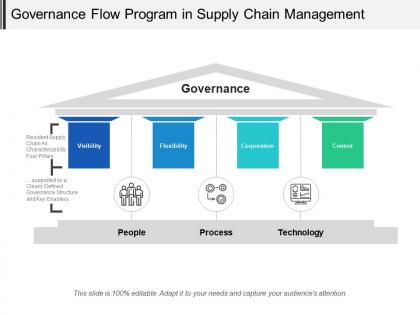
Download our governance flow program in supply chain management PowerPoint slide. The presentation template has been designed specifically to meet the requirements of the supply chain and marketing industry. In order to attain the operational and strategic efficiencies, through collaboration among the various internal and external functions of the supply chain department, a well-planned governance structure flow should be incorporated by any firm. Include this amazingly designed governance model PPT graphic with a four pillars visual process along with icons and text boxes. The four main pillars are denoting visibility, flexibility, corporation and control. You can add your own content in this governance structure presentation template as the slide is fully modifiable. This supply chain governance model framework PowerPoint layout aims to create value through financial benefits, matches the values of its various customers, and appeals to social value of its customers, stakeholders and community. Download to present your governance model with our remarkably created PPT slide. Coax agreements with our Governance Flow Program In Supply Chain Management. They bring even bitter enemies closer.
People who downloaded this PowerPoint presentation also viewed the following :
Governance flow program in supply chain management with all 5 slides:
Your charm and our Governance Flow Program In Supply Chain Management will combine fabulously. They will complement each other beautifully.



FAQs for Governance flow program in
Honestly, it all comes down to three big things: transparency, accountability, and managing risks throughout your supply chain. Map out who your suppliers are first - you can't manage what you don't know. Set clear standards everyone has to follow, then actually monitor if they're doing it. The risk assessment part is critical though - figure out where things could go wrong and have backup plans ready. I'd start by identifying your biggest vulnerabilities since that's where you'll get the most bang for your buck. Regular check-ins keep suppliers on their toes too.
Track both the hard numbers and relationship stuff to see if your governance is actually working. Supplier performance scores, contract compliance, how often risk incidents happen - that's your bread and butter. Cost savings from these initiatives obviously matter too. But honestly, the soft metrics like supplier satisfaction surveys can catch problems you'd totally miss otherwise. Issue resolution time is huge - nobody wants problems dragging on forever. I'd build a simple dashboard with maybe 3-4 metrics from each bucket and review monthly. Internal stakeholder feedback helps too since they're the ones dealing with this day-to-day.
So technology is basically what makes supply chain management actually work these days. You get real-time tracking of everything - raw materials, shipping, final delivery, the whole thing. ERP systems and blockchain are your main tools for transparency, plus IoT sensors to monitor stuff automatically. The AI prediction features are honestly pretty impressive when they don't glitch out. Map out what data you actually need first, then find tools that play nice together. Oh, and compliance checks can run automatically too, which saves tons of headaches down the road.
Honestly, you've got to build this stuff right into your governance from the start. Map out your main suppliers first - look for weak spots like shaky finances, political drama, natural disaster zones. Build regular risk checks into your supplier reviews and board updates. Most companies I've worked with totally ignore this until they're scrambling during a crisis (which is honestly pretty dumb). Document your escalation steps and backup plans now. Short version: make risk management part of your normal routine, not something you panic about later when everything's on fire.
Honestly, getting everyone on the same page is the hardest part - stakeholders love to argue about frameworks. Then you've got the whole enforcement mess across your supply chain. Most companies can barely see past their main suppliers, which makes governing anything impossible. Different regions have their own crazy compliance rules too. Data quality? Don't even go there, it's a total headache. My advice? Pick your most important suppliers first. Build from there instead of trying to fix everything at once - that never works.
Look, good supply chain governance is honestly a game-changer for your company's performance. It creates accountability and gives you standardized processes that actually work. You'll get better cost control and faster decisions - plus your supplier relationships won't be a constant headache. The real win though? You avoid those disasters where one supplier problem tanks everything (seen that mess too many times). Better transparency means happier customers since you can deliver what you promise. My advice - set up those frameworks now. Trust me, cleaning up supply chain chaos later costs way more than preventing it upfront.
Start by figuring out who all your stakeholders actually are - suppliers, customers, regulators, your own teams. Then set up regular check-ins with each group. Supplier scorecards work well, and I'd definitely do business reviews with your main vendors. Cross-functional committees help keep everyone internal on the same page. Be super transparent with performance data and risk stuff - people appreciate that honesty. Oh, and don't ignore your tier-2 and tier-3 suppliers because they'll bite you later. Make it a real conversation though, not just you talking at them. Focus on your critical suppliers first, then expand from there.
Look, regulations are basically gonna dictate your whole governance setup whether you like it or not. Map out what hits where - GDPR for data, SOX for financials, maybe FDA stuff if that's your world. Honestly such a headache since rules keep shifting, but you can't ignore them. Build in regular audits and solid documentation to cover your ass. Clear accountability chains too so everyone knows who's responsible for what. I'd start with your biggest regulatory headaches first and work backwards from there. Way easier than trying to tackle everything at once.
So basically, supply chain governance gives you a solid framework to actually enforce sustainability and ethical stuff across all your suppliers. You can set clear rules - fair labor, environmental compliance, responsible sourcing - then audit whether they're actually following through. Honestly, too many companies just have pretty policies that don't mean anything. The governance part lets you tie supplier contracts to these standards and create real transparency. When issues come up, you can address them fast. I'd start by mapping your main suppliers first and figuring out where your biggest risks are.
Track supplier compliance rates and audit findings first - that's your bread and butter for seeing if policies actually stick. Risk scores matter too, obviously. Contract performance tells you loads about relationship health, which honestly is half the battle with governance anyway. Don't ignore cost savings but quality metrics are just as crucial. Oh, and pick maybe 3-5 things max that match your biggest headaches right now. Too many metrics and you'll drown in data. Consistency beats perfection here - just track the same stuff regularly.
Honestly, start by figuring out your whole supply chain - and I mean really knowing who supplies your suppliers, which is way trickier than you'd think. Make your suppliers disclose stuff regularly and audit them. Then actually publish all that data publicly through sustainability reports or transparency sites. Third-party certifications are clutch since they make you look legit. Track the important metrics like labor practices, environmental impact, where you're sourcing from. Share both your wins AND what you're still figuring out - people appreciate the honesty. The trick is getting ahead of it before stakeholders start digging around themselves.
So governance is like your rulebook - it sets up performance standards, risk protocols, who makes what decisions, all that foundational stuff. SRM is actually doing the work though. Building relationships, tracking how suppliers are performing, fixing problems when they pop up. Honestly, most companies mess this up because they try to do SRM without having their governance house in order first. They're super connected - can't really succeed at one without the other. I'd start by looking at what governance structure you have now (if any) and see if it's actually helping you build the supplier relationships you want.
Map out your whole supply chain first - figure out what regulations hit you in each country. Audit your suppliers regularly because honestly, this stuff shifts constantly and you can't just check once then peace out. Get a central system going for tracking all your docs, certificates, permits, whatever. Your procurement team needs training on the big ones like trade sanctions, labor rules, environmental reqs. The real trick is finding suppliers who actually get that compliance isn't negotiable. Oh and make these checks part of regular supplier reviews instead of scrambling when problems pop up.
Dude, AI risk monitoring is everywhere now - you basically can't compete without it. ESG stuff is exploding too, like carbon tracking and making sure your suppliers aren't sketchy. Customers actually care about this now, which is wild. The regulatory nightmare is real though. New rules every week, I swear. Companies are also getting into circular economy thinking - less waste, better product lifecycles, that whole thing. Oh and supplier relationships are way more collaborative now instead of just "here's money, give us stuff." My advice? Audit where you're falling short first, then test one new approach.
Oh man, cultural stuff totally changes everything with supply chains. Germans love their formal contracts and processes, but in Thailand? It's all about relationships and trust. Brazil's somewhere in between. Even deadlines mean different things - I learned that the hard way once! Some places you need super rigid governance, others are way more flexible. Decision-making styles are completely different too. You can't just copy-paste your approach everywhere. Map out what matters in each region first, then build your framework around that. Sounds obvious but most companies mess this up.
No Reviews