


New Product Launch Plan Powerpoint Presentation Slides




Try Before you Buy Download Free Sample Product
 Impress Your
 Audience
 100%
100% Editable
 Save Hours
 of Time


Showcase your exciting brand releasing journey using these New Product Launch Plan PowerPoint Presentation Slides. Take the assistance of these product launch PowerPoint templates to depict various development plans like manufacturing plan, operational plan, budgeting plan, etc. Take advantage of these product introduction PowerPoint slideshow to reveal the phases of marketing launch plan such as creating press releases, using twitter, etc. Utilize these product promotion PPT visuals to demonstrate the phases of product development funnel like discovery, exploration, scoping, development, etc. Create an effective marketing plan comprising direct marketing, public relations, personal selling, sales promotion, and advertising using these brand launch PowerPoint deck. Implement content writing, paid organic search, email marketing, and social media management for creating a wonderful marketing plan using these brand launch PPT infographics. Achieve your business objectives through the creation of a product roadmap consisting of celebrity partnership, press launch, ongoing marketing, etc. Download these amazing product release PPT slides to increase the demand for your offerings.
People who downloaded this PowerPoint presentation also viewed the following :
Video for New Product Launch Plan Powerpoint Presentation Slides
Content of this Powerpoint Presentation
Product launches are challenging and thrilling endeavors. For any new endeavor to succeed, it needs to be meticulously planned, organized, and executed. A new product goes through a challenging launch process before it is ready for usage. Using PPT templates can help you navigate its complexity. These templates will provide a structured approach to planning the product launch. By providing a consistent framework for discussing the launch plans, these templates foster teamwork and communication among team members.
Get our product launch plan PPT templates if you want to maintain consistency across different product launches!!
SlideTeam produced the customizable templates for the new product launch plan. With the help of these templates, you may identify the challenges and risks that must be reduced and then develop a new plan of action for a successful launch process.
Explore our exclusive ready-to-use templates for food product launches!!
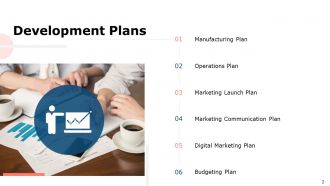
Template 1: Development Plans
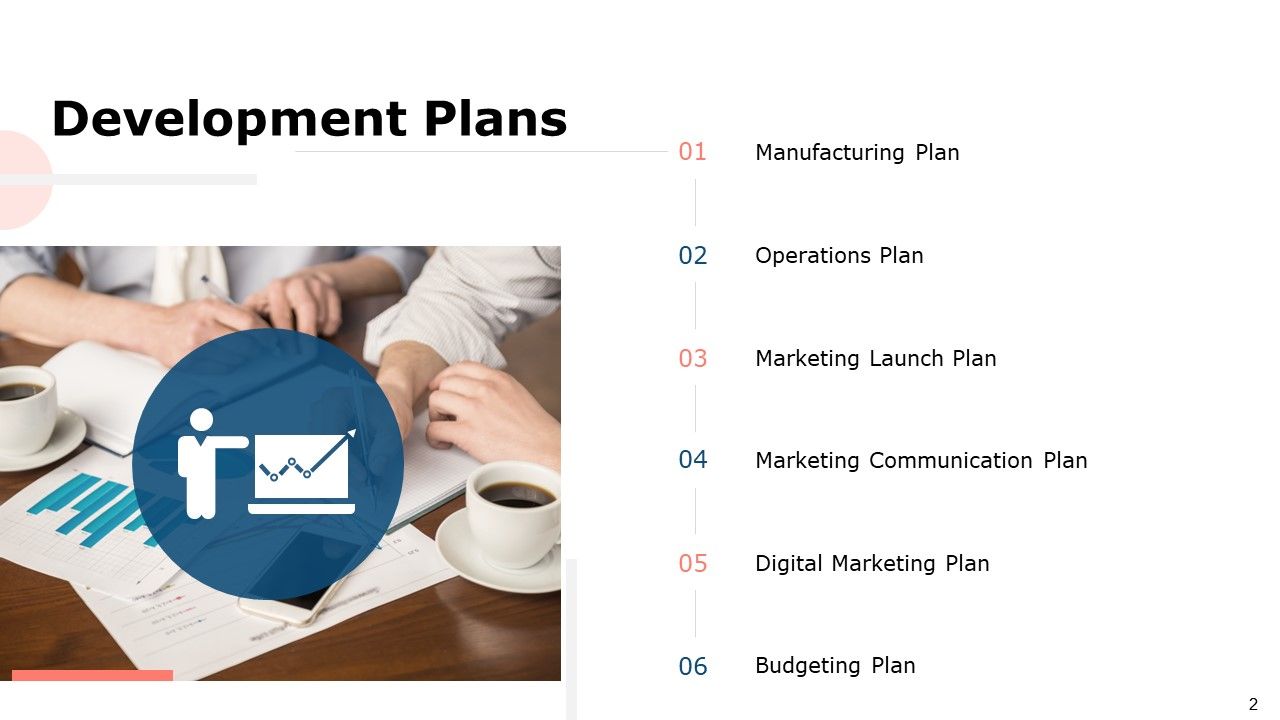
This particular template allows you to lay down the development plans for the new product launch. Different strategies are used in the development stages of a new product. This PPT slide demonstrates the various plans for manufacturing, marketing, and budgeting. Creative images and graphics can help you quickly demonstrate the plans involved in the development stages of a new product.
Template 2: Operations Plan

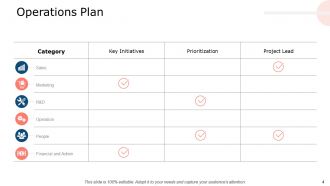
A successful operations plan encompasses every aspect of the launch of a new product, from production to inventory management to marketing and sales strategies. This template helps in demonstrating the operations plans for each department of an organization. Moreover, you can tick the key initiatives, prioritization, and project lead of the operations plan within various departments that has been taken place.
Template 3: Marketing Launch Plan
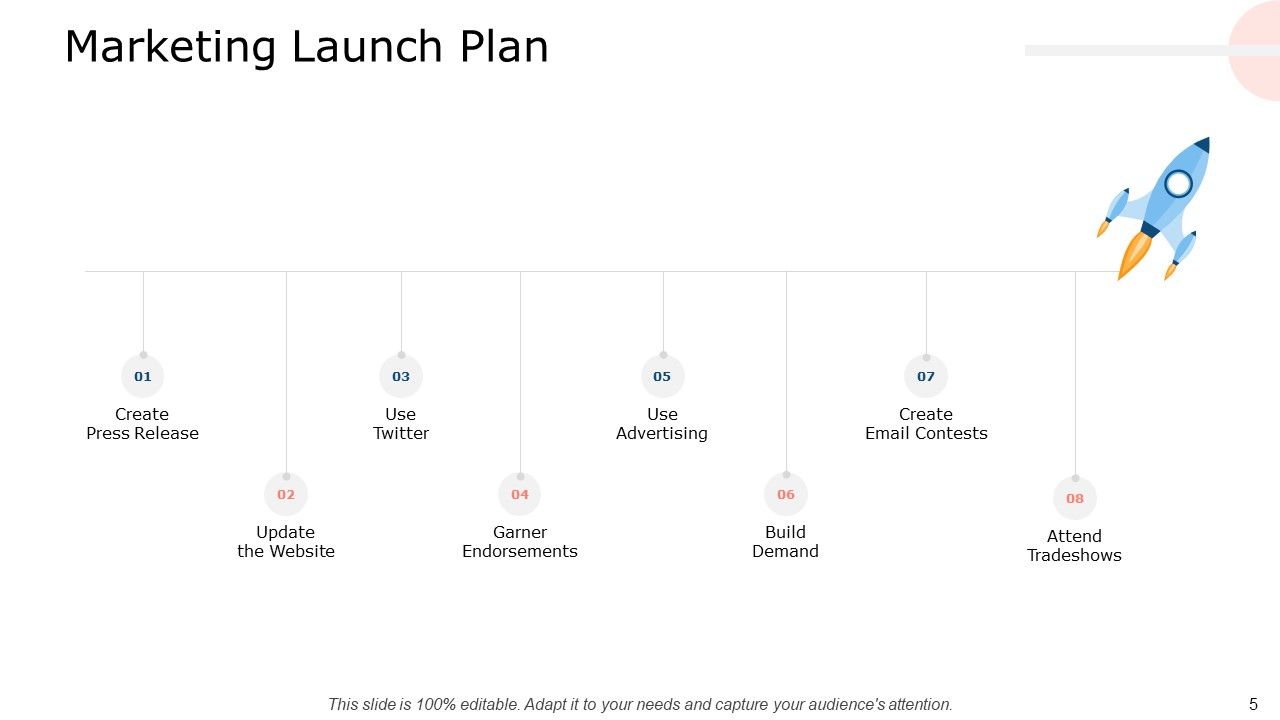
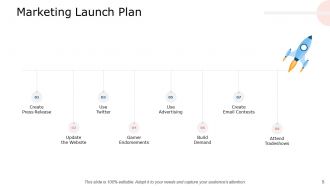
A marketing launch plan is a must for driving maximum sales and impact for the new product. Use this PPT Template to get the fundamentals in place on how to create a marketing plan for the launch of a product. The flowchart format is a god-send, as you can depict the components of such a plan as well. The major parts are advertising channels, creating a press release and so on.
Template 4: Product Roadmap Plan
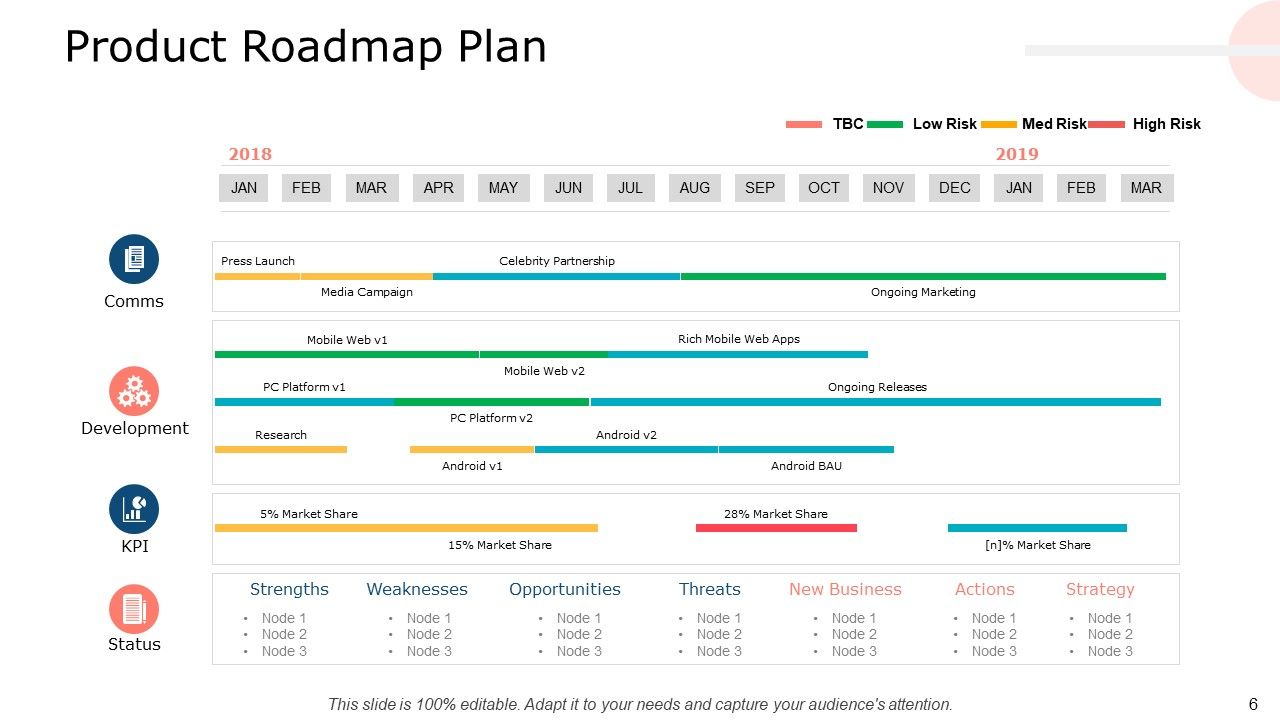
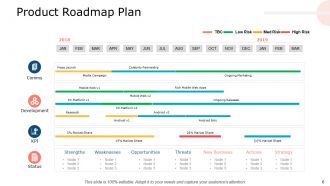
A strategic roadmap outlines the direction, vision and outline for the product’s launch, while also providing an overview of goals and objectives that the launch will achieve. This PPT Slide helps in outlining key milestones and deliverables that need to be achieved in a time frame. Use this template to demonstrate the time frame for press launches, media campaigns, and development of platforms. To emphasize the advantages, disadvantages, possibilities, and risks associated with the product launch process, more space has been added at the bottom of the slide.
Template 5: Product Planning Cycle
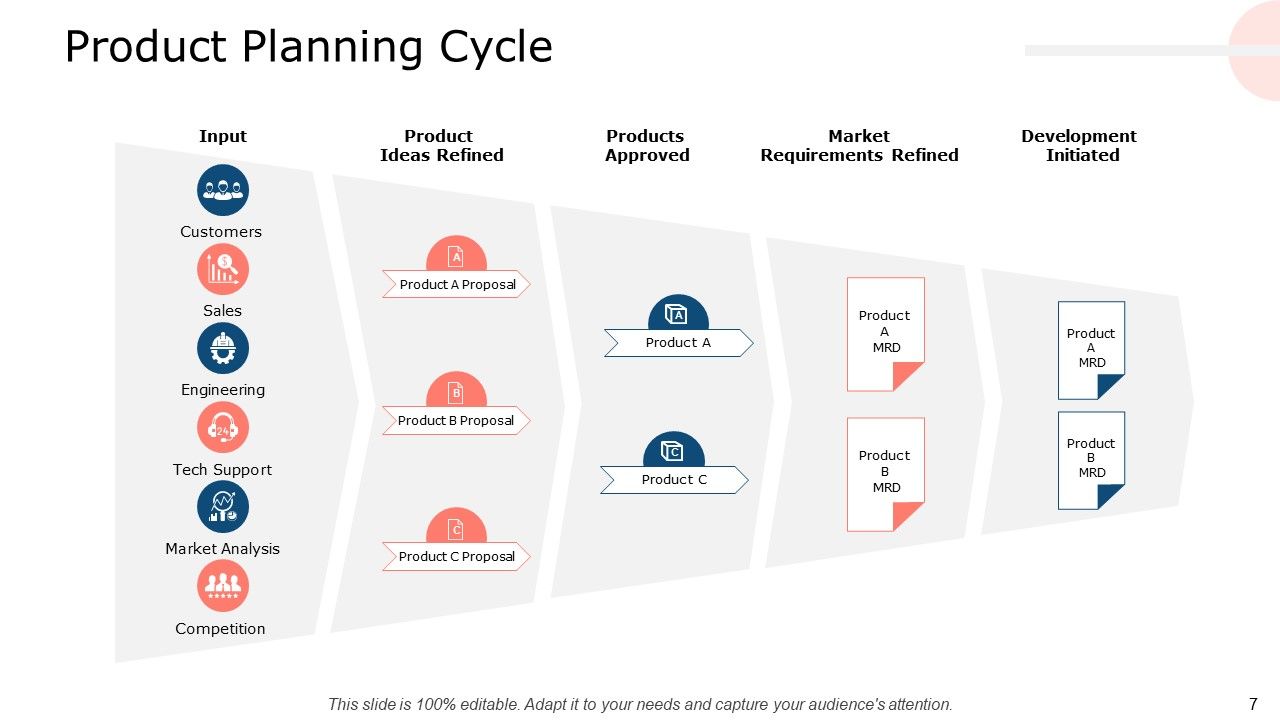
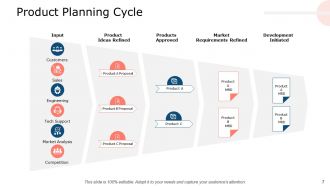
Product planning is the problem that this slide tackles for you. The template showcases the project from its inception to the product launch accomplishment. From identifying ideas, product proposals, approval, and development initiation of the product, a structured outline can be created. Grab this template to showcase a product plan from scratch to its development through creative visuals.
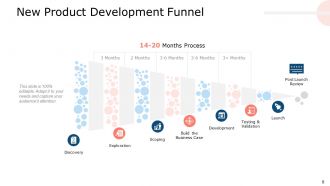
Template 6: New Product Development Funnel
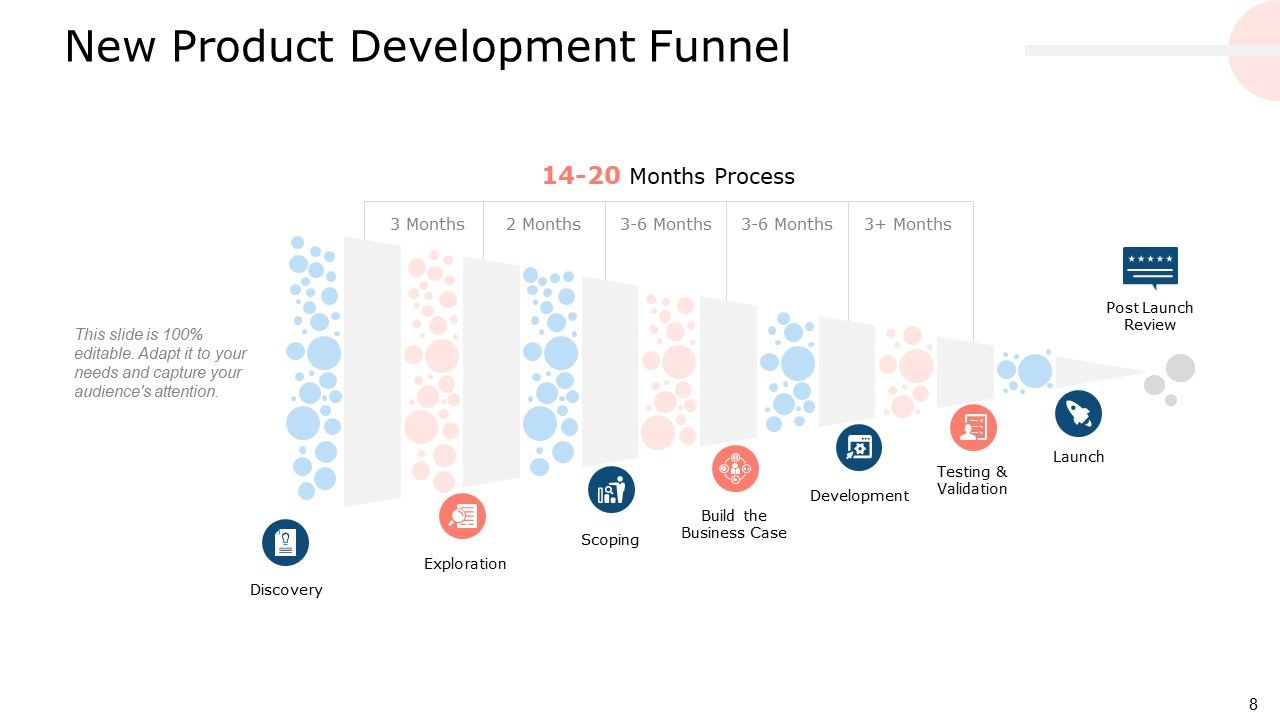
This customizable template highlights the whole process of a product launch, from the discovery of an idea to the post-launch review. Different steps are involved in between, such as discovery, exploration, scoping, development, testing, and launch. All these processes take time, and this slide helps highlight the product development funnel along with the time frame.
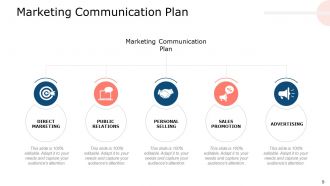
Template 7: Marketing Communication Plan
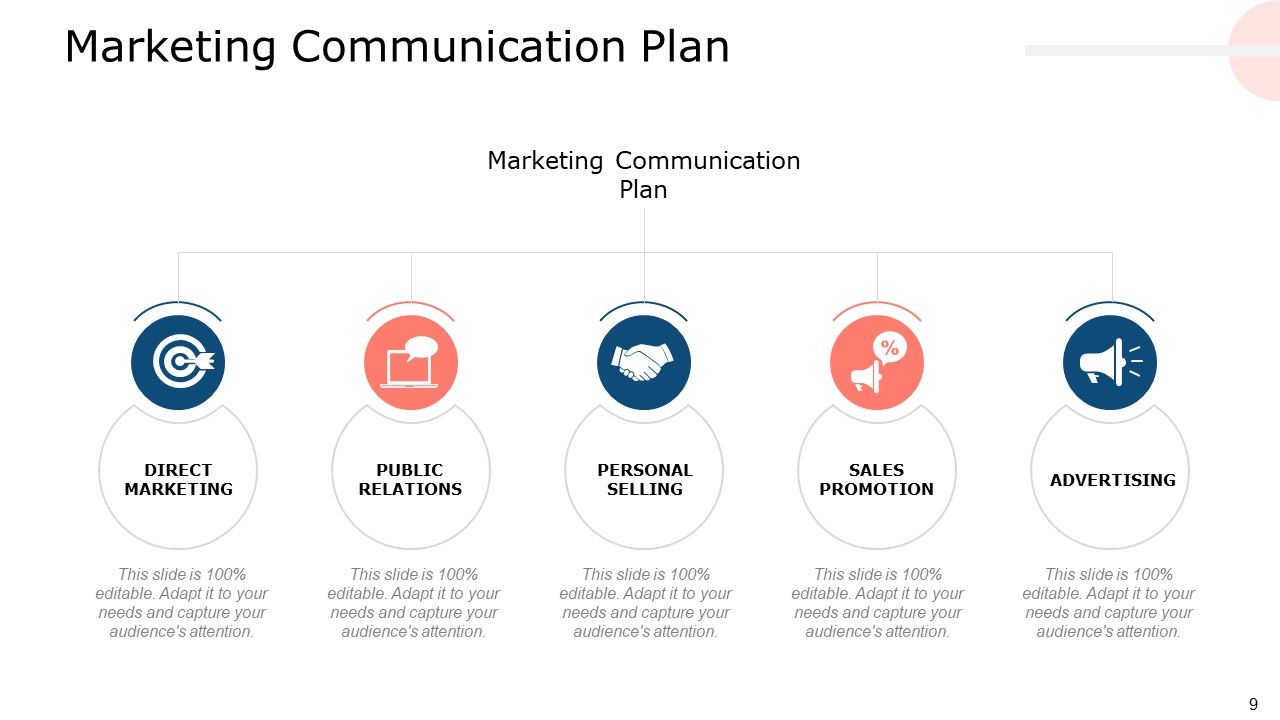
This template emphasizes the marketing communication plan. You can showcase the different components of marketing for the new product through flowchart. The icons used are the result of extensive, creative brainstorming and represent the major topics effortlessly. Be it direct marketing, public relations, personal selling, sales promotion, and advertising, all are covered.
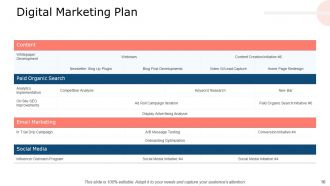
Template 8: Digital Marketing Plan
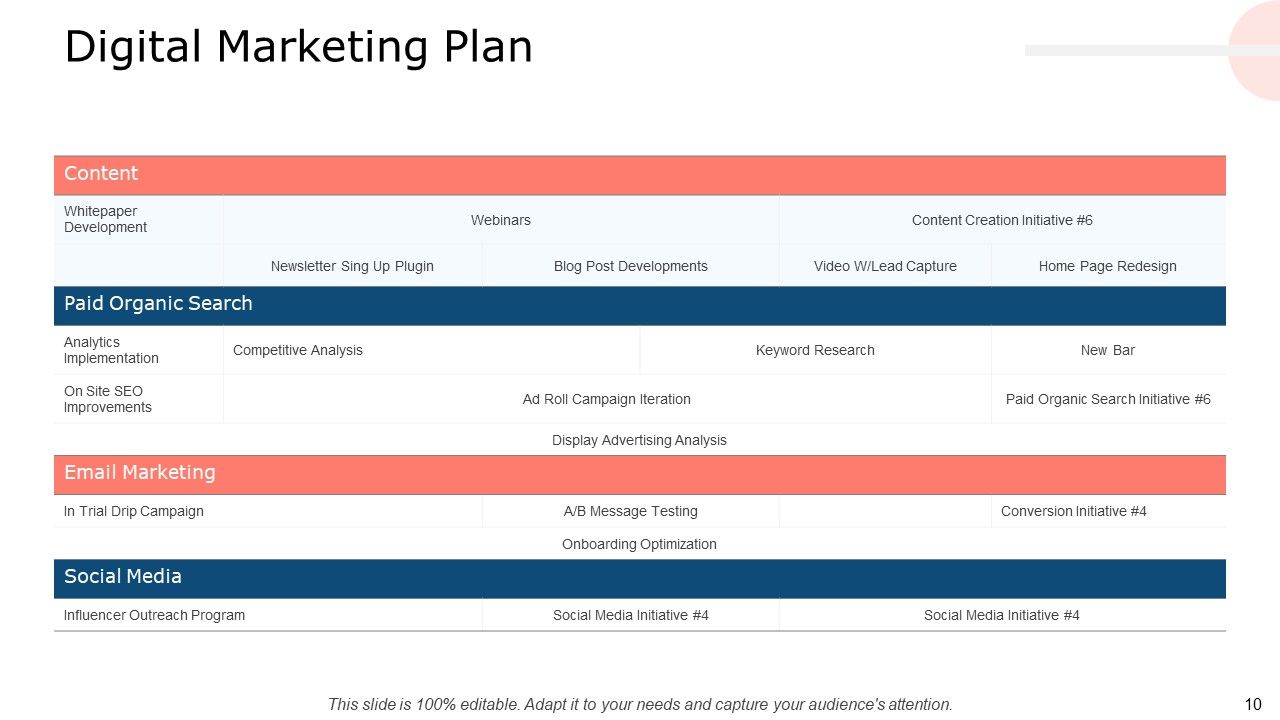
Label the digital marketing plan for the new product that will be launched at your company. This PPT slide will help you demonstrate parts of a digital marketing plan, such as E-mail marketing, social media, and paid organic search.
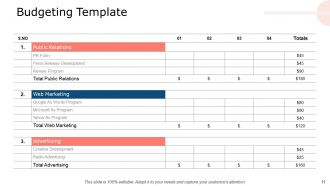
Template 9: Budgeting Template
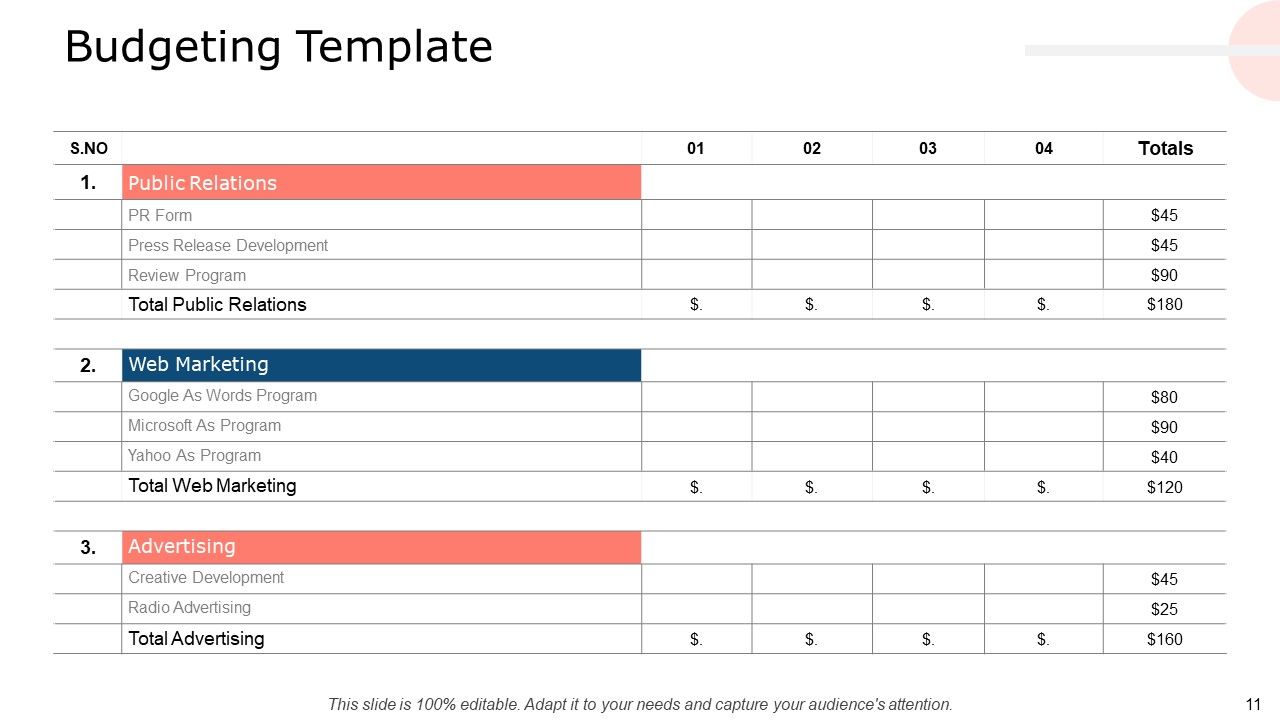
This template demonstrates the total cost of activities when a new product is launched. This template facilitates demonstrating the total cost of creating awareness through advertising and public relations about the new product.
Launch new product with confidence
You may create a presentation that is remarkable by utilizing the strength of these captivating PowerPoint slides to create a message that is understandable, educational, and visually appealing.
PS Click here if you want customizable PPT slides for pharmaceutical marketing launch product!!
New Product Launch Plan Powerpoint Presentation Slides with all 23 slides:
Declare your agenda with our New Product Launch Plan Powerpoint Presentation Slides. Folks will get fully aware of your inclinations.


FAQs for New Product Launch Plan
Okay so first thing - map out who you're actually selling to and how you'll position yourself against competitors. Pricing strategy is huge too, don't wing that part. Then figure out your marketing channels and messaging (honestly the creative stuff is fun but the boring logistics will make or break you). Set up a timeline with real deadlines and assign someone to own each piece. Oh and definitely nail down your success metrics upfront - you'll want to track what's actually working. Risk planning sounds tedious but trust me, something always goes sideways. Start with customer journey mapping though, that usually reveals gaps you didn't see coming.
So I'd start with your current customer data - look for patterns in who they are and what bugs them. Market research is huge too. Surveys, focus groups, checking out competitors. Buyer personas actually help a ton (I know it sounds corporate-y but trust me). Don't just focus on basic demographics either. What drives these people? Where do they scroll online? How do they buy stuff? The psychology matters way more than you'd think. Oh and validate everything with real data before you blow money on ads that flop.
Dude, you absolutely need market research before launching anything. It shows you who'll actually buy your stuff and what they're willing to spend. Without it, you're basically guessing at everything - pricing, messaging, target audience. I learned this the hard way on my first product launch (total disaster). Customer interviews are gold. Surveys work too. Start at least 3 months early so you can actually use what you find out. You'll spot problems before they bite you and see what competitors are doing wrong. Trust me, skipping this step is asking for trouble.
Look, competitive analysis is huge for figuring out your positioning and messaging. I'd start with 3-5 direct competitors - check out their features, pricing, marketing channels, the whole deal. Customer reviews are gold mines btw, you'll see exactly what people hate about existing solutions. That's where you can swoop in and fill gaps they're missing. Honestly? I've watched teams crash and burn because they thought they already knew their competition without actually researching it. Don't be those people. Build a simple comparison matrix and use what you find to nail down your pricing and go-to-market strategy. It's way easier than reinventing the wheel.
Honestly, teaser campaigns on social are your best bet - just drop hints without giving everything away. Get some influencers to share behind-the-scenes stuff or early looks. Your existing customers? Send them exclusive previews via email, they eat that up. I'd also hit up reporters if you've got an interesting angle to your story. Oh and definitely set up a "notify me" page - people are weirdly into feeling special about getting early access. Don't spread yourself too thin though, maybe pick like 2 things max that actually make sense for your audience.
Okay so definitely work backwards from your launch date and give yourself way more time than you think. I'd say 3-6 months depending on how complex this thing is. Something always goes wrong - like always. Break it down into chunks: prep work (finishing the product, marketing stuff, training your team), then maybe a soft launch to test things out, then the real deal with your big marketing push. Each phase needs clear deadlines and someone actually responsible for it. The trick is building in spots where you can genuinely pause and fix stuff, not just pretend everything's fine and keep moving.
Honestly, you gotta look at both the early signals and the actual results. Before launch, watch your sign-ups, pre-orders, social buzz - that stuff shows if people care. Launch week is all about the hard numbers: downloads, sales, traffic, conversions. But here's what most people miss - engagement metrics matter way more than vanity numbers. Are users sticking around? Actually using your features? Those tell you if your product's any good or just hyped up. Customer satisfaction scores and support tickets come later. My take? Don't go crazy with analytics. Pick maybe 5-7 metrics that actually matter and obsess over those instead of juggling a million dashboards.
Start posting teasers and behind-the-scenes stuff before you launch - people eat that up. Micro-influencers are honestly better than the big names sometimes, way more authentic. Make sure you're using hashtags that actually matter and reply to comments. Social ads work too if you want to get specific with targeting. Oh, and this might sound obvious but keep everything consistent across platforms while playing to each one's strengths. Like Instagram's all about visuals, Twitter's more conversational, you know? Don't spread yourself too thin though.
Okay so your headline needs to grab attention - make it scream "this matters to you." Start with whatever's most newsworthy, like solving a big problem or actually being first at something. Opening paragraph should be under 25 words and hit who/what/when/where right away. Journalists literally spend 10 seconds scanning these things, which is honestly depressing but whatever. Real customer quotes are gold if you've got them. Throw in some actual data points too. Short paragraphs work better - nobody wants to read a wall of text. End with clear contact info so they know who to reach out to. Oh, and bullet points help when you're listing stuff.
Honestly, just map out the obvious stuff first - marketing, PR, events, whatever production costs you need upfront. I learned the hard way to add 20% extra because something will definitely go sideways. Break it into three chunks: pre-launch, launch week, and after. You'll forget the little things like design work or extra customer support when everything's crazy during launch. Oh and make a simple spreadsheet to track actual vs planned spending - update it weekly or you're gonna hate yourself later. Trust me on this one.
Dude, get feedback before you launch - it's like a sanity check. Run beta tests, focus groups, demos, whatever. I've watched so many products crash because founders got obsessed with their "brilliant" idea and totally ignored what users were actually saying. Use what you learn to fix your messaging or tweak features. Sometimes you'll even realize you're targeting the wrong people entirely (happened to my last startup, honestly). Set up those feedback channels early and don't just collect responses - actually act on them. Your launch plan should change based on real data, not just what sounds good in meetings.
Honestly, timing is everything with launches. Map out when your audience is actually buying stuff - like productivity apps during back-to-school or gift-type products in Q4. Trade shows are pretty clutch for visibility too. I'd definitely scope out what competitors are doing first though. Sometimes you want to launch alongside them to catch the wave, other times it's smarter to find a quiet gap where you're not fighting for attention. The sweet spot? When people are already thinking about your type of solution anyway.
Look, the big killers are usually timing, competition, and your own team screwing up execution. Launch too early or late and you're toast. Competitors will catch you off guard if you're not watching. But honestly? Most failures I've seen come from internal mess-ups - like marketing and product not talking to each other. Do your homework on the market first, keep tabs on what competitors are doing, and build extra time into everything because stuff always takes longer than expected. Oh, and have backup plans ready because something will definitely go wrong.
Partnering up can totally boost your launch - you get access to their audience plus instant credibility. Look for companies that serve your same customers but aren't competing with you directly. Maybe you co-create some content together or do cross-promotion. Bundling products works great too. Honestly, it's way smarter than trying to build everything from scratch yourself. Just don't send those generic "let's partner" emails - nobody responds to those. Come up with actual ideas first, then reach out.
For tracking everything, Asana's been solid for me - keeps all your milestones in one spot. Slack's obvious but honestly necessary for staying sane. Airtable's clutch for your database stuff - contacts, timelines, all that. I'd grab Hootsuite too for scheduling posts so you're not scrambling last minute. One thing that'll save your sanity: set up a shared drive (Google Drive works fine) for creative assets. Trust me, the "wait which logo version?" conversations get old fast. Just don't go overboard with tools or you'll be managing software instead of actually launching. Stick to like 3 max.
No Reviews