


Inspection Workshop Completion Overview Product Quality Acceptance Process




Try Before you Buy Download Free Sample Product
 Impress Your
 Audience
 100%
100% Editable
 Save Hours
 of Time


Our Inspection Workshop Completion Overview Product Quality Acceptance Process are topically designed to provide an attractive backdrop to any subject. Use them to look like a presentation pro.
People who downloaded this PowerPoint presentation also viewed the following :
Inspection Workshop Completion Overview Product Quality Acceptance Process with all 12 slides:
Use our Inspection Workshop Completion Overview Product Quality Acceptance Process to effectively help you save your valuable time. They are readymade to fit into any presentation structure.
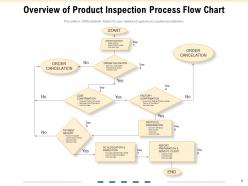
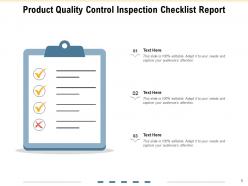
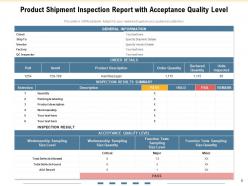
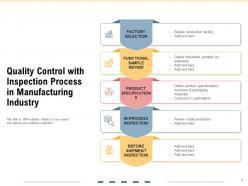

FAQs for Inspection Workshop Completion Overview Product
So you'll want to track defect rates - basically how many units bomb during inspection. First-pass yield matters too (what percentage makes it through first try). Track how long inspections take and what they cost, because honestly nobody wants this dragging on forever. Customer returns and complaints are huge - they tell you what's slipping through the cracks. Oh, and classify issues by severity so you know what's actually critical. Set up some kind of weekly dashboard to catch trends early. Way easier to tweak your process before things spiral.
So it really depends on your industry, right? Pharma companies are crazy strict about contamination - everything's documented and sterile. Manufacturing cares more about getting dimensions perfect and keeping defect rates low. Food industry is all about safety standards and shelf life (which makes sense after some of those nasty recalls). Tech focuses on whether stuff actually works and if users won't hate it. Honestly, just figure out what could go catastrophically wrong in your field. That's what should drive how you inspect things.
Dude, the tech stuff for quality control is honestly insane right now. AI vision systems catch defects way faster than people can - and they don't get tired or distracted like we do. Machine learning actually gets smarter over time, which is pretty cool. Real-time analytics help you spot problems before they blow up into bigger issues. IoT sensors can monitor everything 24/7 instead of just checking random samples. Best part? You won't need to hire tons of inspectors to scale up. I'd start with whatever manual checks eat up most of your time - that's where automation really pays off.
Honestly, get your new people working directly with the experienced inspectors right on the floor - that's where they'll actually see what defects look like in real life. Theory is pretty much useless here. Build visual guides with photos showing good vs bad products because written standards don't mean much when you're holding an actual part. Also, don't forget refresher training since people get sloppy over time and standards change. The whole thing comes down to consistent practice with someone giving feedback who actually knows what they're doing.
Dude, you're gonna deal with inspectors having different standards and rushing when deadlines hit - I've watched that trainwreck happen so many times. Fatigue makes people miss obvious stuff too. Plus unclear quality standards just make everything worse. Here's what actually works: create solid checklists and rotate people so they stay sharp. Do regular calibration sessions where everyone's on the same page. Visual examples help tons for your standards - way better than just written descriptions. Oh, and build in buffer time because sacrificing quality for speed always backfires. Document consistently or you'll regret it later.
So here's the thing - instead of checking every single product, you just test a representative chunk of them. Saves you a crazy amount of time and cash. Random sampling works great, or you can do stratified sampling if you want to get fancy about it. Your team will actually spot more problems this way since they're not rushing through a million items. They can really focus on what they're inspecting. Oh, and make sure your sample size makes sense statistically - like 5-10% of your batch usually does the trick, depending on how much risk you're cool with.
Dude, you don't want to mess around with quality issues. Product liability lawsuits are brutal - we're talking millions in damages if someone gets hurt. The FDA and other agencies will hit you with massive fines too. Recalls are expensive as hell. Honestly, the reputation damage might be worse than the legal costs though. I've seen companies never recover from that stuff. Document everything and get your quality processes locked down now. Way cheaper than fighting lawsuits later, trust me.
Honestly, quality can't just be the QC team's problem - everyone needs to own it. Train your people on standards and let them actually stop the line when something's off. Leadership has to walk the walk too, because if they don't give a shit, why would anyone else? Post your quality metrics where people can see them and celebrate when teams catch stuff early. The worst thing is when workers are terrified to report problems because they'll get thrown under the bus. Make it safe to speak up. Oh, and actually listen to your floor workers during reviews - they're the ones who know what's really happening out there.
Honestly, start with something like iAuditor or GoCanvas for digital checklists - they'll save you tons of time. Minitab's solid for statistical process control if you need trend tracking. Machine vision systems are cool for visual stuff but ugh, the initial setup is brutal. Mobile apps for real-time data collection are clutch too. But seriously, just digitizing your paper checklists first will probably cut inspection time by like 30-40%. That's where I'd start. You'll get way better data tracking and it's not overwhelming to implement.
Honestly, your customers pretty much dictate what quality standards you need to hit. If they're expecting perfect finishes and zero defects, your inspection process better reflect that - or you'll just get bombarded with returns. It's annoying how expectations keep creeping higher as competition gets fiercer. What works is actually asking your customers what matters to them and tracking why stuff gets sent back. Then tweak your inspection lists based on real feedback instead of just winging it. Way more effective than guessing what they care about.
Honestly, product quality is everything for your brand rep and keeping customers around. Good quality builds trust - people stick with you. But man, one bad batch can blow up on social media and wreck what took years to build. Customers will bail fast, leave nasty reviews, return stuff left and right. Quality products though? Those customers become your biggest fans and tell everyone about you. I'd seriously put money into good quality checks from the start - way less of a headache than fixing a mess later. Trust me on this one.
Look, continuous feedback loops are basically your secret weapon for turning inspection data into actual improvements. Track your defects and patterns consistently - you'll start seeing which processes or suppliers keep screwing up. Then here's the crucial part: actually share that info with your production teams, suppliers, and engineers so they can fix specific problems instead of just throwing darts at a board. I've seen too many places collect mountains of data but never do anything with it. Don't just gather the info - act on it and check if your fixes actually worked.
Honestly, get your quality standards written down first and make sure every supplier knows exactly what you expect - saves you from so many fights later. Do inspections at different points: when stuff arrives, during production, then before it ships out. Random checks work way better than scheduled ones because nobody can prepare fake good behavior. Oh and definitely find local inspection partners in your main regions instead of flying people around constantly (learned that expensive lesson the hard way). Keep your standards consistent everywhere though. Take tons of photos, write detailed reports, and have a solid plan for when things go sideways.
Ditch the rigid gate inspections - they're death for agile. Build quick checkpoints right into your sprints instead. Focus on the stuff that'll actually break things, not every tiny detail. Cross-functional teams giving instant feedback is where it's at. I learned this the hard way after way too many failed launches tbh. Do lots of small checks throughout rather than one huge review at the end. Oh and define your "done" criteria upfront so nobody's confused about quality standards each iteration.
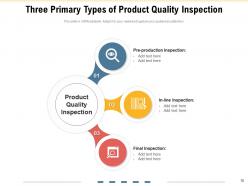
Honestly, pre-production inspections are where it's at - catch problems before you're stuck with a whole batch of junk. Final random sampling is the other must-have since that's what proves your stuff actually works like you say it does. Most companies I know totally skip the pre-production part and then wonder why everything goes sideways later. If you're dealing with FDA or CE marking, throw in some in-process monitoring too. Way better to set up checkpoints at the critical spots than just cross your fingers and hope it all works out.
-
Great product with effective design. Helped a lot in our corporate presentations. Easy to edit and stunning visuals.
-
Great designs, Easily Editable.
-
Unique research projects to present in meeting.
-
Good research work and creative work done on every template.
-
Great experience, I would definitely use your services further.
-
Great experience, I would definitely use your services further.
-
Great product with highly impressive and engaging designs.
-
The content is very helpful from business point of view.