


Proceso de flujo de la empresa de logística




Try Before you Buy Download Free Sample Product
 Impress Your
 Audience
 100%
100% Editable
 Save Hours
 of Time


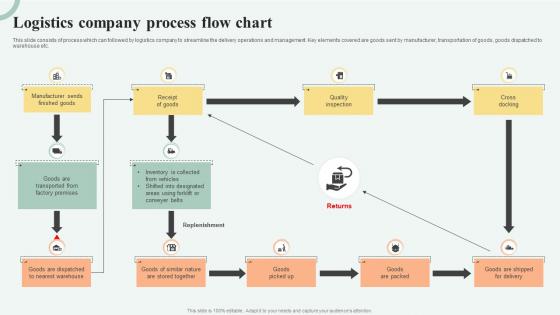
El proceso que puede seguir una empresa logística para optimizar las operaciones y la gestión de la entrega incluye los siguientes elementos clave: los bienes enviados por el fabricante, el transporte de los bienes y el despacho de los bienes al almacén.
People who downloaded this PowerPoint presentation also viewed the following :
Proceso de flujo de la empresa de logística 1. Recepción de pedido 2. Preparación de envío 3. Transporte 4. Entrega 5. Seguimiento 6. Retroalimentación
Utilice nuestro diagrama de flujo del proceso de la empresa de logística para ahorrar tiempo valioso. Están listos para adaptarse a cualquier estructura de presentación.





FAQs for Logistics Company
Dude, automation is exploding right now - warehouses are going full robot mode because they can't find workers anywhere. Supply chains are getting spread out too since everyone learned that depending on one supplier is risky as hell. Oh, and all those crazy fast delivery promises? Companies are building tiny fulfillment centers everywhere to make it happen. Honestly the whole industry feels different than like 3 years ago. If you're not already doing it, start talking to backup suppliers now. Flexibility's everything these days.
Honestly, AI and automation are game-changers for supply chains. They crush all the boring repetitive tasks - demand forecasting, inventory tracking, route planning. Real-time visibility is where it gets interesting though. You can actually catch problems before they blow up into major headaches. The AI beats Excel every time for predicting what customers want. Meanwhile automation runs your warehouse picking and sorting. Oh, and customer service too I guess. Everything connects automatically, so when one thing shifts, the whole system adapts. My advice? Pick one process first and see how it goes.
Honestly, sustainability isn't just trendy anymore - it's becoming core to how logistics actually works. Companies are rebuilding supply chains around it. Electric fleets, route optimization to cut fuel, picking suppliers based on green practices. The crazy part? It saves money too through efficiency gains and waste cuts. Customers expect it now, plus regulations keep getting stricter worldwide. I'd start with a carbon audit - sounds boring but you'll spot easy wins fast. Things like consolidating shipments or tweaking warehouse energy use. Those changes add up quicker than you'd think.
Honestly, last-mile delivery can make or break your whole customer experience. It's that final moment when people actually get their stuff, so if you mess it up, they'll remember. Fast and reliable delivery with flexible options - like letting customers pick time slots or alternate pickup spots - seriously boosts satisfaction scores. We've all been there waiting around all day for a package that never shows, right? Super annoying. The game changer is really about giving people control and visibility. Real-time tracking, delivery preferences, easy rescheduling when plans change. Even if everything else went smoothly, a bad delivery experience will overshadow it all.
Oh man, the coordination nightmare is real - different time zones, currencies, regulations everywhere. Customs delays will destroy your timeline (trust me on that one). Currency swings mess with your costs constantly. Lead times get crazy long so forecasting demand becomes this guessing game. Then there's all the geopolitical drama and natural disasters to worry about. Honestly though, decent supply chain software is worth every penny. Also build solid relationships with local partners in each region - they'll save your butt when things go sideways.
Honestly, data analytics is a total game-changer for logistics - it turns your gut instincts into actual smart decisions. You can optimize routes, predict when demand's gonna spike, and catch bottlenecks before they wreck everything. Once you start seeing the patterns, you'll wonder how you managed without it. Track delivery times, costs, resource allocation - basically everything you can get your hands on. The analytics will show you exactly where you're losing money or missing chances to improve. I'd say start with whatever data you already have (even if it's messy) and clean it up as you go. Short sentences work. Your operations will thank you later.
Honestly, spread your suppliers around - don't rely on just one or two because that's asking for trouble. Map out where everything could go wrong in your supply chain, then have backup plans ready. Buffer inventory is your friend for critical stuff. Real-time tracking helps catch issues early (learned that the hard way). Communication protocols with partners matter too. The big thing though? Actually test your backup plans every few months. I've seen too many companies with "disaster plans" that fall apart the second a truck breaks down or weather hits.
Honestly, geopolitics can mess up your entire supply chain in like 24 hours. Trade wars and sanctions suddenly mean you're scrambling for new suppliers or completely different shipping routes. Remember when that ship got stuck in the Suez Canal? Total chaos. The Russia-Ukraine thing showed how fast everything can fall apart too. Political drama affects everything - customs gets slower, infrastructure crumbles, transit times go crazy. You've gotta have backup plans ready to go. I always tell people to watch the news in regions where their stuff ships through. Sounds boring but you don't want to get blindsided when some new conflict pops up.
Honestly, AI and machine learning are crushing it right now - they'll optimize your picking routes and predict what inventory you actually need. IoT sensors track everything in real-time, from temps to equipment health. Robots and those automated vehicles do all the heavy lifting. You can manage everything from your phone with cloud systems, which is pretty sick. Voice-picking tech makes workers way more efficient too. Here's the thing - this stuff isn't some distant future anymore, it's here and getting affordable. Just pick whatever's your biggest headache first and start there.
Documentation's huge - commercial invoices, packing lists, certificates of origin can't be wrong. Find a solid freight forwarder who actually knows their stuff, trust me on this one. Going it alone is brutal. Your HS codes better be spot-on too since customs is cracking down hard on classifications. Train your logistics people regularly so they catch problems early. Oh, and if you can swing automated compliance checks in your shipping software, do it. Nobody wants those panicked calls at 3am about stuck shipments - been there, it sucks.
Dude, e-commerce is completely wrecking how logistics used to work. Companies went from shipping pallets to businesses to now dealing with millions of tiny packages going everywhere - total chaos for costs. Same-day delivery killed the old hub systems, so now you need warehouses scattered around cities and actual last-mile networks. Seasonal rushes are insane, plus all those returns? They'll destroy your margins if you're not careful. Oh, and inventory tracking has to be perfect now or you're screwed. Honestly, if your logistics company isn't already dumping money into urban delivery and multi-channel stuff, time to find a new one.
Dude, inventory management is honestly what makes or breaks your whole logistics setup. You don't want to run out of stuff (customers hate that) but you also can't have too much inventory just sitting around eating up space and cash. Real-time tracking is a game changer - seriously, implement that first. Then figure out your reorder points so you're not scrambling. When you actually know what you have and where it needs to go, planning routes becomes way easier. I've watched companies slash their logistics costs by like 15-20% just from fixing their inventory mess. Those two changes will transform how everything flows.
Dude, start by bundling your shipments together - most companies don't even bother asking carriers for volume discounts which is honestly crazy. Plan ahead a few days instead of rushing everything and you'll probably save 15-20%. Switch between different transport types based on how urgent stuff actually is. Oh, and definitely dig through your freight bills this week - I bet you'll find some obvious waste pretty quick. The routing thing matters too. Track your shipping data so you can catch patterns. Sounds boring but it's where the real savings hide.
Honestly, customers are running the show these days. They want everything fast, trackable, and convenient - which means we're constantly scrambling to keep up. Same-day delivery? Now you need warehouses everywhere and perfect routing. Real-time tracking that actually tells people where their stuff is? That's table stakes now. Returns need to be painless too, which is a whole other headache. Amazon basically ruined it for everyone lol. My advice? Survey your customers every few months to see what crazy thing they'll want next. Better to get ahead of it than watch competitors steal your business because they figured it out first.
So IoT sensors are probably your best bet to start with - they'll track temperature, humidity, location, the whole deal in real-time. Blockchain's getting big for tracking stuff through the supply chain too. Smart packaging is pretty cool now, like it'll literally tell you if your shipment got too warm before you open it. AI route optimization saves tons on transit time and energy costs. There's also autonomous refrigerated trucks starting to show up for deliveries, though honestly they're still mostly experimental. I'd go with the sensors first since everything else kinda builds off that data anyway.
-
SlideTeam is my go-to resource for professional PPT templates. They have an exhaustive library, giving you the option to download the best slide!
-
They helped us design the pamphlets for our church’s food drive! The people loved the design, and I’m happy to say it was successful. Thank you, SlideTeam!