


Market Sizing Powerpoint Presentation Slides





Try Before you Buy Download Free Sample Product
 Impress Your
 Audience
 100%
100% Editable
 Save Hours
 of Time


Much before a company starts to estimate the market size, it is very important to compile the data concerned in PPT template format relating to the study of market potential. Other parameters like defining of customer target, penetration rate, and potential market size can be addressed with ease in a Market Sizing PowerPoint Presentation Slides. As far as company’s allocation is concerned in the total market size it can be measured by the stats of total volume rightly updated in presentation template. Number handling and other calculation part has become very easy as all the measurement tables and formulas are supported in PowerPoint slideshow. In a conference hall qualitative and qualitative aspects can be handled, brought into notice and assessed with ease using pre designed graphics in PPT layout. Even before a new product or service is launched its important to understand the market potential with respect to your company, all of which can be tracked with presentation slide, thus helping you to stand at par with others. Ensure ethnic feelings are duly considered with our Market Sizing Powerpoint Presentation Slides. Be able to address cultural concerns.
People who downloaded this PowerPoint presentation also viewed the following :
Content of this Powerpoint Presentation
Before a business steps up, enters a new business domain, launches a product or service, rents a property, or hires personnel, it tries to learn everything it can about the market. Market sizing and studying help pave the way for the new thing that you want to start.
At times, management asks a senior associate or experienced executive in the organization to offer them the required details related to market sizing. As market sizing is a sensitive aspect and highly derivative, the executive may seem to be troubled while collecting and analyzing the details related to market sizing. If you are one such executive, then what may help you is a ready-to-use template related to the concept.
SlideTeam’s 100% customizable and adaptable template on market sizing contains the required ammunition to bring down the huge aspects of this concept. Using this template, you can showcase the critical aspects, data, and other information related to the market and present them comprehensively in front of the management.
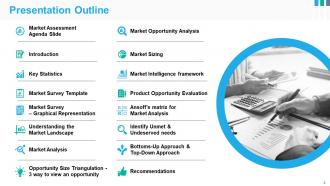
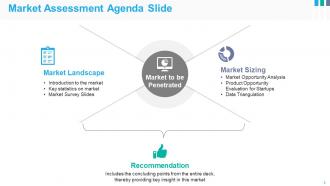
The template contains everything from concept details to agenda, from key statistics to survey insights, and so much more. So, without any further ado, let’s learn about the major offerings of the template below so that you can use it for your benefit with ease.
To showcase the market sizing results for an estimated research, you can use this template.
Template 1: Market Survey Template
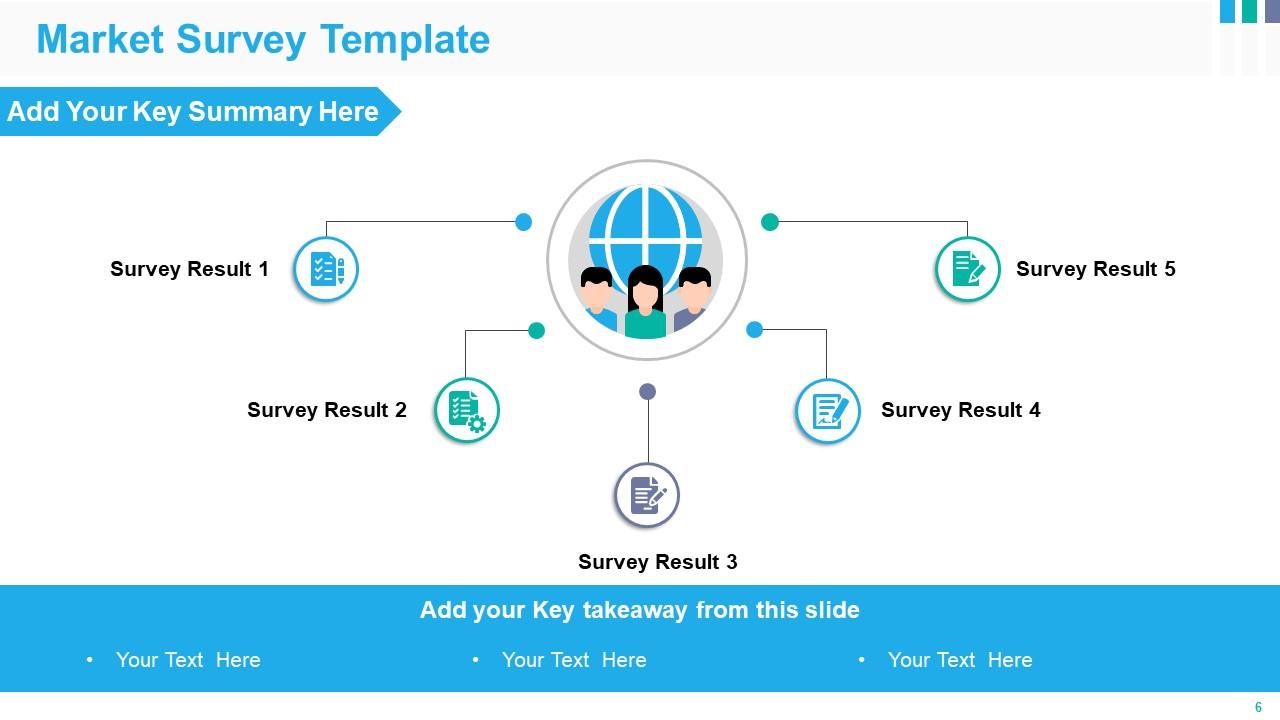
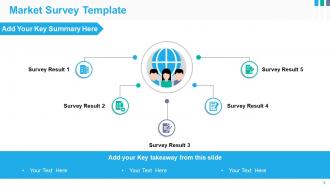
Market sizing can not be done accurately without a market survey(s). Hence, this template allows you to sum up and showcase the types of surveys conducted in the market as well as their findings. You can use the infographic structure of this template to address what you found before and after conducting the surveys. For a better and quicker understanding of the audience, you can also add the key summary of the surveys at the top of the template.
Template 2: Market Survey- Graphical Representation
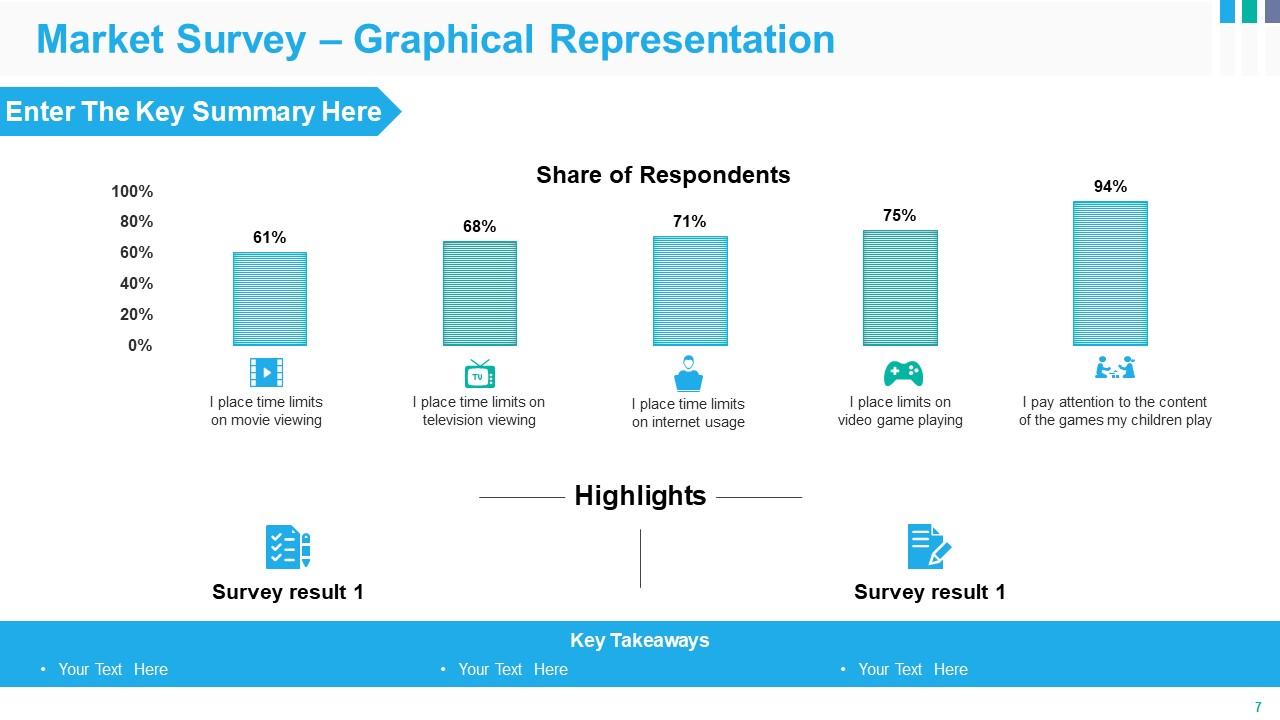
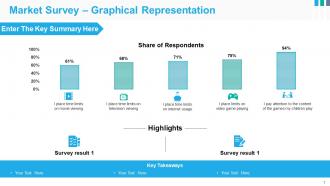
The members of the management team or your audience may need deeper insights into your survey findings. Hence, this template helps present your market survey findings graphically. You can use the bar graph present in the template to showcase the findings. The y-axis of the graph will help you record the intensity of the change or findings. You can add the key summary at the top of the template as well as include two other major findings at the bottom.
Template 3: Understanding the Market Landscape
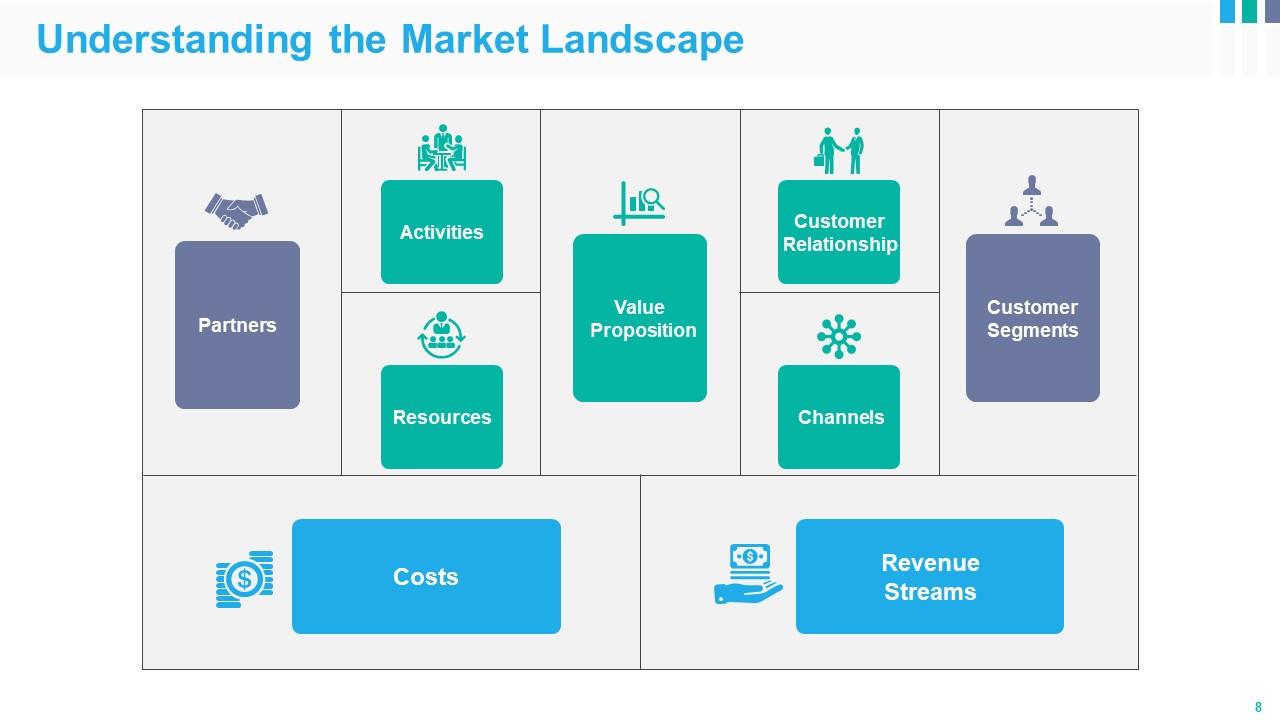
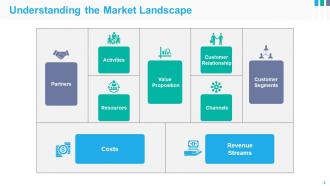
To successfully showcase the domains related to your market research, you can use this slide. Covering a broad market landscape is a crucial element of market sizing. This slide allows you to add as many landscape elements as you want to the market sizing reports. Here, you can add elements like the number of partners in the market, all the activities and resources involved, the proposed value, customer relationship patterns, channels of distribution, customer segments, and various others.
Template 4: Market Analysis
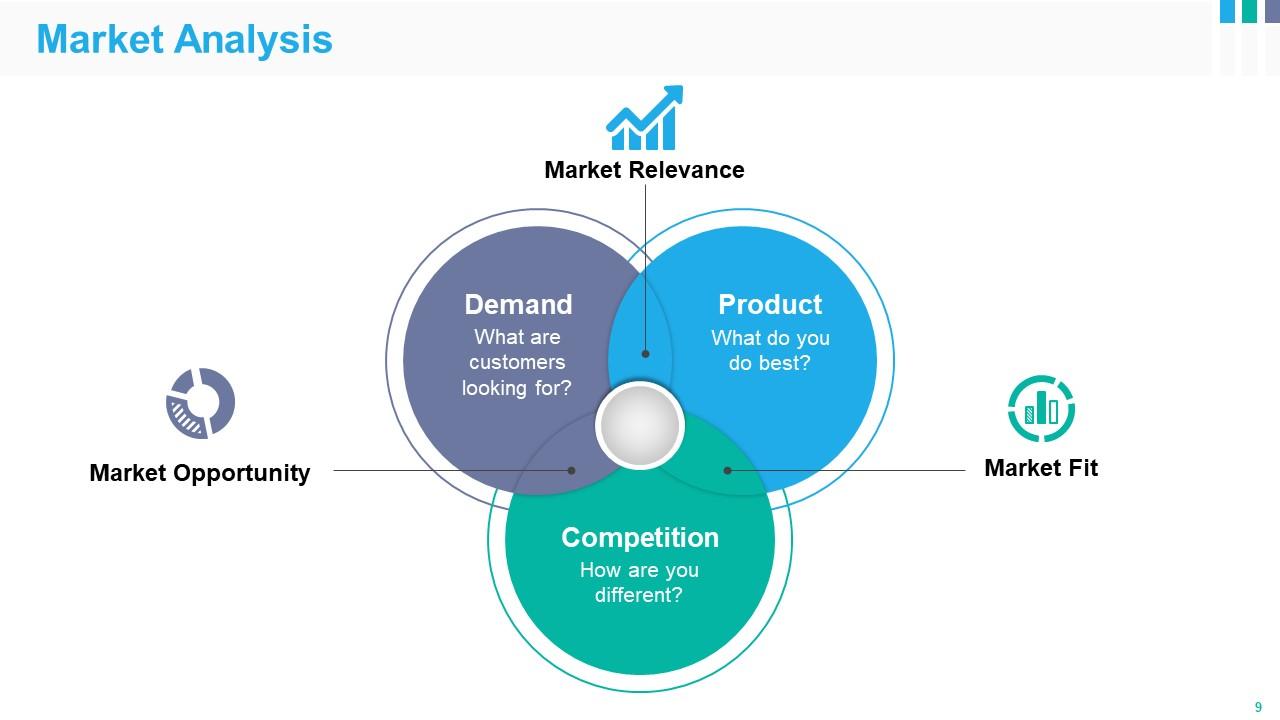
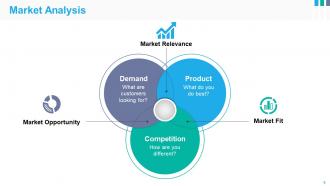
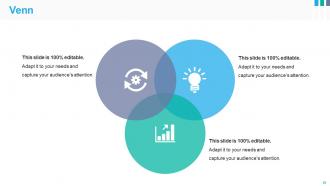
Here’s an important slide in the market sizing template that allows you to showcase the market analysis reports ideographically. The slide shows a Venn diagram representing three different elements of the market analysis, viz. Demand (What customers want), Product (What can you offer), and Competition (What makes you unique). The intersection areas represent the information related to Market Fit, Market Opportunity, and Market Relevance concerning each element of market demand as available.
Template 5: Market Opportunity Analysis- Template 1
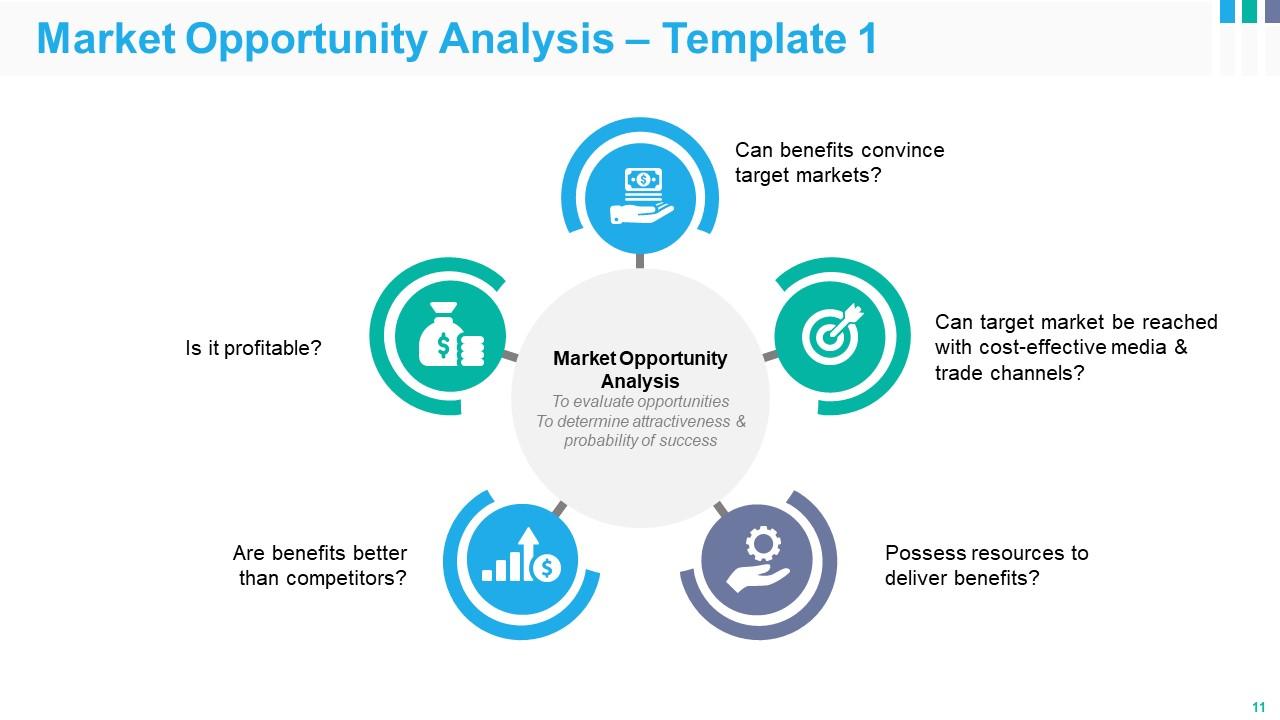
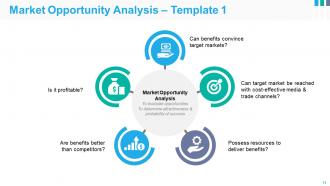
Once you have successfully conducted and showcased the market survey findings, you may need help representing your market opportunity analysis reports. This part of the market sizing template can help you with this task. Here, you can answer questions like: Can benefits convince the target market? Can the target market be reached cost-effectively? Is it profitable? Does your business possess the required resources to cater to the expectations of customers?
Template 6: Market Sizing- Template 1
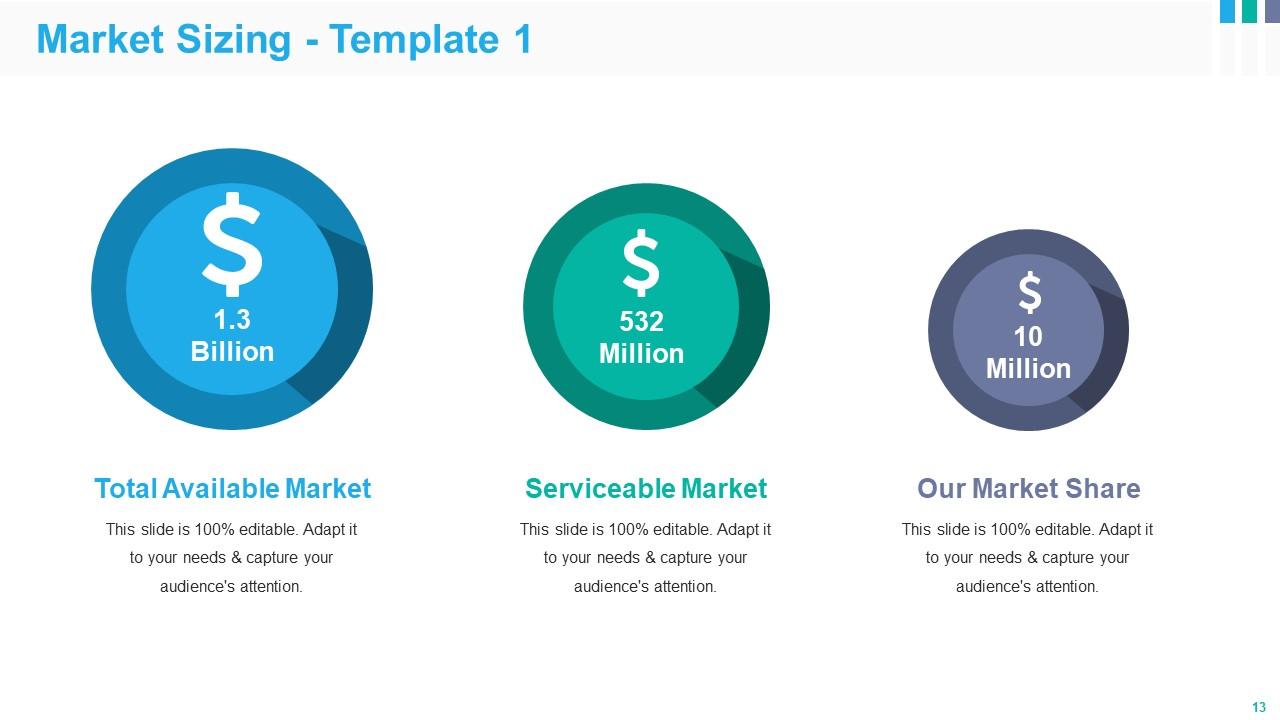
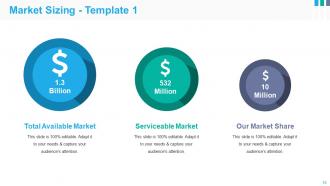
Now that you have showcased the market opportunity analysis, it's time to get to the market sizing part of the template. With the help of this slide, you can enlighten the audience about the total available market size within the scope of the business, the serviceable market available at your disposal, and the market share your business currently covers or governs. You can represent this data in the form of bubbles, and each bubble will contain a market size of millions or billions of dollars.
Template 7: Market Intelligence Framework
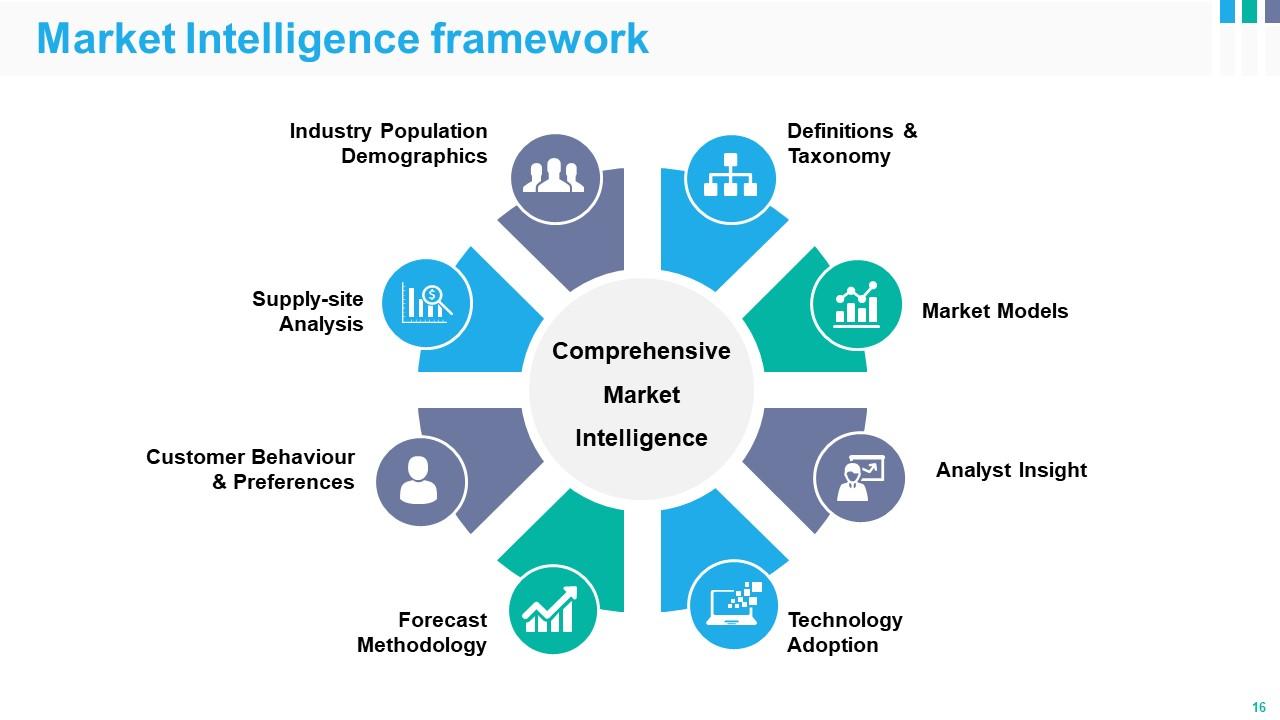
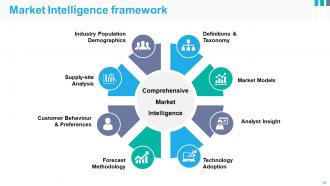
Using this slide of the market sizing template, you can enlighten management about the overall market intelligence framework. Here, you can showcase that the information provided to the audience has been delivered considering the Definitions and Taxonomy, Market Models, Analyst Insight, Technology Adoption, Forecast Methodology, Customer Behaviour and Preferences, Supply-site Analysis, and Industry Population Demographics. You can add or remove as many framework materials as required, depending on the market research you conducted and its general findings.
Template 8: Ansoff’s Matrix for Market Analysis
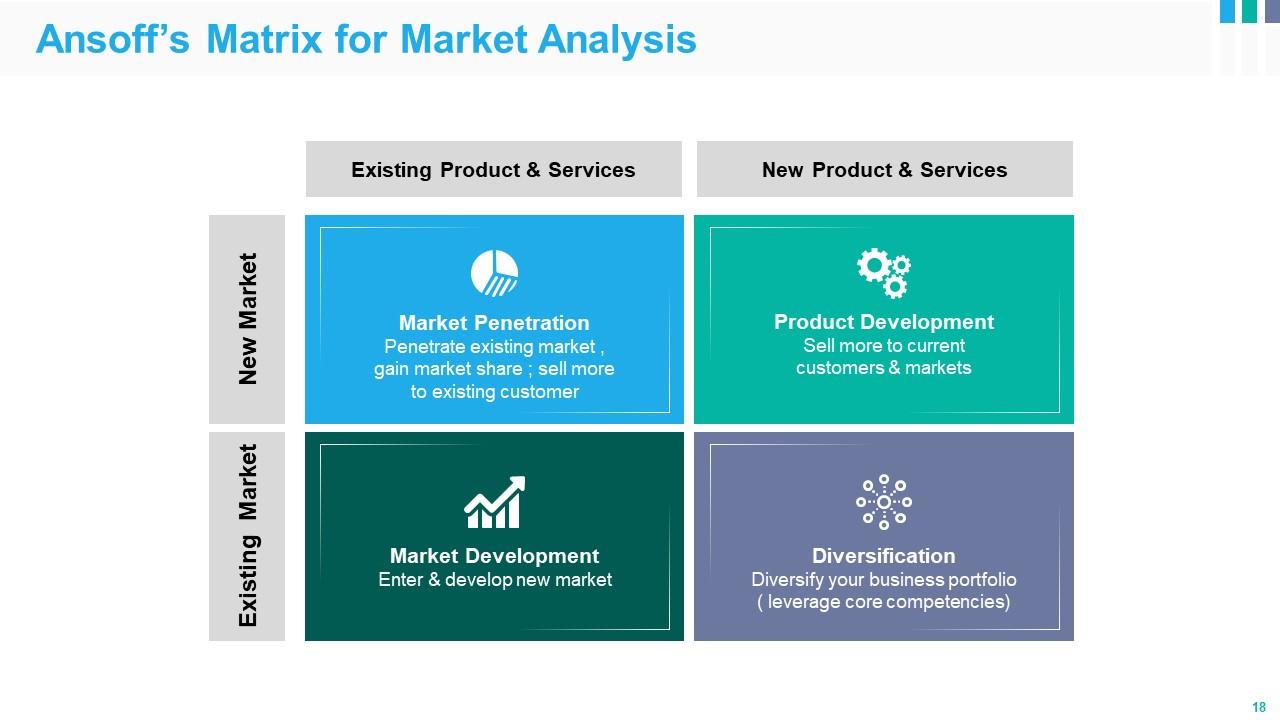
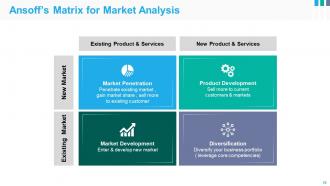
The Ansoff matrix is a reliable and highly-entrusted tool for analysis that helps businesses and their personnel understand market patterns and devise plans accordingly. You can use the Ansoff matrix provided in this market sizing template to deliver information related to the existing products and services as well as new products and services with respect to the new market and emerging market findings. To further enlighten the management about the concept, you can add supportive text.
Template 9: Identify Unmet and Underserved Needs
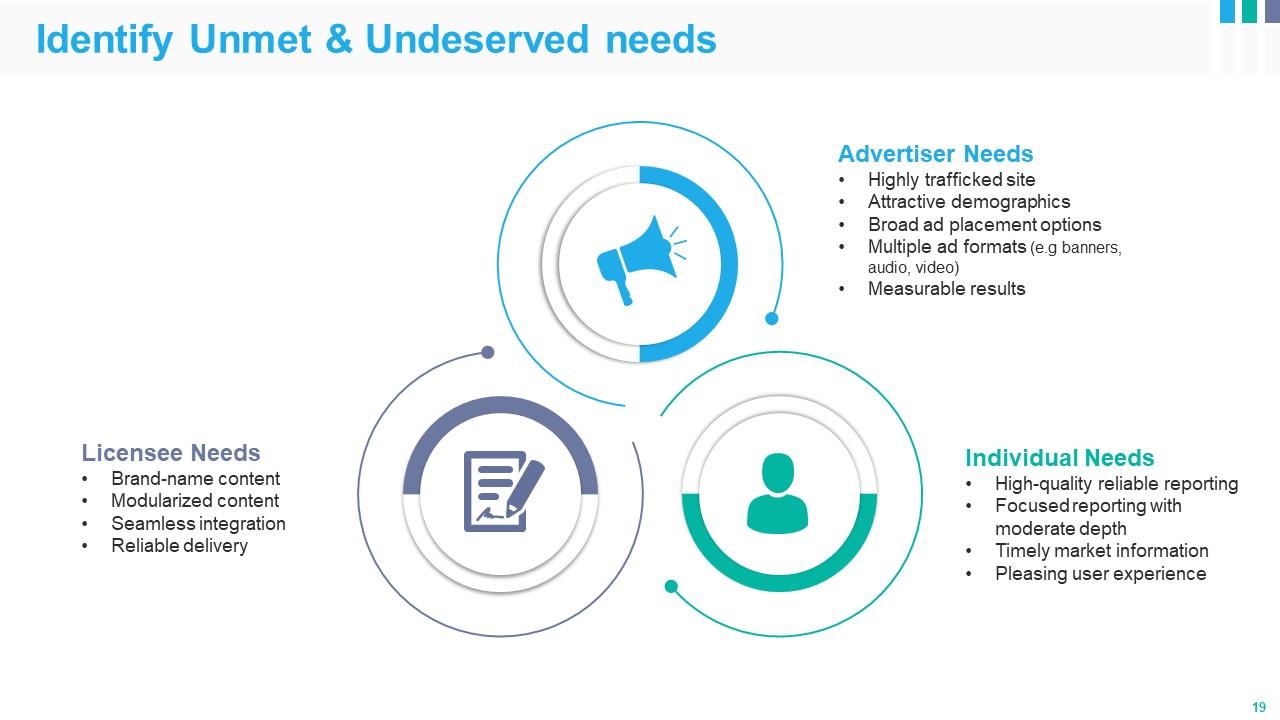
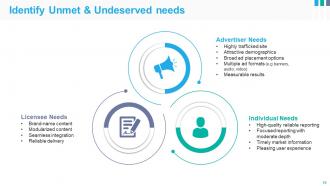
Next in the market sizing template is a slide that allows you to showcase the advertiser needs, license needs, and individual needs as derived from the analysis. The advertiser's needs can include requirements like highly trafficked sites and attractive demographics. Similarly, the license needs can include heads such as brand-name content and modularized content. Lastly, the individual needs can include elements such as high-quality reporting and focused reporting with moderate depth.
Template 10: Bottom-Up Approach and Top-Down Approach

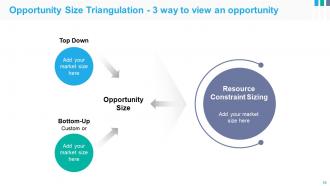
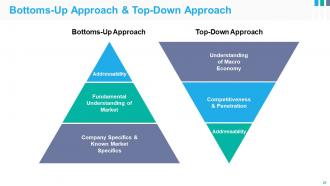
To showcase the findings of the market sizing, you can use bottom-up and top-down approaches. Both of these approaches are highly derivative and, hence, important to include in the findings. The bottoms-up approach contains addressability at the top, then a fundamental understanding of the market in the middle, and company specifications and know-market specifications at the bottom of the funnel. Similarly, the top-down approach contains an Understanding of the Macro Economy at the Top, Competitiveness and Penetration in the middle, and Addressability at the bottom of the funnel.
If you are looking for a feasible way to showcase the estimated market sizing insights of an insurance business, you can use this template instead.
Market Analysis Made Easy with Market Sizing Template
Market sizing may be a mere part of the market analysis domain, but it plays a pivotal role in getting insights related to the market. The above template can help you showcase your findings of the market analysis and market sizing to a greater extent for the benefit of the business.
You can try the simplistic approach used in this market sizing template to enlighten your audience about the insights of the desired market.
Market Sizing Powerpoint Presentation Slides with all 44 slides:
Attract bigger crowds with our Market Sizing Powerpoint Presentation Slides. More folks will frequent your events.












FAQs for Market Sizing
Honestly, start with bottom-up if you can - way more realistic than those fancy industry reports. First figure out who you're actually selling to, then count how many of those people exist. Grab data from wherever you can find it, but don't just trust the first numbers you see. Talk to real customers to check if your math makes sense. Oh and definitely compare against what competitors are doing - sometimes that's the reality check you need. Biggest thing? Don't fall in love with your first estimate. I've seen people get super attached and miss obvious red flags.
Honestly, you need both - they work really well together. Secondary research first (industry reports, government stats, competitor stuff) gives you the foundation. It's boring as hell but super useful for baseline numbers. After that, do primary research with surveys or interviews to check if your assumptions are actually right. Secondary helps you understand the big picture, then primary fills in the gaps with real customer feedback. Oh and definitely do secondary first - it'll help you ask way better questions when you get to the primary stuff. Makes everything more focused instead of just shooting in the dark.
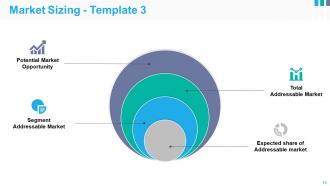
Look into TAM, SAM, and SOM - yeah I know, more acronyms. TAM is basically everyone who could ever want your product. SAM narrows that down to people you can actually reach with your current setup. SOM is what you'll realistically grab considering competitors aren't just gonna roll over. Honestly, SAM is probably where you should start since it's the most useful for actual planning. Also keep an eye on how fast your market's growing and what it costs to snag new customers. The whole framework sounds super corporate but it actually helps you think through things properly.
Think of TAM/SAM/SOM like a funnel. TAM is the total market if literally everyone bought your product. SAM gets more realistic - what slice can you actually serve based on geography, your business model, etc. SOM is what you'll realistically capture given your budget and competition. Coffee shop example: TAM = all global coffee sales. SAM = Seattle's coffee market. SOM = maybe 2% of that with your single location. Honestly, most founders I know totally inflate their SOM numbers because they want to impress investors. Don't do that. Just work down from solid data for each layer and be real about your constraints.
Honestly, competitor analysis is like your sanity check for market sizing. Look at their revenue numbers, customer counts, market share - whatever you can dig up. Cross-reference that stuff with your estimates so you don't end up with totally bonkers projections. Their pricing and where they operate also shows you how the market actually splits up. I always try to find at least 2-3 competitors with solid data to compare against. Trust me, it's way better to catch unrealistic numbers early than pitch something that makes investors roll their eyes. Plus it's probably the most straightforward way to validate your assumptions anyway.
Dude, consumer trends totally mess with market projections because they flip demand on its head. Historical data becomes pretty much worthless. Look at video conferencing - who saw that 2020 explosion coming? Your 2019 numbers would've been laughably wrong. I always check search trends and early pilot results for clues. You've got to factor in stuff like changing preferences, new tech adoption, demographic shifts. The tricky part is staying flexible with your assumptions instead of clinging to old models. Honestly, behavioral changes are where most people get blindsided in market sizing.
Biggest mistake? Being stupidly optimistic about your TAM. Don't fall into that "if we capture just 1% of this huge market" nonsense - I see this constantly and it never works out. Always validate with actual data instead of guessing. Bottom-up analysis beats top-down every time, especially when you can get real customer info. Focus on the market you can actually reach, not some fantasy global number. Oh, and talk to potential customers first - sounds obvious but most people skip this step. That reality check will save you from looking ridiculous later.
Yeah so it totally depends on the industry you're looking at. Tech moves crazy fast so you're basically guessing based on user growth and whatever digital data you can find. Healthcare though? That's a nightmare with all the patient studies and regulatory stuff you have to dig through. Retail's actually not bad since there's tons of sales data and foot traffic info out there. Oh and your timelines are gonna be totally different too - tech changes every few months but healthcare takes forever. I'd honestly just pick whichever one has the best public data available first.
SurveyMonkey and Typeform are solid for customer surveys. Google Analytics is free and gives decent web traffic data. I live in Excel way too much building models, but honestly it's perfect for the bottom-up math stuff. IBISWorld and Statista cost money but they're goldmines for industry data. PitchBook rocks for startup/VC market info if you can get access. Actually, start with free tools first - you'd be surprised what you can piece together just using Google, census data, and a decent spreadsheet. Build from there once you know what gaps you're trying to fill.
Dude, you'll want to ditch the usual market reports for emerging markets - they're either ancient or nonexistent. Primary research is your best bet. I got burned by this in Southeast Asia, so trust me on this one. Local surveys and interviews beat fancy reports every time. The informal economy stuff? Traditional methods completely miss it, which is honestly crazy given how huge it is in these regions. Your assumptions from developed markets won't work here - purchasing power operates totally differently. Oh, and start small with test markets first. Way less risky than going big right away.
Dude, charts and graphs are a game-changer for market sizing presentations. People's eyes glaze over the second you start rattling off numbers - trust me, I've been there. Waterfall charts work great for showing your calculation process, and pie charts make those TAM/SAM/SOM breakdowns super clear. Bar graphs are perfect for growth projections too. Honestly, anything beats another boring spreadsheet walkthrough. Your audience will actually remember what you're saying instead of checking their phones. Makes the whole thing way more convincing when stakeholders can see the relationships between market segments at a glance.
Honestly, just build it into your routine instead of panicking later when numbers look weird. I'd do quarterly reviews for most stuff, maybe twice a year if your market's pretty stable. Google Trends is solid for catching early shifts - though obviously don't make it your only source. Set up alerts for your main segments and always double-check big changes against other data. Track the obvious stuff: new competitors popping up, regulatory tweaks, customer behavior changes. A simple dashboard works better than anything fancy. The whole point is spotting problems before someone corners you asking "wait, is this still right?"
So yeah, GDP growth usually means bigger markets because people have more cash to spend. Pretty straightforward stuff. But honestly, don't just look at the headline GDP number - that's kinda lazy. You want GDP per capita and how income's actually distributed. Like, if only the top 1% are getting richer, that doesn't help much if you're selling everyday products. Also check which sectors are actually growing in your area. I always throw in demographic trends too because sometimes those matter more than the economic data. Makes the whole picture way clearer.
You can't just look at your whole market and call it a day - you'll end up with totally useless numbers. Break it down by geography, demographics, whatever makes sense for your business. Like instead of "all small businesses need this," try "retail shops under 50 employees in cities." Way more realistic. I learned this the hard way when I was doing projections last year and my numbers were completely off. Pick 2-3 ways to slice your market that actually matter for how you operate. Then size each chunk separately. Trust me, it's so much better than guessing.
Dude, market sizing is basically your cheat sheet for not wasting money. You figure out the total addressable market, then get real about what slice you can actually grab. Is dropping $2M worth it for a $50M opportunity vs a $500M one? Pretty obvious when you put it that way. It helps justify hiring more people, pick which projects to prioritize, and set revenue goals that won't make your CFO roll their eyes. Think of it like checking GPS before a road trip - I mean, you could just drive around aimlessly but why would you? Start big with TAM, then work down to what's actually realistic.
-
Very unique, user-friendly presentation interface.
-
Great product with highly impressive and engaging designs.