


Memorandum Of Agreement Between Two Parties Proposal Powerpoint Presentation Slides




Try Before you Buy Download Free Sample Product
 Impress Your
 Audience
 100%
100% Editable
 Save Hours
 of Time


Our Memorandum Of Agreement Between Two Parties Proposal Powerpoint Presentation Slides are topically designed to provide an attractive backdrop to any subject. Use them to look like a presentation pro.
People who downloaded this PowerPoint presentation also viewed the following :
Content of this Powerpoint Presentation
Slide 1: This slide introduces Memorandum of Agreement between Two Parties Proposal. State the names of Parties and Begin.
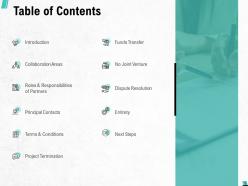
Slide 2: This slide displays Table of Contents of the presentation.
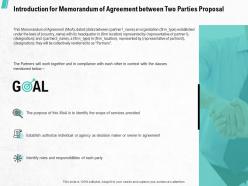
Slide 3: This slide displays Introduction for Memorandum of Agreement Between Two Parties Proposal.
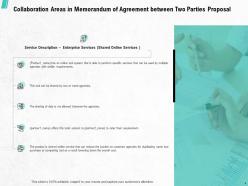
Slide 4: This slide depicts Collaboration Areas in Memorandum of Agreement Between Two Parties Proposal.
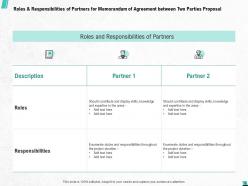
Slide 5: This slide showcases Roles & Responsibilities of Partners for Memorandum of Agreement Between Two Parties Proposal.
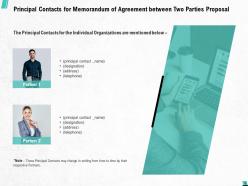
Slide 6: This slide represents Principal Contacts for Memorandum of Agreement Between Two Parties Proposal.
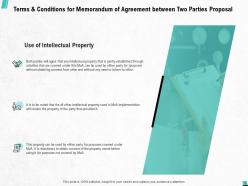
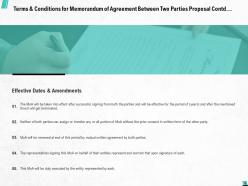
Slide 7: This slide showcases Terms & Conditions for Memorandum of Agreement Between Two Parties Proposal.
Slide 8: This slide is continued with Terms & Conditions for Memorandum of Agreement Between Two Parties Proposal.
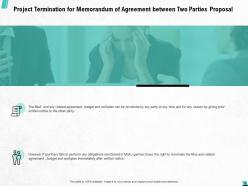
Slide 9: This slide presents Project Termination for Memorandum of Agreement Between Two Parties Proposal.
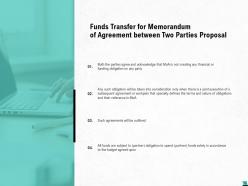
Slide 10: This slide shows Funds Transfer for Memorandum of Agreement Between Two Parties Proposal.
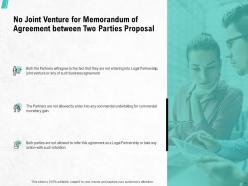
Slide 11: This slide describes No Joint Venture for Memorandum of Agreement Between Two Parties Proposal.
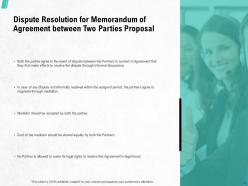
Slide 12: This slide depicts Dispute Resolution for Memorandum of Agreement Between Two Parties Proposal.
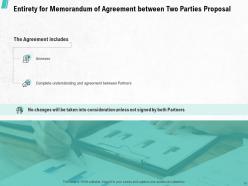
Slide 13: This slide shows Entirety for Memorandum of Agreement Between Two Parties Proposal.
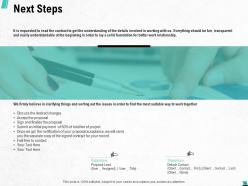
Slide 14: This slide showcases Next Steps.
Slide 15: This is Contact Us slide with Address, E-mail address and Phone number.
Slide 16: This slide is titled as Additional Slides for moving forward.
Slide 17: This is About Us to showcase specifications.
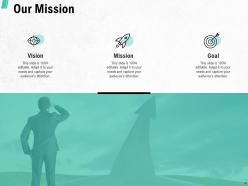
Slide 18: This is Our Mission slide with Mission, Vision and Goal.
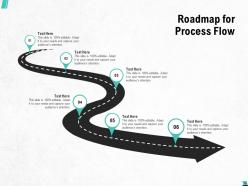
Slide 19: This slide depicts Roadmap for Process Flow.
Slide 20: This is 30 60 90 Days Plan slide.
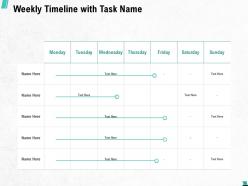
Slide 21: This slide displays Weekly Timeline with Task Name.
Memorandum Of Agreement Between Two Parties Proposal Powerpoint Presentation Slides with all 21 slides:
Use our Memorandum Of Agreement Between Two Parties Proposal Powerpoint Presentation Slides to effectively help you save your valuable time. They are readymade to fit into any presentation structure.


FAQs for Memorandum Of Agreement Between Two Parties Proposal
So for your MOA, you'll need the basic stuff - who's involved, what you're trying to accomplish, and who does what. Timeline with milestones is key. Oh, and don't skip the termination clause even though it feels pessimistic - saved my butt once when a partnership went south. Resource commitments should be spelled out clearly. The scope of work section is honestly where most people mess up later, so be super specific there. Add in how you'll handle disputes, reporting schedules, and get everyone to sign with dates. Basically make it detailed enough that future-you won't be confused about what everyone agreed to.
So basically, an MOA is like the middle child between an MOU and a full contract. MOUs are pretty casual - just a "yeah, we should totally work together" type thing with zero legal teeth. Contracts are the opposite extreme with all the lawyer-speak and consequences if you bail. MOAs split the difference though. They're way more specific than MOUs about who does what, but you won't get sued if things don't work out (usually). It's like making plans with someone reliable - you both mean it, but life happens. Just make sure you're clear upfront about how binding you actually want it to be.
You'll find MOAs all over government contracting and healthcare partnerships. Tech companies use them nonstop for joint ventures and data sharing stuff. Construction and real estate are obsessed with them for multi-party deals - honestly, my lawyer friend complains about reviewing these constantly. Non-profits depend on them too when they partner up for funding or programs. The thing is, these industries need cooperation frameworks without getting bogged down in heavy contract language. My advice? Next time you're talking partnerships, throw out the MOA idea first. Way easier to hash out expectations that way before you dive into the real legal headaches.
Honestly, the hardest part is just getting everyone on the same page first. Talk to all the stakeholders - like actually talk, don't just assume you know what they want. Figure out who's doing what, when stuff needs to happen, and what resources each side is bringing. Oh, and definitely hash out how you'll handle disputes or changes ahead of time. That's where things usually get messy later if you don't think it through now. Check if there's any legal stuff you need to worry about too. Once you've got all that sorted, writing the actual MOA becomes way easier. You'll know exactly what needs to go in there.
Yeah, totally can be binding if you hit the usual contract basics - offer, acceptance, consideration, all that stuff. Really depends on how you write it though. Some MOAs are just fluffy "let's be friends" documents that won't hold up anywhere. But write in specific deliverables, deadlines, consequences? Courts will actually enforce those. The devil's in the details basically. Honestly, I've seen people get burned thinking their vague MOA meant something legally. If you want it to stick, don't mess around - spell out exactly who does what and when.
Make sure you nail down who's doing what and when - that's your scope and timeline stuff. Money talks are obvious but don't skip the details like payment schedules or budget limits. IP rights and confidentiality clauses will save your ass later, trust me. Figure out how disputes get handled before you need it. Termination terms matter too - nobody wants a messy breakup. Oh, and governance structure for ongoing stuff, though that might be overkill depending on your situation. Honestly? Just make a checklist beforehand so you don't forget something important when you're in the thick of negotiations.
Get a lawyer to look at your MOA before you sign anything - seriously, it's worth the money. Research what laws apply to your industry and location since they're all over the place. Don't forget about licensing stuff, data privacy rules, or whatever regulations hit your sector. I've watched MOAs completely blow up because someone missed something super basic that should've been obvious. My cousin went through this nightmare last year - total mess. Way better to pay for legal review now than deal with compliance disasters later.
Your MOA needs actual signatures or it's just a fancy piece of paper. Courts won't enforce unsigned agreements because there's no proof anyone actually committed to the terms. Make sure whoever's signing has real authority though - I've seen deals fall apart because some random employee signed when they had zero power to bind the company. Digital signatures work fine these days in most places. Oh, and don't start operating under the agreement until you've got everyone's signature locked down. You'll save yourself major headaches later.
Always get a formal written amendment that everyone signs - don't mess around with emails or verbal stuff. Reference the original MOA, spell out exactly what's changing, and add new dates. Seriously, I've watched so many people get burned by "we all agreed to this" situations that blew up later. Get signed copies to everyone and update your master file. Oh, and keep a log of amendments because someone will definitely ask "which version are we using?" six months from now. Trust me on this one.
Honestly, the biggest trap is using vague language - you'll kick yourself later when everyone interprets stuff differently. Termination clauses are huge too. Nobody wants to think about breakups when they're all excited, but trust me on this one. Be super specific about who does what, not just hopeful assumptions. Don't promise deliverables or timelines you can't actually hit (I've seen this blow up so many times). Oh, and dispute resolution - boring but necessary. Get a lawyer to look at it first. Catching problems early beats dealing with a mess later.
So basically an MOA lets you and government agencies get on the same page about who's doing what and when. You'll want to map out responsibilities, what resources everyone's bringing, and how you'll know if things are working. Honestly saved my butt when our city contact left mid-project and budgets got shuffled around. Plus it helps with all that accountability stuff government folks need while keeping you compliant for grants. Oh, and start with your shared goals first - way easier than trying to figure out roles before you know what you're actually trying to accomplish together.
Honestly, just throw everything into one secure digital folder with proper backups - I learned this the hard way when my old team lost a critical agreement. Version control is clutch here. Keep signed originals separate from working drafts so there's no confusion. Set up calendar alerts for renewal dates because those will absolutely sneak up on you. A basic spreadsheet tracking who's involved, status, and expiration dates saves so much headache later. Oh, and definitely audit whatever MOAs you have now first. You'd be amazed what random stuff gets buried in people's old files.
You'll want to upgrade when money enters the picture or deadlines become make-or-break. Also when intellectual property gets involved - that stuff can turn ugly fast. Multiple stakeholders with different agendas? Definitely time for a real contract. MOAs are perfect for "hey, let's collaborate and see what happens" situations, but once you're talking serious resources or complex deliverables, you need actual legal teeth. Honestly, I've seen too many handshake deals go south. The moment your partnership moves past the experimental phase, start drafting something formal. Better safe than sorry when liability's on the table.
You want really specific language in your MOA - it's like having GPS instead of someone just saying "head north." Define who does what, when stuff's due, what you're actually delivering. Vague wording? That's how you end up with those super awkward conversations where everyone's pointing fingers. I've seen this mess up so many projects it's not even funny. When disagreements pop up (and they will), you'll thank yourself for having crystal clear terms to reference. Yeah, it takes extra time upfront to nail down the details, but trust me - way better than dealing with confusion later.
Honestly, once you start noticing them, MOAs are everywhere. Universities team up with tech companies for research. Nonprofits partner with corporations on community stuff. The ones that actually work define clear roles and outcomes from the start - no guessing games later. Healthcare systems nail this when they collaborate on patient programs because everyone wants the same thing. Government agencies use them too for joint projects, though those can get messy with all the bureaucracy. Look for partnerships where each side brings different strengths instead of competing. That's where things get interesting.
-
Amazing product with appealing content and design.
-
Really like the color and design of the presentation.
-
Design layout is very impressive.
-
Perfect template with attractive color combination.