


Milestone approach powerpoint presentation slides




Try Before you Buy Download Free Sample Product
 Impress Your
 Audience
 100%
100% Editable
 Save Hours
 of Time


Achieve your goals on time using Milestone Approach PowerPoint Presentation Slides. Project managers can avail this milestone approach PPT presentation slideshow to guide their team members to accomplish the project objectives on time. Present the completion of major tasks, key decision points, team progress to your clients and stakeholders. Keep your teammates and other members involved in the project by projecting the accomplished and pending goals. You can also use this deck to showcase milestones achieved of your various projects to the clients to get them on board with you. Impress the interviewer by putting your best work forward. Showcase various milestones achieved using milestone approach PowerPoint presentation slides. Identify milestones, communicate them with your team, track and manage milestones throughout the project. Use these templates to measure project’s progress. These templates are editable. Customize templates as per your requirements. Edit color, text, icon and font size as per your need. Download milestone approach PowerPoint presentation templates to present various project tasks along with milestones achieved. Our Milestone Approach Powerpoint Presentation Slides don't allow biases to cloud impressions. Encourage folks to judge fairly.
People who downloaded this PowerPoint presentation also viewed the following :
Content of this Powerpoint Presentation
Slide 1: This slide introduces the Milestone Approach with background imagery. Add your company name and begin.
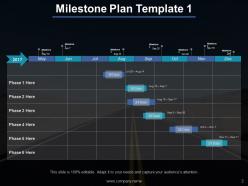
Slide 2: This slide showcases the first Milestone Plan Template with a timeline to add phases, dates and years respectively.
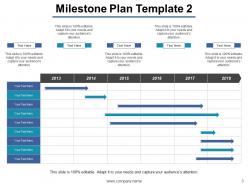
Slide 3: This slide showcases second Milestone Plan Template with timeline to add relevant information.
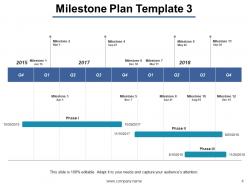
Slide 4: This slide showcases third Milestone Plan Template with a timeline to add milestones, growth prospects etc.
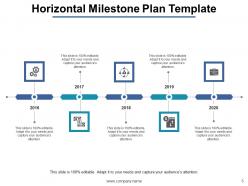
Slide 5: This slide showcases Horizontal Milestone Plan Template. You can add the summary or data of some years.
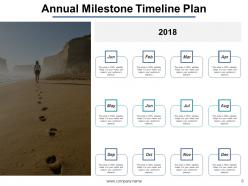
Slide 6: This slide shows Annual Milestone Timeline Plan. Add your annual milestones in the given text boxes.
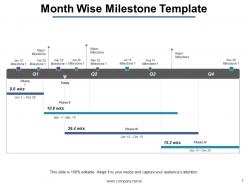
Slide 7: This slide presents Month Wise Milestone Template with a timeline and four phases added in it.
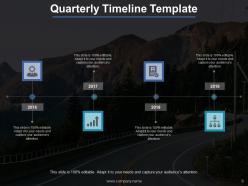
Slide 8: This slide presents Quarterly Timeline Template containing stats of four financial years. Add the data as per your requirement.
Slide 9: This is Milestone Approach Icon Slide. Alter the icons as per your requirement.
Slide 10: This slide is titled Additional slides. Alter the slide content as per need and move forward.
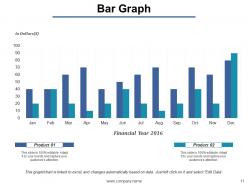
Slide 11: This is a Bar Graph image slide to show product comparison, growth etc.
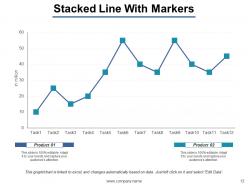
Slide 12: This is a Stacked Line With Markers slide to show product/ entity comparison, specifications etc.
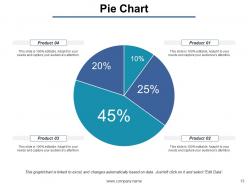
Slide 13: This is a Pie Chart slide to show product/ entity comparison, specifications etc.
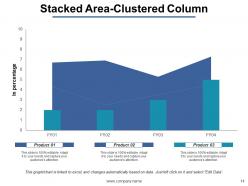
Slide 14: This is a Stacked Area-clustered Column slide to present product/ entity comparison, specifications etc.
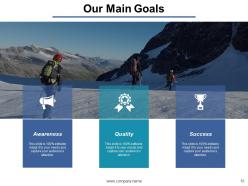
Slide 15: This slide shows Our Main Goals. Add them here.
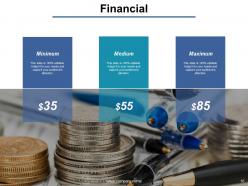
Slide 16: This slide shows Financial aspects with Minimum, Medium and Maximum parameters.
Slide 17: This is a Target Achievement slide. State your targets and use it accordingly.
Slide 18: This is a Post It slide. Pin your text here.
Slide 19: This is Thank You slide stating Address# street number, city, state, Contact Numbers, Email Address.
Milestone approach powerpoint presentation slides with all 19 slides:
Avoid excessive formality with our Milestone Approach Powerpoint Presentation Slides. Allow greater freedom to exist.


FAQs for Milestone approach
Key components include clear deliverable definitions, realistic timeline establishment, stakeholder alignment checkpoints, resource allocation planning, and risk assessment protocols. These elements work together by creating structured progress tracking, enabling early issue identification, and maintaining project momentum, with many organizations finding that this systematic approach ultimately delivers improved project success rates and enhanced team accountability.
Setting specific milestones improves team performance by creating clear checkpoints, establishing measurable goals, enhancing progress tracking, and fostering regular communication cycles. These structured intervals enable teams to identify bottlenecks early, reallocate resources strategically, and maintain momentum through consistent achievement recognition, ultimately delivering improved project outcomes and stronger accountability across all organizational levels.
Milestones serve as critical risk checkpoints by enabling early detection of deviations, resource constraints, and timeline issues before they escalate into major problems. Through systematic milestone reviews, project managers can reassess risk probability, implement corrective measures, and reallocate resources strategically, with many organizations finding that structured milestone gates reduce project failure rates significantly.
Milestones can be effectively communicated through regular status meetings, visual project dashboards, detailed progress reports, and stakeholder-specific updates tailored to their interests and influence levels. These communication strategies enhance transparency and accountability by providing clear timelines, celebrating achievements, and addressing potential roadblocks early, ultimately ensuring all parties remain aligned on project objectives and deliverables.
Progress measurement strategies include performance dashboards, milestone completion tracking, variance analysis, stakeholder feedback loops, and regular checkpoint reviews. These approaches enhance project visibility by comparing actual outcomes against planned targets, identifying potential delays early, and enabling course corrections, with many organizations finding that systematic milestone monitoring ultimately delivers improved project success rates and better resource allocation.
Milestone frequency depends on project complexity, duration, stakeholder expectations, and risk levels, typically ranging from weekly intervals for short projects to monthly or quarterly checkpoints for longer initiatives. Organizations in sectors like software development, construction, and consulting find that aligning milestone timing with deliverable phases, budget cycles, and client review requirements ensures optimal project visibility while maintaining momentum without creating administrative burden.
Common pitfalls include setting unrealistic timelines, creating too many or too few milestones, inadequate stakeholder communication, and insufficient contingency planning. Organizations often struggle with milestone dependencies, resource allocation conflicts, and scope creep between checkpoints, with many finding that regular milestone reviews and flexible adjustment mechanisms ultimately deliver better project outcomes and stakeholder alignment.
Agile milestone approaches adapt traditional checkpoints into sprint reviews, release planning sessions, and iteration retrospectives, creating flexible evaluation points throughout development cycles. These adaptive milestones enable teams to assess progress incrementally, adjust priorities based on stakeholder feedback, and maintain project momentum while accommodating changing requirements, ultimately delivering faster iterations and enhanced customer satisfaction.
Technology enhances milestone tracking through project management platforms, real-time analytics, automated progress reporting, AI-powered predictive insights, and collaborative dashboards. These digital solutions streamline monitoring by providing instant visibility, automated alerts, and data-driven forecasting, with many organizations finding that integrated tracking systems ultimately deliver faster project completion and improved resource allocation.
Teams can use milestones to celebrate success by recognizing achievements at key project phases, hosting team appreciation events, sharing progress wins with stakeholders, and providing tangible rewards or recognition. These celebrations enhance team cohesion, maintain momentum through long projects, and reinforce positive performance, with many organizations finding that milestone recognition significantly improves employee engagement and project completion rates.
Hard milestones represent fixed, non-negotiable deadlines with concrete deliverables like product launches, regulatory submissions, or contract completions, while soft milestones are flexible checkpoints for progress reviews, team assessments, or preliminary approvals. This strategic combination enables project managers to maintain critical timeline discipline while allowing adaptive flexibility, with many organizations finding that balancing both approaches enhances delivery predictability and stakeholder confidence.
The milestone approach aids resource allocation and budgeting by breaking projects into phases with defined deliverables, enabling precise cost forecasting, timeline planning, and performance tracking. This structured method allows organizations to allocate funds incrementally, adjust resources based on completed milestones, and minimize financial risks, with many companies finding improved budget control and strategic resource optimization across departments.
Key milestone metrics include schedule adherence, budget variance, scope completion, quality indicators, and stakeholder satisfaction scores. These measurements enable project managers to identify potential risks, reallocate resources strategically, and maintain alignment with business objectives, with many organizations finding that consistent milestone evaluation ultimately delivers improved project success rates and enhanced operational efficiency.
Feedback from milestone reviews informs future iterations by identifying performance gaps, validating successful strategies, and revealing resource optimization opportunities that enhance project outcomes. These insights enable teams to refine methodologies, adjust timelines, and reallocate resources more strategically, with many organizations finding that systematic milestone feedback reduces project risks while accelerating delivery timelines.
A milestone approach in strategic planning breaks long-term goals into measurable checkpoints, enabling progress tracking, resource allocation adjustments, and risk mitigation throughout the journey. This methodology enhances accountability and maintains momentum by providing regular evaluation points, with many organizations finding that structured milestones significantly improve goal achievement rates and strategic alignment across departments.
-
Perfect template with attractive color combination.
-
Attractive design and informative presentation.