Multiple Projects Status Tracking Report With Priority

Rating:
90%
Multiple Projects Status Tracking Report With Priority
Slide 1 of 6
Favourites Favourites

Try Before you Buy Download Free Sample Product

Audience Impress Your
Audience
Editable 100%
Editable
Time Save Hours
of Time
The Biggest Sale is ending soon in
0
0
:
0
0
:
0
0
Rating:
90%
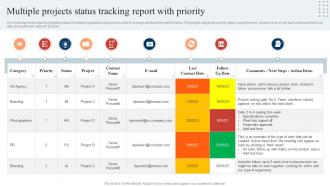
This slide represents report highlighting status of multiple organizational projects in order to manage and track their performance. It highlights categories, priority, status, project names, contact name, email, last contact and follow up date along with next steps for projects. Presenting our well structured Multiple Projects Status Tracking Report With Priority. The topics discussed in this slide are Email, Project, Branding. This is an instantly available PowerPoint presentation that can be edited conveniently. Download it right away and captivate your audience.

People who downloaded this PowerPoint presentation also viewed the following :

FAQs for Multiple Projects Status Tracking

You need scope definition, timeline with milestones, resource allocation, and a solid communication plan first. Risk management too - trust me, learned that one the hard way when a project went sideways! Clear roles matter so much because otherwise people just blame each other when things get messy. Budget breakdown should be detailed enough that stakeholders actually get where their money's going. Quality standards and success metrics are huge - you're basically flying blind without them. Honestly, perfectionism will kill your momentum though. Start with these basics and refine later.

Talk to everyone constantly, seriously. Set expectations super clearly upfront - what you're doing, when it's due, all that stuff. Then check in regularly so nobody gets lost. I bombed a project once because I figured we were all aligned (we definitely weren't). Write everything down so people can't pull the "I thought we said..." thing later. Changes will happen - when they do, spell out what it means. Want more features? Cool, but it'll take longer or cost more. Oh and give them dashboards or quick updates so they can see what you're actually working on. Most people have no clue what goes into this stuff.

Honestly, communication makes or breaks everything. I've watched so many projects completely implode because people just assumed everyone was on the same page. You'll have team members doing their own thing, stakeholders freaking out about delays they didn't see coming, and scope creep everywhere since nobody actually talked through the requirements properly. Weekly check-ins are your best friend here - and actually show up to them, don't just schedule and bail. Better to over-communicate than have everything fall apart later. Trust me on this one.

Okay so first figure out your critical path stuff - that's the non-negotiable timeline stuff. After that, I'd look at what gives you the biggest bang for your buck or kills the most risk. Honestly, I just draw up a quick impact vs effort chart whenever I'm stuck on this. High impact, low effort wins every time if you can swing it. But here's the thing - dependencies will mess with your perfect plan. Sometimes you gotta do the boring groundwork first because everything else builds on it. Oh and write down why you picked what you picked. You'll thank me later when someone questions your choices.

Honestly, start with a risk register - sounds boring but it'll save you later. List out what could go wrong, then score each risk by how likely it is and how bad the damage would be. Insurance and solid vendor contracts help transfer some risks off your plate. Always pad your timeline and budget with contingency buffers too. Oh, and create backup plans for your worst-case scenarios. The documentation part sucks but trust me on this one. Most PMs do this once at kickoff then forget about it. Big mistake - you need to revisit and update regularly as things change.

Dude, agile is honestly a game-changer. Instead of planning everything upfront (which never works anyway), you break stuff into 2-week chunks. Daily check-ins keep everyone on track, and those sprint reviews? Pure gold for catching problems before they become disasters. What I love most is getting actual working features delivered throughout the project - no more scary "big reveal" moments where everything's broken. The retrospectives help your team get better each time too. Start small with those 2-week sprints and you'll see the difference immediately. Way better than traditional project management.

Honestly? You're gonna deal with three main headaches. Scope creep is the worst - everyone keeps asking for "tiny" changes that aren't tiny at all. Document everything and make them submit actual change requests, trust me. Resource conflicts are another nightmare. Keep a RACI chart so people know their damn roles. Communication falls apart fast too, so do regular check-ins and use one central tool where everyone can see updates. Oh, and catch problems early instead of scrambling later. Way less stressful that way.

Dude, project management tools are total game changers. I use Asana religiously now - helps me track deadlines and catch problems before they blow up. Communication stays in one place instead of scattered across a million emails (which honestly used to drive me insane). Real-time updates mean you can actually see what's happening without bugging everyone constantly. The reporting features are solid too. My advice? Pick whatever fixes your biggest headache first - maybe task tracking or team chat. Don't try to implement everything at once or you'll overwhelm yourself.

Honestly, you need both the hard numbers and the fuzzy stuff. Budget, timeline, scope - yeah, track those obviously. But also look at whether people are actually happy with what you built. Team morale matters too because burnt-out teams deliver crap work. I always check defect rates since nobody wants to launch something broken. Here's the thing though - did your project actually solve the original problem? Like, really solve it? Pick maybe 3-4 metrics max and stick with them. Otherwise you'll spend more time measuring than actually doing the work.

Oh man, cultural stuff can absolutely tank your project if you're not paying attention. Like, Americans are super direct but other cultures hint around things - total recipe for confusion. Time's another weird one - I've learned the hard way that "ASAP" means completely different things depending on where people are from. Plus some teams expect you to defer to the boss while others want everyone's input. Honestly? Just research your team's backgrounds beforehand and set up communication rules early. Trust me, it's way better than scrambling to fix misunderstandings later when deadlines are breathing down your neck.

Honestly, check in with your team regularly and celebrate the small stuff - not just the big finale. People burn out when they can't see they're actually getting anywhere, you know? Mix up who does what so nobody gets stuck with soul-crushing tasks for weeks. Weekly pulse checks are clutch for catching problems early. Oh, and be real about roadblocks instead of pretending everything's fine. When someone hits a milestone, actually acknowledge it! I swear, so many managers skip this part. Stay flexible too - rigid plans kill morale fast.

So lessons learned are basically your "what worked, what didn't" notes for future projects. Document everything - the wins AND the total disasters. Like when everyone stopped talking to each other halfway through (happens more than you'd think). Use those insights to get better at spotting risks early and planning timelines that actually make sense. Here's the thing though - don't just dump it all in some report that'll gather digital dust. Make it easy for your team to find and search through later. Oh, and always check past project notes before starting something new. Saves you from repeating the same mistakes.

Get a shared repo going first - everyone needs access to the latest stuff. Honestly, naming conventions will save your sanity later (no more "final_FINAL_v47" nonsense). Assign document owners so things actually stay updated, and schedule check-ins. Templates are your friend for repetitive docs like status reports. Don't go crazy documenting every tiny thing though - stick to what people actually need for decisions and handoffs. Oh, and just start now even if you're mid-project. There's never gonna be a perfect time to get organized.

Oh man, you HAVE to do this early - seriously. I've watched projects completely blow up because people skipped talking to stakeholders upfront. Get those conversations going now, even just quick 15-minute chats over coffee. You'll figure out what "success" actually means to the people who call the shots, plus you can spot problems before they turn into disasters. The political cover alone is worth it when things get messy later (and they always do, let's be honest). Start mapping out who matters most and get those meetings on the calendar. Trust me on this one.

Ugh, scope creep is the worst - it's when your project keeps growing through tiny "can we just add this one thing?" requests. Honestly feels like death by a thousand paper cuts sometimes. You gotta document everything that's included upfront and actually stick to it. When people want extras, make them fill out proper change requests showing how it'll mess with your timeline and budget. I learned this the hard way on my last project. Just tell them "love that idea, let's save it for round two." Trust me, saying no upfront beats the alternative nightmare later.

Ratings and Reviews

90% of 100
Review Form
Write a review
Most Relevant Reviews
  1. 80%

    by Edward Nunez

    Impressive templates. Designing a presentation is fun now!
  2. 100%

    by O'Kelly Phillips

    Unique research projects to present in meeting.

2 Item(s)

per page: