


Open Innovation Process To Target Set 2 Innovation Product Development




Try Before you Buy Download Free Sample Product
 Impress Your
 Audience
 100%
100% Editable
 Save Hours
 of Time


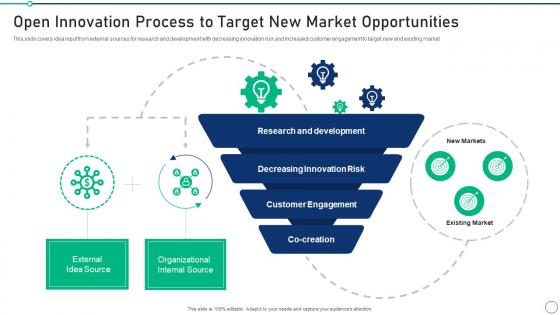
This slide covers idea input from external sources for research and development with decreasing innovation risk and increased customer engagement to target new and existing market
People who downloaded this PowerPoint presentation also viewed the following :
Open Innovation Process To Target Set 2 Innovation Product Development with all 6 slides:
Use our Open Innovation Process To Target Set 2 Innovation Product Development to effectively help you save your valuable time. They are readymade to fit into any presentation structure.





FAQs for Open Innovation Process To Target Set 2
Open innovation principles include collaborative partnerships, external knowledge integration, shared intellectual property, distributed R&D processes, and ecosystem-based development approaches. These principles fundamentally differ from traditional closed models by leveraging external expertise, accelerating development timelines, and reducing costs, with companies like Procter & Gamble and IBM finding that open frameworks deliver faster market entry and enhanced competitive advantage.
Organizations can effectively leverage crowdsourcing by creating structured platforms for idea submission, establishing clear challenge parameters, and implementing robust evaluation frameworks that reward meaningful contributions. Through targeted campaigns, companies like Procter & Gamble and NASA have successfully accessed diverse global talent pools, accelerated product development cycles, and reduced R&D costs, while building engaged innovation communities that deliver competitive advantages.
Intellectual property rights in open innovation present both protective and collaborative opportunities, balancing ownership with shared knowledge through strategic licensing, patent pools, and innovation commons. While companies maintain core IP protection, they increasingly leverage open licensing models and cross-licensing agreements to accelerate development cycles, reduce R&D costs, and access broader innovation ecosystems, ultimately delivering competitive advantage through strategic IP management.
Companies can measure open innovation success through key performance indicators including idea generation rates, implementation timelines, revenue from collaborative projects, patent applications, and partnership quality metrics. Many organizations track both quantitative outcomes like cost reductions and faster time-to-market, alongside qualitative measures such as enhanced innovation culture and strategic relationships, ultimately delivering sustained competitive advantage and accelerated growth.
Open innovation challenges include intellectual property concerns, cultural resistance to external collaboration, difficulty identifying suitable partners, managing complex partnerships, and integrating external ideas effectively. Organizations address these by establishing clear IP frameworks, fostering collaborative cultures, using innovation platforms for partner discovery, and creating dedicated innovation teams, with many companies finding that structured processes and strong leadership commitment ultimately deliver enhanced innovation capabilities and competitive advantage.
Open innovation accelerates product development by leveraging external partnerships, crowdsourcing ideas, collaborative research platforms, and shared R&D resources, reducing internal development time and costs. Through strategic alliances with startups, universities, and industry partners, companies streamline prototype testing, access specialized expertise, and bring products to market significantly faster, ultimately delivering competitive advantage in rapidly evolving industries.
Open innovation platforms include InnoCentive, NineSigma, Crowdspring, Quirky, and Yet2.com, along with collaborative tools like Slack, Microsoft Teams, and specialized R&D management software. These technologies streamline innovation processes by connecting organizations with external inventors, researchers, and problem-solvers globally, while facilitating seamless communication and project management, ultimately delivering faster product development cycles and enhanced competitive advantage.
Startups benefit through access to established distribution networks, funding resources, regulatory expertise, market credibility, and advanced infrastructure that accelerate growth. Through strategic partnerships, emerging companies leverage corporate mentorship, customer bases, and operational scale while maintaining innovation agility, with many finding that these collaborations deliver faster market entry and sustainable competitive positioning.
Cultural differences can significantly impact global open innovation by affecting communication styles, decision-making processes, intellectual property perceptions, and collaboration approaches across diverse teams. While these differences present coordination challenges, they also enhance creativity and problem-solving capabilities, with many multinational organizations finding that culturally diverse innovation networks ultimately deliver more comprehensive solutions and broader market insights.
Strategic partnerships with universities, startups, suppliers, customers, and research institutions prove most effective for open innovation success. These collaborations enhance R&D capabilities, accelerate time-to-market, and provide access to specialized expertise, with many organizations finding that diverse partnership portfolios deliver breakthrough innovations and sustained competitive advantage across industries.
Data privacy and security concerns significantly impact trust in open innovation by creating hesitation around sharing sensitive information, establishing clear data governance frameworks, and requiring robust cybersecurity protocols. While these challenges present initial barriers, organizations increasingly find that transparent data handling agreements, secure collaboration platforms, and defined intellectual property protections ultimately strengthen partnerships and deliver competitive advantages through enhanced innovation capabilities.
Successful open innovation case studies include Procter & Gamble's Connect + Develop program, LEGO's crowdsourced product development, IBM's collaboration ecosystems, Starbucks' customer-driven menu innovations, and pharmaceutical companies' research partnerships. These approaches streamline product development, enhance market responsiveness, and accelerate time-to-market, with many organizations finding that external collaboration delivers breakthrough solutions while reducing internal R&D costs and risks.
Organizations align open innovation with business strategy by establishing clear innovation objectives that directly support core business goals, creating dedicated governance structures to evaluate external partnerships, and implementing systematic processes for identifying strategic opportunities. Through targeted collaboration platforms and strategic partnerships, companies streamline resource allocation while maintaining focus on their competitive advantages, ultimately delivering faster market responses and enhanced operational efficiency across their innovation portfolios.
Customer feedback serves as a critical catalyst in open innovation processes by identifying market gaps, validating concepts, and guiding product development priorities through direct user insights and pain points. This strategic input enables organizations to align their collaborative innovation efforts with real market demands, while external partners and internal teams can leverage customer data to accelerate development cycles, reduce risks, and ultimately deliver solutions that resonate with target audiences.
Open innovation accelerates sustainability by enabling cross-sector collaboration, shared research resources, and collective problem-solving across industries like renewable energy, waste management, and green technology development. Through strategic partnerships between corporations, startups, and research institutions, organizations streamline environmental solutions, reduce development costs, and scale sustainable practices faster, ultimately delivering competitive advantage while addressing pressing climate challenges.
-
Keep doing the good work guys. Surpass the needs and expectations always!!
-
I came across many PowerPoint presentations with excellent creatives and I believe they would be beneficial to my work.