Potential Customer Retention Dashboard With Key Performance Indicators

Rating:
90%
Potential Customer Retention Dashboard With Key Performance Indicators
Slide 1 of 7
Favourites Favourites

Try Before you Buy Download Free Sample Product

Audience Impress Your
Audience
Editable 100%
Editable
Time Save Hours
of Time
The Biggest Sale is ending soon in
0
0
:
0
0
:
0
0
Rating:
90%
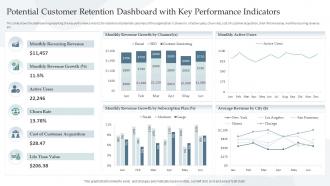
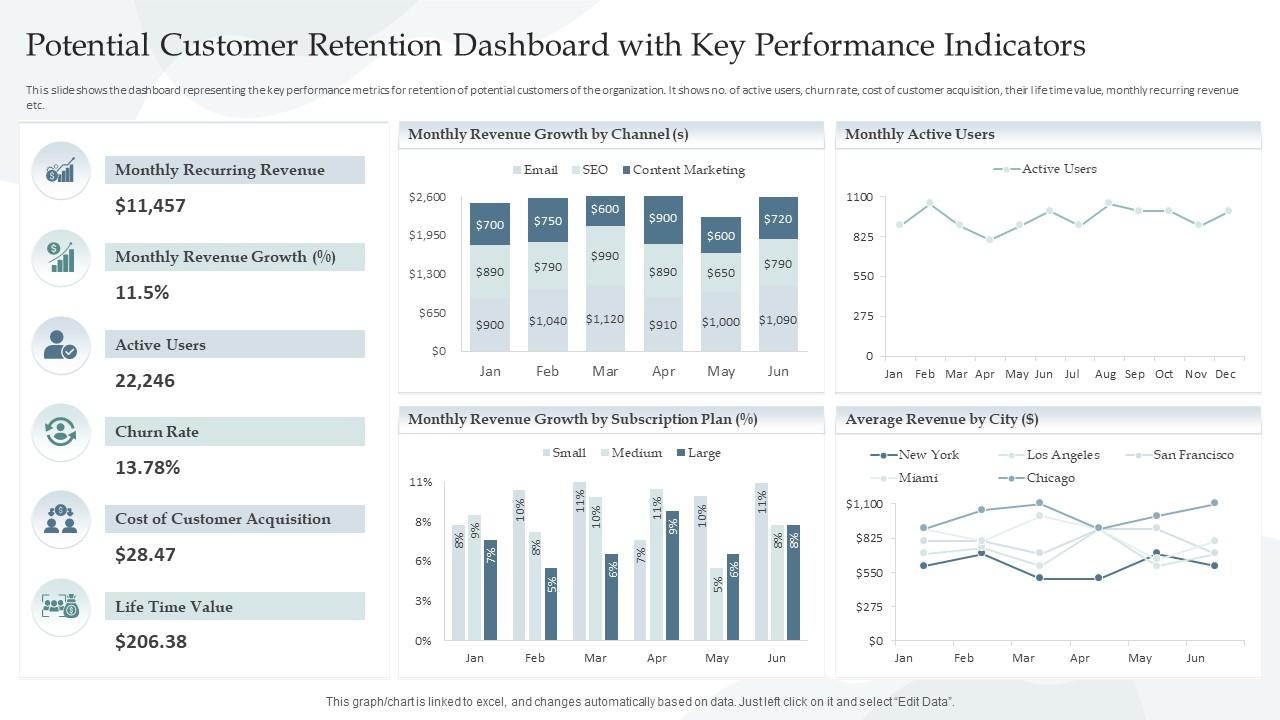
This slide shows the dashboard representing the key performance metrics for retention of potential customers of the organization. It shows no. of active users, churn rate, cost of customer acquisition, their life time value, monthly recurring revenue etc. Introducing our Potential Customer Retention Dashboard With Key Performance Indicators set of slides. The topics discussed in these slides are Monthly Recurring Revenue, Customer Acquisition, Monthly Revenue Growth. This is an immediately available PowerPoint presentation that can be conveniently customized. Download it and convince your audience.
People who downloaded this PowerPoint presentation also viewed the following :

FAQs for Potential Customer Retention Dashboard With

Effective customer retention strategies include personalized communication, omnichannel experiences, loyalty programs, proactive customer support, and data-driven insights. These approaches enhance engagement by delivering tailored content, seamless interactions across platforms, and anticipatory service, with many retail and financial services organizations finding that strategic personalization and responsive support ultimately reduce churn while increasing customer lifetime value.

Personalized communication enhances customer loyalty by delivering targeted content, customized offers, relevant product recommendations, and timely engagement based on individual preferences and behaviors. Through data analytics and CRM systems, businesses across retail, hospitality, and financial services create meaningful connections, reduce churn rates, and increase lifetime value, ultimately driving sustainable growth and competitive advantage.

Customer feedback serves as the foundation for retention strategies by identifying pain points, measuring satisfaction levels, and revealing improvement opportunities that directly impact loyalty. Through surveys, social media monitoring, focus groups, and direct communication channels, businesses can systematically gather insights that enable them to address concerns proactively, enhance service delivery, and ultimately reduce churn while strengthening customer relationships.

Businesses can leverage data analytics to identify at-risk customers by monitoring behavioral patterns, transaction frequency, engagement metrics, support ticket volumes, and satisfaction scores. Through predictive modeling and machine learning algorithms, companies in retail, banking, and telecommunications can detect declining usage patterns, increased complaints, and reduced purchase frequency, ultimately enabling proactive retention strategies and personalized interventions.

Loyalty programs significantly enhance customer retention by incentivizing repeat purchases, fostering emotional connections, and providing valuable customer data for personalization. These programs can be optimized through tiered rewards, personalized offers, seamless digital integration, and regular performance analysis, with many retailers and hospitality companies finding that strategic program design ultimately delivers higher customer lifetime value and sustained competitive advantage.

Employee engagement significantly impacts customer retention by creating stronger service delivery, enhanced customer interactions, and improved problem resolution capabilities. Engaged employees demonstrate greater commitment to customer satisfaction, deliver more personalized experiences, and build lasting relationships that reduce churn, with many organizations finding that highly engaged teams achieve retention rates up to 12% higher than their competitors.

Customer acquisition strategies focus on attracting new prospects through marketing campaigns, lead generation, advertising, and brand awareness initiatives to expand market reach. Customer retention strategies emphasize nurturing existing relationships through personalized experiences, loyalty programs, exceptional service, and ongoing engagement, with many organizations finding that retention delivers significantly higher ROI and long-term profitability than acquisition efforts.

Companies measure customer retention success through key metrics including customer retention rate, churn rate, customer lifetime value, repeat purchase rates, and Net Promoter Score. These measurements enable organizations to track loyalty trends, identify at-risk segments, and quantify revenue impact, with many businesses finding that combining multiple metrics delivers comprehensive insights into retention program effectiveness and long-term customer relationships.

Companies commonly make mistakes like providing inconsistent customer service, failing to personalize experiences, ignoring customer feedback, offering poor onboarding processes, and lacking proactive communication strategies. These oversights significantly undermine customer loyalty by creating friction points, missed expectations, and disconnected experiences, with many organizations finding that addressing these fundamental gaps through systematic improvements ultimately delivers higher retention rates and increased customer lifetime value.

A seamless customer experience contributes to higher retention rates by eliminating friction points, reducing customer effort, and consistently meeting expectations across all touchpoints. Through streamlined processes and intuitive interfaces, businesses enhance satisfaction, minimize frustration, and build trust, with many organizations finding that smooth experiences create emotional loyalty, ultimately delivering competitive advantage and increased lifetime customer value.

Social media influences customer loyalty and retention by enabling direct engagement, personalized customer service, community building, brand storytelling, and real-time feedback management. Through strategic social media presence, companies like Starbucks and Nike create emotional connections, resolve issues quickly, and foster brand communities, ultimately delivering enhanced customer experiences and stronger retention rates in an increasingly digital marketplace.

Customer segmentation enables businesses to tailor retention strategies by analyzing purchasing behaviors, engagement patterns, demographic data, and lifecycle stages to create targeted approaches. Through personalized communication, customized offers, and specific service levels, companies in retail, financial services, and telecommunications deliver more relevant experiences, reduce churn rates, and ultimately strengthen customer loyalty while maximizing retention investment returns.

Best practices for re-engaging lapsed customers include personalized win-back campaigns, exclusive offers, feedback surveys, multi-channel outreach, and targeted content based on purchase history. These strategies work by addressing specific reasons for departure, demonstrating renewed value, and rebuilding trust, with many retail and subscription businesses finding that segmented approaches ultimately deliver higher reactivation rates and improved lifetime value.

Customer support plays a pivotal role in client retention by resolving issues quickly, building trust through personalized interactions, and creating positive experiences that encourage loyalty. Effective support teams enable businesses to reduce churn rates, increase customer lifetime value, and generate referrals, with many organizations finding that responsive support directly correlates with improved retention metrics.

Businesses should monitor digital engagement patterns, purchase frequency changes, support interaction trends, feedback sentiment shifts, and cross-channel behavior consistency. These behavioral indicators enable organizations to identify at-risk customers, personalize retention approaches, and optimize touchpoint experiences, with many companies finding that proactive monitoring delivers significantly higher retention rates and customer lifetime value.

Ratings and Reviews

90% of 100
Review Form
Write a review
Most Relevant Reviews
  1. 100%

    by Dion Dunn

    A big thanks to SlideTeam! An incredible and diverse library of templates helped me with my business project presentation.
  2. 80%

    by Dewey Stephens

    Thank you for showering me with discounts every time I was reluctant to make the purchase. 

2 Item(s)

per page: