


Diapositives de présentation PowerPoint sur les achats






Try Before you Buy Download Free Sample Product
 Impress Your
 Audience
 100%
100% Editable
 Save Hours
 of Time


Utilisez des diapositives de présentation PowerPoint sur les achats prêtes à l'emploi pour exécuter le processus d'acquisition de biens et de services auprès d'une source externe via un appel d'offres. Répondre aux demandes des clients et des parties prenantes, analyser les processus, optimiser les stratégies et finalement réduire les coûts d'approvisionnement. Intégrez des modèles PowerPoint PPT d'approvisionnement conçus par des professionnels pour transformer votre entreprise et vous apporter des avantages. Ce jeu comprend des modèles tels que la structure de la stratégie d'approvisionnement, les étapes d'approvisionnement, le processus de workflow d'approvisionnement, la stratégie d'approvisionnement, l'approche d'approvisionnement, la formulation d'une stratégie d'approvisionnement, la création d'une stratégie d'approvisionnement, etc. Utilisez cette présentation pour la planification des achats, l'analyse de la valeur, le financement, la négociation des prix, le contrôle des stocks et des magasins, la détermination des normes, etc. Ces modèles PowerPoint d'approvisionnement sont entièrement personnalisables. Modifiez la couleur, le texte, l'icône et la taille de la police selon vos besoins. Ajoutez ou supprimez du contenu, si nécessaire. Saisissez la présentation complète PowerPoint d'approvisionnement prête à l'emploi pour suivre étape par étape le processus d'acquisition de biens et de services auprès de fournisseurs externes. Une bonne expression est garantie avec nos diapositives de présentation Powerpoint sur les achats. La communication devient explicitement claire.
People who downloaded this PowerPoint presentation also viewed the following :
Contenu de cette présentation Powerpoint
Diapositive 1 : Cette diapositive présente les achats. Indiquez le nom de votre entreprise et commencez.
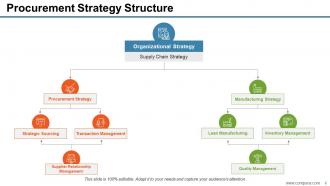
Diapositive 2 : Cette diapositive présente la structure de la stratégie d'approvisionnement sous une forme hiérarchique décrivant la stratégie organisationnelle, la stratégie d'approvisionnement, la stratégie de fabrication, la gestion des relations avec les fournisseurs, la gestion des transactions, l'approvisionnement stratégique, la gestion de la qualité, la production au plus juste, la gestion des stocks.
Diapositive 3 : Cette diapositive montre les étapes d'approvisionnement décrivant : Compréhension de vos objectifs, analyse des données, démarrage du processus de tarification, gestion du processus de tarification, exécution, maintien du service.
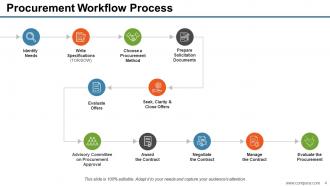
Diapositive 4 : Cette diapositive représente le processus d'approvisionnement décrivant : identifier les besoins, rédiger les spécifications (TOR/SOW), choisir une méthode d'approvisionnement, préparer les documents de sollicitation, évaluer les offres, rechercher, clarifier et conclure les offres, comité consultatif sur l'approbation des achats, attribuer le contrat , Négocier le contrat, gérer le contrat, évaluer l'approvisionnement.
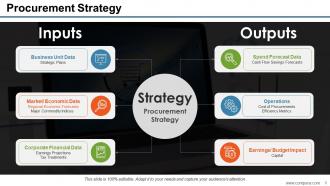
Diapositive 5 : Cette diapositive présente la stratégie d'approvisionnement décrivant les intrants et les extrants. Les sous-titres d'entrée incluent les données de l'unité commerciale, les données de marché/économiques et les données financières de l'entreprise, tandis que les sous-titres de sortie incluent les données de prévision des dépenses, les opérations et l'impact sur les bénéfices/budget.
Diapositive 6 : Cette diapositive affiche l'approche de l'approvisionnement décrivant la stratégie d'approvisionnement, les spécifications, la soumission, l'évaluation et les négociations de contrat avec des images et des zones de texte relatives.
Diapositive 7 : Cette diapositive présente la formulation d'une stratégie d'approvisionnement, qui montre également les données commerciales, les données économiques, les données financières, les opérations, les prévisions de dépenses et l'impact sur les revenus.
Diapositive 8 : Cette diapositive représente la création d'une stratégie d'approvisionnement avec : définition des orientations, processus de gestion, processus de travail, stratégie, organisation, culture, gestion des performances, technologie, approvisionnement stratégique, logistique, développement des fournisseurs, approvisionnement transactionnel.
Diapositive 9 : Cette diapositive montre le cadre de stratégie d'approvisionnement des services décrivant : quoi rechercher, comment sourcer, où sourcer et comment gérer l'approvisionnement global avec des zones de texte supplémentaires.
Diapositive 10 : Cette diapositive affiche les icônes d'approvisionnement.
Diapositive 11 : Cette diapositive s'intitule Diapositives supplémentaires pour avancer. Vous pouvez modifier le contenu selon vos besoins.
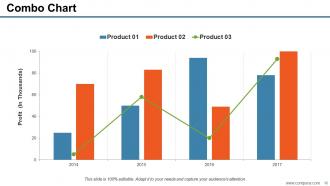
Diapositive 12 : Il s'agit d'une diapositive de graphique combiné avec une comparaison de trois produits.
Diapositive 13 : Ceci est notre diapositive de mission avec des images et des zones de texte pour aller avec.
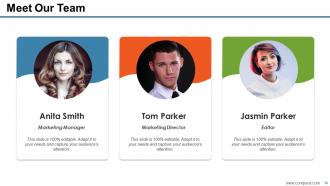
Diapositive 14 : Ceci est la diapositive de notre équipe avec les noms et la désignation.
Diapositive 15 : Il s'agit d'une diapositive Bulb ou Idea pour énoncer une nouvelle idée ou mettre en évidence des spécifications/informations, etc.
Diapositive 16 : Ceci est une diapositive de remerciement avec le numéro de rue, la ville, l'état, le numéro de contact, l'adresse e-mail.
Diapositives de présentation Powerpoint sur les achats avec les 16 diapositives :
Nos diapositives de présentation Powerpoint sur les achats sont conçues pour la vitesse. Accélérez la compréhension de vos pensées.
-
Procurement
-
Procurement Strategy Structure
-

Procurement Steps
-
Procurement Workflow Process
-
Procurement Strategy
-
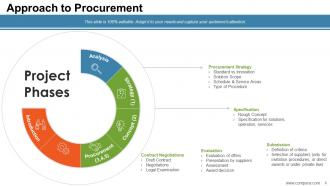
Approach to Procurement
-
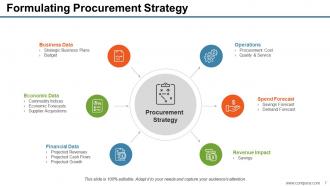
Formulating Procurement Strategy
-

Creating Procurement Strategy
-
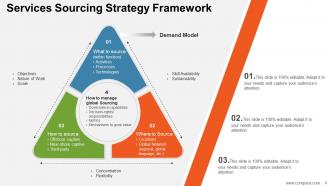
Services Sourcing Strategy Framework
-
Procurement icon slides
-
Additional Slides
-
Combo Chart
-

Our Mission
-
Meet Our Team
-
Idea or Bulb
-
Thank You
FAQs for Procurement
So here's what's worked for me - start with a solid needs assessment, then research vendors and pick one. After that comes contract negotiation and ongoing management. Oh, and don't skip the procurement planning phase upfront! I know it seems boring but trust me on this one. Set up evaluation checkpoints along the way so you can pivot if things go sideways. The real trick is assigning clear owners and deadlines for each stage. Otherwise you'll be stuck in procurement hell for months. Map out these stages first, then get someone to own each piece.
Look, tech can totally transform your procurement game. Manual stuff like purchase orders? Gone - automation handles that. E-procurement platforms show you exactly where money's going and track how suppliers are actually performing. The AI demand prediction thing is honestly pretty wild - it'll tell you what to order and when. Your team can browse digital catalogs way faster than calling around for quotes. Biggest payoff though? Way fewer mistakes, plus your people can focus on building actual relationships with suppliers instead of drowning in paperwork. Trust me, it's worth the switch.
Dude, SRM is basically what separates good procurement from just buying stuff. You build real relationships with suppliers and they'll hook you up with better deals, jump you to the front of the line when shit hits the fan, plus they'll pitch new ideas to you first. I've seen suppliers work weekends just because they actually liked working with someone. It's way more than just transactions - think of it like business friendships where everyone wins. Honestly, just start with your top 3 suppliers and set up regular coffee chats or calls this month.
Oh man, this is such a classic trade-off situation! Centralized procurement gets you way better deals because you're buying everything in bulk - the savings can be pretty nuts. But your teams will probably hate you because everything takes forever to approve. Decentralized is the opposite - departments can move fast and pick suppliers that actually make sense for what they're doing. Though honestly, you'll definitely spend more money overall. Really comes down to whether you need to cut costs right now or if speed matters more for hitting your deadlines.
Check their finances first - you don't want suppliers going bankrupt on you. Look at their track record with other clients and make sure their cybersecurity isn't garbage, especially if they're touching your data. Natural disasters and political drama can screw everything up, so think about location too. Site visits are clutch when you can swing them - seeing the actual operation tells you way more than paperwork. Oh, and don't just do this once during setup. Their situation can change pretty quickly, so I'd review everything quarterly to stay on top of things.
Procurement's getting turned upside down by all this sustainability stuff. Companies are picking suppliers based on environmental practices now, even when they're pricier upfront. Regulations and investors are breathing down everyone's necks about it too. The weird thing is some sustainable options actually save money over time - who knew? You've got to weigh carbon footprint and ethical sourcing alongside your usual cost and quality checks. It's become straight-up risk management at this point. I'd start by checking what your current suppliers are actually doing sustainability-wise. That'll show you the biggest gaps pretty quick.
Do your research first - check market rates and dig into their financials before you walk in there. Don't just squeeze them for every penny though, because pissed off suppliers will definitely find creative ways to screw you over later (trust me on this one). Bundle everything together when you negotiate - price, payment terms, delivery schedules, quality stuff. Way better than going item by item. Oh, and write down what you agree on as you go! Get them to confirm the big points before moving on. You don't want those awkward "wait, I thought we said..." moments afterward.
Honestly, analytics beats guessing every time when you're buying stuff for work. Look at your spending patterns first - you'll spot which suppliers actually deliver versus the smooth talkers. Demand forecasting helps you avoid those cringe "sorry, we're out" moments with your team. The cool part? You catch savings opportunities hiding in plain sight. Start simple though - clean up your spend data and hunt for obvious patterns before getting fancy with tools. I mean, why make it harder than it needs to be? Your gut's good, but data's better.
Honestly, locking in longer contracts helps a ton - just make sure you've got some wiggle room built in. Multiple suppliers is clutch too, learned that the hard way during all the supply chain chaos. When prices drop on key materials, stock up a bit (storage costs permitting, obviously). You can also try price indexing so suppliers share some of the risk instead of you eating it all. Oh, and start watching market trends now rather than scrambling later. Diversification really is your friend here - saved my ass more times than I can count.
Honestly, procurement is way more strategic than people think. Your procurement team can make or break your bottom line - better deals and reliable vendors = better margins and smoother operations. It's not just about finding cheap stuff anymore either. They're the ones who'll spot suppliers with cool new tech that could give you an edge. Plus they help spread risk around by not putting all your eggs in one supplier basket (learned that the hard way during COVID supply issues). Get them involved early when you're planning big moves - they know what's actually doable and can optimize your whole sourcing game.
Oh man, where do I start? Budget constraints are brutal. Then you've got compliance stuff that's basically a maze - I swear they make it complicated on purpose. Approval processes take forever too. Limited vendor pools mean fewer options, and don't get me started on the political drama. Everything gets picked apart because it's taxpayer money, so everyone's scared to mess up. The transparency requirements are actually good in theory but make everything harder. Pro tip: get tight with your legal team from day one and document literally everything you do.
Build compliance right into your procurement from the start - don't try to fix it later. First, figure out which regulations hit your industry: anti-corruption stuff, data protection, environmental rules, labor laws. Total maze initially, but it clicks once you map it out. Create approval workflows with compliance checks built in. Train your team on the basics and document everything religiously. Your legal team will be lifesavers here - they'll catch problems before they blow up. Oh, and seriously partner with compliance folks early. They're not the fun police, they're keeping you out of trouble.
So AI and machine learning are totally changing the game right now. They're handling vendor selection automatically, predicting when your supply chain might blow up, and crunching spend data way faster than doing it by hand. Real-time dashboards give you instant visibility into everything. There's also blockchain for transparency, but honestly that's still pretty niche. RPA takes care of boring PO stuff. Smart teams use predictive analytics for better demand forecasting too. Start with automating your most repetitive tasks - that's where you'll actually see results fast.
Oh man, procurement across different cultures is wild. What works perfectly in Germany will bomb spectacularly in Japan - trust me on that one. You've got to completely flip your approach depending where you are. Some places want direct communication, others think that's super rude. Relationship timelines are totally different too. In some countries you're expected to do months of relationship-building before talking business (which honestly can be exhausting but whatever). Then there's all the hierarchy stuff, gift customs, decision-making processes. My advice? Find local partners who actually know the culture inside out. They'll save you from so many awkward moments.
If you're looking at the big names, SAP Ariba and Coupa are solid choices - they handle everything from sourcing through payments. Oracle's good too but honestly feels like overkill unless you're huge. NetSuite works if you're already using their stuff. Smaller budget? Precoro and ProcurePort won't destroy your wallet. Really depends on your company size though. I'd grab demos from maybe 2-3 platforms and see what your team doesn't hate using every day - that's half the battle right there.
No Reviews