


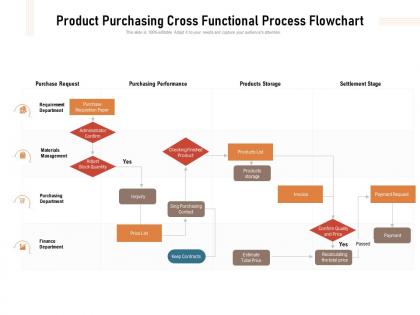
Product purchasing cross functional process flowchart




Try Before you Buy Download Free Sample Product
 Impress Your
 Audience
 100%
100% Editable
 Save Hours
 of Time


Our Product Purchasing Cross Functional Process Flowchart are topically designed to provide an attractive backdrop to any subject. Use them to look like a presentation pro.
People who downloaded this PowerPoint presentation also viewed the following :
Product purchasing cross functional process flowchart with all 2 slides:
Use our Product Purchasing Cross Functional Process Flowchart to effectively help you save your valuable time. They are readymade to fit into any presentation structure.
FAQs for Product purchasing cross
So basically there's five main stages: recognizing you need something, researching options, comparing everything, buying it, then deciding if you're happy after. People spend forever in that research phase though - like way longer than you'd think. They'll also jump around between stages instead of going in order, which is kinda annoying to track. Oh and that post-purchase thing? Super critical. That's where you either get a loyal customer or they never come back. I'd put most of your energy into making the research and comparison stuff really easy for them. That's where you'll win or lose most deals.
So basically, consumer preferences control everything about how people buy stuff. They decide what products you'll even look at and which features actually matter to you. Past experiences and your values totally shape this - like if you care about the environment, you're gonna check sustainability first, not just price. It also affects where you get info from, whether that's reviews or just sticking with brands you trust. Payment methods too, honestly. The whole point is that if you understand what your customers actually want, you can make buying from you way easier and more natural for them.
Honestly, market research is like getting inside your customers' brains while they're deciding whether to buy from you. You'll see exactly where they hesitate, what makes them finally hit "purchase," and which parts of your process actually matter. Without it? You're basically throwing darts blindfolded. The data reveals real patterns - how people go from just hearing about you to seriously considering you to actually buying. I'd start by sketching out what you think your customer journey looks like right now. Then do some surveys or quick interviews to figure out what you're missing. Trust me, the insights always surprise you.
Honestly, just dig into your existing customer data first - see what patterns jump out. Survey your current buyers directly because they'll straight up tell you why they picked you over everyone else. Your website analytics show what content actually works and where people bail out. Social media insights help too (even for B2B stuff, weirdly). Build detailed buyer personas from all this, then test everything with A/B campaigns. The trick is refining based on what people actually buy, not who you assume your customers are. Oh, and don't ignore the small details - sometimes they matter more than you'd think.
Dude, reviews are everything now. Like 93% of people check them before buying anything - I literally can't think of the last time I didn't scroll through at least a few. People trust random strangers more than fancy marketing copy, especially for expensive stuff or brands they've never heard of. Bad reviews? Sales tank. Good ones boost your conversion rates like crazy. Oh, and make sure your product pages show reviews front and center. Don't hide them! You want happy customers leaving feedback as easily as possible.
Honestly, visualization tools are game-changers for product presentations. They turn boring technical specs into stories people actually get. Templates save you tons of time too - no more staring at blank slides wondering where to start. Charts and mockups make complex stuff way easier to digest. Plus you won't ramble about features nobody cares about (guilty of this myself). Try a simple before/after template first - sounds basic but it works surprisingly well for showing value. Visual comparisons stick in people's heads way better than bullet points.
Honestly, guest checkout is huge - don't make people create accounts just to buy something. Shorten your forms and throw in autofill everywhere you can. Multiple payment options help too, especially Apple Pay since people love that one-click thing. Progress bars are weirdly effective because nobody likes wondering how many more steps they have left. Mobile optimization is obviously critical now that everyone's glued to their phones. I'd focus on tracking where people bail out of your funnel first though - fix the biggest leaks before tweaking smaller stuff.
Think of a sales funnel like this - it's just mapping how someone goes from never knowing you exist to actually buying your stuff. Top part is awareness (blog posts work great here), then interest kicks in where they're digging deeper. After that comes consideration - this is where product demos really shine, honestly. Purchase happens last, obviously. You want different content for each stage, and testimonials are clutch for closing deals. Oh, and definitely track where people bail out so you can patch up those weak spots. Makes way more sense once you've built one yourself.
Price is usually the biggest killer. People also get overwhelmed when there's too many choices - I literally spent 20 minutes yesterday picking between three identical phone cases lol. Trust is huge too, especially with brands they've never heard of. Confusing checkout processes will make people bounce immediately. Surprise shipping costs at the end? Instant cart abandonment. Stock issues are annoying but unavoidable sometimes. If you're building something, focus on clear pricing upfront and make the buying process dead simple. Reviews help a ton with the trust thing too.
Definitely set up direct shopping on Instagram or Facebook - people can buy stuff without bouncing around different sites. Reviews are everything now, so push for user-generated content and testimonials. Live shopping events are actually pretty cool (way better than old-school TV shopping). You're basically demoing products while answering questions in real time. The main thing? Don't make people click through a million pages. Every extra step loses potential customers. I'd start with whatever platform your audience uses most and test out shoppable posts there first. Once you nail that, expand to other platforms.
B2B buyers are way more complicated - you're dealing with committees, months-long decisions, and people obsessing over ROI and integration stuff. B2C? Totally different beast. People buy on emotion and impulse (I'm guilty of too many late-night Amazon purchases myself). B2B takes forever because everyone needs to weigh in and get approval. Meanwhile, B2C customers can checkout in seconds if you don't mess up their experience. So your B2B strategy needs patience and relationship stuff, while B2C is all about making that purchase super smooth and showing immediate value.
So basically, companies track what you buy and browse to show you stuff you'll actually want. Pretty smart, right? They can adjust prices based on what's popular and make checkout way smoother so you don't just abandon your cart halfway through. Plus they use all that data to predict what to stock - because honestly, there's nothing more annoying than wanting something and it being backordered forever. Real-time analytics help them create those creepy-but-convenient moments where they suggest exactly what you didn't know you needed.
Honestly, pricing is like being the bouncer at a club - you decide who gets in. Set it too high? You'll scare off budget shoppers. Go too low and people think your stuff is cheap garbage (psychology is wild). Your price tells customers what you think your product is worth, plus how you stack up against competition. Finding that sweet spot means figuring out what your audience will actually pay. I'd definitely test different prices and see what happens to your sales - that'll teach you way more than any theory.
Honestly, personalization just cuts through all the noise for your customers. Instead of scrolling through random stuff, they see products that actually match their vibe based on what they've bought before or browsed. You can suggest items that go together too - like showing boots when someone's buying jeans. The checkout process can even adapt to their preferences. People hate wasting time on irrelevant products, and personalized recs usually bump up order values since you're showing things they'll genuinely want. Even something basic like "other customers bought this" works surprisingly well for boosting sales.
Okay so basically you want three main touchpoints - order confirmation with tracking, delivery confirmation, then wait like a week before asking for feedback. Don't be that company that blows up their inbox though, nobody likes that. I'd throw in some helpful stuff like setup guides if it makes sense. Short sentences work better than long rambling ones. Make it super easy for them to contact you when something goes wrong (and it will). Oh, and actually follow through when people complain - that's where most businesses totally drop the ball.
No Reviews