

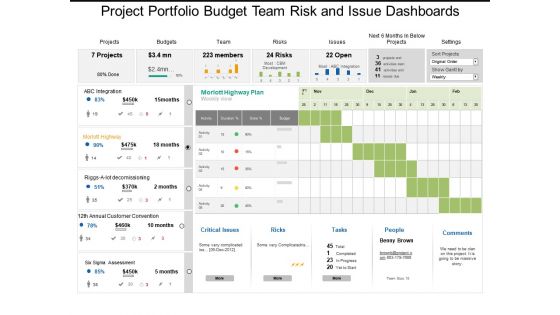
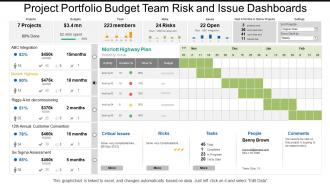
Project portfolio budget team risk and issue dashboards





Try Before you Buy Download Free Sample Product
 Impress Your
 Audience
 100%
100% Editable
 Save Hours
 of Time


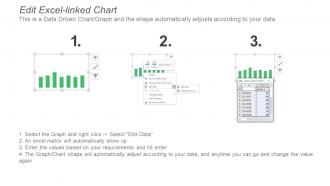
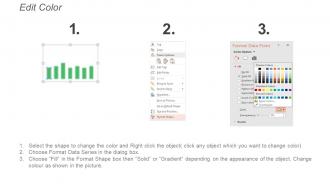
Share your business data in the professional way with our project portfolio budget team risk and issue dashboards PPT template. Our dedicated designing team has made this brilliant project portfolio budget dashboard PowerPoint visual possible. Representing the data can sometimes be problematic as you need to ensure that all the numbers are shown in the correct way. If the data is not showing in the right format, then you may not be able to make your team understand as where you are and what all needs to be done to achieve the target. Our project portfolio budget team risk and issue dashboards Presentation slide showcases the various projects your team is working upon and the budget and risks associated with those projects in the most efficient manner. This excel linked PPT presentation design can be part of your presentation. All you must do is just insert data and share it whenever required. Our Project Portfolio Budget Team Risk And Issue Dashboards create a fraternal feeling. Affection will fill the air.
People who downloaded this PowerPoint presentation also viewed the following :
Project portfolio budget team risk and issue dashboards with all 6 slides:
Why do you have to spend time looking for great ideas for your presentation when the pros are are there to ease the pain. No more time wasting and no more long nights when you use our Project Portfolio Budget Team Risk And Issue Dashboards.
FAQs for Project portfolio budget team risk
Honestly, start by mapping what you're working on against your actual business goals - anything that doesn't fit? Just axe it. You need clear ways to rank projects so you're not comparing random stuff. Make sure you can actually staff things properly (resource allocation is everything). Regular check-ins are clutch for tracking how things are going. Risk management across everything is non-negotiable. Oh, and having standard ways to evaluate projects makes life so much easier when deciding what gets the green light. Strong governance processes tie it all together, but that probably sounds boring even though it's super important.
Think of project portfolio management as your reality check system. You know how companies always want to chase every cool new idea? PPM forces you to step back and ask "does this actually help us hit our main goals?" Short answer: kill projects that don't align. Focus resources on what matters. The trick is setting up clear criteria beforehand - trust me, you'll need them when everyone's fighting over budget and people. It's basically about being ruthless with priorities so you're not doing ten mediocre things instead of three game-changing ones.
Honestly, most companies mess this up in three main ways. First, way too many projects fighting for the same people and money - total chaos. Leadership loves changing direction without telling anyone, so teams end up working on stuff that doesn't even matter anymore. Plus project managers barely talk to each other, which is insane when you think about it. Nobody has a clue what's happening across different projects. My advice? Get some kind of central tracking system going and make portfolio reviews a regular thing. It'll save you so much headache down the road.
Track your ROI and delivery timelines first - those are non-negotiables. But honestly, most companies get way too focused on individual project wins and completely miss the portfolio view. Are your people working on stuff that actually moves the needle strategically? Resource utilization matters more than you'd think. Risk balance across projects is key too, plus you gotta be ruthless about killing the duds when they're clearly not working. Oh, and alignment with strategic goals obviously. Start with maybe 3-4 metrics that your leadership actually cares about and stick with those consistently.
Honestly, tech just handles all the boring stuff that used to kill your time in PPM. Real-time dashboards show you portfolio health instantly. No more drowning in spreadsheets trying to track dependencies - the data visualization tools are seriously amazing. Resource allocation happens automatically across projects, and you actually get reports that make sense. AI analytics can spot risks coming and suggest fixes before things blow up. Oh, and integrated reporting is clutch. Just don't go crazy picking tools - find one solid core platform that plays nice with what you've already got, then build out from there. Way less headache.
Look, risk assessment basically shows you what could blow up in each project so you can actually compare them properly. Not just the shiny potential returns everyone gets excited about. You'll spot if you're dumping everything into crazy risky stuff - though honestly, sometimes those wild bets pay off big. The trick is knowing upfront what you're getting into so you can make smart choices about where to spend your resources. I'd start by rating your current projects on how bad things could get and how likely that is. Then shuffle your portfolio around based on those numbers.
Honestly, I'd start with a scoring system - just weight stuff like ROI, strategic fit, and risk, then score each project. Bubble charts are cool if your team's visual (plots value vs effort). Financial methods work too if you've got decent numbers - NPV, payback period, whatever. Strategic alignment matrices are clutch though - shows which projects actually support company goals. That's usually my first move. Pick whatever clicks with how your team makes decisions normally. Don't overthink it at first, you can always adjust the approach later.
Look, stakeholder engagement can totally make or break your portfolio. These people approve budgets and changes - they literally decide if you succeed. Get them involved early and you'll see way better alignment on what matters most. Approvals come faster too. Honestly, I've seen too many projects that were "successful" but didn't actually solve business problems because nobody talked to the right people upfront. Without good engagement, you get competing priorities and scope creep everywhere. Map out your key players first, then set up regular check-ins. Trust me, it's worth the effort.
Honestly, just match your reports to who's reading them. Executives want those red/green dashboards with the big picture stuff. Project managers? They need all the nitty-gritty details. Charts and visuals are your best friend here - I learned this the hard way after sending text-heavy reports that nobody opened. Keep the format consistent so people know what they're getting. Here's the thing though: focus on what's broken or risky, not the stuff that's humming along fine. Always end with what needs to happen next. Oh, and actually ask people if your reports are useful. You'd be surprised how often they're not getting what they need but won't say anything.
Get a bird's-eye view of who's available and what skills you've got across all projects first. Portfolio management tools are your friend here - they'll catch conflicts before things blow up. I'd go with resource pools over dedicated teams every time, way more flexible. Prioritize projects by what actually matters to the business, then assign your A-players there. Monthly planning sessions where PMs can hash out trades work great. You'll want clear rules for when managers fight over the same person (because they will). Regular portfolio check-ins let you move people around when priorities shift.
So basically, you gotta review your portfolio stuff every quarter - don't just set it and forget it like some people do with their 401k (learned that lesson the hard way). Check which projects are actually working and kill the duds. Move your budget and people around based on what's happening in the market or if your company's priorities shift. Most teams that know what they're doing use rolling forecasts instead of planning everything out for the whole year. Oh, and set up some triggers beforehand - like if a competitor does something major or your budget gets slashed. That way you're not scrambling.
Honestly, agile PPM is a game changer for flexibility. You can actually pivot when priorities shift instead of being stuck with some massive plan from six months ago. Regular feedback keeps everyone in the loop, and those shorter cycles mean you're not waiting forever to see if something's working. Breaking big scary projects into smaller pieces? Total sanity saver. You'll constantly reassess what deserves funding and what needs the axe. Oh, and start with sprint reviews for your executives - they love seeing real progress every few weeks instead of just PowerPoints.
Dude, you've gotta try visual tools instead of drowning in spreadsheet hell. Dashboards and Gantt charts make spotting resource conflicts so much easier - like, why did I torture myself with endless rows of data for so long? Templates are clutch too because your whole team presents info the same way, which actually matters when you're comparing projects. Stakeholders love the visual stuff since they don't have to dig through boring reports. Oh, and heat maps are weirdly satisfying to look at. Start simple with a basic dashboard template, then tweak it based on what your team actually cares about day-to-day.
You'll need solid strategic thinking to connect projects with business objectives. Analytical skills are crucial for prioritizing competing initiatives. Communication is massive - constantly explaining trade-offs to execs and teams. Financial knowledge helps with budgets and ROI stuff. Stakeholder management is honestly the worst part because everyone thinks their project matters most. Project management basics and risk assessment are pretty important too. Oh, and influence skills since you're managing people without being their actual boss - that's weird at first. If you can shadow a senior portfolio manager, do it. It's definitely one of those learn-by-watching roles.
First thing - pull together all your project data. Financials, timelines, what actually worked vs what bombed. Map it against your original goals and be brutally honest about where you screwed up the estimates. Talk to your PMs and stakeholders too. They'll tell you what was a disaster (and honestly, sometimes the successful projects teach you more than the failures). The patterns become pretty obvious once you lay everything out. Then just create some basic scoring system for future projects so you don't make the same dumb mistakes again. I learned this the hard way last year.
No Reviews