


Retail Store Team Training Plan For Enhanced Competency Retail Playbook




Try Before you Buy Download Free Sample Product
 Impress Your
 Audience
 100%
100% Editable
 Save Hours
 of Time


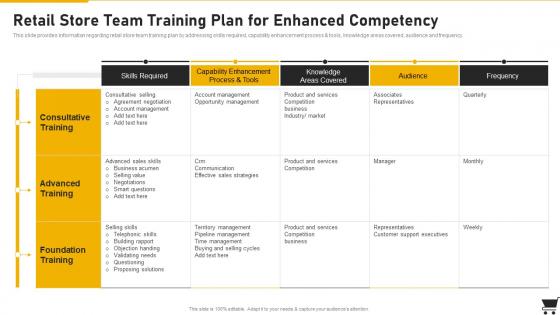
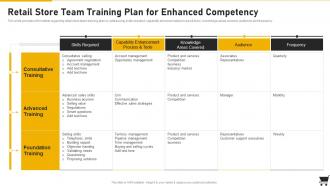
This slide provides information regarding retail store team training plan by addressing skills required, capability enhancement process and tools, knowledge areas covered, audience and frequency.
People who downloaded this PowerPoint presentation also viewed the following :
Retail Store Team Training Plan For Enhanced Competency Retail Playbook with all 6 slides:
Use our Retail Store Team Training Plan For Enhanced Competency Retail Playbook to effectively help you save your valuable time. They are readymade to fit into any presentation structure.





FAQs for Retail Store Team Training Plan For Enhanced
Start with product knowledge - your team needs to actually know what they're selling, obviously. Then focus on customer service skills since that's honestly what separates good stores from terrible ones. Make sure everyone's comfortable with your POS system too. Oh, and don't skip the culture/policy stuff even though it feels like busy work. The real trick is keeping training ongoing instead of just dumping everything on new hires day one. Mix it up - videos, role-playing, having newbies shadow your best people. I'd audit your current team's weak spots first, then build around fixing those specific gaps.
Dude, mobile learning apps are honestly a game changer - your staff can do quick training modules whenever they have a few minutes. VR for customer service practice is pretty sick too, though maybe pricey to start. Some places I've heard about use AR for store layouts, which seems almost like overkill but whatever works I guess. Gamifying product training actually makes people want to learn instead of dreading it. The analytics help you spot who's struggling with specific stuff. I'd probably just start with a simple mobile app first - see how people react before you blow the budget on fancy gear. Way more flexible than those boring classroom sessions anyway.
Honestly, product knowledge is everything in retail. Your team needs to actually know what they're selling - like, really know it, not just the basic specs. When customers ask questions, you want your staff giving helpful answers instead of that deer-in-headlights look. Makes such a huge difference for conversions too. Oh and train them on how stuff works together, not just individual products. Nothing drives me crazy more than when I'm shopping and the person helping me clearly has no clue. Confident employees who can solve problems = way better sales and fewer headaches with returns later.
Just watch your team for a few days and see where they're struggling. Customer interactions, handling transactions, product questions - all that stuff. Make a basic checklist of the skills they need. Honestly, just ask them directly what they want help with too. People are usually pretty upfront about what they suck at! Your sales numbers and customer complaints will show you patterns. Mystery shoppers are amazing if you've got that budget. Once you figure out the main problem areas, focus on whatever's gonna move the needle most for your store.
Honestly? Role-playing works best - have them practice real customer situations. Short videos are good too, stuff they can watch when it's slow. Your team's always moving around so make sure everything works on phones. Oh, and pair up newbies with your best people for shadowing shifts - that's usually more valuable than any formal training anyway. Gamified quizzes keep things interesting if your crew's into that. I'd start with just one approach though, see what they actually use, then add more based on what's working.
Honestly, you need to track the obvious stuff first - sales numbers, customer satisfaction, employee turnover. Mystery shoppers are your best friend here though, they'll actually show you if people are using what they learned or just going through the motions. Also survey your team about confidence and job satisfaction - sounds cheesy but happy employees really do translate to better customer service. Oh, and don't wait six months to check in. Monthly reviews let you fix things that aren't working before the whole program goes sideways.
Honestly, role-playing is a game changer for customer service training. Your team gets to screw up in a safe environment instead of with real customers breathing down their necks. Way better than boring lectures about theory, trust me. They'll get better at handling complaints, spotting upselling chances, and dealing with those nightmare return situations. Short practice sessions work great. Oh, and rotate who plays the awful customer - keeps it interesting and shows everyone different angles of what customers actually do. You'll spot training gaps pretty quickly too.
Honestly, weave that customer-first mindset through ALL your training - even the boring product stuff. I've seen so many places mess this up. Frame everything around solving problems, not just memorizing features. Sales training should focus on actually listening instead of pushing whatever. Role-play scenarios need the customer's perspective built right in. Oh, and switch up those greeting scripts - "What brings you in today?" hits way different than the typical "Can I help you find anything?" It's wild how those tiny phrase changes actually shift the whole vibe over time.
Honestly, you've gotta make it about what they actually care about - their sales numbers and making their job less of a pain. Gamification is surprisingly effective... people get weirdly into competing over training badges, which is kinda hilarious but it works. Short, interactive sessions beat long boring lectures every time. Get your experienced staff to teach the new folks since they'll trust a coworker way more than some corporate trainer. Oh, and ask them what's actually frustrating them on the sales floor, then build your examples around those real problems they're dealing with.
Quarterly updates are pretty standard, but honestly? Just refresh stuff whenever something big changes. New products drop, policies shift, customer complaints pile up - that's when you need new content. Don't get stuck doing annual reviews like most places do. Your team will zone out if they're sitting through the same tired examples from months ago. What works for me is keeping notes on what needs fixing as problems pop up, then rolling those into quick mini-sessions. Way better than dumping massive changes on everyone at once.
Track your conversion rates and average sale amounts - that's where you'll actually see if training worked. Customer satisfaction scores matter a ton too. I'd also look at product knowledge tests and maybe some mystery shopper stuff if you can swing it. Honestly, attendance is pretty telling since people who show up usually absorb more anyway. Monthly one-on-ones help catch problems early. Oh, and don't forget units per transaction - sometimes that's the metric that surprises you most. Just keep it simple so you're not drowning in data.
Honestly, you gotta figure out where everyone's actually at first. Don't just assume they're all beginners or experts. Maybe do a quick skills check or something - then split them up. Your newbies get the basics, experienced people get advanced stuff, and everyone else gets refresher material. I swear, so many places just throw everyone into the same training and then act shocked when people are bored or totally lost. Let them go through it at their own speed too. It's like... you wouldn't market the same product to everyone, right? Same logic applies here.
Honestly, the biggest pain is just finding time when your team isn't swamped with customers. Staff turnover doesn't help either - feels like you're always training someone new instead of actually improving skills. Budget's tight too, obviously. Here's what I'd do: forget the fancy stuff for now. Start with quick 10-15 minute sessions during dead periods. Everyone learns differently anyway, so those big generic training programs are pretty useless. Focus on basics first - you can always add more later once you've got a system that actually works.
Honestly, pairing new hires with your best people for like 30-60 days works really well. Have them do structured check-ins where they walk through real customer stuff together - product knowledge, handling weird situations that training never covers (and there's always something crazy, right?). Your mentors should probably get some basic coaching tips first though. Start with shadowing during rush periods, then flip it so the newbie takes lead while mentor watches. Weekly one-on-ones help track how they're doing. Don't forget to recognize your mentors for developing people - keeps them invested in the whole thing.
Dude, online training is seriously worth it for retail. Your staff can knock it out whenever - slow Tuesday afternoon or at home in pajamas, whatever works. The consistency thing is clutch when you've got multiple locations, everyone gets the same info. Plus tracking who actually did it vs who's just saying they did... that alone is huge. Updates happen instantly when new stuff drops. Honestly, the money you'll save compared to flying trainers around or renting conference rooms adds up fast. I'd start with the basics everyone needs anyway - customer service, how to work the register, that kind of stuff.
-
If you have visited their site and failed to find the products, try reaching the customer service because it will be the case that you didn't use the search bar well.
-
Been using SlideTeam for some time now…can’t imagine why I wasted all that time in front of the screen trying to make the perfect presentation.