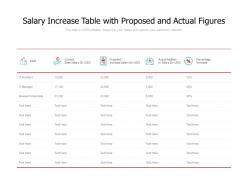
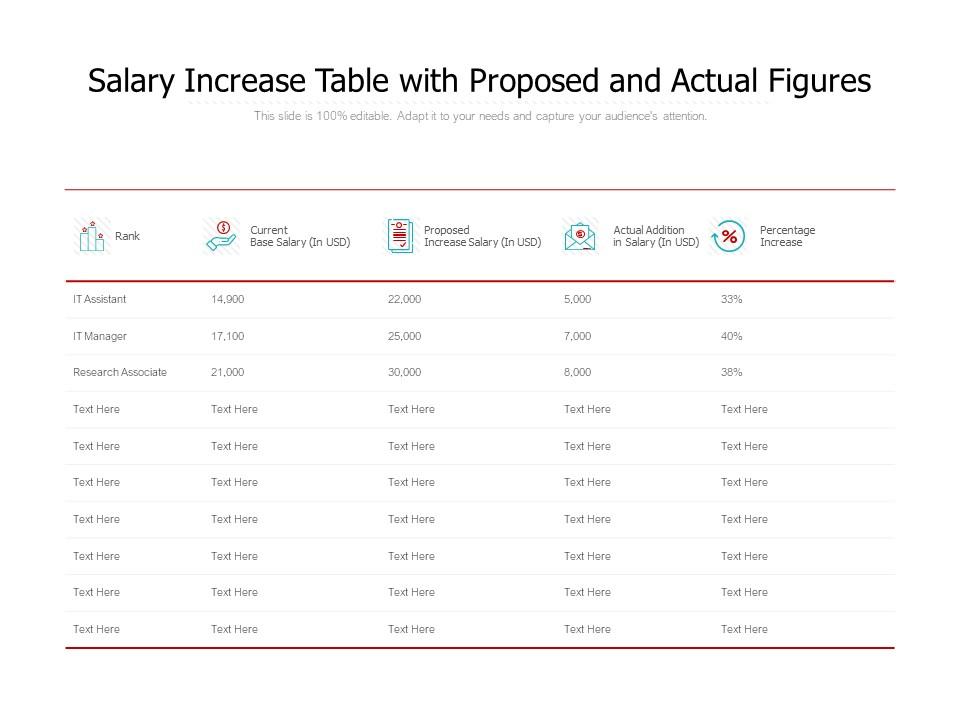
Salary increase table with proposed and actual figures
Try Before you Buy Download Free Sample Product
Audience
Editable
of Time
Increase the degree of consistency achieved with our Salary Increase Table With Proposed And Actual Figures. It will improve your average.
People who downloaded this PowerPoint presentation also viewed the following :
Salary increase table with proposed and actual figures with all 2 slides:
Achieve above average gradings with our Salary Increase Table With Proposed And Actual Figures. Be considered a high caliber individual.
FAQs for Salary increase table with proposed
Performance reviews are huge for raises, but company budgets matter just as much. Market rates help too - if you're getting underpaid compared to other places, that's solid ammo. Timing's tricky though. Some places only do it during annual reviews, which honestly feels outdated to me. How long you've been there counts, plus whether your manager actually fights for you. Oh, and if your role's critical to the team, that definitely helps your case. I'd start documenting what you've accomplished and research what others make in similar positions before you have that conversation.
Oh totally - company performance matters way more than people realize. When the business is crushing it financially, you'll definitely see better raises. Revenue growth and hitting targets = bigger budgets for bumps. Smaller companies especially, since your work actually moves the needle. Big corporations are more about how your specific division is doing though. Some places are just cheap no matter what, which is annoying. But yeah, timing matters too - try having that convo right after they announce good earnings or land a big client.
Honestly, market rates are everything when you're figuring out raises. Check what similar jobs pay in your area using salary surveys and job boards - we got burned last year losing three solid people because we had no clue we were underpaying. Pretty embarrassing actually. If you're below market, you'll need bigger bumps to keep people around. Above market? Smaller increases might work fine. Don't stay in your own little bubble like we did. The data's out there, just gotta look for it.
Okay so first things first - gather your receipts. Specific wins, numbers, times you went above and beyond. Research what people in similar roles actually make around here so you're not shooting blind. Timing is kinda everything though. Right after you crushed a big project or during review season? Perfect. Don't make it about needing the money - focus on what you're bringing to the table. Practice what you'll say beforehand because nobody wants to ramble nervously about money. And honestly, prepare for them to say no. Have backup asks ready - more responsibilities, training opportunities, or at least a timeline for when we can revisit this.
Dude, salaries are actually going up right now! Like 4-6% raises are becoming normal, especially in tech and healthcare. Companies panicked after everyone quit during the Great Resignation - they finally realized they can't just pay peanuts anymore. Remote work helped too since you can negotiate based on what people make nationwide, not just your crappy local market. I mean, it's about time honestly. My cousin just got a 12% bump by switching jobs. If you haven't asked for a raise lately, seriously consider it. The timing's actually decent for once.
Honestly, it depends so much on what field you're in. Tech companies usually do annual reviews and you'll see bigger jumps - like 5-15% if you're lucky. Manufacturing tends to be way more conservative, maybe 3-5% tops. Finance is weird though - sometimes they throw massive bonuses at you, other times it's just enough to cover inflation. Retail and hospitality are tough because budgets are super tight. They might do smaller raises but add performance bonuses instead. I'd definitely look up salary surveys for your specific industry first. That way you're not going in blind when you negotiate.
Honestly, just look at retention rates first - that's your biggest tell. Track who leaves 6-12 months after raises versus before. Employee satisfaction surveys are clutch too, way better than whatever fancy dashboard HR's pushing this quarter. I'd also compare productivity metrics before and after the increases. Quick tangent but engagement surveys actually reveal more than people think. Check how you stack against market rates so you know if you're even competitive. Oh, and pull data from your last raise cycle as a starting point. Performance improvements post-increase matter too, but retention's really the main thing that shows if it worked.
Yeah, most places stick to once a year but that's kinda outdated tbh. Market's moving way too fast for that now. I'd do quarterly check-ins for your star players and critical roles - you don't want to lose them because some competitor swooped in with better pay. Annual reviews are fine as your main thing, but throw in some informal checks every few months. My old company learned this the hard way when they lost their best developer right before a big project. Start with benchmarking your must-keep people quarterly, then you can worry about everyone else.
Yeah, so performance reviews basically control your salary bump. Most places have these rigid charts - like "meets expectations" = 3%, "exceeds" gets you maybe 5-7%. Your rating is literally how they decide what you're worth. Budget stuff and market rates play a role too, but honestly? The review score is what matters most. Oh, and don't wait until review time to make your case - I learned that one the hard way. Keep track of your wins all year long because managers forget everything otherwise.
Document everything first - performance metrics, market rates, budget limits, the whole deal. Make salary bands public and spell out how raises actually work. I know, sounds terrifying to be that open. But honestly? It cuts down on so much workplace drama. Post your timeline too so people aren't bugging you every week asking when reviews happen. Train your managers to explain the reasoning, not just deliver the news. Oh, and this might be obvious but - when employees don't understand how decisions get made, they'll always assume the worst. Transparency really does help.
High turnover is basically your red flag that salaries are off. Solid employees don't usually bail for just money, but they'll absolutely leave if they feel underpaid compared to what's out there. I'd track which departments are losing people most - that's where you throw your raise budget first. Exit interviews will tell you if comp was actually the issue (though people aren't always totally honest about it). The thing is, once good people start walking, word spreads fast about better opportunities elsewhere. So you've got to move quickly on adjusting pay before it becomes a bigger exodus.
Oh man, location makes a massive difference with raises! Companies in places like SF or NYC usually give 4-6% bumps annually, while smaller cities stick to 2-4%. Cost of living is the obvious reason, but competition between employers matters too. I totally underestimated this when I moved to a bigger market - wish someone had warned me earlier. The job market dynamics are just completely different in major metros. You should definitely look up salary data for your specific area before going into any negotiation. That'll give you way better leverage than generic national averages.
Look, you've gotta think about diversity when doing salary reviews or you'll end up with those awful pay gaps based on gender, race, whatever. I've watched companies get absolutely wrecked during audits because they ignored this stuff. Run a quick pay equity analysis before your next review cycle - compare compensation across different demographic groups. Found disparities that aren't explained by performance or experience? Fix them now, not later. It's legally risky if you don't, but honestly it's just the right thing to do anyway.
So basically, when the economy's doing well, companies throw more money at salary budgets. Makes sense - they're trying to keep people from jumping ship when inflation hits. But the second there's any economic drama? Those budgets disappear faster than free pizza in an office. Unemployment rates matter too, plus whatever's happening in your specific industry. I learned this the hard way a few years back - terrible timing on my part. Your move? Wait for those sweet spots when your company's rolling in cash and feeling optimistic. That's when they're actually willing to talk numbers.
Honestly, the worst thing you can do is wing it without clear criteria - that's when people start crying favoritism and you're screwed on pay equity. Budget planning is huge too. I've seen companies promise raises then pull back because they didn't plan properly. So awkward. Poor communication kills you every time - even when you're being fair, people think you're not if they don't get how you made decisions. Oh, and don't skip market research or good people will just leave for better offers. Document everything upfront and be as transparent as possible about your process.
No Reviews