


Software Release Management With KPI Dashboard





Try Before you Buy Download Free Sample Product
 Impress Your
 Audience
 100%
100% Editable
 Save Hours
 of Time


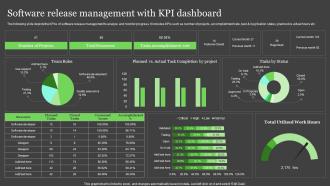
The following slide depicts the KPAs of software release management to analyze and monitor progress. It includes KPIs such as number of projects, accomplishment rate, task and bug fixation status, planned vs actual hours etc.
People who downloaded this PowerPoint presentation also viewed the following :
Software Release Management With KPI Dashboard with all 7 slides:
Use our Software Release Management With KPI Dashboard to effectively help you save your valuable time. They are readymade to fit into any presentation structure.





FAQs for Software Release Management
So basically you've got planning, development, testing, deployment, then monitoring after launch. Planning is where you map out features and timelines. Dev builds while QA tests - though fair warning, testing always drags on way longer than expected (learned that the hard way). Then you push to production and watch your metrics like a hawk. Oh, and set up clear checkpoints between stages so stuff doesn't slip by. Automate whatever you can too - saves your sanity later. The whole process works way better when each phase has defined exit criteria.
Dude, CI/CD is seriously worth setting up. Your releases become way less scary because everything's automated and tested beforehand. No more crossing fingers during deployments! You'll go from monthly releases to daily ones, which sounds crazy but actually makes things smoother. Bugs get caught early when they're easy fixes instead of becoming these massive headaches later. Your team stops wasting time on tedious deployment stuff and can actually build cool features. Oh, and start simple - just automate your builds and tests first. Don't try to do everything at once or you'll hate yourself.
Honestly, I'd go with GitHub Actions if you're already on GitHub - the integration is just seamless. Jenkins gives you tons of flexibility but god, setting it up is such a headache at first. GitLab CI/CD is solid too. For the actual deployment part, Ansible and Terraform are pretty reliable choices. Docker with Kubernetes works great if you're into that whole container thing. But here's the thing - don't get caught up in finding the "perfect" tool. Just pick whatever meshes well with what you're already using. Way easier to start there and expand later.
Honestly, get everyone on the same platform first - Slack or Teams works. Hook up your CI/CD to send automatic updates so nobody's left guessing about build status. Can't tell you how many times I've watched releases blow up because someone made a change and forgot to tell anyone. Do quick standups during release windows, and figure out your escalation chain ahead of time. Oh, and write down your rollback steps before you need them - trust me, when everything's on fire, that's not when you want to be googling solutions.
So the big four metrics everyone talks about are deployment frequency, lead time to production, mean time to recovery, and change failure rate. Those are solid foundations. But honestly? I'd also watch user adoption stuff - how many people are actually using your features, active users, that kind of thing. Business KPIs matter too if they tie back to what you're releasing. Oh and if you're doing agile, track velocity and burndown charts (yeah I know, super obvious but teams forget). Support tickets spiking after releases will tell you everything. Pick maybe 3-5 metrics your stakeholders actually care about instead of tracking twenty things you'll never look at.
Honestly, version control is a lifesaver for release management. Git lets you track every single code change and branch off for different releases. You can tag specific versions for deployment, which is clutch when you need to roll back fast. I'm a huge fan of GitFlow - it keeps everything organized. The commit history shows exactly who changed what and when, so no more mystery bugs. Trust me, pick a branching strategy early and actually stick to it. Nothing worse than scrambling to hotfix prod at 2am with messy branches everywhere.
So risk assessment is basically your safety net when planning releases. What could go wrong? Think technical stuff like integrations breaking, business timing being off, or deployment headaches. I got burned by this last year when everything went sideways! List out whatever's making you lose sleep about the release first. Then rank everything by how likely it is and how badly it'd hurt. The big scary ones need actual backup plans - not just crossing your fingers. Oh, and document this stuff early before you're scrambling at the last minute.
Honestly, user feedback and testing will mess with your timeline every single time - but that's actually a good thing. Critical bugs or major usability problems mean you gotta delay, period. I've watched teams push broken stuff out the door just to hit some random date, and trust me, that's so much worse than being late. Build buffer time from day one. Have clear go/no-go criteria written down somewhere. Quality beats arbitrary deadlines every time - learned that the hard way on a project last year where we ignored testing feedback and basically had to do damage control for weeks.
So GitFlow or feature branches are your best bet - keeps everything separated cleanly. Honestly, separate CI/CD pipelines for each track will save your sanity when hotfixes inevitably pop up. Clear naming conventions are clutch, plus detailed release notes so nobody's confused about what's happening. I'd set up release calendars to coordinate timing. Having dedicated release managers for big versions prevents total chaos (learned that one the hard way). Oh, and automate your testing and deployment - you don't want to be manually handling all that stuff. Start with solid branching habits first, then build out from there.
Think of rollback plans as your "oh shit" button when deployments go sideways. Document everything ahead of time - database rollbacks, traffic switching, who can actually press the buttons. Test it in staging first because figuring out rollbacks at 2am while your boss is texting you? Yeah, no thanks. I learned this the hard way once (coffee was involved, lots of it). Keep your rollback faster than deployment - shoot for under 10 minutes. Short sentences help when you're panicking. Write steps like you're explaining to someone who's half-asleep, because honestly, you probably will be.
Here's what works for me: quick summary up front, then organize by "New Features," "Bug Fixes," "Breaking Changes" - that kind of thing. Put breaking changes first though, seriously. Developers hate surprises. Write like you're talking to actual humans, not robots reading documentation. I've seen too many release notes that sound like they came from a manual. Each point should be short but give enough detail so people know what they're getting into. Oh, and skip the tech jargon - your users will appreciate understanding what's actually changing without needing a translator.
Honestly, just build the compliance stuff right into your pipeline from the start. Document everything - code changes, who approved what, deployments. All of it needs to be traceable. Then set up gates that'll block releases if security scans bomb or approvals are missing. Slows you down at first, but way better than panic mode during audits (been there). Figure out what regulations hit your software - SOX, HIPAA, whatever - and make checklists for different release types. The whole point is making it feel automatic instead of this thing that constantly derails your schedule. Trust me on this one.
Honestly, the hardest part is coordinating all those rapid deployments without breaking stuff. Everyone's pushing code constantly, so your pipeline becomes this huge bottleneck if you don't automate early. Feature flags are helpful but they turn into a nightmare pretty quick - learned that the hard way. You need good rollback plans too since things break faster in production. Oh, and make sure each team owns their piece of the release. Automated testing and monitoring are clutch here. Start small with frequent releases instead of trying to nail everything perfectly from day one.
Stop doing those massive waterfall releases - they're killing you. Break everything down into smaller deployments that happen every sprint. We learned this the hard way, but once you bake release readiness into your definition of done, everything clicks. Feature flags are your best friend for hiding unfinished stuff. Get your dev and ops people talking more (seriously, buy them lunch together). Automated testing and deployment pipelines will save your sanity. Oh, and figure out what's currently bottlenecking your releases first - start automating those pain points before anything else.
Dude, you HAVE to get stakeholders involved from day one - not just when you're ready to ship. Get your PMs, sales people, support team, even some key customers giving feedback on priorities and timelines. I can't tell you how many launches I've watched crash because nobody talked to the right people early enough. Have them review release notes, jump on go/no-go calls, help spread the word to users. Set up regular check-ins and actually listen when they raise concerns. Trust me, it beats dealing with angry emails after everything's already live. Way less stressful that way.
-
The slides come with appealing color schemes and relevant content that helped me deliver a stunning presentation without any hassle!
-
Understandable and informative presentation.