

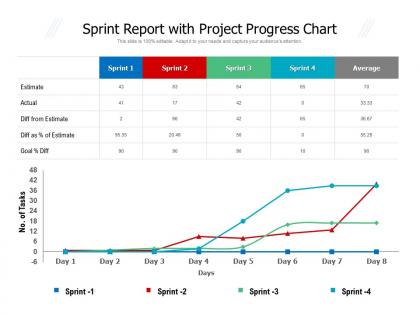
Sprint report with project progress chart




Try Before you Buy Download Free Sample Product
 Impress Your
 Audience
 100%
100% Editable
 Save Hours
 of Time


Our Sprint Report With Project Progress Chart enable better absorption. Make it easier for folks to assimilate.
People who downloaded this PowerPoint presentation also viewed the following :
Sprint report with project progress chart with all 2 slides:
Compare and analyze with the help of our Sprint Report With Project Progress Chart. Be able to differentiate better.
FAQs for Sprint report with
So for sprint reports, hit these five things: did you meet your sprint goals, what work got done (actual vs estimated hours), any roadblocks, what's carrying over, and team retrospective stuff. Honestly, I used to skip the retro part but it's actually super helpful for next time. Don't go crazy with metrics - a simple burndown chart works fine. The whole point is showing stakeholders where you're at and helping your team get better. Just grab a template and tweak it based on what people actually care about in your meetings. Way easier than starting from scratch.
Dude, visuals are a game changer for sprint reports. Nobody wants to stare at walls of text anymore - I learned that the hard way after watching people zone out during my presentations lol. Throw in some velocity charts, burndown graphs, maybe some screenshots of what you actually built. Color-code different work streams so people can follow along easier. Before/after comparisons work great too. Even simple red/green status dots help. You'll keep people way more engaged, and honestly they'll remember what you showed them instead of forgetting everything five minutes later.
Honestly, I'd focus on velocity first - how many story points you're actually finishing each sprint. Then track your burndown charts and whether you're hitting what you committed to. Cycle time matters too, like how long individual stories take from start to finish. Oh, and definitely watch your defect escape rate because there's nothing more annoying than thinking something's done only to have it break later. Team capacity is worth tracking but don't go overboard - I've seen teams drown in metrics. Pick maybe 4 solid ones and stick with them. You'll get a good sense of delivery, efficiency, and quality without the analysis paralysis.
Be super specific about what actually went wrong - like "the payment API crashed three times Tuesday" instead of just "technical issues." Nobody wants vague complaints. If communication sucked, say exactly what happened and between who. I always try being honest without making people look bad (learned that the hard way). Already tried some fixes? Mention those. Your stakeholders need to know how this screws with timelines, so don't sugarcoat it. Most importantly though - always end with real next steps you're taking. Makes you look proactive instead of just whining.
So retrospective insights are just your team being real about what went well and what sucked during the sprint. Pure gold for getting better over time. You'll catch stuff like roadblocks, processes that actually worked, and those lightbulb moments that only hit after you ship. The real learning happens here - not buried in some spreadsheet. Document specific examples though, not fluffy nonsense like "we need better communication." How does that help anyone? These insights show you patterns across sprints so you can make actual changes next time instead of repeating the same mistakes.
Honestly, sprint report templates are a game changer - they stop everyone from making up their own weird formats. You know how Bob always says "mostly done" while Sarah gives you actual percentages? Templates fix that mess. Stakeholders don't have to play detective anymore trying to find basic info. The cool part is you can actually spot trends across different projects when everything's structured the same way. I'd start simple though - just cover what got finished, what's blocking you, and goals for next sprint. Way less headache than you'd think.
Look, stakeholder feedback is what makes sprint reports actually matter instead of being total paperwork waste. Ask them what they need to see - seriously, most teams skip this step and wonder why nobody cares about their reports. Their input shows you which metrics to track and how much detail to include. I've watched so many beautiful reports get completely ignored because they missed what people actually wanted to know. Different stakeholders care about different stuff too. Get their thoughts on your next report first, then build something they'll genuinely read and use for decisions.
Send those sprint reports right after each sprint ends - like within 24-48 hours tops. Everyone's still got the details fresh in their heads then. I've watched teams drag their feet for a week and suddenly nobody can remember what went wrong or what actually worked. Your stakeholders really need that consistent rhythm, especially the ones who aren't sitting through your daily standups (lucky them, honestly). If something major blows up mid-sprint, maybe shoot out a quick update. But seriously, stick to your timeline and get those reports out while people still care about the insights.
Know your audience - that's literally half the battle. Executives want the big picture stuff: progress, what's blocking you, business impact. Skip the technical debt rabbit holes with them. Your dev team? Go deep on implementation headaches and code metrics. Charts work great for stakeholders since honestly, they're probably checking email anyway. Ditch jargon with mixed groups. Here's what I learned the hard way: always start with wins and next steps. People tune out the second you lead with problems. Oh, and prep multiple versions beforehand so you're not scrambling mid-meeting when the CEO randomly shows up.
Always kick off with your wins - what actually got shipped and finished. Morale stays way higher this way. Then get into the blockers, but honestly? Frame them as learning moments instead of screwups. Stakeholders eat that up. Concrete numbers work magic - "finished 8 of 10 story points" sounds so much better than vague stuff like "mostly done." When you mention problems, always throw in your fix or next steps right after. Oh, and definitely end with clear action items plus who owns what. Otherwise things just vanish into the void next sprint.
Jira's probably your best bet - it pulls sprint data automatically and spits out burndown charts, velocity stuff, the works. Azure DevOps and Linear do similar things. Using something basic like Trello? You'll need to export everything to Sheets or Excel, which is honestly kind of annoying but gets the job done. I'd stick with whatever tool your team's already using though, since all your data's already sitting there. Why complicate things? Confluence works great with Jira if you want to write up actual sprint summaries instead of just staring at charts all day.
Your sprint reports need to change when your team changes - pretty obvious but most people don't do it. Project scope shifted? Track different stuff, maybe discovery work instead of just velocity. New team members or everyone went remote? Honestly, the format becomes way more important than you'd expect. Add sections for knowledge sharing or team health checks. I've seen teams still using templates from like six months ago when everything's different now. Make it useful for your current team, not your old one. Just review it monthly and tweak whatever feels off.
Look at your last 3-4 sprints for velocity data - that's your goldmine for realistic forecasting. Story point completion rates and burndown patterns will show you what's actually happening vs what you hoped would happen. I'm always surprised how teams consistently underestimate certain work types, so definitely call that out. Any recurring blockers? Those probably aren't going away magically. Use this stuff to back up your current sprint forecast and show leadership you're not just throwing darts at a board. The trends tell the real story anyway. Way better than crossing your fingers and hoping this sprint will somehow be different.
Scrum teams should focus on sprint goals, velocity, and burndown charts - makes sense since you're working in fixed chunks. With Kanban it's different though. Track cycle time, throughput, and WIP limits instead. Traditional "sprint reports" honestly feel kinda forced when you're doing continuous flow. Hybrid approaches? Mix both styles depending on what your team actually needs. I always think the biggest mistake is trying to use the same template for everything. Match your metrics to whatever drives success for your specific setup.
Keep your sprint reports short and sweet - nobody wants to read a dissertation. Skip the technical jargon that'll make stakeholders' eyes glaze over. When things go wrong, be upfront about it instead of sugar-coating (those issues always come back to bite you anyway). Honestly, the blame game stuff is just exhausting for everyone involved. Better to focus on what got done, what didn't, and why. Track the stuff that actually matters too - velocity, burndown, goal completion. Not just random busy work that looks impressive but means nothing. Oh, and make sure your next steps are crystal clear. People love knowing what's coming next.
No Reviews